Posts tagged literature
 Containing multitudes
Nate
:
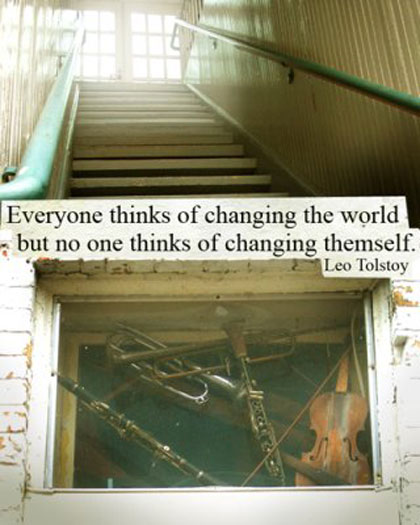
For reasons that are obscure to me, those qualities we cherish in our artists we condemn in our politicians. In our artists we look for the many-colored voice, the multiple sensibility. The apogee of this is, of course, Shakespeare: even more than for his wordplay we cherish him for his lack of allegiance. Our Shakespeare sees always both sides of a thing, he is black and white, male and female—he is everyman. The giant lacunae in his biography are merely a convenience; if any new facts of religious or political affiliation were ever to arise we would dismiss them in our hearts anyway.
Nate
: Accomplices in creation
Nate
:
Reading is a very complex art - the hastiest examination of our sensations as a reader will show us that much. And our duties as readers are many and various. But perhaps it may be said that our first duty to a book is that one should read it for the first time as if one were writing it.
One should begin by sitting in the dock with the criminal, not by mounting the bench to sit among the Judges. One should be an accomplice with the writer in his act, whether good or bad, of creation. For each of these books, however it may differ in kind and quality, is an attempt to make something. And our first duty as readers is to try and understand what the writer is making from the first word with which he builds his first sentence to the last with which he ends his book. We must not impose our design upon him; we must not try to make him conform his will to ours. We must allow Defoe to be Defoe and Jane Austen to be Jane Austen as freely as we allow the tiger to have his fur and the tortoise to have his shell. And this is very difficult. For it is one of the qualities of greatness that it brings Heaven and earth and human nature into conformity with its own vision.
I would write ads for deodorants or labels for catsup bottle, if I had to. The miracle of turning inklings into thoughts and thoughts into words and words into metal and print and ink never palls for me.
—John Updike, Paris Review interview (1967) :: via Daring Fireball
I’m all for reading bad books because I consider them to be a gateway drug. People who read bad books now may or may not read better books in the future. People who read nothing now will read nothing in the future.
—Novelist Ann Patchett on "The Triumph of the Readers"
 AsLOLn
Nate
:Nate
:
Literature | How would Jack Kerouac cope with Microsoft Word? Not very well, a blogger imagines, for “the birth of the computer has led, largely, to the death of the genuine stream of consciousness novel.” It “allows us to delete, shift sections around and continually edit, in the way that Kerouac, writing on his lengthy scrolls [for “On the Road”], could not.” [Guardian]
Dickens on demand
Andy
:When you use a Kindle, you are not merely a reader—you are also a consumer. Indeed, everything about the device is intended to keep you in a posture of consumption. As Amazon founder Jeff Bezos has admitted, the Kindle “isn’t a device, it’s a service.”
In this sense it is a metaphor for the experience of reading in the twenty-first century. Like so many things we idolize today, it is extraordinarily convenient, technologically sophisticated, consumption-oriented, sterile, and distracting. The Kindle also encourages a kind of utopianism about instant gratification, and a confusion of needs and wants. Do we really need Dickens on demand? Part of the gratification for first readers of Dickens was rooted in the very anticipation they felt waiting for the next installment of his serialized novels—as illustrated by the story of Americans lining up at the docks in New York to learn the fate of Little Nell. The wait served a purpose: in the interval between finishing one installment and getting the next, readers had time to think about the characters and ponder their motives and actions. They had time to connect to the story.
On the migration of books
Nate
:At the heart of my library is my father’s library. When I was seventeen or eighteen and began to devote most of my time to reading, I devoured the volumes my father kept in our sitting room as well as the ones I found in Istanbul’s bookshops. These were the days when, if I read a book from my father’s library and liked it, I would take it into my room and place it among my own books. My father, who was pleased to see his son reading, was also glad to see some of his books migrating to my library, and whenever he saw one of his old books on my bookshelf, he would tease me by saying, “Aha, I see this volume has been promoted to the upper echelons!”

Nate
:If you offer it, they will come
Nate
:One of the commonest complaints by cultural doomsayers is that nobody reads good books any more. Yet in the past two years, the Oprah Book Club in America recommended Tolstoy’s “Anna Karenina” and three novels by William Faulkner—good by any standard, and they all made the bestseller lists. This year, Waterstone’s, which owns over 300 bookshops in Britain, asked two celebrated novelists, Sebastian Faulks and Philip Pullman, each to choose 40 titles and write a few words of recommendation. The chain then piled copies of the books on tables next to the entrances of its main shops and waited to see what would happen. Faulks and Pullman hardly dumbed down their choices: they included Fernando Pessoa’s “Book of Disquiet”, Rudyard Kipling’s “Kim”, and Raymond Queneau’s “Exercises in Style”. The sales increases for these books over the same period the year before were, respectively, 1,350%, 1,420% and 1,800%—clear evidence of latent demand. If you offer it, they will come.
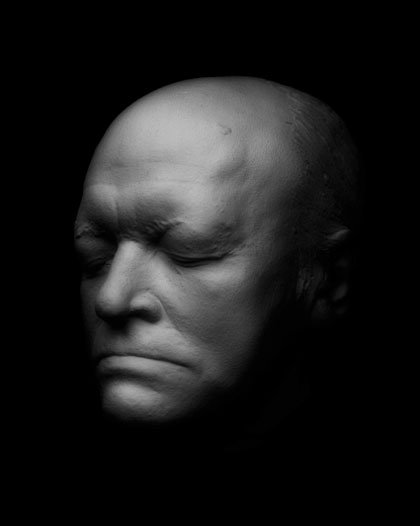
 William Blake, life mask
Nate
: Frankenstein’s editor
Nate
:Literature | Mary Shelley created a monster out of her “waking dream,” but how much of the original “Frankenstein” was actually written by her husband, Percy? A new edition of the earliest recoverable manuscript of this much-altered novel shows his writing and editing were substantial. [TLS]
True, so very true

Andy
:The root of real honor
Nate
:What the reading yields is the idea of father and mother as the Universal Father and Mother, the Lord‘s dear Adam and His beloved Eve; that is, essential humankind as it came from His hand. There is a pattern in these Commandments of setting things apart so that their holiness will be perceived Every day is holy, but the Sabbath is set apart so that the holiness of time can be experienced. Every human being is worthy of honor, but the conscious discipline of honor is learned from this setting apart of the mother and father, who usually labor and are heavy-laden, and may be cranky and stingy or ignorant or overbearing. Believe me, I know this can be a hard Commandment to keep. But I believe also that the rewards of obedience are great, because at the root of real honor is always the sense of the sacredness of the person who is its object.
Nate
:
In a ritual repeated nearly every weekend for the past decade here in Colombia’s war-weary Caribbean hinterland, Luis Soriano gathered his two donkeys, Alfa and Beto, in front of his home on a recent Saturday afternoon. Sweating already under the unforgiving sun, he strapped pouches with the word “Biblioburro” painted in blue letters to the donkeys’ backs and loaded them with an eclectic cargo of books destined for people living in the small villages beyond. His choices included “Anaconda,” the animal fable by the Uruguayan writer Horacio Quiroga that evokes Kipling’s “Jungle Book”; some Time-Life picture books (on Scandinavia, Japan and the Antilles); and the Dictionary of the Royal Academy of the Spanish Language.
“I started out with 70 books, and now I have a collection of more than 4,800,” said Mr. Soriano, 36, a primary school teacher who lives in a small house here with his wife and three children, with books piled to the ceilings. “This began as a necessity; then it became an obligation; and after that a custom,” he explained, squinting at the hills undulating into the horizon. “Now,” he said, “it is an institution.”
A whimsical riff on the bookmobile, Mr. Soriano’s Biblioburro is a small institution: one man and two donkeys. He created it out of the simple belief that the act of taking books to people who do not have them can somehow improve this impoverished region, and perhaps Colombia.
Nate
:I feel sometimes as if I were a child who opens its eyes on the world once and sees amazing things it will never know any names for and then has to close its eyes again. I know this is all mere apparition compared to what awaits us, but it is only lovelier for that. There is a human beauty to it. And I can’t believe that, when we have all been changed and put on incorruptibility, we will forget our fantastic condition of mortality and impermanence, the great bright dream of procreating and perishing that meant the whole world to us. In eternity this world will be Troy, I believe, and all that has passed here will be the epic of the universe, the ballad they sing in the streets. Because I don’t imagine any reality putting this one in the shade entirely, and I think piety forbids me to try.
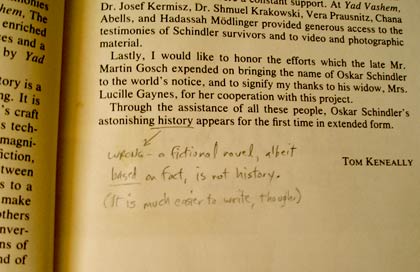
WRONG—
Nate
:Notes from the Archbishop
Nate
:Literature | A reviewer says it’s a good thing the archbishop of Canterbury has written a book about Dostoyevsky. To figure out this Russian fellow, “we need a guide who combines the gifts of a literary critic and a trained theologian.” And like Dostoyevsky, the cleric, through his unruly Church of England, knows what it’s like to juggle “incompatible beliefs.” [TLS]
Extravagant gestures
Nate
:At the time of Lewis and Clark, setting the prairies on fire was a well-known signal that meant, “Come down to the water.” It was an extravagant gesture, but we can’t do less. If the landscape reveals one certainty, it is that the extravagant gesture is the very stuff of creation. After one extravagant gesture of creation in the first place, the universe has continued to deal exclusively in extravagances, flinging intricacies and colossi down aeons of emptiness, heaping profusions on profligacies with ever-fresh vigor. The whole show has been on fire from the word go. I come down to the water to cool my eyes. But everywhere I look I see fire; that which isn’t flint is tinder, and the whole world sparks and flames.