<?xml version="1.0" encoding="utf-8"?>
<feed xmlns="http://www.w3.org/2005/Atom" xml:lang="en">

    <title type="text">Culture Making Articles items tagged literature</title>
    <subtitle type="text">Culture Making Articles:Writing on Christianity and culture from Andy Crouch</subtitle>
    <link rel="alternate" type="text/html" href="http://culture-makers.com/" />
    <link rel="self" type="application/atom+xml" href="https://culture-making.com/tag/atom" />
    <updated>2025-01-03T22:54:05Z</updated>
    <rights>Copyright (c) 2025, Andy Crouch</rights>
    <generator uri="http://www.pmachine.com/" version="7.5.15">ExpressionEngine</generator>
    <id>tag:culture-makers.com,2025:01:02</id>

    <entry>
      <title>Tastes great, but is it art?</title>
      <link rel="alternate" type="text/html" href="https://culture-making.com/post/tastes_great_but_is_it_art" />
      <id>tag:culture-makers.com,2025:author/1.1350</id>
      <published>2025-01-02T22:53:00Z</published>
      <updated>2025-01-03T22:54:05Z</updated>
      <author>
            <name>Andy Crouch</name>
            <email>andy@culture-making.com</email>
            
      </author>

      <content type="html"><![CDATA[


					<b><p>Nate</p>: </b><em>?Fun and important questions about the aesthetics of food (and, for that matter, the aesthetics of aesthetics). At the end of the day it's all culture, though.?</em><br />
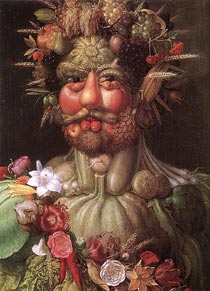
		
		<div style="float:right; padding:15px 5px 5px 5px"><img src="http://culture-making.com/media/433px-Arcimboldovertemnus_210.jpg" alt="image"></div><p>What issues might we be thinking about in trying to decide whether to classify cooking as one of the arts? Here are some.</p>
<p>1) Is the person who says of the Chateau Petrus they have just tasted that it is a work of art to be taken literally? </p>
<p>2) Is the experience we have of a Beethoven String Quartet sufficiently different from that we have when eating a great meal so that we should distinguish them as different kinds of experience?</p>
<p>3) Does it make sense to say of someone that they have been moved by a meal?</p>
<p>4) Is it significant for classifying something as an art form that a meal is consumed in the process of appreciation?</p>
<p>5) When I say of Grant Achatz that he is an artist in the kitchen how does this differ from saying he is a genius at the stove?</p>
<p>6) Why do we distinguish between the architect who designed Notre Dame and those who built it by designating the latter as craftsmen and the former as an artist? Is there a class bias exhibited by this distinction?</p>
<p>7) A piece of music can express sadness. A pate cannot. So?
</p><hr />
<div class="author" style="font-size: -1">from "<a href="http://www.3quarksdaily.com/3quarksdaily/2009/03/penne-for-your-thought.html">Penne for Your Thought</a>," by Gerald Dworkin, <a href="http://www.3quarksdaily.com/3quarksdaily/2009/03/penne-for-your-thought.html">3quarksdaily</a>, 9 March 2009 :: <a href="http://en.wikipedia.org/wiki/Giuseppe_Arcimboldo">Vertemnus / Rudolf II</a>, by Giuseppe Arcimboldo (1527–1593), Wikipedia :: first posted here 18 March 2009</div>		


      ]]></content>
    </entry>    <entry>
      <title>Experiments with Kampf</title>
      <link rel="alternate" type="text/html" href="https://culture-making.com/post/experiments_with_kampf" />
      <id>tag:culture-makers.com,2025:author/1.1971</id>
      <published>2025-01-02T22:53:00Z</published>
      <updated>2025-01-03T22:54:05Z</updated>
      <author>
            <name>Andy Crouch</name>
            <email>andy@culture-making.com</email>
            
      </author>

      <content type="html"><![CDATA[


					<b>Nate: </b><em>?My latest short essay for Comment, from an apparently ongoing series on <a href="http://www.natebarksdale.com/2010/12/how-not-to-do-your-physics-homework.html">Bad Ideas I Have Had</a>.?</em><br />
		
		<p>For much of my post-college reading life, I‘ve been interested in the experience of shifting between texts, in particular the way that, for a short spell, the text I shift to inhabits the same mental space as the one I’ve just left, so that the second book feels like an increasingly improbable continuation of the previous narrative. Say you’re reading Great Expectations and just as your expectations begin to flag, you switch volumes and the scenery becomes more agreeable, the prose less stultifying, the seedy incidental characters more plausibly named, till at last you give in to reality and admit that you’ve abandoned Dickens for Graham Greene. Better yet, you can shift genres entirely. Sociological surveys may suddenly, with a little sleight of hand, contain sonnets.</p><hr />
<div class="author" style="font-size: -1">from "<a href="http://www.cardus.ca/comment/article/2406/">The Joys and Perils of Overlapping Reading</a>," by Nate Barksdale, <a href="http://www.cardus.ca/comment/article/2406/">Comment</a>, 10 December 2010</div>		


      ]]></content>
    </entry>    <entry>
      <title>Subtractive creations</title>
      <link rel="alternate" type="text/html" href="https://culture-making.com/post/subtractive_creations" />
      <id>tag:culture-makers.com,2025:author/1.1933</id>
      <published>2025-01-02T22:53:00Z</published>
      <updated>2025-01-03T22:54:05Z</updated>
      <author>
            <name>Andy Crouch</name>
            <email>andy@culture-making.com</email>
            
      </author>

      <content type="html"><![CDATA[


			<p align="center"><object width="420" height="340"><param name="movie" value="http://www.youtube.com/v/HY33tYVDvfk&amp;hl=en_US&amp;fs=1&amp;"></param><param name="allowFullScreen" value="true"></param><param name="allowscriptaccess" value="always"></param><embed src="http://www.youtube.com/v/HY33tYVDvfk&amp;hl=en_US&amp;fs=1&amp;" type="application/x-shockwave-flash" allowscriptaccess="always" allowfullscreen="true" width="420" height="340"></embed></object></p><br />
<b>Nate: </b><em>?Howard Hawks' 1940 Cary Grant/Rosalind Russel screwball comedy <i>His Girl Friday</i> is probably the greatest cinematic example of nonstop, everyone-talking-at-once comic banter. Well, not-quite nonstop: here an intrepid editor has strung together all eight minutes of clips from the film where nobody is saying anything. It reminds me of another work of subtractive genius I've heard about, in which Damion Searls compiled all of the text abridged out of a book called <i>Moby Dick in Half the Time</i>. The result, containing all the odd, astonishing, and confusing bits of Melville's work and none of the boring old plot, was published under the pruned-off subtltle <a href="http://www.dalkeyarchive.com/book/?GCOI=15647100036970"><i>; or The Whale</i></a>.?</em><br />
<hr /><span style="font-size: -1">from "<a href="http://www.youtube.com/watch?v=HY33tYVDvfk">His Girl Friday - Between The Lines Edit</a>," by Valentin Spirik, 2005. <i>His Girl Friday</i> is available in its entirety <a href="http://www.archive.org/details/his_girl_friday">here</a> :: via <a href="http://waxy.org/2008/04/fanboy_supercuts_obsessive_video_montages/">Waxy.org</a></span>


      ]]></content>
    </entry>    <entry>
      <title>Love and language</title>
      <link rel="alternate" type="text/html" href="https://culture-making.com/post/love_and_language" />
      <id>tag:culture-makers.com,2025:author/1.1932</id>
      <published>2025-01-02T22:53:00Z</published>
      <updated>2025-01-03T22:54:05Z</updated>
      <author>
            <name>Andy Crouch</name>
            <email>andy@culture-making.com</email>
            
      </author>

      <content type="html"><![CDATA[


					<b>Nate: </b><em>?I just finished Elif Batuman's delightful, erudite, and hopelessly funny memoir of her love of Russian literature as lived out through seven at-times-harrowing years of comp lit grad school. Elif is a college acquaintance and <a href="http://www.elifbatuman.net/2009/01/13/beards-and-other-outerwear/">sometime correspondent</a> of mine, so it's always a double treat to see her writing out in the wider world.?</em><br />
		
		<p>If I didn&#8217;t actually believe in my responsibility to tell Americans the truth about Turkey, nevertheless I did feel it was somehow wasteful to study Russian literature instead of Turkish literature. I had repeatedly been told in linguistics classes that all languages were universally complex, to a biologically determined degree. Didn&#8217;t that mean that all languages were, objectively speaking, equally interesting? And I already <i>knew</i> Turkish; it had happened without any work, like a gift, and here I was tossing it away to break my head on a bunch of declensions that came effortlessly to anyone who happened to grow up in Russia.</p><p>Today, this strikes me as terrible reasoning. I now understand that love is a rare and valuable thing, and you don&#8217;t get to choose its object. You just go around getting hung up on the all the least convenient things—and if the only obstacle in your way is a little extra work, then <i>that&#8217;s</i> the wonderful gift right there.</p><hr />
<div class="author" style="font-size: -1">from <i><a href="http://www.amazon.com/Possessed-Adventures-Russian-Books-People/dp/0374532184/cmcom-20">The Possessed: Adventures with Russian Books and the People Who Read Them</a></i>, by Elif Batuman, 2010, p.88</div>		


      ]]></content>
    </entry>    <entry>
      <title>Counsel woven into the fabric of real life</title>
      <link rel="alternate" type="text/html" href="https://culture-making.com/post/counsel_woven_into_the_fabric_of_real_life" />
      <id>tag:culture-makers.com,2025:author/1.1913</id>
      <published>2025-01-02T22:53:00Z</published>
      <updated>2025-01-03T22:54:05Z</updated>
      <author>
            <name>Andy Crouch</name>
            <email>andy@culture-making.com</email>
            
      </author>

      <content type="html"><![CDATA[


					<b>Nate: </b><em>?You can read most of Benjamin's essay at <a href="http://books.google.com/books?id=A4tRaJK85n8C&lpg=PA143&dq=walter%20benjamin%20%22the%20storyteller%22&pg=PA145#v=onepage&q=walter%20benjamin%20%22the%20storyteller%22&f=false">Google Books</a>. The first few pages are all quite good and require no knowledge whatsoever of that <a href="http://en.wikipedia.org/wiki/Nikolai_Leskov">Nikolai Leskov</a> fellow.?</em><br />
		
		<p>All this points to the nature of every real story. It contains, openly or covertly, something useful. The usefulness may, in one case, consist in a moral; in another, in some practical advice; in a third, in a proverb or maxim. In every case the storyteller is a man who has counsel for his readers. But if today “having counsel” is beginning to have an old-fashioned ring, this is because the communicability of experience is decreasing. In consequence we have no counsel either for ourselves or for others. After all, counsel is less an answer to a question than a proposal concerning the continuation of a story which is just unfolding. To seek this counsel one would first have to be able to tell the story. (Quite apart from the fact that a man is receptive to counsel only to the extent that he allows his situation to speak.) Counsel woven into the fabric of real life is wisdom.</p><hr />
<div class="author" style="font-size: -1">from "<a href="http://ayjay.tumblr.com/post/631313575/all-this-points-to-the-nature-of-every-real-story">The Storyteller: Observations on the Works of Nikolai Leskov</a>," by Walter Benjamin, 1936, in <a href="http://books.google.com/books?id=A4tRaJK85n8C&lpg=PA143&dq=walter%20benjamin%20%22the%20storyteller%22&pg=PA145#v=onepage&q=walter%20benjamin%20%22the%20storyteller%22&f=false">Selected Writings, Volume 3</a> :: via <a href="http://ayjay.tumblr.com/post/631313575/all-this-points-to-the-nature-of-every-real-story">more than 95 theses</a></div>		


      ]]></content>
    </entry>    <entry>
      <title>Even if the hymns are impossible to sing</title>
      <link rel="alternate" type="text/html" href="https://culture-making.com/post/even_if_the_hymns_are_impossible_to_sing" />
      <id>tag:culture-makers.com,2025:author/1.1908</id>
      <published>2025-01-02T22:53:00Z</published>
      <updated>2025-01-03T22:54:05Z</updated>
      <author>
            <name>Andy Crouch</name>
            <email>andy@culture-making.com</email>
            
      </author>

      <content type="html"><![CDATA[


					<b>Nate: </b><em>?This is from a magazine interview that came out in the publicity wake of David Foster Wallace's 1996 ur-novel <i>Infinite Jest</i>. Though I'd heard in recent years that DFW was a churchgoer, and read (in the aftermath of his 2008 suicide) that the Apostle Paul was among his favorite writers, those revelations come as a bit of a surprise (followed by a nod of recognition). It adds hope to his tragic aspect, but is, of course, also rather sobering.?</em><br />
		
		<p>He’ll blend in even more after he starts attending church. Brought up an atheist, he has twice failed to pass through the Rite of Christian Initiation for Adults, the first step toward becoming a Catholic. The last time, he made the mistake of referring to “the cult of personality surrounding Jesus.” That didn’t go over big with the priest, who correctly suspected Wallace might have a bit too much skepticism to make a fully obedient Catholic. “I’m a typical American,” says Wallace. “Half of me is dying to give myself away, and the other half is continually rebelling.”</p><p>Recently he found a Mennonite house of worship, which he finds sympathetic even if the hymns are impossible to sing. “The more I believe in something, and the more I take something other than me seriously, the less bored I am, the less self-hating. I get less scared. When I was going through that hard time a few years ago, I was scared all the time.” It’s not a trip he ever plans to take again.</p><hr />
<div class="author" style="font-size: -1">from "<a href="http://craigfehrman.com/2010/05/05/details-1996-profile-of-david-foster-wallace/">The Wasted Land</a>," by David Streitfeld, <a href="http://craigfehrman.com/2010/05/05/details-1996-profile-of-david-foster-wallace/"><i>Details</i></a>, March 1996 :: via <a href="http://www.details.com/">Craig Fehrman</a>, <a href="http://kottke.org/10/05/lost-dfw-profile">kottke</a></div>		


      ]]></content>
    </entry>    <entry>
      <title>As sherp as muckle needles</title>
      <link rel="alternate" type="text/html" href="https://culture-making.com/post/as_sherp_as_muckle_needles" />
      <id>tag:culture-makers.com,2025:author/1.1856</id>
      <published>2025-01-02T22:53:00Z</published>
      <updated>2025-01-03T22:54:05Z</updated>
      <author>
            <name>Andy Crouch</name>
            <email>andy@culture-making.com</email>
            
      </author>

      <content type="html"><![CDATA[


					<b>Nate: </b><em>?The absurdly prolific author Alexander McCall Smith has a new book for younger readers featuring the characters from the bestselling <a href="http://www.amazon.com/No-Ladies-Detective-Agency-Book/dp/1400034779/cmcom-20">No. 1 Ladies' Detective Agency</a> series. As part of a promotion with the <a href="http://www.scottisharts.org.uk/1/artsinscotland/literature/features/preciousandthepuggies.aspx">Scottish Arts Council</a>, it is currently only available in a Scots translation in its first year of publication. It's a fun and fascinating way to affirm and promote the <a href="http://en.wikipedia.org/wiki/Scots_language">Scots language</a>—and even gain it new worldwide readers, as it's close enough to English for a patient reader to puzzle it out with pleasure.?</em><br />
		
		<p>Whit wid ye dae if ye fund yersel face tae face wi a muckle lion? Staund as still as a stookie? Mak yer feet yer freens and rin? Creep awa quiet-like? Mibbe ye wid jist steek yer een and hope that ye were haein a dream – which is whit Obed did at first when he saw the frichtsome lion starin strecht at him. But when he opened his een again, the lion wis aye there, and whit wis waur, wis stertin tae open its muckle mooth. Precious sooked in her braith. ‘Did ye see his teeth?’ she spiered. Obed noddit his heid. ‘The moonlicht wis gey bricht,’ he said. ‘His teeth were white and as sherp as muckle needles.’</p><hr />
<div class="author" style="font-size: -1">from <a href="http://www.amazon.com/Precious-Puggies-Ramotswes-Very-First/dp/1845022807/cmcom-20"><i>Precious and the Puggies</i></a>, Chapter Twa, by Alexander McCall Smith, translatit intae Scots by James Robertson and wi bonnie illustrations by Iain McIntosh, 2010 :: via <a href="http://www.metafilter.com/90660/Nummer-Wan-Ladies-Detective-Agency">MetaFilter</a></div>		


      ]]></content>
    </entry>    <entry>
      <title>The right book at the right time</title>
      <link rel="alternate" type="text/html" href="https://culture-making.com/post/the_right_book_at_the_right_time" />
      <id>tag:culture-makers.com,2025:author/1.1851</id>
      <published>2025-01-02T22:53:00Z</published>
      <updated>2025-01-03T22:54:05Z</updated>
      <author>
            <name>Andy Crouch</name>
            <email>andy@culture-making.com</email>
            
      </author>

      <content type="html"><![CDATA[


			<b>Nate: </b><em>?Ah, the life-changing power of the right book at the right time. The reissue of <a href="http://www.amazon.com/African-Greenland-Review-Books-Classics/dp/0940322889/cmcom-20">An African in Greenland</a> moves right to the top of my travel writing to-read list.?</em><br />

<div class="author" style="font-size: -1">a <a href="http://www.futilitycloset.com/2010/03/15/northern-exposure/?utm_source=feedburner&utm_medium=feed&utm_campaign=Feed:+FutilityCloset+(Futility+Closet)&utm_content=Google+Reader">Futility Closet</a> post by Greg Ross, 15 March 2010</div><hr />		
		<p>Ordered to join a jungle snake cult in his native Togo, Tété-Michel Kpomassie chanced to find a book about Greenland in a local Jesuit library. At the first opportunity he ran away.</p>
<p>Kpomassie’s 1981 autobiography, <i>An African in Greenland</i>, tells of his odyssey through West Africa and Europe seeking a route to the frozen island. He finally arrived in the mid-1960s, a black giant among the Inuit:</p>
<blockquote>
<p>As soon as they saw me, all stopped talking. So intense was the silence, you could have heard a gnat in flight. Then they started to smile again, the women with slightly lowered eyes. When I was standing before them on the wharf, they all raised their heads to look me full in the face. Some children clung to their mothers’ coats, and others began to scream with fright or to weep.
</p>
</blockquote>
<p>Kpomassie happily spent the next two years driving a dogsled and hunting seal in a kayak. After eight years, he had reached the land of his dreams — a country with no trees and no snakes.</p>


      ]]></content>
    </entry>    <entry>
      <title>Our year in culture: Books, movies, and music of 2009, part 2</title>
      <link rel="alternate" type="text/html" href="https://culture-making.com/post/our_year_in_culture_books_movies_and_music_of_2009_part_2" />
      <id>tag:culture-makers.com,2025:author/1.1770</id>
      <published>2025-01-02T22:53:00Z</published>
      <updated>2025-01-03T22:54:05Z</updated>
      <author>
            <name>Andy Crouch</name>
            <email>andy@culture-making.com</email>
            
      </author>

      <content type="html"><![CDATA[


<p><i>This is the second of three posts from this site&#8217;s current contributors, about our favorite books, music, and movies of 2009—not necessarily made in 2009, but consumed, pondered, enjoyed and treasured by each of us during the past year. Yesterday we heard from <a href="http://www.culture-making.com/post/our_year_in_culture_books_movies_and_music_of_2009_part_1">Nate Barksdale</a>; tomorrow we&#8217;ll close the series with Andy Crouch&#8217;s recommendations.</i></p>
<p>Two of the movies that moved me most in 2009 deal with human suffering and hope in the midst of despair: Courtney Hunt&#8217;s <i><a href="http://www.amazon.com/Frozen-River-Melissa-Leo/dp/B001KEHAG2/cmcom-20">Frozen River</a></i>, a haunting story of survival and the sometimes blurry lines between right and wrong, and Scott Blanding/Brad LaBriola/Greg Heller&#8217;s documentary, <i><a href="http://www.womeninwarzones.org/page.php?page=home">Women in War Zones</a></i>, which tells the story of two survivors of sexual violence in the Congo. I was also surprisingly touched by Kenny Ortega&#8217;s <i><a href="http://www.amazon.com/Michael-Jackson-This/dp/B002TYZKIM/cmcom-20">This is It</a></i>, a film documenting the last few months of Michael Jackson&#8217;s life, rehumanizing The Gloved One and presenting him as the phenomenally talented, humble and generous, albeit broken, entertainer he was.</p>
<p>After years of reading mostly non-fiction, I read several novels in 2009 that had a tremendous impact on me. One was <i><a href="http://www.amazon.com/Name-Asher-Lev-Chaim-Potok/dp/1400031044/cmcom-20">My Name is Asher Lev</a></i>, by Chaim Potok. Its insight into the mind of a visual artist was very helpful to me as someone who is trying to understand how visual artists see the world. I also appreciated the author&#8217;s profound insight into Christ&#8217;s crucifixion from the perspective of a Hasidic Jew. Marilynne Robinson&#8217;s <i><a href="http://www.amazon.com/Gilead-Novel-Marilynne-Robinson/dp/031242440X/cmcom-20">Gilead</a></i> was very moving to me on several levels, not the least of which was the way the main character was awakened by tender eros in his twilight years. But the book I read in 2009 that I was most stirred by was actually an unpublished manuscript by a very promising author practicing law near the University of Virginia. Corban Addison&#8217;s <i>A Walk Across the Sun</i> deals with the issue of human trafficking in both the US and India. It was the first time in a while I have had serious trouble putting a book down; I was riveted from page one.</p><p>My non-fiction treasures of 2009 include Michael Card&#8217;s <i><a href="http://www.amazon.com/Sacred-Sorrow-Experience-Guide-Reaching/dp/1576836681/cmcom-20">A Sacred Sorrow: Reaching Out to God in the Lost Language of Lament</a></i>, Nicholas Wolterstorff&#8217;s <i><a href="http://www.amazon.com/Art-Action-Toward-Christian-Aesthetic/dp/0802818161/cmcom-20">Art in Action</a></i>, Dan Siedell&#8217;s <i><a href="http://www.amazon.com/God-Gallery-Christian-Cultural-Exegesis/dp/0801031842/cmcom-20">God in the Gallery</a></i>, Eugene Peterson&#8217;s <i><a href="http://www.amazon.com/Long-Obedience-Same-Direction-Discipleship/dp/0830822577/cmcom-20">A Long Obedience in the Same Direction</a></i> (a pastorally-guided exploration up the Psalms of Ascents), and Lewis Hyde&#8217;s <i><a href="http://www.amazon.com/Gift-Creativity-Artist-Modern-Vintage/dp/0307279502/cmcom-20">The Gift</a></i>, required reading at International Arts Movement as we seek to approach the arts not in terms of commodity, but rather in terms of gift.</p><br />


      ]]></content>
    </entry>    <entry>
      <title>Ecstatically between the pillows and the books</title>
      <link rel="alternate" type="text/html" href="https://culture-making.com/post/ecstatically_between_the_pillows_and_the_books" />
      <id>tag:culture-makers.com,2025:author/1.1758</id>
      <published>2025-01-02T22:53:00Z</published>
      <updated>2025-01-03T22:54:05Z</updated>
      <author>
            <name>Andy Crouch</name>
            <email>andy@culture-making.com</email>
            
      </author>

      <content type="html"><![CDATA[


					<b>Nate: </b><em>?This is from a short story taken from David Foster Wallace's posthumous novel in progress, <i>The Pale King</i>. The whole story, an exploration of childlike faith, is worth reading and rereading—indeed, the emotion I most strongly associate with reading David Foster Wallace's work is a (generally somewhat frustrated) impulse to reread. But in this case the impulse comes gladly and with a touch of, and a feel for, grace.?</em><br />
		
		<p>At any rate, the best analogy for the experience of hearing these childhood “voices” of mine is that it was like going around with your own private masseur, who spent all his time giving you back—and shoulder—rubs (which my biological mother also used to do whenever I was sick in bed, using rubbing alcohol and baby powder and also changing the pillowcases, so that they were clean and cool; the experience of the voices was analogous to the feeling of turning a pillow over to the cool side). Sometimes the experience of the voices was ecstatic, sometimes so much so that it was almost too intense for me—as when you first bite into an apple or a confection that tastes so delicious and causes such a flood of oral juices that there is a moment of intense pain in your mouth and glands—particularly in the late afternoons of spring and summer, when the sunlight on sunny days achieved moments of immanence and became the color of beaten gold and was itself (the light, as if it were taste) so delicious that it was almost too much to stand, and I would lie on the pile of large pillows in our living room and roll back and forth in an agony of delight and tell my mother, who always read on the couch, that I felt so good and full and ecstatic that I could hardly bear it, and I remember her pursing her lips, trying not to laugh, and saying in the driest possible voice that she found it hard to feel too much sympathy or concern for this problem and was confident that I could survive this level of ecstasy, and that I probably didn’t need to be rushed to the emergency room, and at such moments my love and affection for my mother’s dry humor and love became, stacked atop the original ecstasy, so intense that I almost had to stifle a scream of pleasure as I rolled ecstatically between the pillows and the books on the floor. I do not have any real idea what my mother—an exceptional, truly lovable woman—made of having a child who sometimes suffered actual fits of ecstasy; and I do not know whether she herself had them. Nevertheless, the experience of the real but unobservable and unexplainable “voices” and the ecstatic feelings they often aroused doubtless contributed to my reverence for magic and my faith that magic not only permeated the everyday world but did so in a way that was thoroughly benign and altruistic and wished me well. I was never the sort of child who believed in “monsters under the bed” or vampires, or who needed a night-light in his bedroom; on the contrary, my father (who clearly “enjoyed” me and my eccentricities) once laughingly told my mother that he thought I might suffer from a type of benign psychosis called “antiparanoia,” in which I seemed to believe that I was the object of an intricate universal conspiracy to make me so happy I could hardly stand it.</p><hr />
<div class="author" style="font-size: -1">from "<a href="http://www.newyorker.com/fiction/features/2009/12/14/091214fi_fiction_wallace?currentPage=all">All That</a>," by David Foster Wallace, <a href="http://www.newyorker.com/fiction/features/2009/12/14/091214fi_fiction_wallace?currentPage=all"><i>The New Yorker</i></a>, 14 December 2009</div>		


      ]]></content>
    </entry>    <entry>
      <title>The plot quickens</title>
      <link rel="alternate" type="text/html" href="https://culture-making.com/post/the_plot_quickens" />
      <id>tag:culture-makers.com,2025:author/1.1601</id>
      <published>2025-01-02T22:53:00Z</published>
      <updated>2025-01-03T22:54:05Z</updated>
      <author>
            <name>Andy Crouch</name>
            <email>andy@culture-making.com</email>
            
      </author>

      <content type="html"><![CDATA[


					<b>Andy: </b><em>?Great essay by Lev Grossman on the revival in serious fiction that people actually want to read. Bring it on!?</em><br />
		
		<p>The Modernists felt little obligation to entertain their readers. That was just the price you paid for your Joycean epiphany. Conversely they have trained us, Pavlovianly, to associate a crisp, dynamic, exciting plot with supermarket fiction, and cheap thrills, and embarrassment. Plot was the coward&#8217;s way out, for people who can&#8217;t deal with the real world. If you&#8217;re having too much fun, you&#8217;re doing it wrong.</p><p>There was a time when difficult literature was exciting. T.S. Eliot once famously read to a whole football stadium full of fans. And it&#8217;s still exciting—when Eliot does it. But in contemporary writers it has just become a drag. Which is probably why millions of adults are cheating on the literary novel with the young-adult novel, where the unblushing embrace of storytelling is allowed, even encouraged. Sales of hardcover young-adult books are up 30.7% so far this year, through June, according to the Association of American Publishers, while adult hardcovers are down 17.8%. Nam Le&#8217;s &#8220;The Boat,&#8221; one of the best-reviewed books of fiction of 2008, has sold 16,000 copies in hardcover and trade paperback, according to Nielsen Bookscan (which admittedly doesn&#8217;t include all book retailers). In the first quarter of 2009 alone, the author of the &#8220;Twilight&#8221; series, Stephenie Meyer, sold eight million books. What are those readers looking for? You&#8217;ll find critics who say they have bad taste, or that they&#8217;re lazy and can&#8217;t hack it in the big leagues. But that&#8217;s not the case. They need something they&#8217;re not getting elsewhere. Let&#8217;s be honest: Why do so many adults read Suzanne Collins&#8217;s young-adult novel &#8220;The Hunger Games&#8221; instead of contemporary literary fiction? Because &#8220;The Hunger Games&#8221; doesn&#8217;t bore them.</p><hr />
<div class="author" style="font-size: -1">from "<a href="http://online.wsj.com/article/SB10001424052970203706604574377163804387216.html">Good Novels Don’t Have to Be Hard Work</a>," by Lev Grossman, <a href="http://online.wsj.com/">WSJ.com</a>, 29 August 2009</div>		


      ]]></content>
    </entry>    <entry>
      <title>Project Gatsby</title>
      <link rel="alternate" type="text/html" href="https://culture-making.com/post/project_gatsby" />
      <id>tag:culture-makers.com,2025:author/1.1554</id>
      <published>2025-01-02T22:53:00Z</published>
      <updated>2025-01-03T22:54:05Z</updated>
      <author>
            <name>Andy Crouch</name>
            <email>andy@culture-making.com</email>
            
      </author>

      <content type="html"><![CDATA[


			<p align="center"><object width="420" height="340"><param name="movie" value="http://www.youtube.com/v/3xltKAecnL4&amp;color1=0xb1b1b1&amp;color2=0xcfcfcf&amp;hl=en&amp;feature=player_embedded&amp;fs=1"></param><param name="allowFullScreen" value="true"></param><param name="allowScriptAccess" value="always"></param><embed src="http://www.youtube.com/v/3xltKAecnL4&amp;color1=0xb1b1b1&amp;color2=0xcfcfcf&amp;hl=en&amp;feature=player_embedded&amp;fs=1" type="application/x-shockwave-flash" allowfullscreen="true" allowScriptAccess="always" width="420" height="340"></embed></object></p><br />
<b>Nate: </b><em>?I've just written another essay for <a href="http://www.cardus.ca/comment/">Comment Magazine</a>'s "Comforts and Delights" web feature, the strange but true story-cum-art project: <a href="http://www.cardus.ca/comment/article/1140/">Grace Between the Cushions: A Love Letter to My College Couch</a>. It's a more straightforward telling than the short film above—about which a good friend of mine had this to say: "It's cute and bleak. I love it."?</em><br />
<hr /><span style="font-size: -1"><i><a href="http://www.youtube.com/watch?v=3xltKAecnL4&eurl=http%3A%2F%2Fwww.cardus.ca%2Fcomment%2Farticle%2F1140%2F&feature=player_embedded">Project Gatsby</a></i>, a film by Nate Barksdale, based on photographs by Henry Wei, with deep creative debts to (and potential for spirited fair-use debates with) <a href="http://www.amazon.com/dp/cmcom-20">Errol Morris</a>, <a href="http://www.amazon.com/dp/B001BKGLRO/cmcom-20">Philip Glass</a>, <a href="http://www.amazon.com/dp/B000WT5AKO/cmcom-20">Louis Armstrong</a>, <a href="http://www.amazon.com/dp/B001VIAECY/cmcom-20">Alan Lomax</a>, <a href="http://books.google.com/books?id=z2xRAAAAMAAJ&q=future+facts&dq=future+facts&ei=NUd3Sqz4GZCwkASc1pzzDQ">Stephen Rosen</a>, and <a href="http://www.amazon.com/Great-Gatsby-F-Scott-Fitzgerald/dp/B0018SWBQ4/cmcom-20">F. Scott Fitzgerald</a>.</span>


      ]]></content>
    </entry>    <entry>
      <title>Flannery’s voice</title>
      <link rel="alternate" type="text/html" href="https://culture-making.com/post/flannerys_voice" />
      <id>tag:culture-makers.com,2025:author/1.1539</id>
      <published>2025-01-02T22:53:00Z</published>
      <updated>2025-01-03T22:54:05Z</updated>
      <author>
            <name>Andy Crouch</name>
            <email>andy@culture-making.com</email>
            
      </author>

      <content type="html"><![CDATA[


			<p align="center"><object width="420" height="264"><param name="movie" value="http://www.kcrw.com/etc/programs/bw/bw090702brad_gooch/embed-audio"></param><param name="wmode" value="transparent"></param><embed src="http://www.kcrw.com/etc/programs/bw/bw090702brad_gooch/embed-audio" type="application/x-shockwave-flash" wmode="transparent" width="420" height="264"></embed></object></p><br />
<b>Nate: </b><em>?In the introduction to Flannery O'Connor's <i><a href="http://www.amazon.com/dp/0374515360/cmcom-20">Complete Stories</a></i> her editor Robert Giroux writes of her arrival at the University of Iowa: "At their first meeting in his office, in 1946, Mr. Engle recalls, he was unable to understand a word of Flannery's native Georgian tongue: 'Embarrassed, I asked her to write down what she had just said on a pad.'" This sort of thing happened to her quite a bit in Northern literary circles. Which made it all the more amazing when I heard a recording of Flannery's voice for the first time the other day, two and a half minutes into this interview with her biographer Brad Gooch. Her dialect, though strong, is completely understandable. I often assume that our saturation with recording technology must have a homogenizing effect on our speech, making us all talk the same. It may do that, but it also apparently makes us more used to people who talk different. (Here, btw, are lengthier mp3s of the same two-part speech: "<a href="http://blackmarketkidneys.com/blog/wp-content/uploads/2009/02/some_aspects_of_the_grotesque_in_southern_literature.mp3">Some Aspects of the Grotesque in Southern Literature</a>," and a reading of her story "<a href="http://blackmarketkidneys.com/blog/wp-content/uploads/2009/02/a_good_man_is_hard_to_find.mp3">A Good Man Is Hard to Find</a>".)?</em><br /><hr />
<span style="font-size: -1"><a href="http://www.amazon.com/dp/0316000663/cmcom-20"><i>Flannery: A Life of Flannery O'Connor</i></a> author Brad Gooch, interviewed by Michael Silverblatt on <a href="http://www.kcrw.com/etc/programs/bw">KCRW's Bookworm</a>. Additional links from <a href="http://blackmarketkidneys.com/blog/2009/02/02/flannery-oconnor-audio/">Black Market Kidneys</a></span>


      ]]></content>
    </entry>    <entry>
      <title>How to succeed in business</title>
      <link rel="alternate" type="text/html" href="https://culture-making.com/post/how_to_succeed_in_business" />
      <id>tag:culture-makers.com,2025:author/1.1445</id>
      <published>2025-01-02T22:53:00Z</published>
      <updated>2025-01-03T22:54:05Z</updated>
      <author>
            <name>Andy Crouch</name>
            <email>andy@culture-making.com</email>
            
      </author>

      <content type="html"><![CDATA[


					<b>Andy: </b><em>?Somehow in my teens and twenties I harbored a distinct prejudice against the kind of people who were successful in business. But in my thirties, I began to discover all the gifts methodical, focused, "slightly boring" people bring to the creation and cultivation of culture that artists, writers, and other such fascinating creatures do not. The body politic—not to mention the Body of Christ—needs us all.?</em><br />
		
		<p>[P]eople in the literary, academic and media worlds rarely understand business. It is nearly impossible to think of a novel that accurately portrays business success. That’s because the virtues that writers tend to admire — those involving self-expression and self-exploration — are not the ones that lead to corporate excellence.</p><p>For the same reason, business and politics do not blend well. Business leaders tend to perform poorly in Washington, while political leaders possess precisely those talents — charisma, charm, personal skills — that are of such limited value when it comes to corporate execution.</p><p>Fortunately, America is a big place. Literary culture has thrived in Boston, New York and on campuses. Political culture has thrived in Washington. Until recently, corporate culture has been free to thrive in such unlikely places as Bentonville, Omaha and Redmond.</p><hr />
<div class="author" style="font-size: -1">from "<a href="http://www.nytimes.com/2009/05/19/opinion/19brooks.html">In Praise of Dullness</a>," by David Brooks, <a href="http://www.nytimes.com/">NYTimes.com</a>, 19 May 2009</div>		


      ]]></content>
    </entry>    <entry>
      <title>Making things that we can touch</title>
      <link rel="alternate" type="text/html" href="https://culture-making.com/post/making_things_that_we_can_touch" />
      <id>tag:culture-makers.com,2025:author/1.1347</id>
      <published>2025-01-02T22:53:00Z</published>
      <updated>2025-01-03T22:54:05Z</updated>
      <author>
            <name>Andy Crouch</name>
            <email>andy@culture-making.com</email>
            
      </author>

      <content type="html"><![CDATA[


					<b><p>Nate</p>: </b><em>?The <a href="http://www.ted.com/index.php/talks/pattie_maes_demos_the_sixth_sense.html">demo video</a> that goes with this interview is the usual sort of awkward/amazing combo that I've come to expect from the MIT Media Lab's works in progress. As for the interview, I think I just enjoyed that the people inventing sci-fi type tools aren't always inspired by sci-fi itself. Finally, at a more meta-level, I wonder if something like the TED lectures would be possible without the streak of overstating the importance of everything—the portentous, too-loud theme music at the start of the videos nearly keeps me from watching, but many of my fellow viewers must love it.?</em><br />
		
		<p><b>We&#8217;ve been using &#8220;Minority Report&#8221; as shorthand to explain the device, or the heads-up screen in &#8220;Robocop.&#8221; But was this device influenced by science fiction</b></p><p>I&#8217;m not a very big fan of science fiction. I think that I&#8217;m a very big fan of living in the physical world. I&#8217;m good with digital technology, but I start to miss the physical world. I miss riding my bike, talking to friends. Technology now separates us from the physical world more and more. Even social networking sites are taking us away from the physical world.</p><p><a href="http://www.media.mit.edu/">At the lab</a>, we like making things that we can touch, we can feel, we can take with us wherever we want to go, that we know how to interact with. The digital world has power because it has dynamic information, but it&#8217;s important that we stay human instead of being another machine sitting in front of a machine.</p><p>Whatever science fiction movies we watch now, we can make the technology real in two days. What we <i>can</i> do is not important. What we <i>should</i> do is more important.</p><hr />
<div class="author" style="font-size: -1">from "<a href="http://blog.ted.com/2009/03/sixth_sense_pranav.php">An interview with Pranav Mistry, the genius behind Sixth Sense</a>," by Emily McManus, <a href="http://blog.ted.com/2009/03/sixth_sense_pranav.php">TED Blog</a>, 11 March 2009</div>		


      ]]></content>
    </entry>    <entry>
      <title>The trouble with interesting</title>
      <link rel="alternate" type="text/html" href="https://culture-making.com/post/the_trouble_with_interesting" />
      <id>tag:culture-makers.com,2025:author/1.1309</id>
      <published>2025-01-02T22:53:00Z</published>
      <updated>2025-01-03T22:54:05Z</updated>
      <author>
            <name>Andy Crouch</name>
            <email>andy@culture-making.com</email>
            
      </author>

      <content type="html"><![CDATA[


					<b><p>Nate</p>: </b><em>?Granted, these are the words of Walker Percy's least likable (and most sociopathic) protagonist. But it's the line from <i>Lancelot</i> that spurred me to reread it yet again. I'd actually recalled it a little differently: noting the shift from valuing things based on whether we thought they were good or bad, to whether they are interesting or boring.?</em><br />
		
		<p>Yes, interest! The worm of interest. Are you surprised? No? Yes? One conclusion I have reached here after a year in my cell is that the only emotion people feel nowadays is interest or lack of it. Curiosity and interest and boredom have replaced the so-called emotions we used to read about in novels or see registered on actors’ faces. Even the horrors of the age translate into interest. Did you ever watch anybody pick up a newspaper and read the headline PLANE CRASH KILLS THREE HUNDRED? How horrible! says the reader. Is he horrified? No, he is interested. When was the last time you saw anybody horrified?</p><hr />
<div class="author" style="font-size: -1">from <a href="http://books.google.com/books?id=mrwPkAqnXQIC&printsec=frontcover&dq=walker+percy+lancelot&ei=GlSkSevYLpDMlQTA5f3hDg#PPA21,M1"><i>Lancelot</i></a>, by Walker Percy (1977)</div>		


      ]]></content>
    </entry>    <entry>
      <title>Some dim dazzling trick of grace</title>
      <link rel="alternate" type="text/html" href="https://culture-making.com/post/some_dim_dazzling_trick_of_grace" />
      <id>tag:culture-makers.com,2025:author/1.1311</id>
      <published>2025-01-02T22:53:00Z</published>
      <updated>2025-01-03T22:54:05Z</updated>
      <author>
            <name>Andy Crouch</name>
            <email>andy@culture-making.com</email>
            
      </author>

      <content type="html"><![CDATA[


					<b><p>Nate</p>: </b><em>?Come the start of Lent, I always think of the last paragraphs before the epilogue in Walker Percy's novel <i>The Moviegoer</i>, when the narrator discusses his future as he sits in a parked car, simultaneously keeping watch over the comings and goings from the Ash Wednesday services at the new-built Catholic church across the street.?</em><br />
		
		<p>The Negro has already come outside. His forehead is an ambiguous sienna color and pied: it is impossible to be sure he has received ashes. When he gets in his Mercury, he does not leave immediately but sits looking down at something on the seat beside him. A sample case? An insurance manual? I watch him closely in the rear-view mirror. It is impossible to say why he is here. Is it part and parcel of the complex business of coming up in the world? Or is it because he believes that God himself is present here at the corner of Elysian Fields and Bons Enfants? Or is he here for both reasons: through some dim dazzling trick of grace, coming for the one and receiving the other as God&#8217;s own importune bonus?</p><p>It is impossible to say.</p><hr />
<div class="author" style="font-size: -1">from <i><a href="http://books.google.com/books?id=9ShhHmdoSF0C&printsec=frontcover&dq=walker+percy+moviegoer&ei=wqOlSdv_C4_GlQTl-JWKDg#PPA235,M1">The Moviegoer</i></a>, by Walker Percy (1960)</div>		


      ]]></content>
    </entry>    <entry>
      <title>Bone&#45;crunching zombie mayhem</title>
      <link rel="alternate" type="text/html" href="https://culture-making.com/post/bone_crunching_zombie_mayhem" />
      <id>tag:culture-makers.com,2025:author/1.1310</id>
      <published>2025-01-02T22:53:00Z</published>
      <updated>2025-01-03T22:54:05Z</updated>
      <author>
            <name>Andy Crouch</name>
            <email>andy@culture-making.com</email>
            
      </author>

      <content type="html"><![CDATA[


					<b><p>Andy</p>: </b><em>?Don't worry, gentle reader, this is just one brief moment of zany Mardi Gras culture making before we enter the season of Lent (in the Western churches at least) and resume our usual measured, sophisticated commentary on culture and faith. But in the meantime, really, what could be more a model of cultivating and creating than <a href="http://www.amazon.com/dp/1594743347/cmcom-20">Pride and Prejudice and Zombies</a>??</em><br />
		
		<p>Minor pandemonium ensued in the blogosphere this month after Quirk Books announced the publication of “Pride and Prejudice and Zombies,” an edition of Austen’s classic juiced up with “all-new scenes of bone-crunching zombie mayhem” by a Los Angeles television writer named Seth Grahame-Smith. (First line: “It is a truth universally acknowledged that a zombie in possession of brains must be in want of more brains.”) . . .</p><p>According to Mr. Grahame-Smith, who confessed to being “bored to tears” by “Pride and Prejudice” in high school, the idea was mostly to sell resistant readers on the joys of Jane while having a bit of fun. The book, probably the first Austen/horror mashup to make it into print, is roughly 85 percent Austen’s original text, with references to monsters, putrefying flesh and ninja swordplay added on just about every page.</p><p>“I think Austen would have a sense of humor about it,” said Mr. Grahame-Smith, whose previous books include “How to Survive a Horror Movie.” (Rule No. 1 in a zombie attack: “Stop Being So Pathetic.”) “Or maybe she’s rolling in her grave. Or climbing out of it.”</p><hr />
<div class="author" style="font-size: -1">from "<a href="http://www.nytimes.com/2009/02/22/weekinreview/22schuessler.html">I Was a Regency Zombie</a>," by Jennifer Schuessler, <a href="http://www.nytimes.com/">NYTimes.com</a>, 22 February 2009 :: Thanks, <a href="http://twitter.com/markgoodyear">Marcus,</a> for the reminder!</div>		


      ]]></content>
    </entry>    <entry>
      <title>Just foreign enough</title>
      <link rel="alternate" type="text/html" href="https://culture-making.com/post/just_foreign_enough" />
      <id>tag:culture-makers.com,2025:author/1.1304</id>
      <published>2025-01-02T22:53:00Z</published>
      <updated>2025-01-03T22:54:05Z</updated>
      <author>
            <name>Andy Crouch</name>
            <email>andy@culture-making.com</email>
            
      </author>

      <content type="html"><![CDATA[


					<b><p>Nate</p>: </b><em>?Twenty-five percent of books published each year in Spain are translations; compare that to less than four percent in the USA. Of course, with a rising generation of writers from bilingual and immigrant backgrounds, other cultures are still coming to us and (with shifts in fashion) being read and lauded. But it's not the same thing as true translation, this essayist (herself bilingual) writes.?</em><br />
		
		<p>“So many writers nowadays come from different cultures, and I wonder if that compensates for the lack of interest in other cultures,” says ­Moscow-­born novelist Olga Grushin, author of The Dream Life of Sukhanov (2006), who writes in English and now lives near Washington, D.C. “In a way, if Americans will not go to other cultures, then other cultures will have to come here and speak about themselves.”</p><p>But from the first translation of the Bible onward, what Grushin describes was always the translator’s role: to go to another culture and bring back what matters. It was sort of like immigration with a ­built-­in return trip. A good translator must create and inhabit a place that does not fully exist—a land between languages—because it is impossible to reproduce another language exactly. A translator must bring over what is most important, as accurately as ­possible.</p><p>A bilingual writer, on the other hand, might omit the dirty laundry, inside jokes, or other intimate markers of a culture, such as a scandalous reference to a prime minister’s ­sexual ­harassment travails that matter only to the small number of residents of his country, or a joke on, say, Chairman Mao’s appearance. A novelist is more interested in story than in accuracy, but most translators think about exactness, and try to honor it, in their ­way.</p><p>Now, sadly, we have forgotten what it is to live between languages, to have translators who inhabit the space between tongues. We prefer to read of a Bosnian immigrant in New York instead of a Bosnian man in Sarajevo, written by a Bosnian. This way, at least we can recognize New ­York. </p><hr />
<div class="author" style="font-size: -1">from "<a href="http://www.wilsoncenter.org/index.cfm?fuseaction=wq.essay&essay_id=502808">McCulture</a>," by Aviya Kushner, <a href="http://www.wilsoncenter.org/index.cfm?fuseaction=wq.essay&essay_id=502808"><i>The Wilson Quarterly</i></a>, Winter 2009 :: via <a href="http://ideas.blogs.nytimes.com/2009/02/16/americas-spoon-fed-cosmopolitanism/">NYTimes.com Ideas Blog</a></div>		


      ]]></content>
    </entry>    <entry>
      <title>On the Map, by Stefanie Posavec</title>
      <link rel="alternate" type="text/html" href="https://culture-making.com/post/on_the_map_by_stefanie_posavec" />
      <id>tag:culture-makers.com,2025:author/1.1291</id>
      <published>2025-01-02T22:53:00Z</published>
      <updated>2025-01-03T22:54:05Z</updated>
      <author>
            <name>Andy Crouch</name>
            <email>andy@culture-making.com</email>
            
      </author>

      <content type="html"><![CDATA[


					<b><p>Nate</p>: </b><em>?Stefanie Posavec has created a beautiful series of pattern-maps based on the text of Jack Kerouac's <i>On the Road</i>, tree and slice and squiggle diagrams showing sentence-length and theme. This is, presumably, the text she worked from, which shows its own beauty of careful reading.?</em><br />
		
		<a href="http://www.notcot.com/archives/2008/04/stefanie_posave.php"><img src="http://culture-making.com/media/highlighted_book_1.jpg" alt="photo" /></a><hr />
<div class="author" style="font-size: -1">Book photo, from <i><a href="http://www.notcot.com/archives/2008/04/stefanie_posave.php">On the Map</a></i>, by Stefanie Posavec, hi-res images at <a href="http://www.notcot.com/archives/2008/04/stefanie_posave.php">NOTCOT</a>, 2 April 2008 :: via <a href="http://ffffound.com/image/252060a3448ba11d4e08aa1c3b838a45d7774fea">FFFFOUND!</a></div>		


      ]]></content>
    </entry>

</feed>