 Real simple

Simplicity means that you have brought things to a kind of unity in yourself; you have made certain connections. That is, you have to make a just response to the real complexity of life in this world. People have tried to simplify themselves by severing the connections. That doesn’t work. Severing connections makes complication. These bogus attempts at simplification ignore or despise the real complexity of the world. And ignoring complexity makes complication—in other words, a mess.
 Whitman sampler


47 kinds of greens
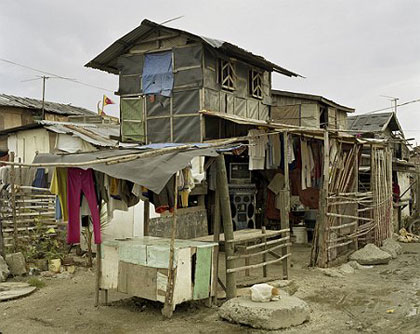
There’s a profound yet simple proverb about ethnocentrism in many African societies (e.g., the Baganda, Akamba, Kikuyu, Bemba, Haya, Igbo, and Yoruba). Translated, it means “The one who has not traveled widely thinks his/her mother is the best cook.”
This proverb often comes to mind when I hear Americans talking about African food, especially Sub-Saharan African food, in a patronizing, superior way, and also lumping a whole continent together in a way they would never dream of doing for other global locations. A missionary in Ghana once sniffed and said to me disparagingly “They eat grass,” when referring to the greens cooked in stews. In Pennsylvania we carefully distinguish among varieties of apples (Rome, Gala, Granny Smith, Red or Golden Delicious, Macintosh, Pink Lady, Ginger Gold, Braeburn, Crispin, Cameo, etc., etc.). In Ghana that discrimination applies to greens, of which it’s documented that people savor 47 different kinds. Just because our palates haven’t been trained to detect the textures, degrees of bitterness, saltiness, etc. doesn’t mean that the food is inferior.
Similarly, people often say that Africans eat some kind of starch, but they lump them all together, without detecting the differences among, say, types of yams, rice, plantains, millets, sorghum, corn, sweet potatoes, potatoes, cassava, taro (cocoyams), even wheat, along with very different methods of preparation (fermented, unfermented, pounded, dried, fresh, boiled, fried, roasted, steamed, stirred, etc.).
Add a little
“One of the most impressive features of being a student is how aware you are of a twenty-four-hour work cycle. When you conceive of what you have to do for school, it’s not in terms of nine to five but in terms of what you can physically do in a week while still achieving a variety of goals in a variety of realms—social, romantic, sexual, extracurricular, résumé-building, academic commitments.” Alex was eager to dispel the notion that students who took Adderall were “academic automatons who are using it in order to be first in their class, or in order to be an obvious admit to law school or the first accepted at a consulting firm.” In fact, he said, “it’s often people”—mainly guys—“who are looking in some way to compensate for activities that are detrimental to their performance.” He explained, “At Harvard, at least, most people are to some degree realistic about it. . . . I don’t think people who take Adderall are aiming to be the top person in the class. I think they’re aiming to be among the best. Or maybe not even among the best. At the most basic level, they aim to do better than they would have otherwise.”
Honey, I shrunk the necessities
No longer do substantial majorities of the public say a microwave oven, a television set or even home air conditioning is a necessity. Instead, nearly half or more now see each of these items as a luxury. Similarly, the proportion that considers a dishwasher or a clothes dryer to be essential has dropped sharply since 2006.
These recession-era reevaluations are all the more striking because the public’s luxury-versus-necessity perceptual boundaries had been moving in the other direction for the previous decade. For example, the share of adults who consider a microwave a necessity was just 32% in 1996. By 2006, it had shot up to 68%. Now it has retreated to 47%. Similarly, just 52% of the public in the latest poll say a television set is a necessity—down 12 percentage points from 2006 and the smallest share to call a TV a necessity since this question was first asked more than 35 years ago.
 To arrr is human
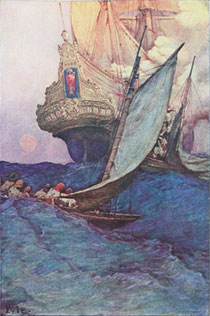
There is another aspect to our fascination with pirates. It is existential rather than political. It is about civilization and its limits, about our need for a sense of home versus a need to break those boundaries altogether. The sea has always played a big role in that dialectic. The sea is, potentially, an avenue for intercommunication and exchange among men. It is, in short, a vast shipping lane. But it is also an outer boundary. The land stops at the sea. The city stops at the sea. We human beings have conquered this earth, mostly and swiftly, but the sea is still unnatural territory for us, we aren\‘t as sure on its surfaces as we are on those harder surfaces more suited to bipeds.
The pirate takes that insecurity and runs with it. Indeed, the word pirate can ultimately be traced back to the ancient Greek word “peira,” which means trial, attempt, experiment. To have peira, to posses peira, is to have gone through an experience. If I try something, I get to know it. In fact, it is out of the collecting of peira that a person constructs the greater web of experience (ex-peira) that makes one person, one person, and another, another.
The pirate is, quite literally, taking a chance. In doing so, pirates reenact the basic process that everyone goes through in becoming a person. You start out with very little sense of the world, and you gradually gain experience and put it all together. Pirates are simply less complacent than the rest of us. For reasons specific to historical circumstance and the accident of birth, some people decide to take that ultimate chance and continue to push the boundary of peira, to become a peirate — a pirate. Such figures dive back into the chaos of the sea, the edges of civilization, the end of the world. That such a journey is wrapped in physical danger, violence, moral ambiguity, cruelty, and heroism is only natural. Things are messy at the limits. Sureness dissolves at the boundaries.

 Beauty let loose in the world
The crisis in art today, where nobody much seems to know how to move beyond the sterile opposition of kitsch sentimentalism on the one hand and in-your-face brutalism on the other, is not to be solved, as Roger Scruton in his recent work seems to want to solve it, by a return to an early Romantic sensibility, however preferable that might be to some of what’s on offer today. The only way forward is to put back together what ought never to have been separated, so that, just as with God and public life, God and politics, God and art need to come once more into the same room and do business with one another. As with God and politics, this will be a huge struggle because there are so many ways of getting it wrong. But the church desperately needs artists of every sort, from sculptors to storytellers, from painters to potters, from singers to seamstresses, and so on; artists whose work will draw attention not to itself, the nemesis of an atheistic aesthetic, but rather to the glory of God. After all, if new creation has begun, if beauty has awoken afresh in the new Temple, the living home of the living God, as he awakens from the tomb, and if beauty is now let loose in all the world, it will rightly generate new forms, new possibilities, new delights. It will come closer and closer to its two senior cousins, Love and Truth, showing with them how to avoid the other false polarization, a brittle objectivity and a collapsing subjectivity, because it will be kept in place by the work of image-bearing, Spirit-filled human beings as they reflect the glory of God into the world and the glory of the world back to God.
No one wishes for hardship. But as we pick through the economic rubble, we may find that our riches have buried our treasures. Money does not buy happiness; Scripture asserts this, research confirms it. Once you reach the median level of income, roughly $50,000 a year, wealth and contentment go their separate ways, and studies find that a millionaire is no more likely to be happy than someone earning one-twentieth as much. Now a third of people polled say they are spending more time with family and friends, and nearly four times as many people say their relations with their kids have gotten better during this crisis than say they have gotten worse.
A consumer culture invites us to want more than we can ever have; a culture of thrift invites us to be grateful for whatever we can get. So we pass the time by tending our gardens and patching our safety nets and debating whether, years from now, this season will be remembered for what we lost, or all that we found.
 Urban prairies
When western music was played to members of the Mafa people from Cameroon who have never been exposed to western music, movies, or art, they were able to recognize the emotions conveyed by the music, even though the Mafa don’t associate emotions with their own music.
 Little lost robot


[Culture Making] was smart, challenging, and most of all very humane. I couldn’t stop thinking about it and talking about it long after I finished reading.
?
Tara, educator living
in Cambridge, Mass.