

Nate
:
 Getting back to making
Nate
:
As the years passed, Lifehacker became my online alter ego, my professional identity, my work and my play. I happily gave up time I’d normally spend on creative side projects to the site, because it was my primary outlet for the two things I love most: software and writing. But as our staff and audience grew, the news chase intensified, and management duties piled up. I started writing and coding less and air traffic-controlling, copy-editing, budgeting, doing PR, and assigning stories to my writers more. While that all has been great experience I am lucky to have under my belt, it’s time for me to recalibrate how I’m spending my days. As someone put well, it’s time to mitigate the urgent to focus on the important.
The bottom line is this: for someone who loves making things on the web, spending 100% of the time blogging about what other people are making is simply untenable.
Every man a king
Nate
: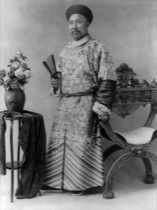
[T]here are railroad kings, copper kings, tobacco kings, etc. It is, however, manifestly improper and incongruous that the people should possess a higher title than their President, who is the head of the nation. To make it even, I would suggest that the title “President” be changed to “Emperor,” for the following reasons: First, it would not only do away with the impropriety of the chief magistrate of the nation assuming a name below that of some of his people, but it would place him on a level with the highest ruler of any nation on the face of the earth. I have often heard the remark that the President of the United States is no more than a common citizen, elected for four years, and that on the expiration of his term he reverts to his former humble status of a private citizen; that he has nothing in common with the dignified majesty of an Emperor; but were the highest official of the United States to be in future officially known as Emperor, all these depreciatory remarks would fall to the ground. There is no reason whatever why he should not be so styled, as, by virtue of his high office, he possesses almost as much power as the most aristocratic ruler of any nation. Secondly, it would clearly demonstrate the sovereign power of the people; a people who could make and unmake an Emperor, would certainly be highly respected. Thirdly, the United States sends ambassadors to Germany, Austria, Russia, etc. According to international law, ambassadors have what is called the representative character, that is, they represent their sovereign by whom they are delegated, and are entitled to the same honors to which their constituent would be entitled were he personally present. In a Republic where the head of the State is only a citizen and the sovereign is the people, it is only by a stretch of imagination that its ambassador can be said to represent the person of his sovereign. Now it would be much more in consonance with the dignified character of an American ambassador to be the representative of an Emperor than of a simple President. The name of Emperor may be distasteful to some, but may not a new meaning be given to it?
Our property seems to me the most beautiful in the world. It is so close to Babylon that we enjoy all the advantages of the city, and yet when we come home we are away from all the noise and dust.
—Letter to the King of Persia, 539 B.C., quoted in Kenneth Jackson, Crabgrass Frontier, p. 12
Watch the lights
Andy
:Every preacher who has been around a while finds consolation in the promise of Isaiah that “the word shall not return void.” To preach well is success. I recall rallies when, in the course of his preaching, King would hold forth on the theological and moral foundations of the movement. The klieg lights and cameras shut down, only to be turned on again when he returned to specifically political or programmatic themes. “Watch the lights,” he commented. “They’re not interested in the most important parts.”

Nate
:What you paint is what you get
Andy
:
I suspect that once the shouting dies down, Wyeth’s oeuvre will undergo at least a partial revaluation, and that it will center on his watercolors. Like so many other American artists who came to prominence between the end of the 19th century and the emergence of Abstract Expressionism, Wyeth profited greatly from the immediacy of watercolor, an on-the-spot medium that does not allow for second thoughts: What you paint is what you get. It forced him to be free. To look at a watercolor like “Benjamin’s House,” which hangs in San Francisco’s de Young Museum, is to see what Wyeth meant when he claimed that “I honestly consider myself to be an abstractionist.” All narrative content has been stripped out of this bare, washy winter scene, leaving only the essentials: a wall, a window, a handful of branches. The result is a masterly little glimpse of the visible world, executed with self-effacing virtuosity.
I’m all for reading bad books because I consider them to be a gateway drug. People who read bad books now may or may not read better books in the future. People who read nothing now will read nothing in the future.
—Novelist Ann Patchett on "The Triumph of the Readers"


Nate
:Making wonderful curves
Nate
:
Twenty years later, this area is still poor, with high unemployment but hope can be found at the Village of Arts and Humanities. That’s what the small art park has grown into—a tangible symbol of renewal that covers more than 120 formerly abandoned lots with murals, sculpture gardens, mosaics, flowers, community gardens, playgrounds, performance spaces, basketball courts, art studios, even a tree farm.
“The entire community seems to take part in the use of the spaces,” writes Kathleen McCarthy, who nominated the Village for Project for Public Space’s authoritative list of the world’s Great Public Spaces. “As we walked down the street, trying to find one of the parks, a man walking beside us directed us to the Park, and told us the history of it and the wonderful artist, Lily Yeh who started the park. He spoke with pride that this was a part of his community. We sat on the benches made of smashed tile and mirror, making wonderful curves and places to sit. Across from us, women sat and smiled, waved. Children ran over and asked us to hide them during a game of hide-and-seek…. I’ve never felt more welcomed in an unfamiliar place.”
Andy
:The poem, titled “Upon Reading Canada,” was an epistolary one-pager. No rhyme, meter, rhythm, or purposeful cadence worth mentioning—“free verse” would be what they aptly call it. It shared with Mr. Collins’s poetry only its general typographic shape. The rest was a haphazard cocksure motif of Billy Collins himself, cast as the heavy weight champion of the world. You see, boxing rings have lines in the form of boundary ropes, which you must grapple within. This is metaphorically similar to writing, which also incorporates lines—this time, of words.
You can see that the Muses had clearly favored me with a friend request.
The empirical prison
Andy
:For years, Republicans have been trying to create a large investor class with policies like private Social Security accounts, medical savings accounts and education vouchers. These policies were based on the belief that investors are careful, rational actors who make optimal decisions. There was little allowance made for the frailty of the decision-making process, let alone the mass delusions that led to the current crack-up.
Democrats also have an unfaced crisis. Democratic discussions of the stimulus package also rest on a mechanical, dehumanized view of the economy. You pump in a certain amount of money and “the economy” spits out a certain number of jobs. Democratic economists issue highly specific accounts of multiplier effects — whether a dollar of spending creates $1.20 or $1.40 of economic activity. . . .
Mechanistic thinkers on the right and left pose as rigorous empiricists. But empiricism built on an inaccurate view of human nature is just a prison.
What do airplanes make possible?
Andy
:His name was Peter, and he carried an L.L. Bean canvas bag, monogrammed and trimmed in forest green. It was December 28, 1988, and I noticed him at the gate. Preppy, but kind of cute. And then we boarded, and he took the seat next to mine. American Airlines; JFK to SFO; a DC-10, which meant a layout of two-five-two. I had the window, and he the aisle. We gave each other brief, courteous nods, he stashed his L.L. Bean bag, and I turned back to my book, sneaking an occasional glance his way.
The flight attendants did their familiar demonstration. The plane pulled away from the gate and taxied onto the runway. The plane stopped. The captain came on and made a lame joke. Peter (although I didn’t know his name yet) and I exchanged glances, rolling our eyes in shared wariness. He said something, I said something, and we didn’t stop talking for the next six hours, during which I didn’t look at my book or attempt the movie.
By the time the plane landed at SFO, we knew each other’s names, hometowns, employers, current neighborhoods, and how our mothers didn’t approve of the people we were dating—in my case, because the guy, in Mom’s words, “acted like a kindergartener,” and in Peter’s because the woman wasn’t WASPy enough, a fact Peter underlined by gesturing toward the L.L. Bean bag at his feet.
 Two worlds, one club
Nate
: Decisive moments
Nate
:
There’s a wonderful article in the new Atlantic by Mark Bowden called “The Hardest Job in Football.” That hardest job is being the director of a television broadcast of a game. Bowden focuses on a man named Bob Fishman, whom he believes to be the best at this job, as Fishman sits in a control room before a bank of TV screens. Each screen shows what one of the many cameras scattered around the stadium is seeing, and Fishman’s job during the game is to scan that bank of screens and decide what the guy watching the game at home on his TV should be seeing at any given moment. It’s fascinating to think what cognitive skills make someone good at this. You have to be able to take in the import of an image in a millisecond — a moving image! — and, in a few milliseconds more, evaluate it in relation to all the other images you’re viewing. But can only do this well not by thinking of the intrinsic visual interest of a particular image, but rather by having in mind a narrative structure, a sense of what the game is about — and not just what it’s about in some general sense, but what it’s about at this particular moment. And that will vary according to whether a team is ahead or behind; whether they are deep in their own territory or deep in the opponents’; whether it’s near the beginning or the end of the game; even what stories have been in the news leading up to the game. The director’s narrative sense, then, needs to govern his visual sense. Fascinating stuff.


[Culture Making] was smart, challenging, and most of all very humane. I couldn’t stop thinking about it and talking about it long after I finished reading.
?
Tara, educator living
in Cambridge, Mass.