

 The lion and the mouse
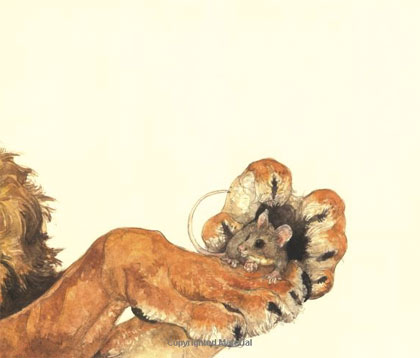
Do not depend on the hope of results. When you are doing the sort of work you have taken on, essentially an apostolic work, you may have to face the fact that your work will be apparently worthless and even achieve no result at all, if not perhaps results opposite to what you expect. As you get used to this idea, you start more and more to concentrate not on the results but on the value, the rightness, the truth of the work itself.
—Thomas Merton, in a letter to Jim Forest dated February 21, 1966 (via harpers.org)
 You need a good chopping scene

One of the delights of watching food-centric films is to see the main characters demonstrate their culinary skills. The breaking of an egg, the flipping of an omelet, the chopping of an onion (or a carrot or a piece of celery) become impressive feats when performed with dexterity and brio. The food writer Michael Pollan has noted that television cooking shows have come to resemble athletic events, showcasing the spectacular, often competitive talents of their chefs. In narrative film, however, the spectacle of cooking is always more than spectacle; it is also a dynamic means of representing character. Chopping, in particular, in being both precise and violent, is an exceptionally cinematic activity, capable of expressing repressed emotions of rage, bitterness, and passion. It is no wonder that most every film in which food plays a role invariably has a chopping scene.
All things being equal, it is good to be happy, and it’s certainly awful to be severely depressed. But what worries me is that our pursuit of happiness is leading us to judge the great intellectual and spiritual traditions of the past according to only one measure: do they increase happiness and reduce misery? That which passes the test is plundered and that which fails is left behind. The result is that wisdom is hollowed out and replaced with a soft centre of caramelised contentment. [...]
Those keen to adopt mindfulness training as a mere means to a happier life ignore the fact that the ideas Buddhists have traditionally wanted people to be mindful of are not necessarily comfortable ones, even if they ultimately lead the way to nirvana. Being mindful of the flavour of freshly brewed coffee or the beauty of a common sparrow is one thing; fostering awareness of the emptiness at the heart of the self quite another.
Aristotle is another ancient sage who has been watered down for the dulled palates of the modern positive thinker. He is frequently quoted as saying that happiness “is the meaning and the purpose of life, the whole aim and end of human existence”. But, as any first-year undergraduate knows, the word translated here as happiness – “eudaimonia” – actually means something more like “flourishing”. Eudaimonia requires that we exercise the full range of our capacities as humans – especially, but not only, our intellects. The crude adoption of Aristotle as a champion of feeling good helps happiness flourish, while flourishing flounders.
 Early warning system
 Robots and the grace of presence
According to all of the roboticists and computer scientists we interviewed, the uncanny is in short supply during face-to-face contact with robots. Two of the robots that inspire the most terror—and accompanying YouTube comments—are Osaka University’s CB2, a child-like, gray-skinned robot, and KOBIAN, Waseda University’s hyper-expressive humanoid. In person, no one rejected the robots. No one screamed and threw chairs at them, or smiled politely and slipped out to report lingering feelings of abject horror. In one case, a local Japanese newspaper tried to force the issue, bringing a group of seniors to visit the full-lipped, almost impossibly creepy-looking KOBIAN. One senior nearly cried, claiming that she felt like the robot truly understood her. A previously skeptical journalist wound up smiling and cuddling with the ominous little CB2. The only exception was a princess from Thailand, who couldn’t quite bring herself to help CB2 to its robotic feet.
Royalty notwithstanding, the uncanny effect appears to be an incredibly specific and specialized phenomenon: It seems to happen, when it does, remotely. In person, the uncanny vanishes. There’s nothing in the way of peer-reviewed evidence to support this, but then, there’s almost nothing to confirm the uncanny effect’s existence in the first place. As an unsupported theory that has morphed into a nerdy breed of urban legend, anecdotes are all we have to work with.
What food books say
“Tell me what you eat: I will tell you what you are,” Brillat-Savarin challenged his readers in 1825, and his wisdom if not his brio was already old hat. Human meals serve those mixtures of raw and cooked that make up anthropological codes. Nearly every prescription or preference blends irrational faith and scientific requirements, as Marvin Harris shows in his fascinating Good to Eat: look long enough at a seemingly arbitrary food rule (cloven hooves, sacred cows) and one can probably discover a self-preserving logic behind it, but look hard enough at an apparently sensible directive (a glass of milk, a handful of supplements) and one will like as not detect a prejudice posing as sense. Omnivorous and hungry, body and spirit, we sit down at a table spread with necessary choice; we cannot eat to live, that is, without in some measure living to eat. As Laurie Colwin once put it, then, cookery books will always “hit you where you live.” What seems distinctive and disquieting now, what seems to have increased in the two centuries since Brillat-Savarin shot a turkey in Hartford or even in the two decades since Colwin roasted a chicken in her New York apartment, is the number of volumes hitting us combined with the force of their impact. A nation with a lot of food books is a nation without much sense of food, as The Economist recently pointed out.
 A new (fun) moral duty
There are ways around this: we can, for example, see it as a moral duty to buy books by authors who are still alive and who deserve money new, rather than used. We could buy books directly from authors whenever possible so that they’re getting a more just cut. We need to re-conceptualize how we think about exchange and consumption. Lewis Hyde’s The Gift presents one such way forward: thinking about artistic creation as something outside the economic. But that requires us to think different both as producers and consumers: maybe that’s what the Internet is trying to tell us.
 Hot dogs of Latin America
Guatemala Generally called “shucos”, are cooked in a carbon grill. They’re served with the classic boiled sausage, guacamole, mustard, mayonnaise,boiled cabbage. If you want you can add ketchup, bacon, pepperoni, salami, Spanish chorizo, longaniza or meat. They cost around $0.50 in all Guatemalan cities. You may order the famous “mixto” who brings all the toppings already mentioned, but its price may rise to $2.00 or $3.00.
Colombia In Bogotá and practically all the country, the hot dog is eaten with an unusually great amount and variety of condiments and fixings. In a single hot dog, is normal to find mashed potato chips, cheese, strings of ham or bacon, ketchup, mayo, mustard, pineapple sauce, and chopped onion.

 Giving during disasters

My preference in giving is not to give quickly nor in times of disaster. There are plenty of people doing that and you don’t have to join the bandwagon. So stop feeling guilty and don’t give to get that monkey off your back. Instead, carefully investigate options and choose to make a longer-term, more strategic decision to truly partner with an organization.
Some have asked me who they should consider giving to following the Haiti earthquake. If you want to provide immediate assistance, send your funding through large corporate charities that had a well-established presence on the ground for years prior to the quake. I specifically recommend World Vision Canada with whom we’ve had a long term successful partnership. Their reputation speaks for itself. They specialize in disaster relief and their logistical ability to respond effectively is unequaled. CEO Dave Toycen is on the ground there now, and is tweeting his thoughts at @toycenontheroad. You can know that even though your immediate funding can be used for an urgent disaster, that WV will be present in Haiti for the long term. Poverty isn’t solved in a week.
For those who prefer a smaller, grassroots response my choice would be Haiti Partners. They have a significant history as a Florida-based charity focused on building schools and training teachers as a long term investment in the next generation of Haitians. They aren’t new to Haiti like some other agencies seeking funding for the Haiti quake. They speak Creole, their staff are Haitians. They’re now expanding their support base to offer Canadian donors an ability to partner with them. In fact, for months they’ve been planning that Sunday, January 24 would be the launch of their first Canadian fundraiser in Toronto.
You can follow co-director John Engle at twitter (@haitipartners) as well as their blog or YouTube with frequent, informative video updates.
What I remember most plainly about the [1906] earthquake was the human warmth and kindliness of everyone afterward. For days refugees poured out of burning San Francisco and camped in Idora Park and the race track in Oakland. People came in their night clothes; there were new-born babies. Mother and all our neighbors were busy from morning to night cooking hot meals. They gave away every garment they possessed. They stripped themselves to the bone in giving, forgetful of the morrow. While the crisis lasted, people loved each other.
—Dorothy Day, The Long Loneliness, quoted here

I’m loving your book. Parts of it are making me jump out of my skin. Molting, I think it’s called.
?
Alf, composer and musician
living in New York City