

Foro TV, a product of the Mexican broadcasting conglomerate Televisa, promises to feature some of this country’s leading journalists and commentators, like Hector Aguilar Camin (co-author of “In the Shadow of the Mexican Revolution”), Denise Dresser and Leo Zuckerman.
But it opens the morning news with Brozo the clown. What does it say about the viewing audience—or Televisa’s perception of us—that we might want our news from a green-haired, red-nosed jokester?
Actually, Brozo has quite a history in Mexican current events, and it hasn’t always been a laughing matter. The costumed persona of journalist Victor Trujillo is known for an irreverence that often skewered the mighty and powerful. Embattled politicians all the way up to a president’s wife have chosen him to be the recipient of exclusive interviews or campaign promos.
A few years back, Brozo stunned a high-ranking city official who was appearing as a guest on a morning show the clown hosted at the time. Brozo aired a secret videotape showing the man stuffing a briefcase and then his pockets with thousands of dollars in alleged bribe money. The man’s career was toast, and the scandal may have cost his boss, then-Mayor Andres Manuel Lopez Obrador, the presidency in 2006.
Brozo left morning television following the death of his wife in 2004 but is returning now to what he says will be a no-holds-barred format.


 Marginalia
Looking at the monocultures of industrial civilization, we yearn with a kind of homesickness for the humanness and the naturalness of a highly diversified, multipurpose landscape, democratically divided, with many margins. The margins are of the utmost importance. They are the divisions between holdings, as well as between kinds of work and kinds of land. These margins—lanes, streamsides, wooded fencerows, and the like—are always freeholds of wildness, where limits are set on human intention. Such places are hospitable to the wild lives of plants and animals and the wild play of human children. They enact, within the bounds of human domesticity itself, a human courtesy towards the world that is one of the best safeguards of designated tracts of true wilderness.
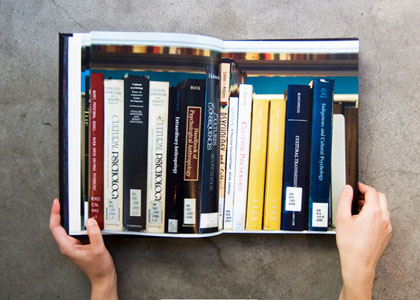
 The audio edition is here, y la traducción español también
The terrific folks at christianaudio have released an unabridged recording of Culture Making, read with exquisite professionalism by Sean Runnette. It’s available from the Christian Audio site in either downloadable or CD form, and the 9-CD set is also available at Amazon and other fine retailers.
Putting out an audio edition of a book like Culture Making is a real economic risk, so if you, like me, are happy to see the book available in this form, I encourage you to support christianaudio with a purchase of a copy (or two—pass one along to your favorite commuter, jogger, or [always in need of sermon inspiration] pastor).
Also, I’m very pleased that the Jesuit publishing house Sal Terrae has released the Spanish translation, Crear cultura: Recupar nuestra vocación creativa. Espero que este libro será útil para muchos en el mundo de habla español.
— Andy Crouch

 Reap what you sew
Arigato goazimasu!!
Reap what you sew
Arigato goazimasu!!
Located inside the Urban Design Center Kashiwa-no-ha, the Ogori cafe looks innocuous enough, but holds a surprise in store for its patrons. In a nutshell, you get what the person before you ordered, and the next person gets what you ordered. Thus, if you’re in on the game, you can choose to be either a generous benefactor, and treat those that come after you – or try your luck at being cheap. Either way, it’s an interesting experiment that explores surprise, kindness and encourages interactions. . . .
[Caleb Stasser explains:] “As I sat down to enjoy my surprise Appletizer, loving this insane idea and wondering what would happen if you tried it in America, a Japanese woman approached the cafe. Since she could actually speak Japanese, she could read the large sign at the front and, fortunately or unfortunately, got advanced warning of what she was in for. Before making a final decision on what to order, she quietly snuck up to me to try to ask me what I had ordered, knowing that it would be her unwavering refreshment destiny. The staff put a quick stop to her trickery, and I didn’t answer.
“Of course, regardless of what she ordered, she got the orange juice I ordered a few minutes earlier. But here’s one of the moments that make this experiment cool: she actually chose orange juice, just like I did. So she got what she wanted. Ogori cafe synchronicity!”
The traveler’s game
And so I am caught within a circle from which there is no escape: the less human societies were able to communicate with each other and therefore to corrupt each other through contact, the less their respective emissaries were able to perceive the wealth and significance of their diversity. In short, I have only two possibilities: either I can be like some traveller of the olden days, who was faced with a stupendous spectacle, all, or almost all, of which eluded him, or worse still, filled him with scorn and disgust; or I can be a modern traveller, chasing after the vestiges of a vanished reality. I lose on both counts, and more seriously than may at first appear, for, while I complain of being able to glimpse no more than the shadow of the past, I may be insensitive to reality as it is taking shape at this very moment, since I have not reached the stage of development at which I would be capable of perceiving it. A few hundred years hence, in the same place, another traveller, as despairing as myself, will mourn the disappearance of what I might have seen, but failed to see. I am subject to a double infirmity: all that I perceive offends me, and I constantly reproach myself for not seeing as much as I should.
 Lander, by Nick Gentry
 Some awe
One emotion we focus on in particular is awe. Stimuli that open the mind to vast and often unconsidered possibilities can inspire awe, a unique human emotion that expands a reader’s frame of reference (Keltner and Haidt 2003). Awe is the emotion of self-transcendence, a feeling of admiration and elevation in the face of something greater than the self (Haidt 2006). It occurs when two conditions are met (Keltner and Haidt 2003). First, people experience something vast: either physically vast such as the grand canyon, conceptually vast such as a grand theory or finding, or socially vast such as fame or power. Second, the vast experience cannot be accommodated by existing mental structures. Intellectual epiphanies, natural wonders, and great works of art can all make people feel a sense of awe (Shiota, Keltner, and Mossman 2007). Similarly, news stories about a treatment that may cure AIDS or a hockey goalie who continues to play even with brain cancer may both inspire some level of awe.
Awe may be linked to social transmission for a number of reasons. First, awe encourages people to connect with others and spread the word. People who have had epiphanies through drug use or religious experiences, for example, seem to have a deep need to talk about them or proselytize (James 1902; Keltner and Haidt 2003). Other types of awe-inducing experiences may activate the same psychological mechanisms evoked by epiphanies. Second, awe inducing stimuli also tend to be entertaining, inspiring, and contain a great deal of information. Each one of these aspect in itself is a reason that people may share things. Third, because awe-inducing experiences are characterized by the accommodation of existing mental structures, they should be particularly likely to drive people to talk to others to understand how they feel (Rime, Mesquita, Philippot, and Boca 1991). Finally, awe-inducing experiences encourage people to look beyond themselves and deepen connections to the broader social world (Shiota, Keltner, and Mossman 2007). All of these factors suggest that awe should lead people to want to share.
 Significant objects
MIL: Where did the original idea come from?
RW: Both Josh and I already spend too much time thinking about value and objects, I guess. There is one minor detail of interest in the back story of S.O.: I broke a coffee cup I’d bought as a souvenir on a trip with my now-wife, early in our relationship. I was very sad to have ruined it, but I realised it only had value to me—it was just a coffee cup from some diner—because of the story behind it. This got me thinking about whether stories for worthless-seeming objects could be invented, and whether that would increase their value. That led to conversations with Josh that culminated in Significant Objects: We would buy cheap thingamabobs from yard sales and thrift stores and the like, recruit creative writers to invent stories about them, then put the object up for auction on eBay with the invented provenance as its description. (It’s important to note that we were explicit about the invented nature of the Significance; there was no hoaxing.)
MIL: Are you surprised by the results?
RW: We expected that the stories would increase the value of the objects—but we were very surprised by how much. The first round involved 100 objects/stories, and in the end we sold $128.74 worth of thrift-store junk for $3,612.51. (The money went to the writers in Volume 1, by the way.) That’s a Significance Markup of more than 2,700%. While nothing we bought cost us more than $4 (and most were a buck), several objects sold for more than $100. We did not think the prices would go that high. I still have old e-mail exchanges between Josh and me from the first week, as we were very excited to see auctions reach, say, $15.
Medieval helpdesk
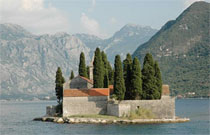
“In 1452,” we read at montenegro.com, “two sailors from Perast happened by a small rock jutting out of the bay after a long day at sea and discovered a picture of the Virgin Mary perched upon the stone.” Thus began a process of dumping more stones into the bay in order to expand this lonely, seemingly blessed rock—as well as loading the hulls of old fishing boats with stones in order to sink them beneath the waves, adding to the island’s growing landmass.
Eventually, in 1630, a small chapel was constructed atop this strange half-geological, half-shipbuilt assemblage.
Throwing stones into the bay and, in the process, incrementally expanding the island’s surface area, has apparently become a local religious tradition: “The custom of throwing rocks into the sea is alive even nowadays. Every year on the sunset of July 22, an event called fašinada, when local residents take their boats and throw rocks into the sea, widening the surface of the island, takes place.”
The idea that devotional rock-throwing has become an art of creating new terrain, generation after generation, rock after rock, pebble after pebble, is stunning to me. Perhaps in a thousand years, a whole archipelago of churches will exist there, standing atop a waterlogged maze of old pleasure boats and fishing ships, the mainland hills and valleys nearby denuded of loose stones altogether. Inadvertently, then, this is as much a museum of local geology—a catalog of rocks—as it is a churchyard.

[Culture Making] was smart, challenging, and most of all very humane. I couldn’t stop thinking about it and talking about it long after I finished reading.
?
Tara, educator living
in Cambridge, Mass.