 A timeline of food
Nate
:
The Food Timeline shows which foods were invented when. Ok, not invented, exactly, but first eaten. A tasting menu:
Pretzels, 5th century AD.
Pork and beans, 1475.
Foie gras, 1st century AD.
Croissants, 1686.
Chop suey, 1896.
Popcorn, 3600 BC.
Swedish meatballs, 1754.
(via snarkmarket)
 We cannot know what to expect
Nate
:
The larger point of my argument with your claim is that we cannot (I use the term advisedly) know what to expect of children with Down syndrome. Early-intervention programs have made such dramatic differences in their lives over the past few decades that we simply do not know what the range of functioning looks like, and therefore do not rightly know what to expect. That, Professor Singer, is the real challenge of being a parent of a child with Down syndrome: it’s not just a matter of contesting other people’s low expectations of your child, it’s a matter of recalibrating your own expectations time and time again—and not only for your own child, but for Down syndrome itself. I’ll never forget the first time I saw a young man with Down syndrome playing the violin—quite competently, at that, with delicacy and a sense of nuance. I thought I was seeing a griffin. And who could have imagined, just forty or fifty years ago, that the children we were institutionalizing and leaving to rot could in fact grow up to become actors? Likewise, this past summer when I remarked to Jamie that time is so strange that nobody really understands it, that we can’t touch it or see it even though we watch the passing of every day, and that it only goes forward like an arrow, and Jamie replied, “except with Hermione’s Time-Turner in Harry Potter,” I was so stunned I nearly crashed the car. I take issue with your passage, then, not because I’m a sentimental fool or because I believe that one child’s surprising accomplishments suffice to win the argument, but because as we learn more about Down syndrome, we honestly—if paradoxically—don’t know what constitutes a “reasonable expectation” for a person with Down syndrome.
God is perfectly capable of naming every animal and giving Adam a dictionary—but he does not. He makes room for Adam’s creativity—not just waiting for Adam to give a pre-existing right answer to a quiz, but genuinely allowing Adam to be the one who speaks something out of nothing, a name where there had been none, and allowing that name to have its own being.
—Culture Making, p.109
Follies
Nate
:
A century is a mere blink in the history of mankind, but it’s a long time in the history of show business. Just about a hundred years ago, a Chicago-born talent manager started a franchise called the “Follies” that set New York on its ear. He apotheosized the showgirl and changed the entertainment rulebook by making the revue an ethnic stew. He later went on to produce “Show Boat,” the first great American musical. But who knows much about Florenz Ziegfeld Jr. today? To most New Yorkers he’s just a name on a dinosaurish single-screen movie house in Midtown.
Even the stars he showcased — Fanny Brice and Will Rogers, Eddie Cantor and Marilyn Miller — are mostly just names in the pages of theater histories. Among Ziegfeld’s long A-list of “Follies” regulars, W. C. Fields alone forged a big-time career in the movies, ensuring the only kind of immortality that seems readily marketable today, the kind that can be uploaded onto YouTube in easily digestible nuggets.


Nate
: Between common and professional
Nate
:Agriculturalists have long distrusted miners, millers, and other proponents of manufacturing; in a land where once nine of every ten people worked in agriculture, it is not surprising that much of our national heritage subtly emphasizes the good life of husbandry and the beauty and rightness of space shaped for farming. Equally significant in American culture is the tension between common and professional builders; while well-read men who understood the new theories of geography, mercantile capitalism, representative government, and innovative design sometimes directed colonization, people much less literate and far more traditional actually shaped the land. Very few cartographers and surveyors and spatial theorists migrated to the New World; men like William Penn were as rare as his finely drawn plan for Philadelphia, and even he did not stay to watch his plan take form.

Nate
:Chicken à la Queens
Nate
:
“This is the same chicken we have on the island,” Ms. Pierre said. “When my mother would make the chicken for dinner, I was right there at her feet helping her. Everything I learned to cook, I learned from her in Haiti.” To her surprise, she has found a taste of home and the perfect chicken at the Halal Live Meat and Poultry Market, a short bus ride from her house.
Muhammad Ali, the 41-year-old Bangladeshi owner of the market, is happy that Ms. Pierre is happy, even if it was never his intention to provide the ingredients for a homey Haitian dish. When he opened Halal Live two years ago, after deciding to forgo a doctorate in international politics, his only goal was to provide the mainly Pakistani Muslim community in the area with meat slaughtered under the traditions set forth in the Koran. Drawn to this bustling corner of Archer Avenue and 168th Street because of the pedestrian traffic — three buses stop outside his door — he had no idea that he would end up with such a polyglot clientele.
“I would say 50 percent of our business comes from people I never expected to come here,” said Mr. Ali, a shy, small-framed man, talking over the squawks of poultry and the chatter of customers. Among those who are keeping business booming are a Nigerian exchange student heading home from biology class at York College, a Salvadoran mango vendor who stops there after working the sidewalks of Jamaica Avenue, and Orthodox Jews who come accompanied by a shochet, a person trained to slaughter animals according to kosher ritual.
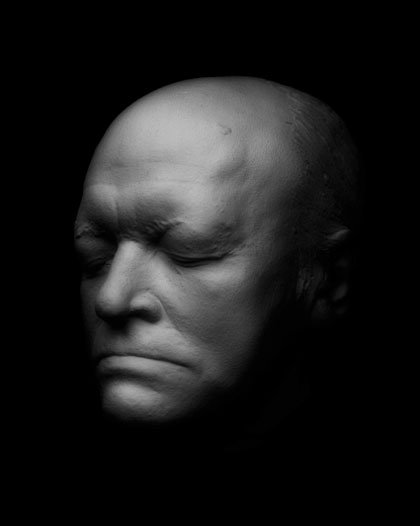
 William Blake, life mask
Nate
:Nate
:In this paper we identify a policy-driven change in the opportunity cost of religious participation based on state laws that prohibit retail activity on Sunday, known as “blue laws.” Many states have repealed these laws in recent years, raising the opportunity cost of religious participation… We then use a variety of datasets to show that when a state repeals its blue laws religious attendance falls, and that church donations and spending fall as well… We find that repealing blue laws leads to an increase in drinking and drug use, and that this increase is found only among the initially religious individuals who were affected by the blue laws. The effect is economically significant; for example, the gap in heavy drinking between religious and non religious individuals falls by about half after the laws are repealed.

Nate
:Nate
:Here is Carnegie Hall. You have heard something of the great Beethoven and it has been charming, masterful in its power over the mind. We have been alleviated, strengthened against life—the enemy—by it. We go out of Carnegie into the subway and we can for a moment withstand the assault of that noise, failingly! as the strength of the music dies….
But as we came from Anthiel’s “Ballet Mechanique,” a woman of our party, herself a musician, made this remark: “The subway seems sweet after that.” “Good,” I replied and went on to consider what evidences there were in myself in explanation of her remark. And this is what I noted. I felt that noise, the unrelated noise of life such as this in the subway had not been battened out as would have been the case with Beethoven still warm in the mind but it had actually been mastered, subjugated. Antheil had taken this hated thing life and rigged himself into power over it by his music. The offense had not been held, cooled, varnished over but annihilated and life itself made thereby triumphant. This is an important difference. By hearing Antheil’s music, seemingly so much noise, when I actually came up on noise in reality, I found that I had gone up over it.
Nate
:It is curious that we Americans have a holiday—Thanksgiving—that’s all about people who left their homes for a life of their own choosing, a life that was different from their parents’ lives. And how do we celebrate it? By hanging out with our parents! It’s as if on the Fourth of July we honored our independence from the British by barbecuing crumpets.
—Sarah Vowell, The Partly Cloudy Patriot
Nate
:Hyperprism was performed again in November by Leopold Stokowski and the Philadelphia Orchestra, with a siren borrowed from a local fire company. The Philadelphia premiere went “splendidly,” according to the conductor; “practically all the audience remained to hear it.” Olin Downes, music critic for the New York Times, could only describe it as a medley of “election night, a menagerie or two, and a catastrophe in a boiler factory,” but others were more willing to accept the piece on its own terms. The Herald-Tribune‘s Lawrence Gilman thought the work “a riotous and zestful playing with timbres, rhythms, sonorities.” While the audience “tittered a bit” during the performance, after its conclusion they “burst into the heartiest, most spontaneous applause we have ever heard given to an ultra-modern work.”


This is must-read stuff, and not just for artists. It’s food for thought for any Christian wishing to make a meaningful contribution to their world.
?
Jennifer, professional soprano living in Madison, Wisconsin