<?xml version="1.0" encoding="utf-8"?>
<feed xmlns="http://www.w3.org/2005/Atom" xml:lang="en">

    <title type="text">Culture Making Articles items tagged women</title>
    <subtitle type="text">Culture Making Articles:Writing on Christianity and culture from Andy Crouch</subtitle>
    <link rel="alternate" type="text/html" href="http://culture-makers.com/" />
    <link rel="self" type="application/atom+xml" href="https://culture-making.com/tag/atom" />
    <updated>2025-01-03T22:54:05Z</updated>
    <rights>Copyright (c) 2025, Andy Crouch</rights>
    <generator uri="http://www.pmachine.com/" version="7.5.15">ExpressionEngine</generator>
    <id>tag:culture-makers.com,2025:01:02</id>

    <entry>
      <title>The daily grind</title>
      <link rel="alternate" type="text/html" href="https://culture-making.com/post/the_daily_grind" />
      <id>tag:culture-makers.com,2025:author/1.1930</id>
      <published>2025-01-02T22:53:00Z</published>
      <updated>2025-01-03T22:54:05Z</updated>
      <author>
            <name>Andy Crouch</name>
            <email>andy@culture-making.com</email>
            
      </author>

      <content type="html"><![CDATA[


					<b>Nate: </b><em>?To make tortillas the traditional way, first you have to cook the maize with something alkaline (cement, for instance), and then grind the wet grains by hand, kneeling on the floor with your metate. It takes about an hour to grind enough to feed one person for one day. Until fifty years ago, there was no effective widespread way to automate this process: every Mexican household would have one woman in the back room, grinding wet corn for five hours a day. Since then, things have changed—bringing great benefits, widespread social change, and some losses too.?</em><br />
		
		<p>Of course, there are trade-offs. <a href="http://en.wikipedia.org/wiki/Grupo_Bimbo">Bimbo</a> is not as good as a <i><a href="http://en.wikipedia.org/wiki/Bolillo">bolillo</a></i>. A machine-made tortilla is not anything like a homemade tortilla – it’s not even in the same universe.</p><p>Mexican women that I have talked to are very explicit about this trade-off. They know it doesn’t taste as good; they don’t care. Because if they want to have time, if they want to work, if they want to send their kids to school, then taste is less important than having that bit of extra money, and moving into the middle class. They have very self-consciously made this decision. In the last ten years, the number of women working in Mexico has gone up from about thirty-three percent to nearly fifty percent. One reason for that—it’s not the only reason, but it is a very important reason—is that we’ve had a revolution in the processing of maize for tortillas.</p><hr />
<div class="author" style="font-size: -1">from "<a href="http://www.ediblegeography.com/fueling-mexico-city-a-grain-revolution/">Fueling Mexico City: A Grain Revolution</a>," by <a href="http://www.rachellaudan.com/2010/06/fueling-mexico-city-a-grain-revolution.html">Rachel Laudan</a>, <a href="http://www.ediblegeography.com/fueling-mexico-city-a-grain-revolution/">edible geography</a>, 14 June 2010</div>		


      ]]></content>
    </entry>    <entry>
      <title>If you can’t control your moustache ...</title>
      <link rel="alternate" type="text/html" href="https://culture-making.com/post/if_you_cant_control_your_moustache_" />
      <id>tag:culture-makers.com,2025:author/1.1910</id>
      <published>2025-01-02T22:53:00Z</published>
      <updated>2025-01-03T22:54:05Z</updated>
      <author>
            <name>Andy Crouch</name>
            <email>andy@culture-making.com</email>
            
      </author>

      <content type="html"><![CDATA[


					<b>Nate: </b><em>?From a searchable collection of over 15,000 proverbs about women from cultures around the world. Many of them sexist far beyond the point of gender differentiation, but I suppose that's the point. It's fascinating to enter different metaphors and see the range of proverbs that pop up: these are the first few results from the hundreds of proverbs about women and soup.?</em><br />
		
		<p>The clever cooking pot! It loses meat and keeps the soup [said the husband: his wife ate the meat while cooking; ironically blaming a thing for the misdeeds of a person]. / Oromo, Ethiopia
</p><p>A child who remains in his mother&#8217;s house believes her soup the best. / Efik, Nigeria
</p><p>A good wife and a strengthening cabbage soup, you should not want more. / Russian
</p><p>A hen&#8217;s soup and a girl&#8217;s laugh bode no good. / German
</p><p>A woman who follows the fashion will never boil a good soup. / English, Jamaica
</p><p>An old hen makes a good soup. / Spanish, Central America and the Caribbean
</p><p>Asking [a neighbour] for salt does not yet make soup. [You have to depend on your own efforts.] / Krio, Sierra Leone
</p><p>Beauty will not season your soup. / Polish
</p><p>If you can&#8217;t control your moustache, don&#8217;t eat lentil soup. [If saddled with a jealous wife, to lead a peaceful married life, in her presence play no game that involves a sportive dame.] / Burmese
</p><hr />
<div class="author" style="font-size: -1">from "<a href="http://womeninproverbsworldwide.com/the-proverbs/search/index.php">Never Marry a Women with Big Feet: Women in Proverbs Around the World</a>," by Mineke Schipper, Universiteit Leiden :: via <a href="http://www.metafilter.com/92041/A-womans-heart-sees-more-than-mens-eyes">MetaFilter</a></div>		


      ]]></content>
    </entry>    <entry>
      <title>The audacity of Afghan women</title>
      <link rel="alternate" type="text/html" href="https://culture-making.com/post/the_audacity_of_afghan_women" />
      <id>tag:culture-makers.com,2025:author/1.1527</id>
      <published>2025-01-02T22:53:00Z</published>
      <updated>2025-01-03T22:54:05Z</updated>
      <author>
            <name>Andy Crouch</name>
            <email>andy@culture-making.com</email>
            
      </author>

      <content type="html"><![CDATA[


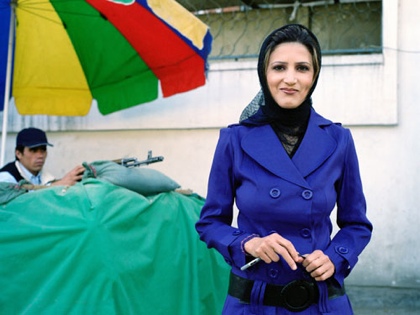
					<b>Christy: </b><em>?I don't read many fashion magazines, but when I began flipping through a copy of the latest Marie Claire someone had left on the Staten Island Ferry, I was delighted (and surprised) to discover this article featuring five Afghan women who are taking big risks to contribute to their deeply wounded culture.?</em><br />
		
		<a href="http://www.marieclaire.com/world-reports/news/international/afghanistan-womens-rights"><img src="http://www.culture-making.com/media/marieclareafghan_420.jpg" alt="photo" /></a><hr />
<div class="author" style="font-size: -1">From <a href="http://www.marieclaire.com/world-reports/news/international/afghanistan-womens-rights">Afghani Women Moving Forward</a>, by Louis Quail, <a href="http://www.marieclaire.com/">Marie Claire</a>, July 2009</div>		


      ]]></content>
    </entry>    <entry>
      <title>Fashion fasts and feasts</title>
      <link rel="alternate" type="text/html" href="https://culture-making.com/post/fashion_fasts_and_feasts" />
      <id>tag:culture-makers.com,2025:author/1.1480</id>
      <published>2025-01-02T22:53:00Z</published>
      <updated>2025-01-03T22:54:05Z</updated>
      <author>
            <name>Andy Crouch</name>
            <email>andy@culture-making.com</email>
            
      </author>

      <content type="html"><![CDATA[


					<b>Nate: </b><em>?Sheena Matheiken's Uniform Project is the latest in a series of web-documented undertakings wherein a young woman wears the same dress every day for a month, a season, a year. Interestingly, though though all the project descriptions circle the same themes of beauty, image, creativity, consumption, discipline, feminism and femininity, each one winds up having its unique angle. Andrea Rosen's <a href="http://www.andrearosengallery.com/exhibitions/2004_1_andrea-zittel/">A–Z Uniforms</a> (1991–2002) has a definite performance-art edge;  Alex Martin's <a href="http://www.littlebrowndress.com/brown%20dress%20archive%20home.htm">Brown Dress</a> (2005–06) called itself "a one-woman show against fashion"; Tala Strauss wrote last year about her month-long Dress Project <a href="http://www.curatormagazine.com/talastrauss/the-dress-project/">in terms of contemplation, fasting, and liturgy</a>. The Uniform Project, in just its 48th day, consistently puts creativity and cuteness at the forefront, perhaps bending the sustainability goal to make way for an endless parade of accessories that are at times so comprehensive as to render the actual uniform superfluous. Interesting that the repeated-dresses in all these projects were dark colored and generally simple (perhaps at least partway explaining why the participants all report all being surprised at how few of their colleagues noticed the fashion-repeats; presumably a Lime Green Dress Project might play out a little differently. Or maybe not.)?</em><br />
		
		<div style="float:right; padding:15px 5px 5px 5px"><img src="http://culture-making.com/media/5445b21d-0c0c-496b-acca-f5af832419a6_June_17_v1_D.jpg" alt="image"></div><p><b>The Idea:</b> Starting May 2009, I have pledged to wear one dress for one year as an exercise in sustainable fashion. Here’s how it works: There are 7 identical dresses, one for each day of the week. Every day I will reinvent the dress with layers, accessories and all kinds of accouterments, the majority of which will be vintage, hand-made, or hand-me-down goodies. Think of it as wearing a daily uniform with enough creative license to make it look like I just crawled out of the Marquis de Sade&#8217;s boudoir.</p><p>The Uniform Project is also a year-long fundraiser for the <a href="home/about_akanksha.html">Akanksha Foundation</a>, a grassroots movement that is revolutionizing education in India. At the end of the year, all contributions will go toward Akanksha’s School Project to fund uniforms and other educational expenses for slum children in India.</p><p><b>The Story of Uniforms</b>: I was raised and schooled in India where uniforms were a mandate in most public schools. Despite the imposed conformity, kids always found a way to bend the rules and flaunt a little personality. Boys rolled up their sleeves, wore over-sized swatches, and hiked up their pants to show off their high-tops. Girls obsessed over bangles, bindis and bad hairdos. Peaking through the sea of uniforms were the idiosyncrasies of teen style and  individual flare. I now want to put the same rules to test again, only this time I&#8217;m trading in the catholic school fervor for an eBay addiction and relocating the school walls to this wonderful place called the internet.</p><hr />
<div class="author" style="font-size: -1">from "<a href="http://www.theuniformproject.com/home/about.html">What's This All About?</a>," by Sheena Matheiken, <a href="http://www.theuniformproject.com/">The Uniform Project</a>, 17 June 2009 :: via <a href="http://www.good.is/post/the-uniform-project-a-dress-for-all-seasons/">GOOD</a>, <a href="http://kottke.org/09/06/the-uniform-project">kottke</a>, <a href="http://www.curatormagazine.com/talastrauss/the-dress-project/">The Curator</a></div>		


      ]]></content>
    </entry>    <entry>
      <title>Women are better off, and unhappier, than before</title>
      <link rel="alternate" type="text/html" href="https://culture-making.com/post/women_are_better_off_and_unhappier_than_before" />
      <id>tag:culture-makers.com,2025:author/1.1447</id>
      <published>2025-01-02T22:53:00Z</published>
      <updated>2025-01-03T22:54:05Z</updated>
      <author>
            <name>Andy Crouch</name>
            <email>andy@culture-making.com</email>
            
      </author>

      <content type="html"><![CDATA[


					<b>Andy: </b><em>?I haven't had time to read this entire paper, and unfortunately it is not available for free online—but if you're interested in these sorts of things, trust me, it's worth the $5 to download. This could be political and cultural dynamite, not just for our views of gender (by the way, working and stay-at-home women were equally less happy) but happiness as well.?</em><br />
		
		<p>By many objective measures the lives of women in the United States have improved over the past 35 years, yet we show that measures of subjective well-being indicate that women&#8217;s happiness has declined both absolutely and relative to men. The paradox of women&#8217;s declining relative well-being is found across various datasets, measures of subjective well-being, and is pervasive across demographic groups and industrialized countries. Relative declines in female happiness have eroded a gender gap in happiness in which women in the 1970s typically reported higher subjective well-being than did men. These declines have continued and a new gender gap is emerging&#8212;one with higher subjective well-being for men.</p><hr />
<div class="author" style="font-size: -1">from "<a href="http://www.nber.org/papers/w14969">The Paradox of Declining Female Happiness</a>," by Betsey Stevenson and Justin Wolfers, <a href="http://www.nber.org/">National Bureau of Economic Research Working Papers</a>, May 2009 :: via <a href="http://gregmankiw.blogspot.com/">Greg Mankiw's Blog</a></div>		


      ]]></content>
    </entry>    <entry>
      <title>Modelling Snow White</title>
      <link rel="alternate" type="text/html" href="https://culture-making.com/post/modelling_snow_white" />
      <id>tag:culture-makers.com,2025:author/1.1043</id>
      <published>2025-01-02T22:53:00Z</published>
      <updated>2025-01-03T22:54:05Z</updated>
      <author>
            <name>Andy Crouch</name>
            <email>andy@culture-making.com</email>
            
      </author>

      <content type="html"><![CDATA[


					<b><p>Nate</p>: </b><em>?Evolution of a cartoon heroine.?</em><br />
		
		<p>In addition to making Snow White fashionable, Grim also “began to absorb more and more of the actual live model” into his drawings, writes Johnson, who happened to be a 14-year-old girl named <a href="http://www.animationartist.com/columns/DJohnson/FourFaces/youngMarge01.jpg" target="_blank">Marge Belcher</a>, who was 16 when they finished filming. Take a look at that face—it’s not exactly the childlike countenance Disney princesses have these days, is it?</p><p>Look at Snow White on the <a href="http://disney.go.com/princess/html/main_iframe.html" target="_blank">Disney Princess official website</a>, Sure she’s been hipped up a bit to fit into modern times and, apparently, that included her waistline—it’s smaller than Barbie’s! (Go download Snow White’s wallpaper and then ask yourself, are the dwarfs even feeding her?)</p><hr />
<div class="author" style="font-size: -1">from "<a href="http://www.deepglamour.net/deep_glamour/2008/11/when-did-snow-w.html">When Did Snow White Get So Dirty?</a>," by Paige Phelps, <a href="http://www.deepglamour.net/deep_glamour/2008/11/when-did-snow-w.html">Deep Glamour</a>, 13 November 2008</div>		


      ]]></content>
    </entry>    <entry>
      <title>Beauty aid</title>
      <link rel="alternate" type="text/html" href="https://culture-making.com/post/beauty_aid" />
      <id>tag:culture-makers.com,2025:author/1.1053</id>
      <published>2025-01-02T22:53:00Z</published>
      <updated>2025-01-03T22:54:05Z</updated>
      <author>
            <name>Andy Crouch</name>
            <email>andy@culture-making.com</email>
            
      </author>

      <content type="html"><![CDATA[


					<b><p>Nate</p>: </b><em>?What does your neighborhood beauty salon make possible? What new forms of culture are created in response??</em><br />
		
		<p>The police have tried doing outreach to victims by, among other things, setting up domestic violence education tables at community events, only to find that no one wants to be seen near them. But the atmosphere is different in the safety of a beauty salon.</p><p>“The salon may be one of the few places women might be without their abuser around,” said Laurie Magid, a former state prosecutor who is acting United States attorney for the Eastern District of Pennsylvania. “This program really addresses a need. You don’t have a case unless you have a crime reported in the first place and that is the difficult area of domestic violence.”</p><p>While Cut it Out trains stylists offsite, the Washington Heights workshops, conducted in Spanish, take place inside beauty parlors during the hours that clients are served, which not only makes it easier for people to participate, but also enhances the comfort factor. </p><p>“The salon is a place where everyone already feels at home,” said Sharon Kagawa of the <a href="http://www.nyc.gov/html/acs/html/home/home.shtml" title="ACS Web site">Administration for Children’s Services</a>, the agency that recruits salons for the program. “So they can be more honest.”</p><hr />
<div class="author" style="font-size: -1">from "<a href="http://www.nytimes.com/2008/11/20/nyregion/20salons.html">Cutting Hair, While Cutting to the Chase on Clients’ Domestic Abuse</a>," by Leslie Kaufman, <a href="http://www.nytimes.com/2008/11/20/nyregion/20salons.html"><i>The New York Times</i></a>, 19 November 2008</div>		


      ]]></content>
    </entry>    <entry>
      <title>Getting beyond “I don’t know”</title>
      <link rel="alternate" type="text/html" href="https://culture-making.com/post/getting_beyond_i_dont_know" />
      <id>tag:culture-makers.com,2025:author/1.1021</id>
      <published>2025-01-02T22:53:00Z</published>
      <updated>2025-01-03T22:54:05Z</updated>
      <author>
            <name>Andy Crouch</name>
            <email>andy@culture-making.com</email>
            
      </author>

      <content type="html"><![CDATA[


					<b><p>Nate</p>: </b><em>?Earlier today in Kenya, my friend Megan hosted the Nairobi launch party for her new non-profit, <a href="http://www.zanaafrica.org/">ZanaAfrica</a>, which (in development-speak) focuses on "simple, sustainable business solutions to solve complex health and social problems throughout Africa to alleviate poverty." Or, to quote the page of <i>Culture Making</i> where Andy mentions Megan's work: "So where are we called to create culture? At the intersection of grace and cross. Where do we find our work and play bearing awe-inspiring fruit—and, at the same time, find ourselves able to identify with Christ on the cross? That intersection is where we are called to dig into the dirt, cultivate, and create."?</em><br />
		
		<p>This organization, and this sanitary pads project, comes as a result of many years of working with girls in Kenya, seeing problems, and searching for solutions. And it comes from living in Kenya for more than seven years now, and revising the way I see the world in light of new information and new experiences. </p><p>When I worked for five years with former street children, our organization’s biggest costs per child were bread and sanitary pads. I realized this was a national problem, that girls across the country went through horrible things during their periods.</p><p>This to me was a question of social justice. The poverty that mires 64% of Kenyans is unjust. To allow girls and their future families to sink further into poverty because they lack the funds necessary to stem the flow of their monthly menstruation and sit out of school four days a month—I cannot be the person who knows but remains on the sidelines. I believe the words of my high school mentor, Denise Fuller, who said, “the easiest words for someone to say are ‘I don’t know’. Because, once we know, we are required to do something.”
<br />

</p><hr />
<div class="author" style="font-size: -1">from a <a href="http://www.zanaafrica.org/zinner.asp?pcat=&cat=news&sid=31">blog post</a> by Megan White, <a href="http://www.zanaafrica.org/default.asp">ZanaA :: Tools for Transformation</a>, 10 September, 2008</div>		


      ]]></content>
    </entry>    <entry>
      <title>Safety through beauty</title>
      <link rel="alternate" type="text/html" href="https://culture-making.com/post/safety_through_beauty" />
      <id>tag:culture-makers.com,2025:author/1.937</id>
      <published>2025-01-02T22:53:00Z</published>
      <updated>2025-01-03T22:54:05Z</updated>
      <author>
            <name>Andy Crouch</name>
            <email>andy@culture-making.com</email>
            
      </author>

      <content type="html"><![CDATA[


					<b><p>Nate</p>: </b><em>?UK group Women's Design Service offers a critique of and alternative to technology- and enforcement-centered approaches to safety in public spaces: fewer barren plazas, more friendly uniformed ... toilet attendants.?</em><br />
		
		<div style="float:right; margin:15px 5px 5px 5px;"><img src="http://www.culture-making.com/media/cs4_hb.jpg" alt="gendersite.org"></div><p>The women took issue with mainstream UK initiatives to ‘design out crime’ in their dislike of the surveillance culture and technology promoted in the name of community safety.  This government-promoted approach includes felling trees to ensure clear sightlines for CCTV cameras,  erecting railings around steps and public monuments where people like to linger and chat, covering public spaces with ugly signage prohibiting everyday activities,  or installing “mosquitos” (high-pitched sounds) to deter young people from congregating in the street.</p><p>The very presence of CCTV made women feel that an area must be unsafe.  Although many wanted to see more uniformed people in public spaces, they preferred the sight of park wardens, bus conductors, and toilet attendants rather than police.  Fenced-off areas and barriers made them feel trapped. Security guards, overseeing privatized public spaces, were also seen as a problem - concerned primarily with the profitability of the enterprise, and not the well-being of the visitor.</p><p>The factor that contributed most highly to women’s sense of safety was ‘a variety of/ lots of other people about’; often they would add ‘smiling people’, ‘happy people’, ‘the sound of children laughing’. WDS therefore does not support the current mainstream approach to community safety. Designers and decision-makers need to think more about how to attract a wide range of different people to come and enjoy themselves in the public spaces of towns and cities.  One way of achieving this is simply through making such places beautiful - a concept rarely discussed in the context of safety. It is this quality above all which will draw people out of their homes and cars to occupy and enjoy a sense of well-being in public urban space.
</p><hr />
<div class="author" style="font-size: -1">from "<a href="http://www.gendersite.org/pages/safety_in_public_urban_space_the_work_of_womens_design_service.html">Safety in Public Urban Space: The Work of Women's Design Service</a>," by Wendy Davis, <a href="http://www.gendersite.org/">Gender and the Built Environment Database</a>, 2008 :: via <a href="http://www.veryshortlist.com/science/">VSL Science</a></div>		


      ]]></content>
    </entry>    <entry>
      <title>Living waters (slightly) reinterpreted</title>
      <link rel="alternate" type="text/html" href="https://culture-making.com/post/living_waters_slightly_reinterpreted1" />
      <id>tag:culture-makers.com,2025:author/1.875</id>
      <published>2025-01-02T22:53:00Z</published>
      <updated>2025-01-03T22:54:05Z</updated>
      <author>
            <name>Andy Crouch</name>
            <email>andy@culture-making.com</email>
            
      </author>

      <content type="html"><![CDATA[


					<b><p>Nate</p>: </b><em>?An example of a deep cultural practice that seems to be—like many deep cultural practices, actually—able to make a rich and creative rebound from rejection and critique.?</em><br />
		
		<p>In the late ’60s and early ’70s, Jewish feminists claimed that the mikveh and other laws dealing with niddah, or menstruation, deemed women’s natural cycles unclean. (Under rabbinical law, married couples are forbidden to have sexual relations during the woman’s menstrual period and for seven days after menstruation has ceased. Some couples even sleep in separate beds during that time.) Objecting to what they saw as the patriarchal concept of &#8216;family purity,&#8217; many feminists rejected the mikveh and the rituals that surround it. Mikveh continued, of course, but mostly among Conservative and Orthodox Jews.</p><p>&#8216;Early feminists were very negative about the mikveh, seeing it as a denigration of women, a focus on ‘cleanliness’ and ‘impurity’ that seemed to be a way of keeping women from tainting men,&#8217; says Shuly Rubin Schwartz, assistant professor of American Jewish history at Jewish Theological Seminary in New York City. &#8216;Now women are saying, ‘Wait a minute. This is a tradition that was an important part of Judaism for our foremothers. Let’s look at the deeper meaning.’&#8217;</p><hr />
<div class="author" style="font-size: -1">from "<a href="http://www.utne.com/2001-11-01/TakeMetotheMikveh.aspx">Take Me to the Mikveh</a>," by Andy Steiner, <a href="http://www.utne.com/2001-11-01/TakeMetotheMikveh.aspx"><i>Utne Reader</i></a>, November/December 2001</div>		


      ]]></content>
    </entry>    <entry>
      <title>Didgeridon’t</title>
      <link rel="alternate" type="text/html" href="https://culture-making.com/post/didgeridont" />
      <id>tag:culture-makers.com,2025:author/1.804</id>
      <published>2025-01-02T22:53:00Z</published>
      <updated>2025-01-03T22:54:05Z</updated>
      <author>
            <name>Andy Crouch</name>
            <email>andy@culture-making.com</email>
            
      </author>

      <content type="html"><![CDATA[


					<b><p>Nate</p>: </b><em>?Girls' empowerment hits a cultural snag down under, when <i><a href="">The Daring Book for Girls</a></i> offers instructions for playing a traditional aboridginal instrument that run counter to ... aboridginal tradition. Once you get into the role (like, I suppose, my own) of gathering interesting and appreciative bits from other cultures, you're going to eventually wind up offending those you're trying to celebrate—and finding out that sometimes they offend you a bit too.?</em><br />
		
		<p>Rose said the didgeridoo, an integral part of many Aboriginal rituals, was “definitely a men’s business ceremonial tool”. The book, originally published in the US, sent out the message that Aboriginal culture was tokenistic, he said. His comments were echoed by indigenous author and chair of the Australian Society of Authors Anita Heiss who said the book’s writers would not have included the offending chapter if “they actually spoke to an indigenous person”.</p><p>“It’s cultural ignorance and it’s a slap in the face to indigenous people and to indigenous writers who are actually writing in the field,” she said.</p><p>The Australian edition replaces much of the original US content with material such as the rules for netball and a guide to surfing.</p><p>The didgeridoo chapter reads: “Playing a didgeridoo appears deceptively simple, until you’ve got a ‘didge’ on your lips and no sound comes out. But a few easy instructions and you’ll be playing like a seasoned pro”.</p><hr />
<div class="author" style="font-size: -1">from "<a href="http://afp.google.com/article/ALeqM5ggfd5cyB6XFmhJImyfOPKe6lCbow">Girls warned playing didgeridoo could cause infertility</a>," AFP, 3 September 2008 :: via <a href="http://www.boingboing.net/2008/09/04/girls-warned-playing.html">Boing Boing</a></div>		


      ]]></content>
    </entry>    <entry>
      <title>The Lacemaker (detail), by Johannes Vermeer</title>
      <link rel="alternate" type="text/html" href="https://culture-making.com/post/the_lacemaker_detail_by_johannes_vermeer" />
      <id>tag:culture-makers.com,2025:author/1.635</id>
      <published>2025-01-02T22:53:00Z</published>
      <updated>2025-01-03T22:54:05Z</updated>
      <author>
            <name>Andy Crouch</name>
            <email>andy@culture-making.com</email>
            
      </author>

      <content type="html"><![CDATA[


					<b><p>Nate</p>: </b><em>?Lawrence Weschler writes far better than I could about this painting in his book <i><a href="http://www.powells.com/biblio/1-9781932416343-0">Everything that Rises</a></i>: "how everything in it is slightly out of focus, either too close or too far, except for the very thing the girl herself is focusing upon, the two strands of thread pulled taut in her hands, the locus of all her labors. This painting is about concentration: gradually, spiralingly, we come to concentrate on the very thing the girl herself is concentrating on (everything else receding to the periphery of our awareness), like nothing so much as a painter lavishing his entire attention on his subject (or else, perhaps, like what happens as we ourselves subsequently pause, dumbstruck, before his canvas in the midst of our museum walk). Are we perhaps exaggerating here? Look more closely at the threads themselves, how they arrange themselves into a crisp V, couched in the M-like cast of shade and light playing upon the hand and fingers behind them. The girl, godlike, momentarily focues all her attention onto VM, the very author of his existance."?</em><br />
		
		<a href="http://www.louvre.fr/llv/oeuvres/detail_image.jsp;jsessionid=LhvmkxbrG1lD2yrB7KhTst1Q7GXpZKTxTQjVxCG66XwrggdvSsT2!994993462?CONTENT<>cnt_id=10134198673382434&CURRENT;_LLV_ILLUSTRATION<>cnt_id=10134198673382434&CURRENT;_LLV_OEUVRE<>cnt_id=10134198673224315&FOLDER;<>folder_id=9852723696500857&bmLocale=en&&newWidth;==610&&newHeight;==760"><img src="http://culture-making.com/media/LaceMaker.jpg" alt="image" /></a><hr />
<div class="author" style="font-size: -1">detail from <a href="http://www.louvre.fr/llv/oeuvres/detail_image.jsp;jsessionid=LhvmkxbrG1lD2yrB7KhTst1Q7GXpZKTxTQjVxCG66XwrggdvSsT2!994993462?CONTENT<>cnt_id=10134198673382434&CURRENT;_LLV_ILLUSTRATION<>cnt_id=10134198673382434&CURRENT;_LLV_OEUVRE<>cnt_id=10134198673224315&FOLDER;<>folder_id=9852723696500857&bmLocale=en&&newWidth;==610&&newHeight;==760">The Lacemaker</a>, by Johannes Vermeer (oil on canvas, c.1670), <a href="http://www.louvre.fr/llv/oeuvres/detail_image.jsp;jsessionid=LhvmkxbrG1lD2yrB7KhTst1Q7GXpZKTxTQjVxCG66XwrggdvSsT2!994993462?CONTENT<>cnt_id=10134198673382434&CURRENT;_LLV_ILLUSTRATION<>cnt_id=10134198673382434&CURRENT;_LLV_OEUVRE<>cnt_id=10134198673224315&FOLDER;<>folder_id=9852723696500857&bmLocale=en&&newWidth;==610&&newHeight;==760">The Louvre</a>, Paris</div>		


      ]]></content>
    </entry>    <entry>
      <title>Community kitchens in Lima, Peru</title>
      <link rel="alternate" type="text/html" href="https://culture-making.com/post/community_kitchens_in_lima_peru" />
      <id>tag:culture-makers.com,2025:author/1.602</id>
      <published>2025-01-02T22:53:00Z</published>
      <updated>2025-01-03T22:54:05Z</updated>
      <author>
            <name>Andy Crouch</name>
            <email>andy@culture-making.com</email>
            
      </author>

      <content type="html"><![CDATA[


					<b><p>Nate</p>: </b><em>?This reminds me of the community ovens that I've heard about in North Africa and Lebanon, where women make their dough at home and then drop it off to be baked. Though I think the savings there is mostly one of fuel and avoided kitchen heat.?</em><br />
		
		<p>Steam rises into air thick with the scent of garlic as women prepare lunch for 120 of Peru’s neediest.
</p>
<p>
But this is no charity. Obaldina Quilca and Veronica Zelaya – who are on cooking duty today – are also beneficiaries of one of the estimated 5,000 community kitchens run by women in Peru’s capital, Lima.
</p>
<p>
The kitchens started in the 1970s and persisted through the ‘80s and ‘90s, through dictatorship, terrorism, and hyperinflation that brought Peru to its knees. And now that global food prices have put basic staples out of reach for families across the region, the kitchens that feed an estimated half million residents of metropolitan Lima every day are again providing a refuge.
</p>
<p>
But their work goes well beyond survival; the kitchens have become a vehicle for collective action, giving women the self-esteem to denounce government shortcomings and demand change. They have risen as one of the most significant women’s organizations in Latin America, and today are on the forefront of protests demanding solutions to a cost of living that many say is reversing recent progress in reducing poverty.
</p><hr />
<div class="author" style="font-size: -1">from "<a href="http://www.csmonitor.com/2008/0729/p01s01-woam.html">Peru's women unite in kitchen — and beyond</a>," by Sara Miller Llana, <a href="http://www.csmonitor.com/"><i>Christian Science Monitor</i></a>, 28 July 2008 :: via <a href="http://latimesblogs.latimes.com/laplaza/2008/07/community-kitch.html">La Plaza</a></div>		


      ]]></content>
    </entry>

</feed>