<?xml version="1.0" encoding="utf-8"?>
<feed xmlns="http://www.w3.org/2005/Atom" xml:lang="en">

    <title type="text">Culture Making Articles items tagged time</title>
    <subtitle type="text">Culture Making Articles:Writing on Christianity and culture from Andy Crouch</subtitle>
    <link rel="alternate" type="text/html" href="http://culture-makers.com/" />
    <link rel="self" type="application/atom+xml" href="https://culture-making.com/tag/atom" />
    <updated>2025-01-03T22:54:05Z</updated>
    <rights>Copyright (c) 2025, Andy Crouch</rights>
    <generator uri="http://www.pmachine.com/" version="7.5.15">ExpressionEngine</generator>
    <id>tag:culture-makers.com,2025:01:02</id>

    <entry>
      <title>The Meandering Mississippi</title>
      <link rel="alternate" type="text/html" href="https://culture-making.com/post/the_meandering_mississippi" />
      <id>tag:culture-makers.com,2025:author/1.1924</id>
      <published>2025-01-02T22:53:00Z</published>
      <updated>2025-01-03T22:54:05Z</updated>
      <author>
            <name>Andy Crouch</name>
            <email>andy@culture-making.com</email>
            
      </author>

      <content type="html"><![CDATA[


					<b>Nate: </b><em>?This bit of virtuoso cartography overlays the meanders and jumps taken by the <a href="http://maps.google.com/maps?f=d&source=s_d&saddr=Cape+Girardeau,+MO&daddr=Donaldsonville,+LA&hl=en&geocode=&mra=ls&sll=37.305884,-89.518148&sspn=0.163576,0.421944&g=Cape+Girardeau,+MO&ie=UTF8&z=6">lower Mississippi River</a> over the past few thousand years. The time-compression inherent in geography always boggles the mind. I love how it looks like a mix between an abstract expressionist painting and an intestinal diagram.?</em><br />
		
		<a href="http://pruned.blogspot.com/2005/06/geological-investigation-of-alluvial.html"><img src="http://culture-making.com/media/76503013_cad89c9916_o.jpg" alt="image" /></a><hr />
<div class="author" style="font-size: -1">"<a href="http://pruned.blogspot.com/2005/06/geological-investigation-of-alluvial.html">Mississippi River Meander Belt: Cape Giradeau, MO–Donaldsonville, LA</a>," from <i>Geological Investigation of the Alluvial Valley of the Lower Mississippi River</i>, by Harold N. Fisk, 1944 :: via <a href="http://pruned.blogspot.com/2005/06/geological-investigation-of-alluvial.html">Pruned</a>, <a href="#">Boing Boing</a></div>		


      ]]></content>
    </entry>    <entry>
      <title>An archipelago of churches, one pebble at a time</title>
      <link rel="alternate" type="text/html" href="https://culture-making.com/post/an_archipelago_of_churches_one_pebble_at_a_time" />
      <id>tag:culture-makers.com,2025:author/1.1801</id>
      <published>2025-01-02T22:53:00Z</published>
      <updated>2025-01-03T22:54:05Z</updated>
      <author>
            <name>Andy Crouch</name>
            <email>andy@culture-making.com</email>
            
      </author>

      <content type="html"><![CDATA[


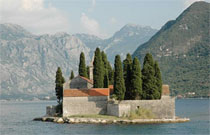
					<b>Nate: </b><em>?A great example of long-form culture making, from an island church in Montenegro's <a href="http://maps.google.com/maps?f=q&source=s_q&hl=en&geocode=&q=kotor&sll=42.367676,19.146423&sspn=0.691981,1.476288&ie=UTF8&hq=&hnear=Kotor,+Montenegro&ll=42.486213,18.690169&spn=0.002698,0.005767&t=h&z=18">Bay of Kotor</a>.?</em><br />
		
		<div style="float:right; padding:15px 5px 5px 5px"><img src="http://culture-making.com/media/kotor.jpg" alt="image"></div>
<p>&#8220;In 1452,&#8221; we read at <a href="http://www.montenegro.com/phototrips/coast/Perast,_a_walk_through_eternity.html" target="_blank">montenegro.com</a>, &#8220;two sailors from Perast happened by a small rock jutting out of the bay after a long day at sea and discovered a picture of the Virgin Mary perched upon the stone.&#8221; Thus began a process of dumping more stones into the bay in order to expand this lonely, seemingly blessed rock—as well as loading the hulls of old fishing boats with stones in order to sink them beneath the waves, adding to the island&#8217;s growing landmass. </p><p>Eventually, in 1630, a small chapel was constructed atop this strange half-geological, half-shipbuilt assemblage.</p><p>Throwing stones into the bay and, in the process, incrementally expanding the island&#8217;s surface area, has apparently become a local religious tradition: &#8220;The custom of throwing rocks into the sea is alive even nowadays. Every year on the sunset of July 22, an event called <a href="http://en.wikipedia.org/wiki/Our_Lady_of_the_Rocks" target="_blank"><i>fašinada</i></a>, when local residents take their boats and throw rocks into the sea, widening the surface of the island, takes place.&#8221;<br><br>The idea that devotional rock-throwing has become an art of creating new terrain, generation after generation, rock after rock, pebble after pebble, is stunning to me. Perhaps in a thousand years, a whole archipelago of churches will exist there, standing atop a waterlogged maze of old pleasure boats and fishing ships, the mainland hills and valleys nearby denuded of loose stones altogether. Inadvertently, then, this is as much a museum of local geology—a catalog of rocks—as it is a churchyard.</p><hr />
<div class="author" style="font-size: -1">from "<a href="http://bldgblog.blogspot.com/2010/01/our-lady-of-rocks.html">Our Lady of the Rocks</a>," by Geoff Manaugh, <a href="http://bldgblog.blogspot.com/2010/01/our-lady-of-rocks.html">BLDGBLOG</a>, 30 January 2010</div>		


      ]]></content>
    </entry>    <entry>
      <title>Home Movie Reconstructions 1974/2004, by Elliott Malkin</title>
      <link rel="alternate" type="text/html" href="https://culture-making.com/post/home_movie_reconstructions_1974_2004_by_elliott_malkin" />
      <id>tag:culture-makers.com,2025:author/1.1744</id>
      <published>2025-01-02T22:53:00Z</published>
      <updated>2025-01-03T22:54:05Z</updated>
      <author>
            <name>Andy Crouch</name>
            <email>andy@culture-making.com</email>
            
      </author>

      <content type="html"><![CDATA[


			<p align="center"><a href="http://dziga.com/family/reconstructions/"><img src="http://culture-making.com/media/familymovies_420.jpg" title="click through to the original site to play the movies" /></a></p><br />
<b>Nate: </b><em>?As part of his short film <a href="http://www.dziga.com/family/">Family Movie</a>, Elliott Malkin revisited the scenes and protagonists of his family's old 1970s Super 8 movies, creating shot-for-shot reenactments that are both eerie and good-humored. Played side by side in sync, the ultra-wide aspect and split screen call to mind old <a href="http://images.google.com/images?hl=en&client=firefox-a&rls=org.mozilla:en-US:official&hs=faJ&num=100&q=stereoscope+cards&um=1&ie=UTF-8&ei=1WEZS-_4B5SkswOYgqn3Bw&sa=X&oi=image_result_group&ct=title&resnum=4&ved=0CCgQsAQwAw">stereoscope cards</a>, as past and present combine to provide parallel slightly different views on people and things, giving the sense—or could it be the false sense?—of depth and perspective.?</em><br />
<hr /><span style="font-size: -1">"<a href="http://dziga.com/family/reconstructions/">Home Movie Reconstructions 1974 / 2004</a>," by Elliott Malkin :: via <a href="http://www.themorningnews.org/archives/headlines/2009/November/05/">The Morning News</a></span>


      ]]></content>
    </entry>    <entry>
      <title>Creative distance</title>
      <link rel="alternate" type="text/html" href="https://culture-making.com/post/creative_distance" />
      <id>tag:culture-makers.com,2025:author/1.1549</id>
      <published>2025-01-02T22:53:00Z</published>
      <updated>2025-01-03T22:54:05Z</updated>
      <author>
            <name>Andy Crouch</name>
            <email>andy@culture-making.com</email>
            
      </author>

      <content type="html"><![CDATA[


					<b>Nate: </b><em>?Students apparently score better on a test of creative thinking if they're told the questions were written 2000 miles away. Evidently the increased psychological distance expands the horizons of the possible. I wonder how different that is from, say, a painter stepping back to survey her work from afar before diving back in with the brushes.?</em><br />
		
		<p>Creativity is commonly thought of as a personality trait that resides within the individual. We count on creative people to produce the songs, movies, and books we love; to invent the new gadgets that can change our lives; and to discover the new scientific theories and philosophies that can change the way we view the world. Over the past several years, however, social psychologists have discovered that creativity is not only a characteristic of the individual, but may also change depending on the situation and context. The question, of course, is what those <a href="http://www.scientificamerican.com/article.cfm?id=how-to-unleash-your-creativity">situations</a> are: what makes us more creative at times and less creative at others?</p><p>One answer is psychological distance.  According to the construal level theory (CLT) of psychological distance, anything that we do not experience as occurring now, here, and to ourselves falls into the “psychologically distant” category. It’s also possible to induce a state of “psychological distance” simply by changing the way we think about a particular problem, such as attempting to take another person&#8217;s perspective, or by thinking of the question as if it were unreal and unlikely. In this new <a href="http://www.science-direct.com/science?_ob=ArticleURL&amp;_udi=B6WJB-4WGK4PN-1&amp;_user=10&amp;_coverDate=06/09/2009&amp;_rdoc=1&amp;_fmt=high&amp;_orig=browse&amp;_sort=d&amp;view=c&amp;_acct=C000050221&amp;_version=1&amp;_urlVersion=0&amp;_userid=10&amp;md5=a790afaac04ae948c5fa6d8dee8490bd">paper</a>, by Lile Jia and colleagues at Indiana University at Bloomington, scientists have demonstrated that increasing psychological distance so that a problem feels farther away can actually increase creativity.</p><hr />
<div class="author" style="font-size: -1">from "<a href="http://www.scientificamerican.com/article.cfm?id=an-easy-way-to-increase-c">An Easy Way to Increase Creativity</a>," by Oren Shapira and Nira Liberman, <a href="http://www.scientificamerican.com/article.cfm?id=an-easy-way-to-increase-c"><i>Scientific American</i></a>, 21 July 2009 :: via <a href="http://www.kottke.org/09/07/increasing-creativity-and-psychological-distance">kottke.org</a></div>		


      ]]></content>
    </entry>    <entry>
      <title>“Dispatchwork” in Berlin</title>
      <link rel="alternate" type="text/html" href="https://culture-making.com/post/dispatchwork_in_berlin" />
      <id>tag:culture-makers.com,2025:author/1.1530</id>
      <published>2025-01-02T22:53:00Z</published>
      <updated>2025-01-03T22:54:05Z</updated>
      <author>
            <name>Andy Crouch</name>
            <email>andy@culture-making.com</email>
            
      </author>

      <content type="html"><![CDATA[


					<b>Andy: </b><em>?The German artist Jan Vormann uses Lego bricks to fill in—but also, inevitably, to focus our attention on—holes in the façades of buildings, created in the case of this Berlin building by shells in World War II. It's an incongruous gesture, playful and plastic in the face of the mute testimony to suffering and time offered by Old Europe's architecture.?</em><br />
		
		<a href="http://www.janvormann.com/testbild/dispatchwork-berlin/"><img src="http://www.culture-making.com/media/dispatchwork.jpg" alt="image" /></a><hr />
<div class="author" style="font-size: -1">from "<a href="http://www.janvormann.com/testbild/dispatchwork-berlin/">Dispatchwork Berlin</a>," by Jan Vormann:: via <a href="http://laughingsquid.com/in-berlin-lego-bricks-fill-real-world-cracks/">Laughing Squid</a> (thanks Agnieszka)</div>		


      ]]></content>
    </entry>    <entry>
      <title>That’s one way to fight the war on cliche</title>
      <link rel="alternate" type="text/html" href="https://culture-making.com/post/thats_one_way_to_fight_the_war_on_cliche" />
      <id>tag:culture-makers.com,2025:author/1.1428</id>
      <published>2025-01-02T22:53:00Z</published>
      <updated>2025-01-03T22:54:05Z</updated>
      <author>
            <name>Andy Crouch</name>
            <email>andy@culture-making.com</email>
            
      </author>

      <content type="html"><![CDATA[


		<p>Artist Liz Glynn and her assistants built a small model of Rome <i>in a day</i> from cardboard and wood at New York&#8217;s New Museum. And then destroyed it.</p><hr />
<div class="author" style="font-size: -1">from a <a href="http://www.boingboing.net/2009/05/11/rome-model-built-in.html">Boing Boing</a> post, by David Pescovitz, 11 May 2009</div>		


      ]]></content>
    </entry>    <entry>
      <title>More time with mom and dad</title>
      <link rel="alternate" type="text/html" href="https://culture-making.com/post/more_time_with_mom_and_dad" />
      <id>tag:culture-makers.com,2025:author/1.1285</id>
      <published>2025-01-02T22:53:00Z</published>
      <updated>2025-01-03T22:54:05Z</updated>
      <author>
            <name>Andy Crouch</name>
            <email>andy@culture-making.com</email>
            
      </author>

      <content type="html"><![CDATA[


					<b><p>Andy</p>: </b><em>?The latest installment from the Department of Counterintuitive But Encouraging Trends, or maybe it's more evidence that <a href="http://www.culture-making.com/post/1184">"Cat's in the Cradle"</a> really did change the world.?</em><br />
		
		<p>Parents today spend much more time with their children than they did 40 years ago. The sociologists Suzanne Bianchi, John Robinson and Melissa Milkie report that married mothers in 2000 spent 20 percent more time with their children than in 1965. Married fathers spent more than twice as much time.</p><p>A study by John Sandberg and Sandra Hofferth at the University of Michigan showed that by 1997 children in two-parent families were getting six more hours a week with Mom and four more hours with Dad than in 1981. And these increases occurred even as more mothers entered the labor force.</p><hr />
<div class="author" style="font-size: -1">from "<a href="http://www.nytimes.com/2009/02/05/opinion/05coontz.html">Till Children Do Us Part</a>," by Stephanie Coontz, <a href="http://www.nytimes.com/">NYTimes.com</a>, 4 February 2009 :: via <a href="http://jamesjchoi.blogspot.com/">The .Plan: A Quasi-Blog</a></div>		


      ]]></content>
    </entry>    <entry>
      <title>Getting back to making</title>
      <link rel="alternate" type="text/html" href="https://culture-making.com/post/getting_back_to_making" />
      <id>tag:culture-makers.com,2025:author/1.1240</id>
      <published>2025-01-02T22:53:00Z</published>
      <updated>2025-01-03T22:54:05Z</updated>
      <author>
            <name>Andy Crouch</name>
            <email>andy@culture-making.com</email>
            
      </author>

      <content type="html"><![CDATA[


					<b><p>Nate</p>: </b><em>?Lifehacker is probably one of my most-read blogs that doesn't translate into many (or any, till now) posts on this site. There's definitely something seductive about wasting one's time reading other people's suggestions about how not to waste time. But now Lifehacker's founder and lead blogger is stepping down to get back to making stuff. Of course (I tell myself) finding and curating good stuff is its own form of culture making, but often it still can feel a level removed.?</em><br />
		
		<p>As the years passed, Lifehacker became my online alter ego, my professional identity, my work and my play. I happily gave up time I&#8217;d normally spend on creative side projects to the site, because it was my primary outlet for the two things I love most: software and writing. But as our staff and audience grew, the news chase intensified, and management duties piled up. I started writing and coding less and air traffic-controlling, copy-editing, budgeting, doing PR, and assigning stories to my writers more. While that all has been great experience I am lucky to have under my belt, it&#8217;s time for me to recalibrate how I&#8217;m spending my days. As someone <a href="http://twitter.com/RandySmithCan/status/1102321915">put well</a>, it&#8217;s time to mitigate the urgent to focus on the important.</p>
<p>The bottom line is this: for someone who loves making things on the web, spending 100% of the time blogging about what other people are making is simply untenable.</p><hr />
<div class="author" style="font-size: -1">from "<a href="http://lifehacker.com/5132674/">Letter From The Editor: So Long, and Thanks for All the Fish</a>," by Gina Trapani, <a href="http://lifehacker.com/5132674/">Lifehacker</a>, 16 January 2009 :: via <a href="http://daringfireball.net/linked/2009/01/17/gina-trapani">Daring Fireball</a></div>		


      ]]></content>
    </entry>    <entry>
      <title>Achtung!</title>
      <link rel="alternate" type="text/html" href="https://culture-making.com/post/achtung" />
      <id>tag:culture-makers.com,2025:author/1.1185</id>
      <published>2025-01-02T22:53:00Z</published>
      <updated>2025-01-03T22:54:05Z</updated>
      <author>
            <name>Andy Crouch</name>
            <email>andy@culture-making.com</email>
            
      </author>

      <content type="html"><![CDATA[


					<b><p>Andy</p>: </b><em>?In the first decade of the 2000s, speakers celebrated when listeners emailed, blogged, IMed, and tweeted reactions during their talks because they were so good. In the second decade, speakers will celebrate that no one tweets, IMs, blogs, or emails during their talks—because they are so good.?</em><br />
		
		<p>In a world in which entire industries bet their businesses on gaining access to our attention, which value leads to better personal success: hard work or the ability to control attention?</p><p>A person who works six hours a day but with total focus has an enormous advantage over a 12-hour-per-day workaholic who’s “multi-tasking” all day, answering every phone call, constantly checking Facebook and Twitter, and indulging every interruption.</p><hr />
<div class="author" style="font-size: -1">from "<a href="http://www.internetnews.com/commentary/article.php/3793561">Work Ethic 2.0: Attention Control</a>," by Mike Elgan, <a href="http://www.internetnews.com/commentary/article.php/3793561">InternetNews Realtime IT News</a>, 29 December 2008</div>		


      ]]></content>
    </entry>    <entry>
      <title>A time for branding</title>
      <link rel="alternate" type="text/html" href="https://culture-making.com/post/a_time_for_branding" />
      <id>tag:culture-makers.com,2025:author/1.1160</id>
      <published>2025-01-02T22:53:00Z</published>
      <updated>2025-01-03T22:54:05Z</updated>
      <author>
            <name>Andy Crouch</name>
            <email>andy@culture-making.com</email>
            
      </author>

      <content type="html"><![CDATA[


					<b><p>Nate</p>: </b><em>?Designer Tanner Woodford, inspired by <a href="http://dearjanesample.wordpress.com/2008/05/19/fun-with-brands/">this brand-timeline self-portrait</a> made a time-based list of every brand and logo he encountered over 24 hours, and then arranged them all clock-wise (well, 24-hour-clock-wise). I'd love to see mockups for brands encountered by people in different places and times. I expect, for instance, that the clock of a 19th-century city-dweller might well be just about as full. A Renaissance nobleman's would be full of heraldry and religious iconography. But would a medieval peasant (assuming he lived far away from town or church) have anything for the face of his anachronistic clock??</em><br />
		
		<a href="http://www.fillslashstroke.com/slash/2008/12/a-clock-for-identity-designers/"><img src="http://culture-making.com/media/clock-big.jpg" alt="image" /></a><hr />
<div class="author" style="font-size: -1">from "<a href="http://www.fillslashstroke.com/slash/2008/12/a-clock-for-identity-designers/">A clock for identity designers</a>," by Tanner Woodford, <a href="http://www.fillslashstroke.com/slash/2008/12/a-clock-for-identity-designers/">fill/stroke.com </a>, 15 December 2008 :: via <a href="http://www.underconsideration.com/brandnew/archives/in_brief_clockwise.php">Brand New</a></div>		


      ]]></content>
    </entry>    <entry>
      <title>What are the Japanese up to right now?</title>
      <link rel="alternate" type="text/html" href="https://culture-making.com/post/what_are_the_japanese_up_to_right_now" />
      <id>tag:culture-makers.com,2025:author/1.1057</id>
      <published>2025-01-02T22:53:00Z</published>
      <updated>2025-01-03T22:54:05Z</updated>
      <author>
            <name>Andy Crouch</name>
            <email>andy@culture-making.com</email>
            
      </author>

      <content type="html"><![CDATA[


<div class="author" style="font-size: -1">a <a href="http://www.kottke.org/08/10/what-are-the-japanese-up-to-right-now">kottke.org</a> post, 20 October 2008</div><hr />		
		<p>As part of the Japanese census, people were asked to keep a record of what they were doing in 15 minute intervals. The data was publicly released and Jonathan Soma took it and <a href="http://www.xoxosoma.com/tokyo-tuesday/">graphed the results so that you can see what many Japanese are up to during the course of a normal day</a>.</p><p>“Sports: Women like swimming, but men eschew the water for productive sports, which is the most important Japanese invention.</p><p>Early to bed and early to rise… and early to bed: People start waking up at 5 AM, but are taking naps by 7:30 AM.”</p><p>Fascinating.</p>


      ]]></content>
    </entry>    <entry>
      <title>Time lost</title>
      <link rel="alternate" type="text/html" href="https://culture-making.com/post/time_lost" />
      <id>tag:culture-makers.com,2025:author/1.575</id>
      <published>2025-01-02T22:53:00Z</published>
      <updated>2025-01-03T22:54:05Z</updated>
      <author>
            <name>Andy Crouch</name>
            <email>andy@culture-making.com</email>
            
      </author>

      <content type="html"><![CDATA[


		<p>Time lost is time in which we have failed to live a full human life, gain experience, learn, create, enjoy, and suffer; it is time that has not been filled up, but left empty. These last years have certainly not been like that. Our losses have been great and immeasurable, but time has not been lost.</p><br />
		<p><small>	&mdash;Dietrich Bonhoeffer, "<a href="http://books.google.com/books?id=q7pyQwhiUcQC&pg=PA256&dq=%22time+lost%22+bonhoeffer&ei=H2yPSPGfApzOswPFh5GzAg&client=firefox-a&sig=ACfU3U3f2oKmM5CxW1-n67W4-4qZJJ00jA#PPA256,M1">After Ten Years</a>," 1942</small></p>


      ]]></content>
    </entry>    <entry>
      <title>Einstein’s day job</title>
      <link rel="alternate" type="text/html" href="https://culture-making.com/post/einsteins_day_job" />
      <id>tag:culture-makers.com,2025:author/1.549</id>
      <published>2025-01-02T22:53:00Z</published>
      <updated>2025-01-03T22:54:05Z</updated>
      <author>
            <name>Andy Crouch</name>
            <email>andy@culture-making.com</email>
            
      </author>

      <content type="html"><![CDATA[


					<b><p>Nate</p>: </b><em>?We like to think that our greatest geniuses, especially those who came up with universal theories, operated at a plane removed from a particular cultural (and workaday) context. But in fact, the specifics always seem to play a role.?</em><br />
		
		<p>It turns out that this business of the young Einstein’s immersion in questions of train time and clock accuracy was central to his entire development, and that of his theory. I doubt I am particularly unique in long having imagined Einstein’s day job at the Swiss patent office as something akin to Kafka’s, around the same time, in the railway (!) insurance bureaucracy over in Prague: mindless drudge work, something to help pay the bills while the real work of genius transpired late at night and around the margins. It turns out, though, that the central focus of Einstein’s work there at the patent office in Bern around the golden year of 1905-06 (perhaps not surprisingly so, Switzerland after all being famous for being the world’s center for clockmaking) were applications having to do with devices capable of ever more accurate timekeeping. ... [W]hat with his job at the patent office, the young Einstein may have been the world authority on cutting-edge practice and thinking in these regards. He would have been thinking about simultaneity all day long: and at night he just kept on thinking.</p><hr />
<div class="author" style="font-size: -1">from "<a href="http://www.newyorker.com/archive/1992/11/16/1992_11_16_098_TNY_CARDS_000362984">Magritte Standard Time</a>," by Lawrence Weschler, <a href="http://www.newyorker.com/"><i>The New Yorker</i></a>, 16 November 1992 :: collected in Weschler's <a href="http://store.mcsweeneys.net/index.cfm/fuseaction/catalog.detail/object_id/8DFDF415-5DAE-45D1-9A40-3A40B4E97DDF/EverythingThatRisesbrABookofConvergences.cfm"><i>Everything that Rises: A Book of Convergences</i></a>, McSweeney's Books, 2007</div>		


      ]]></content>
    </entry>

</feed>