<?xml version="1.0" encoding="utf-8"?>
<feed xmlns="http://www.w3.org/2005/Atom" xml:lang="en">

    <title type="text">Culture Making Articles items tagged stone</title>
    <subtitle type="text">Culture Making Articles:Writing on Christianity and culture from Andy Crouch</subtitle>
    <link rel="alternate" type="text/html" href="http://culture-makers.com/" />
    <link rel="self" type="application/atom+xml" href="https://culture-making.com/tag/atom" />
    <updated>2025-01-03T22:54:05Z</updated>
    <rights>Copyright (c) 2025, Andy Crouch</rights>
    <generator uri="http://www.pmachine.com/" version="7.5.15">ExpressionEngine</generator>
    <id>tag:culture-makers.com,2025:01:02</id>

    <entry>
      <title>Beach calligraphy by Andrew van der Merwe</title>
      <link rel="alternate" type="text/html" href="https://culture-making.com/post/beach_calligraphy_by_andrew_van_der_merwe" />
      <id>tag:culture-makers.com,2025:author/1.1614</id>
      <published>2025-01-02T22:53:00Z</published>
      <updated>2025-01-03T22:54:05Z</updated>
      <author>
            <name>Andy Crouch</name>
            <email>andy@culture-making.com</email>
            
      </author>

      <content type="html"><![CDATA[


					<b>Nate: </b><em>?South African calligrapher Andrew van der Merwe has developed various wedge- and scoop-shaped tools to allow him to carve letters out of beach sand. This is a picture of one of his creations, on a beach in Belgium.?</em><br />
		
		<a href="http://j-laf.org/2008/10/worlds-project-report-beach-ca.html"><img src="http://www.culture-making.com/media/beachscript.jpg" alt="photo" /></a><hr />
<div class="author" style="font-size: -1">image from "<a href="http://j-laf.org/2008/10/worlds-project-report-beach-ca.html">Beach Calligraphy</a>," by Andrew van der Merwe, <a href="http://j-laf.org/2008/10/worlds-project-report-beach-ca.html">Japan Letter Arts Forum</a>, 21 October 2008 :: via <a href="http://ministryoftype.co.uk/words/article/andrew_van_der_merwe/">The Ministry of Type</a> :: first posted here 8 September 2009</div>		


      ]]></content>
    </entry>    <entry>
      <title>Petroglyphs</title>
      <link rel="alternate" type="text/html" href="https://culture-making.com/post/petroglyphs" />
      <id>tag:culture-makers.com,2025:author/1.1019</id>
      <published>2025-01-02T22:53:00Z</published>
      <updated>2025-01-03T22:54:05Z</updated>
      <author>
            <name>Andy Crouch</name>
            <email>andy@culture-making.com</email>
            
      </author>

      <content type="html"><![CDATA[


					<b><p>Nate</p>: </b><em>?Alas, the site offers neither name nor date of these beautiful rock drawings. They have a similar look to those at <a href="http://en.wikipedia.org/wiki/Newspaper_Rock_State_Historic_Monument">Newspaper Rock</a>, near Moab, Utah. The style of many petroglyphs seems to be a sort of elemental human visual consciousness—some of the oldest surviving evidences of culture-making (though if these drawings are as exposed as the picture suggests, they're probably much more recent).?</em><br />
		
		<a href="http://www.citrinitas.com/history_of_viscom/rockandcaves.html"><img src="http://culture-making.com/media/petro01.jpg" alt="photo" /></a><hr />
<div class="author" style="font-size: -1">from <a href="http://www.citrinitas.com/history_of_viscom/rockandcaves.html">The History of Visual Communication</a> :: via <a href="http://ffffound.com/image/6f01721c1a677b91f5fc2158822f944709bbbc67">FFFFOUND!</a> :: first posted here 6 November 2008</div>		


      ]]></content>
    </entry>    <entry>
      <title>An archipelago of churches, one pebble at a time</title>
      <link rel="alternate" type="text/html" href="https://culture-making.com/post/an_archipelago_of_churches_one_pebble_at_a_time" />
      <id>tag:culture-makers.com,2025:author/1.1801</id>
      <published>2025-01-02T22:53:00Z</published>
      <updated>2025-01-03T22:54:05Z</updated>
      <author>
            <name>Andy Crouch</name>
            <email>andy@culture-making.com</email>
            
      </author>

      <content type="html"><![CDATA[


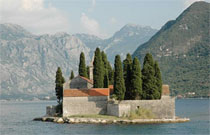
					<b>Nate: </b><em>?A great example of long-form culture making, from an island church in Montenegro's <a href="http://maps.google.com/maps?f=q&source=s_q&hl=en&geocode=&q=kotor&sll=42.367676,19.146423&sspn=0.691981,1.476288&ie=UTF8&hq=&hnear=Kotor,+Montenegro&ll=42.486213,18.690169&spn=0.002698,0.005767&t=h&z=18">Bay of Kotor</a>.?</em><br />
		
		<div style="float:right; padding:15px 5px 5px 5px"><img src="http://culture-making.com/media/kotor.jpg" alt="image"></div>
<p>&#8220;In 1452,&#8221; we read at <a href="http://www.montenegro.com/phototrips/coast/Perast,_a_walk_through_eternity.html" target="_blank">montenegro.com</a>, &#8220;two sailors from Perast happened by a small rock jutting out of the bay after a long day at sea and discovered a picture of the Virgin Mary perched upon the stone.&#8221; Thus began a process of dumping more stones into the bay in order to expand this lonely, seemingly blessed rock—as well as loading the hulls of old fishing boats with stones in order to sink them beneath the waves, adding to the island&#8217;s growing landmass. </p><p>Eventually, in 1630, a small chapel was constructed atop this strange half-geological, half-shipbuilt assemblage.</p><p>Throwing stones into the bay and, in the process, incrementally expanding the island&#8217;s surface area, has apparently become a local religious tradition: &#8220;The custom of throwing rocks into the sea is alive even nowadays. Every year on the sunset of July 22, an event called <a href="http://en.wikipedia.org/wiki/Our_Lady_of_the_Rocks" target="_blank"><i>fašinada</i></a>, when local residents take their boats and throw rocks into the sea, widening the surface of the island, takes place.&#8221;<br><br>The idea that devotional rock-throwing has become an art of creating new terrain, generation after generation, rock after rock, pebble after pebble, is stunning to me. Perhaps in a thousand years, a whole archipelago of churches will exist there, standing atop a waterlogged maze of old pleasure boats and fishing ships, the mainland hills and valleys nearby denuded of loose stones altogether. Inadvertently, then, this is as much a museum of local geology—a catalog of rocks—as it is a churchyard.</p><hr />
<div class="author" style="font-size: -1">from "<a href="http://bldgblog.blogspot.com/2010/01/our-lady-of-rocks.html">Our Lady of the Rocks</a>," by Geoff Manaugh, <a href="http://bldgblog.blogspot.com/2010/01/our-lady-of-rocks.html">BLDGBLOG</a>, 30 January 2010</div>		


      ]]></content>
    </entry>    <entry>
      <title>Stone wall, Cuzco, Peru</title>
      <link rel="alternate" type="text/html" href="https://culture-making.com/post/stone_wall_cuzco_peru" />
      <id>tag:culture-makers.com,2025:author/1.927</id>
      <published>2025-01-02T22:53:00Z</published>
      <updated>2025-01-03T22:54:05Z</updated>
      <author>
            <name>Andy Crouch</name>
            <email>andy@culture-making.com</email>
            
      </author>

      <content type="html"><![CDATA[


					<b><p>Nate</p>: </b><em>?I'm familiar (but none the less amazed) with the look of Cuzco's famous mortarless Incan masonry (talk about a well-disciplined cultural offering!), the seams between the blocks at once organic and artificial. But whenever I see another image like this, I wonder what the seams look like on the inside—do the joints just go straight back? Do things get even more complex??</em><br />
		
		<a href="http://www.flickr.com/photos/io747/2539164551/"><img src="http://culture-making.com/media/2539164551_9a7571cd4c_o.jpg" alt="photo" /></a><hr />
<div class="author" style="font-size: -1">"<a href="http://www.flickr.com/photos/io747/2539164551/">the wall</a>," by flickr user <a href="http://www.flickr.com/photos/io747/2539164551/">lo747</a>, 13 March 2008 :: via <a href="http://www.flickr.com/groups/intelligent_travel/pool/">Intelligent Travel Flickr Pool</a></div>		


      ]]></content>
    </entry>    <entry>
      <title>First Congregational Church, Weeping Water, Nebraska</title>
      <link rel="alternate" type="text/html" href="https://culture-making.com/post/first_congregational_church_weeping_water_nebraska" />
      <id>tag:culture-makers.com,2025:author/1.866</id>
      <published>2025-01-02T22:53:00Z</published>
      <updated>2025-01-03T22:54:05Z</updated>
      <author>
            <name>Andy Crouch</name>
            <email>andy@culture-making.com</email>
            
      </author>

      <content type="html"><![CDATA[


			<p align="center"><iframe width="420" height="240" frameborder="0" scrolling="no" marginheight="0" marginwidth="0" src="http://maps.google.com/maps/sv?cbp=1,315.84751176788484,,0,-16.872547977586407&amp;cbll=40.869931,-96.140779&amp;v=1&amp;panoid=QeMGc8N_LxueyYJrH9ylIA&amp;gl=&amp;hl="></iframe>
</p><br />
<b><p>Nate</p>: </b><em>?I was struck by the rust streaking on this church in the evocatively named Weeping Water, NE (pop. 1003). The church seemed to be weeping too! At first I thought it must be derelict, but I think the staining is a sort of natural patina that grows from flecks of iron in the limestone—the <a href="http://flickr.com/photos/librarycommission/397899856/sizes/o/">Weeping Water Public Library</a> has the same facade, also out of stone from the town quarry, which is listed as the largest limestone mine in the state.?</em><br /><hr />
<span style="font-size: -1">First Congregational Church, Weeping Water, Nebraska, <a href="http://maps.google.com/?ie=UTF8&ll=40.922333,-96.133461&spn=0.104544,0.244446&t=h&z=13&layer=c&cbll=40.869945,-96.141239&panoid=Tr2qXQ2RuiLEFH6DD4o3WA&cbp=2,47.748063205876235,,0,-5.470343480425235">Google Street View</a></span>


      ]]></content>
    </entry>

</feed>