<?xml version="1.0" encoding="utf-8"?>
<feed xmlns="http://www.w3.org/2005/Atom" xml:lang="en">

    <title type="text">Culture Making Articles items tagged power</title>
    <subtitle type="text">Culture Making Articles:Writing on Christianity and culture from Andy Crouch</subtitle>
    <link rel="alternate" type="text/html" href="http://culture-makers.com/" />
    <link rel="self" type="application/atom+xml" href="https://culture-making.com/tag/atom" />
    <updated>2025-01-03T22:54:05Z</updated>
    <rights>Copyright (c) 2025, Andy Crouch</rights>
    <generator uri="http://www.pmachine.com/" version="7.5.15">ExpressionEngine</generator>
    <id>tag:culture-makers.com,2025:01:02</id>

    <entry>
      <title>Not independence, but dependence</title>
      <link rel="alternate" type="text/html" href="https://culture-making.com/post/not_independence_but_dependence" />
      <id>tag:culture-makers.com,2025:author/1.556</id>
      <published>2025-01-02T22:53:00Z</published>
      <updated>2025-01-03T22:54:05Z</updated>
      <author>
            <name>Andy Crouch</name>
            <email>andy@culture-making.com</email>
            
      </author>

      <content type="html"><![CDATA[


		<p>Of all the creators and cultivators who have ever lived, Jesus was the most capable of shaping culture through his own talents and power—and yet the most culture-shaping event of his life is the result of his choice to abandon his talents and power. The resurrection shows us the pattern for culture-making in the image of God. Not power, but trust. Not independence, but dependence.</p><br />
		<p><small>	&mdash;<i>Culture Making</i>, p.145</small></p>


      ]]></content>
    </entry>    <entry>
      <title>Power and love</title>
      <link rel="alternate" type="text/html" href="https://culture-making.com/post/power_and_love" />
      <id>tag:culture-makers.com,2025:author/1.1757</id>
      <published>2025-01-02T22:53:00Z</published>
      <updated>2025-01-03T22:54:05Z</updated>
      <author>
            <name>Andy Crouch</name>
            <email>andy@culture-making.com</email>
            
      </author>

      <content type="html"><![CDATA[


		<p>Power without love is reckless and abusive, and love without power is sentimental and anemic. Power at its best is love implementing the demands of justice, and justice at its best is power correcting
everything that stands against love.</p><br />
		<p><small>	&mdash;Martin Luther King, Jr., "<a href="http://books.google.com/books?id=ky323HwHxXMC&lpg=PR1&ots=lukjezq74f&dq=where%20do%20we%20go%20from%20here%20martin%20luther%20king&pg=PA38#v=onepage&q&f=false">Where Do We Go From Here?</a>"</small></p>


      ]]></content>
    </entry>    <entry>
      <title>Whither the power sermon?</title>
      <link rel="alternate" type="text/html" href="https://culture-making.com/post/whither_the_power_sermon" />
      <id>tag:culture-makers.com,2025:author/1.534</id>
      <published>2025-01-02T22:53:00Z</published>
      <updated>2025-01-03T22:54:05Z</updated>
      <author>
            <name>Andy Crouch</name>
            <email>andy@culture-making.com</email>
            
      </author>

      <content type="html"><![CDATA[


		<p>While it is likely that you have heard at least one sermon on how to think in a Christian way about sex, and the requirements of church budgets make money an annual topic, chances are you have never a sermon on how to be stewards of cultural power.</p><br />
		<p><small>	&mdash;<i>Culture Making</i>, p.226
</small></p>


      ]]></content>
    </entry>    <entry>
      <title>Powerlessness and shopping</title>
      <link rel="alternate" type="text/html" href="https://culture-making.com/post/powerlessness_and_shopping" />
      <id>tag:culture-makers.com,2025:author/1.479</id>
      <published>2025-01-02T22:53:00Z</published>
      <updated>2025-01-03T22:54:05Z</updated>
      <author>
            <name>Andy Crouch</name>
            <email>andy@culture-making.com</email>
            
      </author>

      <content type="html"><![CDATA[


			<b><p>Nate</p>: </b><em>?Powerlessness and consumption can seem a bit at odds. There is, though, significant distinction to be made between feeling and being powerless.?</em><br />

<div class="author" style="font-size: -1">a <a href="http://feeds.gawker.com/~r/jezebel/full/~3/321541935/power-play">Jezebel</a> post by SadieStein, 27 June 2008 :: first posted here 27 June 2008</div><hr />		
		<p>Researchers at Northwestern have found that <a href="http://www.sciencedaily.com/releases/2008/06/080625193859.htm">feeling powerless leads people to shell out</a> for expensive status items to bolster their egos — explaining why those deep in debt continue to spend. “After recalling situations where they were powerless, participants were willing to pay more for items that signal status, like silk ties and fur coats, but not products like minivans and dryers. They also agreed to pay more for a framed picture of their university if it was portrayed as rare and exclusive.” Okay, can’t really comprehend a situation demeaning enough that we’d be willing to pay any amount of money for a framed picture of our alma mater but who hasn’t restored a flagging sense of self with a handsome necktie from time to time? [<a href="http://www.sciencedaily.com/releases/2008/06/080625193859.htm">Science Daily</a>]
</p>


      ]]></content>
    </entry>    <entry>
      <title>Conspicuous conservation</title>
      <link rel="alternate" type="text/html" href="https://culture-making.com/post/conspicuous_conservation" />
      <id>tag:culture-makers.com,2025:author/1.1939</id>
      <published>2025-01-02T22:53:00Z</published>
      <updated>2025-01-03T22:54:05Z</updated>
      <author>
            <name>Andy Crouch</name>
            <email>andy@culture-making.com</email>
            
      </author>

      <content type="html"><![CDATA[


					<b>Andy: </b><em>?It's a lot to wade through, but the series of experiments described in this paper elegantly demonstrate that university students choose "green" products in order to signal their wealth and status to others—not for any intrinsic environmental benefits. (The news reports will inevitably generalize "university students" to Americans as a whole, but the study only examined students.) Glass half full interpretation: caring for the environment has become a sign of status. Glass half empty interpretation: what we really care about is status, not the earth. Jesus' words about <a href="http://bible.oremus.org/?ql=145328884">doing your good works in secret</a> might be worth rereading before you buy that new Prius.?</em><br />
		
		<p>Our findings suggest that marketers of green products are well-advised to clearly link such products to status (e.g., celebrity endorsers, prestigious events), especially when a green product is relatively expensive (e.g., when such products have high development costs and cannot be sold at a loss). As indicated by Study 2, however, a key component of harnessing the power of status motives to benefit social welfare necessitates that the prosocial acts be visible to others, whereby such acts can clearly influence the well-doer’s reputation. For example, nonprofit organizations are well-advised to give their benefactors visible signs, tags, or badges (e.g., the highly visible yellow Livestrong armband signifying cancer donations), so that benefactors can clearly display their self-sacrificing and status-enhancing acts.</p><p>A costly signaling framework also suggests that it would be a mistake to link green products to status when such products are relatively cheap because inexpensive products can undermine the signaling of wealth by its owner. Indeed, a key counterintuitive aspect of this framework is that attempts to make green products cheaper, easier to buy, or more time-saving can actually undercut their utility as a signal of environmentalist/altruist dedication. For example, in contrast to standard economic models, a costly signaling framework suggests that electric cars might be seen as more prestigious and more desirable if recharging stations are harder to find and take longer to recharge the batteries, rather than being ubiquitous, fast, and efficient.</p><hr />
<div class="author" style="font-size: -1">from "<a href="http://www.rsm.nl/portal/page/portal/home/content_pages/news/RSM News/News Current/Griskevicius_Tybur_Van den_Bergh_ JPSP_2010.pdf">Going Green to Be Seen: Status, Reputation, and Conspicuous Conservation</a>," by Vladas Griskevicius, Joshua M. Tybur, and Bram Van der Bergh, <i>Journal of Personality and Social Psychology,</i> 2010, Vol. 98, No. 3, 392-404 :: via Kyle Van Houtan</div>		


      ]]></content>
    </entry>    <entry>
      <title>Culture Making and Poverty (Best Question #2)</title>
      <link rel="alternate" type="text/html" href="https://culture-making.com/post/culture_making_and_poverty" />
      <id>tag:culture-makers.com,2025:author/1.1888</id>
      <published>2025-01-02T22:53:00Z</published>
      <updated>2025-01-03T22:54:05Z</updated>
      <author>
            <name>Andy Crouch</name>
            <email>andy@culture-making.com</email>
            
      </author>

      <content type="html"><![CDATA[


			<p align="center"><object width="420" height="236"><param name="allowfullscreen" value="true" /><param name="allowscriptaccess" value="always" /><param name="movie" value="http://vimeo.com/moogaloop.swf?clip_id=11088904&amp;server=vimeo.com&amp;show_title=0&amp;show_byline=0&amp;show_portrait=0&amp;color=00ADEF&amp;fullscreen=1" /><embed src="http://vimeo.com/moogaloop.swf?clip_id=11088904&amp;server=vimeo.com&amp;show_title=0&amp;show_byline=0&amp;show_portrait=0&amp;color=00ADEF&amp;fullscreen=1" type="application/x-shockwave-flash" allowfullscreen="true" allowscriptaccess="always" width="420" height="236"></embed></object></p><br />
<b>Nathan: </b><em>?How can we talk about creating artistic culture when there are so many out there without access to basic needs?  Part of our <a href="http://www.culture-making.com/post/culture_making_on_the_road/">ongoing series on power</a>.?</em><br />
<hr /><span style="font-size: -1">"<a href="http://vimeo.com/11088904">The Best Question - Culture Making and Poverty</a>," by <a href="http://www.vimeo.com/user3252529">Andy Crouch and Nathan Clarke</a></span>


      ]]></content>
    </entry>    <entry>
      <title>The Trinity and Power (Best Question #1)</title>
      <link rel="alternate" type="text/html" href="https://culture-making.com/post/trinity_and_power" />
      <id>tag:culture-makers.com,2025:author/1.1879</id>
      <published>2025-01-02T22:53:00Z</published>
      <updated>2025-01-03T22:54:05Z</updated>
      <author>
            <name>Andy Crouch</name>
            <email>andy@culture-making.com</email>
            
      </author>

      <content type="html"><![CDATA[


			<p align="center"><object width="420" height="236"><param name="allowfullscreen" value="true" /><param name="allowscriptaccess" value="always" /><param name="movie" value="http://vimeo.com/moogaloop.swf?clip_id=10929822&amp;server=vimeo.com&amp;show_title=0&amp;show_byline=0&amp;show_portrait=0&amp;color=00ADEF&amp;fullscreen=1" /><embed src="http://vimeo.com/moogaloop.swf?clip_id=10929822&amp;server=vimeo.com&amp;show_title=0&amp;show_byline=0&amp;show_portrait=0&amp;color=00ADEF&amp;fullscreen=1" type="application/x-shockwave-flash" allowfullscreen="true" allowscriptaccess="always" width="420" height="236"></embed></object></p><br />
<b>Nathan: </b><em>?As part of our <a href="http://www.culture-making.com/post/culture_making_on_the_road/">ongoing series on power</a>, Andy Crouch tackles a question about what we can learn from the Trinity about power. Filmed on location at Osprey Point Retreat and Conference Center in Maryland during the Trinity Forum Academy's annual <a href="http://www.ttf.org/academy/integrity.html">Integrity Weekend</a>.?</em><br />
<hr /><span style="font-size: -1">"<a href="http://vimeo.com/10929822">The Best Question - The Trinity and Power</a>," by <a href="http://www.vimeo.com/user3252529">Andy Crouch and Nathan Clarke</a></span>


      ]]></content>
    </entry>    <entry>
      <title>Ask the Poles</title>
      <link rel="alternate" type="text/html" href="https://culture-making.com/post/ask_the_poles" />
      <id>tag:culture-makers.com,2025:author/1.1869</id>
      <published>2025-01-02T22:53:00Z</published>
      <updated>2025-01-03T22:54:05Z</updated>
      <author>
            <name>Andy Crouch</name>
            <email>andy@culture-making.com</email>
            
      </author>

      <content type="html"><![CDATA[


					<b>Andy: </b><em>?A powerful piece by Roger Cohen about the possibility of cultural, indeed national, transformation.?</em><br />
		
		<p>Poland should shame every nation that believes peace and reconciliation are impossible, every state that believes the sacrifice of new generations is needed to avenge the grievances of history. The thing about competitive victimhood, a favorite Middle Eastern pastime, is that it condemns the children of today to join the long list of the dead.</p><p>For scarcely any nation has suffered since 1939 as Poland, carved up by the Hitler-Stalin nonaggression pact, transformed by the Nazis into the epicenter of their program to annihilate European Jewry, land of Auschwitz and Majdanek, killing field for millions of Christian Poles and millions of Polish Jews, brave home to the Warsaw Uprising, Soviet pawn, lonely Solidarity-led leader of post-Yalta Europe’s fight for freedom, a place where, as one of its great poets, Wislawa Szymborska, wrote, “History counts its skeletons in round numbers” — 20,000 of them at Katyn.</p><p>It is this Poland that is now at peace with its neighbors and stable. It is this Poland that has joined Germany in the European Union. It is this Poland that has just seen the very symbols of its tumultuous history (including the Gdansk dock worker Anna Walentynowicz and former president-in-exile Ryszard Kaczorowski) go down in a Soviet-made jet and responded with dignity, according to the rule of law.</p><p>So do not tell me that cruel history cannot be overcome. Do not tell me that Israelis and Palestinians can never make peace. Do not tell me that the people in the streets of Bangkok and Bishkek and Tehran dream in vain of freedom and democracy. Do not tell me that lies can stand forever.</p><p>Ask the Poles. They know.</p><hr />
<div class="author" style="font-size: -1">from "<a href="http://www.nytimes.com/2010/04/13/opinion/13iht-edcohen.html">The Glory of Poland</a>," by Roger Cohen, <a href="http://www.nytimes.com/">NYTimes.com</a>, 12 April 2010</div>		


      ]]></content>
    </entry>    <entry>
      <title>Culture Making on the road</title>
      <link rel="alternate" type="text/html" href="https://culture-making.com/post/culture_making_on_the_road" />
      <id>tag:culture-makers.com,2025:author/1.1864</id>
      <published>2025-01-02T22:53:00Z</published>
      <updated>2025-01-03T22:54:05Z</updated>
      <author>
            <name>Andy Crouch</name>
            <email>andy@culture-making.com</email>
            
      </author>

      <content type="html"><![CDATA[


			<p align="center"><object width="420" height="236"><param name="allowfullscreen" value="true" /><param name="allowscriptaccess" value="always" /><param name="movie" value="http://vimeo.com/moogaloop.swf?clip_id=9768201&amp;server=vimeo.com&amp;show_title=1&amp;show_byline=1&amp;show_portrait=0&amp;color=00ADEF&amp;fullscreen=1" /><embed src="http://vimeo.com/moogaloop.swf?clip_id=9768201&amp;server=vimeo.com&amp;show_title=1&amp;show_byline=1&amp;show_portrait=0&amp;color=00ADEF&amp;fullscreen=1" type="application/x-shockwave-flash" allowfullscreen="true" allowscriptaccess="always" width="420" height="236"></embed></object></p><br />
<b>Nathan: </b><em>?Over the next several months, I'll be tagging along with Andy on several of his speaking engagements, particularly as he continues to develop his ideas on cultural power.  While doing that we'll be producing a series of "Best Question" videos as Culture Making hits the road.?</em><br />
<hr /><span style="font-size: -1">"<a href="http://www.vimeo.com/9768201">Culture Making on the Road</a>," by <a href="http://www.vimeo.com/user3252529">Andy Crouch and Nathan Clarke</a></span>


      ]]></content>
    </entry>    <entry>
      <title>The crying&#45;on&#45;the&#45;inside kind of news</title>
      <link rel="alternate" type="text/html" href="https://culture-making.com/post/the_crying-on-the-inside_kind_of_news" />
      <id>tag:culture-makers.com,2025:author/1.1818</id>
      <published>2025-01-02T22:53:00Z</published>
      <updated>2025-01-03T22:54:05Z</updated>
      <author>
            <name>Andy Crouch</name>
            <email>andy@culture-making.com</email>
            
      </author>

      <content type="html"><![CDATA[


					<b>Nate: </b><em>?I can't help thinking of The Simpsons when I read about at this—a pleasing combo of <a href="http://en.wikipedia.org/wiki/Kent_Brockman">Kent Brockman</a>, <a href="http://en.wikipedia.org/wiki/Krusty_the_Clown">Krusty the Clown</a>, and <a href="http://en.wikipedia.org/wiki/List_of_media_personalities_in_The_Simpsons#Bumblebee_Man">Bumblebee Man</a>. It makes me think of court jesters and maskers using disguises and buffonery to criticize the powerful and get away with it.?</em><br />
		
		<div style="float:right; padding:15px 5px 5px 5px"><img src="http://culture-making.com/media/bozo.jpg" alt="image"></div>
<p>Foro TV, a product of the Mexican broadcasting conglomerate <a href="http://www2.esmas.com/noticierostelevisa/index.php">Televisa</a>, promises to feature some of this country’s leading journalists and commentators, like Hector Aguilar Camin (co-author of &#8220;<a href="http://www.amazon.com/Shadow-Mexican-Revolution-Contemporary-Translations/dp/0292704518/ref=ntt_at_ep_dpi_1">In the Shadow of the Mexican Revolution</a>&#8221;),&nbsp; <a href="http://latimesblogs.latimes.com/laplaza/2009/06/when-political-scientist-denise-dresser-had-the-seemingly-simple-idea-to-invite-38-mexican-women-to-write-a-series-of-persona.html">Denise Dresser</a> and Leo Zuckerman.</p>
<p>But it opens the morning news with Brozo the clown. What does it say about the viewing audience&#8212;or Televisa’s perception of us&#8212;that we might want our news from a green-haired, red-nosed jokester?</p>
<p>
Actually, Brozo has quite a history in Mexican current events, and it hasn’t always been a laughing matter. The costumed persona of journalist Victor Trujillo is known for an irreverence that often skewered the mighty and powerful. Embattled politicians all the way up to a president’s wife have chosen him to be the recipient of exclusive interviews or <a href="http://video.google.com/videoplay?docid=6758917734194596191#docid=-3950715321333932309">campaign promos</a>.</p>
<p>
A few years back, Brozo stunned a high-ranking city official who was appearing as a guest on a morning show the clown hosted at the time. Brozo aired a secret videotape showing the man stuffing a briefcase and then his pockets with thousands of dollars in alleged bribe money. The man’s career was toast, and the scandal may have cost his boss, then-Mayor Andres Manuel Lopez Obrador, the presidency in 2006.</p>
<p>Brozo left morning television following the death of his wife in 2004 but is returning now to what he says will be a no-holds-barred format.</p><hr />
<div class="author" style="font-size: -1">from "<a href="http://latimesblogs.latimes.com/laplaza/2010/02/mexican-tv-launches-24hour-news-network-_-clown-and-all.html?utm_source=feedburner&utm_medium=feed&utm_campaign=Feed:+LaPlaza+(La+Plaza)&utm_content=Google+Reader">Mexican TV launches 24-hour news network -- Brozo the clown and all</a>," by Tracy Wilkinson, <a href="http://latimesblogs.latimes.com/laplaza/2010/02/mexican-tv-launches-24hour-news-network-_-clown-and-all.html?utm_source=feedburner&utm_medium=feed&utm_campaign=Feed:+LaPlaza+(La+Plaza)&utm_content=Google+Reader">La Plaza | Los Angeles Times</a>, 16 Februrary 2010</div>		


      ]]></content>
    </entry>    <entry>
      <title>Worth nothing, but worth a lot</title>
      <link rel="alternate" type="text/html" href="https://culture-making.com/post/worth_nothing_but_worth_a_lot1" />
      <id>tag:culture-makers.com,2025:author/1.1806</id>
      <published>2025-01-02T22:53:00Z</published>
      <updated>2025-01-03T22:54:05Z</updated>
      <author>
            <name>Andy Crouch</name>
            <email>andy@culture-making.com</email>
            
      </author>

      <content type="html"><![CDATA[


					<b>Andy: </b><em>?This is a zero-rupee note. It's worth nothing—but one million of them have been printed and distributed for Indians to use when officials ask for petty bribes. <a href="http://www.economist.com/world/asia/displaystory.cfm?story_id=15393714">The Economist reports</a> that they have surprisingly effective: "corrupt officials so rarely encounter resistance that they get scared when they do." It's a brilliant example of culture making from the bottom up.?</em><br />
		
		<a href="http://old.5thpillar.org/images/rupees_front.jpg"><img src="http://www.culture-making.com/media/rupees_front.jpg" alt="image" /></a><hr />
<div class="author" style="font-size: -1">from "<a href="http://5thpillar.org/india/ZRN">Zero Rupee Notes</a>," by 5th Pillar :: via <a href="http://www.economist.com/world/asia/displaystory.cfm?story_id=15393714">The Economist</a></div>		


      ]]></content>
    </entry>    <entry>
      <title>I couldn’t see the future with my bare eyes</title>
      <link rel="alternate" type="text/html" href="https://culture-making.com/post/i_couldnt_see_the_future_with_my_bare_eyes" />
      <id>tag:culture-makers.com,2025:author/1.1464</id>
      <published>2025-01-02T22:53:00Z</published>
      <updated>2025-01-03T22:54:05Z</updated>
      <author>
            <name>Andy Crouch</name>
            <email>andy@culture-making.com</email>
            
      </author>

      <content type="html"><![CDATA[


					<b>Andy: </b><em>?I urge readers of this Web site to spend a few moments today and tomorrow reflecting on one of the most audacious attempts at cultural change in recent history: the 1989 student protests in Tiananmen Square, brutally crushed by the Chinese government on 4 June and scarcely known or discussed in China today. One of the more penetrating critiques of my book has been that I don't devote enough space to environments of persistent oppression where people's culture-making agency is severely constrained. This excellent story by NPR's Louisa Lim provides some insights into how three leaders of the Tiananmen protests have responded to the movement's failure. The response of pastor Zhang Boli is especially worth pondering as Christian culture makers—perhaps both an encouraging and a cautionary tale.?</em><br />
		
		<p>Zhang, the former journalist who brought the students to the square, has taken a different path. Once, he preached for democracy; now he preaches for Jesus. Formerly No. 17 on Beijing&#8217;s most-wanted list, Zhang today is a pastor at a Chinese church in Fairfax, Va.</p><p>After the clampdown, Zhang spent two years in hiding, much of it in a remote mountain cabin near the frozen Russian border, where he lived off wildlife that he caught. He also spent a month in a Russian prison. It was at that time that he found God.</p><p>&#8220;I read the Bible and began to know God,&#8221; Zhang remembers. &#8220;I gained sustenance from it. People really needed God then. They needed a future. I couldn&#8217;t see the future with my bare eyes.&#8221;</p><p>Zhang finally escaped China through Hong Kong and sought asylum in the United States. These days, he throws himself into ministering his flock. He is planning to build a 16,000-square-foot church for his congregation, which currently numbers about 300.</p><hr />
<div class="author" style="font-size: -1">from "<a href="http://www.npr.org/templates/story/story.php?storyId=104821771">Student Leaders Reflect, 20 Years After Tiananmen</a>," by Louisa Lim, <a href="http://www.npr.org/">NPR</a>, 3 June 2009</div>		


      ]]></content>
    </entry>    <entry>
      <title>Marilyn French RIP</title>
      <link rel="alternate" type="text/html" href="https://culture-making.com/post/marilyn_french_rip" />
      <id>tag:culture-makers.com,2025:author/1.1421</id>
      <published>2025-01-02T22:53:00Z</published>
      <updated>2025-01-03T22:54:05Z</updated>
      <author>
            <name>Andy Crouch</name>
            <email>andy@culture-making.com</email>
            
      </author>

      <content type="html"><![CDATA[


		<p>Coercion seems a simpler, less time-consuming method of creating order than any other; yet it is just as time-consuming and tedious and far more expensive than personal encounter, persuasion, listening, and participating in bringing a group into harmony. None of this is unknown, unfamiliar, unperceived. Yet so strong is the mythology of power that we continue to believe, in the face of all evidence to the contrary, that it is substantial, that if we possessed enough of it we could be happy, that if some “great man” possessed enough of it, he could make the world come right.</p><br />
		<p><small>	&mdash;Marilyn French (1929–2009), <a href="http://www.fragmentsweb.org/stuff/10french.html"><i>Beyond Power</i></a></small></p>


      ]]></content>
    </entry>    <entry>
      <title>Every man a king</title>
      <link rel="alternate" type="text/html" href="https://culture-making.com/post/every_man_a_king" />
      <id>tag:culture-makers.com,2025:author/1.1239</id>
      <published>2025-01-02T22:53:00Z</published>
      <updated>2025-01-03T22:54:05Z</updated>
      <author>
            <name>Andy Crouch</name>
            <email>andy@culture-making.com</email>
            
      </author>

      <content type="html"><![CDATA[


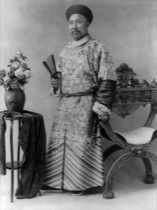
					<b><p>Nate</p>: </b><em>?After studying at an Anglican university in Hong Kong and then becoming the first East Asian to be admitted as a barrister in England, <a href="http://en.wikipedia.org/wiki/Wu_Tingfang">Wu Tingfang</a> served as the Qing Dynasty's minister to the United States, Spain, and Peru around the turn of the last century. His 1914 book comparing American and Chinese cultures is a fascinating, moving, and at times amusing read; it was written in part to counter the era's entrenched discrimination against Chinese immigrants. I particularly enjoyed his bafflement at the Americans' boast of calling their president, simply, "Mr."; he argues (in a playful but serious manner) for a more exalted title.?</em><br />
		
		<div style="float:right; padding:15px 5px 5px 5px"><img src="http://culture-making.com/media/450px-Wu_Tingfang1_210.jpg" alt="image"></div><p>[T]here are railroad kings, copper kings, tobacco kings, etc. It is, however, manifestly improper and incongruous that the people should possess a higher title than their President, who is the head of the nation. To make it even, I would suggest that the title “President” be changed to “Emperor,” for the following reasons: First, it would not only do away with the impropriety of the chief magistrate of the nation assuming a name below that of some of his people, but it would place him on a level with the highest ruler of any nation on the face of the earth. I have often heard the remark that the President of the United States is no more than a common citizen, elected for four years, and that on the expiration of his term he reverts to his former humble status of a private citizen; that he has nothing in common with the dignified majesty of an Emperor; but were the highest official of the United States to be in future officially known as Emperor, all these depreciatory remarks would fall to the ground. There is no reason whatever why he should not be so styled, as, by virtue of his high office, he possesses almost as much power as the most aristocratic ruler of any nation. Secondly, it would clearly demonstrate the sovereign power of the people; a people who could make and unmake an Emperor, would certainly be highly respected. Thirdly, the United States sends ambassadors to Germany, Austria, Russia, etc. According to international law, ambassadors have what is called the representative character, that is, they represent their sovereign by whom they are delegated, and are entitled to the same honors to which their constituent would be entitled were he personally present. In a Republic where the head of the State is only a citizen and the sovereign is the people, it is only by a stretch of imagination that its ambassador can be said to represent the person of his sovereign. Now it would be much more in consonance with the dignified character of an American ambassador to be the representative of an Emperor than of a simple President. The name of Emperor may be distasteful to some, but may not a new meaning be given to it?</p><hr />
<div class="author" style="font-size: -1">from <i><a href="http://books.google.com/books?id=VTcTAAAAYAAJ&printsec=frontcover&dq=america+through+the+spectacles&ei=U9N0SfLhHobWlQTa9ZG6Dg#">America, Through the Spectacles of an Oriental Diplomat</a></i>," by Wu Tingfang (1914)</div>		


      ]]></content>
    </entry>    <entry>
      <title>Down payments on a different reality</title>
      <link rel="alternate" type="text/html" href="https://culture-making.com/post/down_payments_on_a_different_reality" />
      <id>tag:culture-makers.com,2025:author/1.1122</id>
      <published>2025-01-02T22:53:00Z</published>
      <updated>2025-01-03T22:54:05Z</updated>
      <author>
            <name>Andy Crouch</name>
            <email>andy@culture-making.com</email>
            
      </author>

      <content type="html"><![CDATA[


		<p>Like the disciplines of fidelity and chastity, simplicity and generosity, acts of service and stewardship are not just quaint or pious exercises to make us better people. They are down payments on our faith that the reality of power, that most slippery of all human realities, is not as it appears.</p><br />
		<p><small>	&mdash;<i>Culture Making</i>, p. 233</small></p>


      ]]></content>
    </entry>    <entry>
      <title>Getting beyond “I don’t know”</title>
      <link rel="alternate" type="text/html" href="https://culture-making.com/post/getting_beyond_i_dont_know" />
      <id>tag:culture-makers.com,2025:author/1.1021</id>
      <published>2025-01-02T22:53:00Z</published>
      <updated>2025-01-03T22:54:05Z</updated>
      <author>
            <name>Andy Crouch</name>
            <email>andy@culture-making.com</email>
            
      </author>

      <content type="html"><![CDATA[


					<b><p>Nate</p>: </b><em>?Earlier today in Kenya, my friend Megan hosted the Nairobi launch party for her new non-profit, <a href="http://www.zanaafrica.org/">ZanaAfrica</a>, which (in development-speak) focuses on "simple, sustainable business solutions to solve complex health and social problems throughout Africa to alleviate poverty." Or, to quote the page of <i>Culture Making</i> where Andy mentions Megan's work: "So where are we called to create culture? At the intersection of grace and cross. Where do we find our work and play bearing awe-inspiring fruit—and, at the same time, find ourselves able to identify with Christ on the cross? That intersection is where we are called to dig into the dirt, cultivate, and create."?</em><br />
		
		<p>This organization, and this sanitary pads project, comes as a result of many years of working with girls in Kenya, seeing problems, and searching for solutions. And it comes from living in Kenya for more than seven years now, and revising the way I see the world in light of new information and new experiences. </p><p>When I worked for five years with former street children, our organization’s biggest costs per child were bread and sanitary pads. I realized this was a national problem, that girls across the country went through horrible things during their periods.</p><p>This to me was a question of social justice. The poverty that mires 64% of Kenyans is unjust. To allow girls and their future families to sink further into poverty because they lack the funds necessary to stem the flow of their monthly menstruation and sit out of school four days a month—I cannot be the person who knows but remains on the sidelines. I believe the words of my high school mentor, Denise Fuller, who said, “the easiest words for someone to say are ‘I don’t know’. Because, once we know, we are required to do something.”
<br />

</p><hr />
<div class="author" style="font-size: -1">from a <a href="http://www.zanaafrica.org/zinner.asp?pcat=&cat=news&sid=31">blog post</a> by Megan White, <a href="http://www.zanaafrica.org/default.asp">ZanaA :: Tools for Transformation</a>, 10 September, 2008</div>		


      ]]></content>
    </entry>    <entry>
      <title>Power paradox</title>
      <link rel="alternate" type="text/html" href="https://culture-making.com/post/power_paradox" />
      <id>tag:culture-makers.com,2025:author/1.1016</id>
      <published>2025-01-02T22:53:00Z</published>
      <updated>2025-01-03T22:54:05Z</updated>
      <author>
            <name>Andy Crouch</name>
            <email>andy@culture-making.com</email>
            
      </author>

      <content type="html"><![CDATA[


		<p>No one ever knows how much power they have. You know, certainly, when you are having sex. You can count your money. But there is no way to reliably measure power, especially at the moments when we most want and need it.</p><br />
		<p><small>	&mdash;<i>Culture Making</i>, p.222</small></p>


      ]]></content>
    </entry>    <entry>
      <title>Tough luck, Mel</title>
      <link rel="alternate" type="text/html" href="https://culture-making.com/post/tough_luck_mel" />
      <id>tag:culture-makers.com,2025:author/1.998</id>
      <published>2025-01-02T22:53:00Z</published>
      <updated>2025-01-03T22:54:05Z</updated>
      <author>
            <name>Andy Crouch</name>
            <email>andy@culture-making.com</email>
            
      </author>

      <content type="html"><![CDATA[


					<b><p>Nate</p>: </b><em>?A fable of conflicting values and the mistaken assumption that Hollywood would have sufficiant cultural clout even in a rugged corner of South Africa—it looks like the forthcoming Biblical film epic <i>The Lamb</i> will have to be staged somewhere else. Best quote from the article not in the excerpt below: "The Rev. Cyril Smith, whose cathedral would have been made into a Mexican village film set, says the consortium miscalculated the level of opposition and the legal status of the land."?</em><br />
		
		<p>A filmmaker’s dream of building a Hollywood-style studio in the northern part of South Africa has been blocked after a passionate campaign by the local Khoi-San community. Residents of the remote and desolate town of Pella say they do not care about the millions of dollars promised or the prospect of A-list celebrities flying in on private jets and instead wanted to keep their “sacred” scrubland, which was won in battle by their forefathers.</p<p>Desert Star Studios wanted to transform their ancestral lands into a giant studio featuring biblical and cowboy film sets, production offices, stunt tracks, storehouses, and workshops, plus a luxury resort, golf course, and private landing strip. The consortium planned to spend $14 million on the project which it says would create 18,000 jobs and generate a further $14.2 million income for the area over the next 10 years—a huge sum for a relatively poor province.</p><p>A visit to the semi-desert area can see its potential. The flat scrubland nestles between giant mountains under clear blue skies. There are hidden valleys cut by tributaries to the mighty Orange River, and one mountain resembling the doomed Israeli fortress of Masada.</p><p>But the filmmakers underestimated the will of the local 5,000-strong population who put the spiritual value of the land over any potential economic gain and nixed the plan last month. “No money in the world can buy this land,” says Ina Basson, secretary of the Pella Community Forum. “It is ours and has sentimental value. Our forefathers fought the Germans for this land and had to battle to keep it. They have spilled blood for the land and for us, and it is not for sale. “[The producers] said Mel Gibson and Halle Berry would fly in to do movies, and that Tiger Woods would design the golf course,” adds Ms. Basson. “We don’t care about them. We want to live here.”
</p><hr />
<div class="author" style="font-size: -1">from "<a href="http://www.csmonitor.com/2008/1031/p07s01-woaf.html">Africans say 'no deal' to $14 million movie studio</a>," by Ian Evans, <a href="http://www.csmonitor.com/2008/1031/p07s01-woaf.html"><i>Christian Science Monitor</i></a>, 31 October, 2008</div>		


      ]]></content>
    </entry>    <entry>
      <title>Rice husk power</title>
      <link rel="alternate" type="text/html" href="https://culture-making.com/post/rice_husk_power" />
      <id>tag:culture-makers.com,2025:author/1.989</id>
      <published>2025-01-02T22:53:00Z</published>
      <updated>2025-01-03T22:54:05Z</updated>
      <author>
            <name>Andy Crouch</name>
            <email>andy@culture-making.com</email>
            
      </author>

      <content type="html"><![CDATA[


					<b><p>Nate</p>: </b><em>?Here's a cool-sounding example of a company developing for-profit "meso-power" stations that take local agricultural waste and use it to generate electricity for rural villages in India.?</em><br />
		
		<p><b>NextBillion.net</b>: Tell me about rice husk – what is it, how much is there, where do you find them?&nbsp; What do farmers do with them now?</p><p><b>Chip Ransler</b>: <a target="new" href="http://en.wikipedia.org/wiki/Rice_hulls">Rice husk</a> is the outside of a rice kernel.&nbsp; When you harvest rice, husk represents about 30 percent of the gross weight.&nbsp; As a result, husks are removed and discarded before transport.&nbsp; In a typical village, about 1500 tons of rice are harvested every season, yielding 500 tons of husk and 1000 tons of edible product.&nbsp; The farmers either burn the husk or allow it to rot in the fields.</p><p>Rice husk is <a target="new" href="http://en.wikipedia.org/wiki/Cellulose">cellulosic</a>, which means it can be heated up and released for energy – the gas released is similar to methane.&nbsp; It also contains silica, which is released as a waste product when burned.</p><p>So, why is this interesting?&nbsp; If you took a map of the world’s energy poor areas and compare it to a map of rice producing areas, these two maps would look nearly identical.&nbsp; So we use husk to make electricity.&nbsp; The gas we make out of the husk is filtered, then run through a diesel-like engine to generate power. </p><p>Like I said, farmers throw away or burn rice husk – releasing methane into the atmosphere.&nbsp; This is an opportunity too.&nbsp; We’re working with the Indian government on getting our <a target="new" href="http://en.wikipedia.org/wiki/Clean_Development_Mechanism">Clean Development Mechanism</a> certification to sell carbon credits associated with our plants.&nbsp; And the silica – which is the other waste product – is sold to concrete manufacturers.&nbsp; So we take agricultural waste and turn it into electricity, minerals and carbon credits.</p><hr />
<div class="author" style="font-size: -1">from "<a href="http://www.worldchanging.com/archives/008923.html">Rice Power to the People With Husk Power Systems</a>," by Robert Katz, <a href="http://www.worldchanging.com/archives/008923.html">WorldChanging</a>, 28 October 2008</div>		


      ]]></content>
    </entry>    <entry>
      <title>Face&#45;off</title>
      <link rel="alternate" type="text/html" href="https://culture-making.com/post/face_off" />
      <id>tag:culture-makers.com,2025:author/1.984</id>
      <published>2025-01-02T22:53:00Z</published>
      <updated>2025-01-03T22:54:05Z</updated>
      <author>
            <name>Andy Crouch</name>
            <email>andy@culture-making.com</email>
            
      </author>

      <content type="html"><![CDATA[


		<p>With all the plastic surgery money could buy, you or I will never look like Princess Diana in her prime—but for absolutely no cost except a life of love, we could all look like Mother Teresa.</p><br />
		<p><small>	&mdash;<i>Culture Making</i>, p.219</small></p>


      ]]></content>
    </entry>

</feed>