<?xml version="1.0" encoding="utf-8"?>
<feed xmlns="http://www.w3.org/2005/Atom" xml:lang="en">

    <title type="text">Culture Making Articles items tagged objects</title>
    <subtitle type="text">Culture Making Articles:Writing on Christianity and culture from Andy Crouch</subtitle>
    <link rel="alternate" type="text/html" href="http://culture-makers.com/" />
    <link rel="self" type="application/atom+xml" href="https://culture-making.com/tag/atom" />
    <updated>2025-01-03T22:54:05Z</updated>
    <rights>Copyright (c) 2025, Andy Crouch</rights>
    <generator uri="http://www.pmachine.com/" version="7.5.15">ExpressionEngine</generator>
    <id>tag:culture-makers.com,2025:01:02</id>

    <entry>
      <title>Everything is Everything, by Koki Tanaka</title>
      <link rel="alternate" type="text/html" href="https://culture-making.com/post/everything_is_everything_by_koki_tanaka" />
      <id>tag:culture-makers.com,2025:author/1.1819</id>
      <published>2025-01-02T22:53:00Z</published>
      <updated>2025-01-03T22:54:05Z</updated>
      <author>
            <name>Andy Crouch</name>
            <email>andy@culture-making.com</email>
            
      </author>

      <content type="html"><![CDATA[


			<p align="center"><object width="420" height="340"><param name="movie" value="http://www.youtube.com/v/geh0WRYnLao&amp;hl=en_US&amp;fs=1&amp;"></param><param name="allowFullScreen" value="true"></param><param name="allowscriptaccess" value="always"></param><embed src="http://www.youtube.com/v/geh0WRYnLao&amp;hl=en_US&amp;fs=1&amp;" type="application/x-shockwave-flash" allowscriptaccess="always" allowfullscreen="true" width="420" height="340"></embed></object></p><br />
<b>Nate: </b><em>?There's an odd decisive joy to this short film of odd decisive actions. I love the sense of deadpan discovery as the filmmaker finds abbreviated new uses and gestures for everyday plastic things, conjuring up a dance of objects for an audience of food. Really.?</em><br />
<hr /><span style="font-size: -1">"<a href="http://www.youtube.com/watch?v=geh0WRYnLao">Everything is Everything: Alternate Version for Single Channel</a>," by <a href="http://www.kktnk.com/koki_tanaka_works.html">Koki Tanaka</a>, 2007 :: via <a href="http://feedproxy.google.com/~r/CoudalFreshSignals/~3/QP__OoJq3-0/people_doing_st.php">Coudal Partners</a></span>


      ]]></content>
    </entry>    <entry>
      <title>Significant objects</title>
      <link rel="alternate" type="text/html" href="https://culture-making.com/post/significant_objects1" />
      <id>tag:culture-makers.com,2025:author/1.1804</id>
      <published>2025-01-02T22:53:00Z</published>
      <updated>2025-01-03T22:54:05Z</updated>
      <author>
            <name>Andy Crouch</name>
            <email>andy@culture-making.com</email>
            
      </author>

      <content type="html"><![CDATA[


					<b>Nate: </b><em>?A fascinating exploration of the the intersecting values of thing-ness and story-ness: thrift store junk given invented backstories and resold. At the <a href="http://significantobjects.com/">Significant Objects</a> website they've got detailed analysis of just <a href="http://significantobjects.com/2010/02/04/which-exposition-strategy-adds-the-most-value/">what sort of narrative strategy</a> seems to yeild the greatest increase in value at auction.?</em><br />
		
		<p><b>MIL: Where did the original idea come from?</b></p><p><b>
RW:</b> Both Josh and I already spend too much time thinking about value and objects, I guess. There is one minor detail of interest in the back story of S.O.: I broke a coffee cup I&#8217;d bought as a souvenir on a trip with my now-wife, early in our relationship. I was very sad to have ruined it, but I realised it only had value to me—it was just a coffee cup from some diner—because of the story behind it. This got me thinking about whether stories for worthless-seeming objects could be invented, and whether that would increase their value. That led to conversations with Josh that culminated in Significant Objects: We would buy cheap thingamabobs from yard sales and thrift stores and the like, recruit creative writers to invent stories about them, then put the object up for auction on eBay with the invented provenance as its description. (It&#8217;s important to note that we were explicit about the invented nature of the Significance; there was no hoaxing.)</p><p><b>

MIL: Are you surprised by the results?</b></p><p><b>

RW:</b> We expected that the stories would increase the value of the objects—but we were very surprised by how much. The first round involved 100 objects/stories, and in the end we sold $128.74 worth of thrift-store junk for $3,612.51. (The money went to the writers in Volume 1, by the way.) That&#8217;s a Significance Markup of more than 2,700%. While nothing we bought cost us more than $4 (and most were a buck), several objects sold for more than $100. We did not think the prices would go that high. I still have old e-mail exchanges between Josh and me from the first week, as we were very excited to see auctions reach, say, $15.</p><hr />
<div class="author" style="font-size: -1">from "<a href="http://www.moreintelligentlife.com/blog/ariel-ramchandani/qa-rob-walker-significant-objects?utm_source=feedburner&utm_medium=feed&utm_campaign=Feed:+MoreintelligentlifeTotal+(moreintelligentlife.com+-+total)&utm_content=Google+Reader">Rob Walker, Consumer, Thingamabob Connoisseur</a>," by Ariel Ramchandani, <a href="http://www.moreintelligentlife.com/blog/ariel-ramchandani/qa-rob-walker-significant-objects?utm_source=feedburner&utm_medium=feed&utm_campaign=Feed:+MoreintelligentlifeTotal+(moreintelligentlife.com+-+total)&utm_content=Google+Reader"><i>More Intelligent Life</i></a>, 8 Februrary 2010</div>		


      ]]></content>
    </entry>    <entry>
      <title>Cocktails with Picasso, by Mimi Jensen</title>
      <link rel="alternate" type="text/html" href="https://culture-making.com/post/cocktails_with_picasso_by_mimi_jensen" />
      <id>tag:culture-makers.com,2025:author/1.1432</id>
      <published>2025-01-02T22:53:00Z</published>
      <updated>2025-01-03T22:54:05Z</updated>
      <author>
            <name>Andy Crouch</name>
            <email>andy@culture-making.com</email>
            
      </author>

      <content type="html"><![CDATA[


					<b>Nate: </b><em>?This is actually not my favorite San Francisco painter Mimi Jenson's still lifes, though it's still quite good. But what stopped me short is that I have that exact cut-rate Picasso etching on my wall, and for that matter a Montecristo cigar box full of old maps on my bookshelf. So nice to encounter old friends in surprising settings.?</em><br />
		
		<a href="http://www.mimijensen.com/pages/cocktails_with_picasso.phtml"><img src="http://culture-making.com/media/cocktails_with_picasso.jpg" alt="image" /></a><hr />
<div class="author" style="font-size: -1"><a href="http://www.mimijensen.com/pages/cocktails_with_picasso.phtml">Cocktails with Picasso</a>, oil on canvas (2007) by Mimi Jenson :: via <a href="http://www.newamericanpaintings.com/">New American Paintings</a></div>		


      ]]></content>
    </entry>    <entry>
      <title>Rich objects</title>
      <link rel="alternate" type="text/html" href="https://culture-making.com/post/rich_objects" />
      <id>tag:culture-makers.com,2025:author/1.1214</id>
      <published>2025-01-02T22:53:00Z</published>
      <updated>2025-01-03T22:54:05Z</updated>
      <author>
            <name>Andy Crouch</name>
            <email>andy@culture-making.com</email>
            
      </author>

      <content type="html"><![CDATA[


					<b><p>Nate</p>: </b><em>?On cultural artifacts, the science of child development, and the child's development of science.?</em><br />
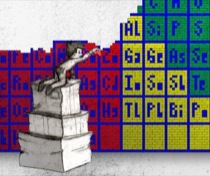
		
		<div style="float:right; padding:15px 5px 5px 5px"><img src="http://culture-making.com/media/OMMLegoWideARTICLE_210.jpg" alt="image"></div><p>Science is fueled by passion, a passion that is often attached to the world of objects much as the artist is attached to his paints, the poet to her words. From my first days at the Massachusetts Institute of Technology in 1976, I saw this passion for objects everywhere. My students and colleagues told how they were drawn into science by the physics of sand castles, by playing with soap bubbles, by the mesmerizing power of a crystal radio.</p><p>Since this was the early days of computer culture, there was also talk of new objects. Some people identified with their computers, experiencing these machines as extensions of themselves. For them, computers were useful for thinking about larger questions, questions of determinism and free will, of mind and mechanism ...</p><p>Objects don’t nudge every child toward science, but for some, a rich object world is the best way to give science a chance. Given the opportunity, children will make intimate connections, connections they must construct on their own ...</p><p>If we attend to young scientists’ romance with objects, we are encouraged to make children comfortable with the idea that falling in love with things is part of what we expect of them. We are encouraged to introduce the periodic table as poetry and LEGOs as a form of art.</p><hr />
<div class="author" style="font-size: -1">from "<a href="http://www.seedmagazine.com/news/2009/01/sherry_turkle_on_the_romance_o.php">The Romance of Objects</a>," by Sherry Turkle, <a href="http://www.seedmagazine.com/news/2009/01/sherry_turkle_on_the_romance_o.php"><i>Seed</i></a>, 9 January 2009</div>		


      ]]></content>
    </entry>

</feed>