<?xml version="1.0" encoding="utf-8"?>
<feed xmlns="http://www.w3.org/2005/Atom" xml:lang="en">

    <title type="text">Culture Making Articles items tagged music</title>
    <subtitle type="text">Culture Making Articles:Writing on Christianity and culture from Andy Crouch</subtitle>
    <link rel="alternate" type="text/html" href="http://culture-makers.com/" />
    <link rel="self" type="application/atom+xml" href="https://culture-making.com/tag/atom" />
    <updated>2025-01-03T22:54:05Z</updated>
    <rights>Copyright (c) 2025, Andy Crouch</rights>
    <generator uri="http://www.pmachine.com/" version="7.5.15">ExpressionEngine</generator>
    <id>tag:culture-makers.com,2025:01:02</id>

    <entry>
      <title>New Years Rulin’s</title>
      <link rel="alternate" type="text/html" href="https://culture-making.com/post/new_years_rulins" />
      <id>tag:culture-makers.com,2025:author/1.2014</id>
      <published>2025-01-02T22:53:00Z</published>
      <updated>2025-01-03T22:54:05Z</updated>
      <author>
            <name>Andy Crouch</name>
            <email>andy@culture-making.com</email>
            
      </author>

      <content type="html"><![CDATA[


					<b>Nate: </b><em>?From a list of folk singer Woody Guthrie's 1942 New Year's resolutions: a collection of low and high goals. The <a href="http://www.woodyguthrie.org/newyearsrulins.htm">second page</a> gets more metaphorical and far-seeing ("19. KEEP HOPING MACHINE RUNNING"; "31. LOVE EVERYBODY"). The item before "PLAY AND SING GOOD" strikes a pang: "SEND MARY AND KIDS MONEY", a reminder of the family he'd left behind for the rambling' lifestyle. Culture-making, however great, always comes at a cost. This July will mark the 100th anniversary of Woody's birth.?</em><br />
		
		<a href="http://www.woodyguthrie.org/newyearsrulins.htm"><img src="http://www.culture-making.com/media/guthrie.jpg" alt="image" /></a><hr />
<div class="author" style="font-size: -1">from "<a href="http://www.woodyguthrie.org/newyearsrulins.htm">New Year's Rulin's</a>," by Woody Guthrie, 31 January1942, from the archives of the <a href="http://www.woodyguthrie.org/newyearsrulins.htm">Woody Guthrie Foundation</a> :: via <a href="http://www.listsofnote.com/2011/12/new-years-rulins.html">Lists of Note</a></div>		


      ]]></content>
    </entry>    <entry>
      <title>Rethinking one’s own position as a creator</title>
      <link rel="alternate" type="text/html" href="https://culture-making.com/post/rethinking_ones_own_position_as_a_creator" />
      <id>tag:culture-makers.com,2025:author/1.2008</id>
      <published>2025-01-02T22:53:00Z</published>
      <updated>2025-01-03T22:54:05Z</updated>
      <author>
            <name>Andy Crouch</name>
            <email>andy@culture-making.com</email>
            
      </author>

      <content type="html"><![CDATA[


					<b>Nate: </b><em>?Is a composer like an architect, directing every detail of the music, from its structure to its finish? That, says Brian Eno, is the traditional view (never mind my architect friends' complaints about the impossibility of getting builders to fully follow the blueprints).  As you might guess, Eno prefers another approach, less about wresting control than laying a groundwork and then seeing what grows.?</em><br />
		
		<p>And essentially the idea there is that one is making a kind of music in the way that one might make a garden.  One is carefully constructing seeds, or finding seeds, carefully planting them and then letting them have their life.  And that life isn&#8217;t necessarily exactly what you&#8217;d envisaged for them.  It&#8217;s characteristic of the kind of work that I do that I&#8217;m really not aware of how the final result is going to look or sound.  So in fact, I&#8217;m deliberately constructing systems that will put me in the same position as any other member of the audience.  I want to be surprised by it as well.  And indeed, I often am.</p>

<p>What this means, really, is a rethinking of one&#8217;s own position as a creator.  You stop thinking of yourself as me, the controller, you the audience, and you start thinking of all of us as the audience, all of us as people enjoying the garden together.  Gardener included.  So there&#8217;s something in the notes to this thing that says something about the difference between order and disorder.</p><hr />
<div class="author" style="font-size: -1">from "<a href="http://edge.org/conversation/composers-as-gardeners">Composers As Gardeners</a>," by Brian Eno, <a href="http://edge.org/conversation/composers-as-gardeners">Edge</a>, 10 November 2011 :: via <a href="http://thebrowser.com/articles/composers-gardeners">The Browser</a></div>		


      ]]></content>
    </entry>    <entry>
      <title>The Wexford Carol &#45; Allison Krauss with Yo&#45;Yo Ma</title>
      <link rel="alternate" type="text/html" href="https://culture-making.com/post/yo-yo_maalison_krauss_-_the_wexford_carol_-_youtube" />
      <id>tag:culture-makers.com,2025:author/1.2006</id>
      <published>2025-01-02T22:53:00Z</published>
      <updated>2025-01-03T22:54:05Z</updated>
      <author>
            <name>Andy Crouch</name>
            <email>andy@culture-making.com</email>
            
      </author>

      <content type="html"><![CDATA[


			<p><iframe width="420" height="236" src="http://www.youtube.com/embed/yxDZjg_Igoc" frameborder="0" allowfullscreen></p><p></iframe></p><br />
<b>Nate: </b><em>?A little third-week-of-Advent music for our faithful readers. It's hardly either lead artist's best work, but still quite a combo. It takes a little while to verify that much of the backing music isn't coming from the cello. Lyrics and history of the carol are <a href="http://www.hymnsandcarolsofchristmas.com/Hymns_and_Carols/wexford_carol.htm">here<a>.?</em><br />
<hr /><span style="font-size: -1">"<a href="http://www.youtube.com/watch?v=yxDZjg_Igoc&feature=youtu.be">The Wexford Carol</a>," by Yo-Yo Ma featuring Alison Krauss, part of Ma's album <i><a href="http://www.youtube.com/watch?v=yxDZjg_Igoc&feature=youtu.be">Songs of Joy & Peace</a></i>, 2008 :: via Metafilter's  <a href="http://www.metafilter.com/110375/TwentyFive-SemiObscure-Traditional-Christmas-Songs-as-Performed-by-Famous-and-NonFamous-People">Twenty-Five Semi-Obscure Traditional Christmas Songs as Performed by Famous and Non-Famous People</a></span>


      ]]></content>
    </entry>    <entry>
      <title>Tastes great, but is it art?</title>
      <link rel="alternate" type="text/html" href="https://culture-making.com/post/tastes_great_but_is_it_art" />
      <id>tag:culture-makers.com,2025:author/1.1350</id>
      <published>2025-01-02T22:53:00Z</published>
      <updated>2025-01-03T22:54:05Z</updated>
      <author>
            <name>Andy Crouch</name>
            <email>andy@culture-making.com</email>
            
      </author>

      <content type="html"><![CDATA[


					<b><p>Nate</p>: </b><em>?Fun and important questions about the aesthetics of food (and, for that matter, the aesthetics of aesthetics). At the end of the day it's all culture, though.?</em><br />
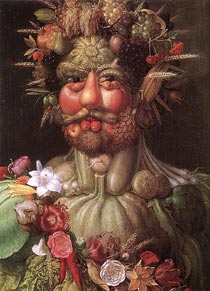
		
		<div style="float:right; padding:15px 5px 5px 5px"><img src="http://culture-making.com/media/433px-Arcimboldovertemnus_210.jpg" alt="image"></div><p>What issues might we be thinking about in trying to decide whether to classify cooking as one of the arts? Here are some.</p>
<p>1) Is the person who says of the Chateau Petrus they have just tasted that it is a work of art to be taken literally? </p>
<p>2) Is the experience we have of a Beethoven String Quartet sufficiently different from that we have when eating a great meal so that we should distinguish them as different kinds of experience?</p>
<p>3) Does it make sense to say of someone that they have been moved by a meal?</p>
<p>4) Is it significant for classifying something as an art form that a meal is consumed in the process of appreciation?</p>
<p>5) When I say of Grant Achatz that he is an artist in the kitchen how does this differ from saying he is a genius at the stove?</p>
<p>6) Why do we distinguish between the architect who designed Notre Dame and those who built it by designating the latter as craftsmen and the former as an artist? Is there a class bias exhibited by this distinction?</p>
<p>7) A piece of music can express sadness. A pate cannot. So?
</p><hr />
<div class="author" style="font-size: -1">from "<a href="http://www.3quarksdaily.com/3quarksdaily/2009/03/penne-for-your-thought.html">Penne for Your Thought</a>," by Gerald Dworkin, <a href="http://www.3quarksdaily.com/3quarksdaily/2009/03/penne-for-your-thought.html">3quarksdaily</a>, 9 March 2009 :: <a href="http://en.wikipedia.org/wiki/Giuseppe_Arcimboldo">Vertemnus / Rudolf II</a>, by Giuseppe Arcimboldo (1527–1593), Wikipedia :: first posted here 18 March 2009</div>		


      ]]></content>
    </entry>    <entry>
      <title>My kind of body art</title>
      <link rel="alternate" type="text/html" href="https://culture-making.com/post/my_kind_of_body_art" />
      <id>tag:culture-makers.com,2025:author/1.1725</id>
      <published>2025-01-02T22:53:00Z</published>
      <updated>2025-01-03T22:54:05Z</updated>
      <author>
            <name>Andy Crouch</name>
            <email>andy@culture-making.com</email>
            
      </author>

      <content type="html"><![CDATA[


			<p align="center"><object width="420" height="340"><param name="movie" value="http://www.youtube.com/v/-GugzLSbOQE&amp;hl=en_US&amp;fs=1&amp;"></param><param name="allowFullScreen" value="true"></param><param name="allowscriptaccess" value="always"></param><embed src="http://www.youtube.com/v/-GugzLSbOQE&amp;hl=en_US&amp;fs=1&amp;" type="application/x-shockwave-flash" allowscriptaccess="always" allowfullscreen="true" width="420" height="340"></embed></object></p><br />
<b>Christy: </b><em>?The human imagination never ceases to amaze and astound me. Give a creative person a blank (body) canvas, a Magic Marker, a camera and a Tom Waits song, and you get this marvelous stop-motion  message of hope and invitation.?</em><br />
<hr /><span style="font-size: -1">"<a href="http://www.youtube.com/watch?v=-GugzLSbOQE&feature=player_embedded">Come On Up To The House</a>," by Tom Waits, directed by Anders Lövgren :: first posted here 20 November 2009</span>


      ]]></content>
    </entry>    <entry>
      <title>Secular praise songs from Western Kenya</title>
      <link rel="alternate" type="text/html" href="https://culture-making.com/post/secular_praise_songs_from_western_kenya" />
      <id>tag:culture-makers.com,2025:author/1.1044</id>
      <published>2025-01-02T22:53:00Z</published>
      <updated>2025-01-03T22:54:05Z</updated>
      <author>
            <name>Andy Crouch</name>
            <email>andy@culture-making.com</email>
            
      </author>

      <content type="html"><![CDATA[


					<b><p>Nate</p>: </b><em>?This is from a really wonderful blog (my <a href="http://www.voanews.com/english/africa/blog/">tax dollars at work</a>!) that posts decades-old African pop music, accompanied by lengthy history and commentary. Here's the brief background: "The Kawere Boys were formed by Cheplin Ngode Kotula in Kericho, Kenya in 1974, and over the next four years became one of the more popular Benga groups in Luo land. ... These recordings were not only popular throughout Luo land, but also sold well in Tanzania, Malawi, South Africa, Nigeria, Cameroun, and West Africa." It's fascinating and heartening to learn these tales of cultural spread that bypass the usual centers of power (Europe, the U.S., heck, even Nairobi). Also—fascinating relationship between artist and patron: the patron doesn't just make the song possible, he is the song's subject.?</em><br />
		
		<div style="float:right; padding:15px 5px 5px 5px"><img src="http://culture-making.com/media/pd_africanblog_kaweremuma_420.jpg" alt="image"></div><p><a href="http://www.voanews.com//english/africa/blog/images/Media/KAWERE_BOYS_Muma_Ben.Mp3">The Kawere Boys ‘Muma Ben’ (1974) mp3</a></p>
<p>Most of the songs in the Kawere repertoire seem to be praise songs for patrons who had invited the group to perform. These songs can be thought of as pre-internet age social networking. The singer usually starts by introducing himself, goes on to introduce the object of his praise, as well as the patron’s relatives, friends, and neighbors, before explaining the nature of his relationship to the patron in question. For example, in ‘Muma Ben’, the song starts with an introduction of ‘Muma Ben from Saye Konyango’, then introduces Muma Ben’s family, and ends with praise for the hospitality the singer received when he was invited to Muma Ben’s house. If you were to map out all of the relationships outlined in the Kawere Boys singles in our collection, and if you had a deep understanding of Luo culture, you could get a good idea of the social networks the Kawere Boys relied upon for their livelihood.</p><hr />
<div class="author" style="font-size: -1">from "<a href="http://www.voanews.com/english/africa/blog/index.cfm?mode=entry&entry=9176649F-F9A9-411F-29F74F07F256F725">The Kawere Boys</a>," by Matthew LaVoie, <a href="http://www.voanews.com/english/africa/blog/index.cfm?mode=entry&entry=9176649F-F9A9-411F-29F74F07F256F725">Voice of America African Music Treasures Blog</a>, 12 November 2008 :: first posted here 12 November 2008</div>		


      ]]></content>
    </entry>    <entry>
      <title>No armadillos were harmed in the production of this essay</title>
      <link rel="alternate" type="text/html" href="https://culture-making.com/post/no_armadillos_were_harmed_in_the_production_of_this_essay" />
      <id>tag:culture-makers.com,2025:author/1.1963</id>
      <published>2025-01-02T22:53:00Z</published>
      <updated>2025-01-03T22:54:05Z</updated>
      <author>
            <name>Andy Crouch</name>
            <email>andy@culture-making.com</email>
            
      </author>

      <content type="html"><![CDATA[


					<b>Nate: </b><em>?I forgot to post it when it came out, but here's my latest essay for Comment magazine's "Comforts and Delights" web feature.?</em><br />
		
		<p>A few months ago, around my thirty-fourth birthday, I decided what I really needed was a smaller guitar. A man reaches a certain age, I guess, and after spending most of my life figuring out tunes on a classical guitar, I figured I&#8217;d gotten as good at &#8220;Wayfaring Stranger&#8221; as I was going to get. I thought something smaller might enliven the mix.</p>

<p>There aren&#8217;t really any standard guitars more diminutive than my Yamaha classical—I toyed with the idea of a Martin 000-series like Woody Guthrie painted up and played (\&#8220;This Machine Kills Fascists&#8221;). But I realized that my desire to tweak Guthrie&#8217;s proto-punk motto into something more comfortably charitable (&#8220;This Machine Loves Fascists&#8221;? Wait, that doesn&#8217;t sound right) would probably make the 000 a not-quite-satisfying axe. Besides, other musical cultures—and more importantly, more-fun-to-say instrument names—beckoned.</p>
<p><a href="http://www.cardus.ca/comment/article/2212/">Read More&#8230;</a></p><hr />
<div class="author" style="font-size: -1">from "<a href="http://www.cardus.ca/comment/article/2212/">My Charango</a>," by Nate Barksdale, <a href="http://www.cardus.ca/comment/article/2212/">Cardus</a>, 24 September 2010</div>		


      ]]></content>
    </entry>    <entry>
      <title>Interpreters, not just reenactors</title>
      <link rel="alternate" type="text/html" href="https://culture-making.com/post/interpreters_not_just_reenactors" />
      <id>tag:culture-makers.com,2025:author/1.1872</id>
      <published>2025-01-02T22:53:00Z</published>
      <updated>2025-01-03T22:54:05Z</updated>
      <author>
            <name>Andy Crouch</name>
            <email>andy@culture-making.com</email>
            
      </author>

      <content type="html"><![CDATA[


			<p><object width="420" height="253"><param name="movie" value="http://www.youtube.com/v/XbcqGjeNz7w&amp;hl=en_US&amp;fs=1&amp;rel=0"></param><param name="allowFullScreen" value="true"></param><param name="allowscriptaccess" value="always"></param><embed src="http://www.youtube.com/v/XbcqGjeNz7w&amp;hl=en_US&amp;fs=1&amp;rel=0" type="application/x-shockwave-flash" allowscriptaccess="always" allowfullscreen="true" width="420" height="253"></embed></object></p><br />
<b>Nathan: </b><em>?"We've all seen examples of people who very reverently recreate traditional music, and it's already a relic. . . . And then there are people like the Chocolate Drops—you can talk about the tradition with them, [and] they have studied it.  But nothing about their performance seems to suggest that they are trapped by it." (Joe Henry, producer). An amazing example of cultivating a neglected tradition and creating remarkable new music at the same time. (Don't miss the down-home remix of Blu Cantrell at the four-minute mark.)?</em><br />
<hr /><span style="font-size: -1">from "<a href="http://www.youtube.com/watch?v=XbcqGjeNz7w">The Carolina Chocolate Drops Preview Genuine Negro Jig</a>," by nonesuch records :: first posted here 19 April 2010 </span>


      ]]></content>
    </entry>    <entry>
      <title>A young person’s guide to the vuvuzela</title>
      <link rel="alternate" type="text/html" href="https://culture-making.com/post/vuvuzela" />
      <id>tag:culture-makers.com,2025:author/1.1936</id>
      <published>2025-01-02T22:53:00Z</published>
      <updated>2025-01-03T22:54:05Z</updated>
      <author>
            <name>Andy Crouch</name>
            <email>andy@culture-making.com</email>
            
      </author>

      <content type="html"><![CDATA[


			<p><object width="420" height="252"><param name="movie" value="http://www.youtube.com/v/wf2P8SnOwLo&amp;color1=0xb1b1b1&amp;color2=0xd0d0d0&amp;hl=en_US&amp;feature=player_embedded&amp;fs=1"></param><param name="allowFullScreen" value="true"></param><param name="allowScriptAccess" value="always"></param><embed src="http://www.youtube.com/v/wf2P8SnOwLo&amp;color1=0xb1b1b1&amp;color2=0xd0d0d0&amp;hl=en_US&amp;feature=player_embedded&amp;fs=1" type="application/x-shockwave-flash" allowfullscreen="true" allowScriptAccess="always" width="420" height="252"></embed></object></p><br />
<b>Andy: </b><em>?A delightfully deadpan introduction to the classical repertoire for . . . the vuvuzela.?</em><br />
<hr /><span style="font-size: -1">from "<a href="http://www.youtube.com/watch?v=wf2P8SnOwLo">Vuvuzela Concert</a>," by Zeit Online, 28 June 2010 :: via <a href="http://therestisnoise.com">Alex Ross</a> via Ted Olsen</span>


      ]]></content>
    </entry>    <entry>
      <title>Migrant family, photo by Dorthea Lange</title>
      <link rel="alternate" type="text/html" href="https://culture-making.com/post/migrant_family_photo_by_dorthea_lange" />
      <id>tag:culture-makers.com,2025:author/1.1903</id>
      <published>2025-01-02T22:53:00Z</published>
      <updated>2025-01-03T22:54:05Z</updated>
      <author>
            <name>Andy Crouch</name>
            <email>andy@culture-making.com</email>
            
      </author>

      <content type="html"><![CDATA[


					<b>Nate: </b><em>?This is one of Dorthea Lange's FSA photos that I hadn't seen before. I like the aesthetics (the cris-crossing musical-instrument vectors; the look of concentration on the mandolin-kid's face), but more than that I appreciate its depiction of "dust bowl refugees" not just as weather-beaten victims, but as culture makers (and -keepers) in their own right. The photo is part of the recently-published paperback anthology <a href="http://www.amazon.com/Hard-Luck-Blues-Photographs-Depression/dp/0252077091/cmcom-20"><i>Hard Luck Blues: Roots Music Photographs from the Great Depression</i></a>.?</em><br />
		
		<a href="http://www.oxfordamerican.org/articles/2010/may/07/hard-luck-blues/?utm_source=feedburner&utm_medium=feed&utm_campaign=Feed:+OxfordAmericanArticles+(Oxford+American+Articles)&utm_content=Google+Reader"><img src="http://culture-making.com/media/migrant_family.jpg" alt="photo" /></a><hr />
<div class="author" style="font-size: -1">"Migrant family from Arkansas playing hill-billy songs," Farm Security Administration emergency migrant camp, <a href="http://maps.google.com/places/us/ca/calipatria?gl=us">Calipatria, California</a>, photo by Dorothea Lange, February 1939 :: via the <a href="http://www.oxfordamerican.org/articles/2010/may/07/hard-luck-blues/?utm_source=feedburner&utm_medium=feed&utm_campaign=Feed:+OxfordAmericanArticles+(Oxford+American+Articles)&utm_content=Google+Reader">Oxford American</a>,</div>		


      ]]></content>
    </entry>    <entry>
      <title>Fine tuning</title>
      <link rel="alternate" type="text/html" href="https://culture-making.com/post/fine_tuning" />
      <id>tag:culture-makers.com,2025:author/1.1902</id>
      <published>2025-01-02T22:53:00Z</published>
      <updated>2025-01-03T22:54:05Z</updated>
      <author>
            <name>Andy Crouch</name>
            <email>andy@culture-making.com</email>
            
      </author>

      <content type="html"><![CDATA[


		<p>When Indian sitar virtuoso Ravi Shankar and his ensemble played at Madison Square Garden, New York, in 1971, the audience broke into rapturous applause at the first short pause. &#8220;Thank you,&#8221; said Shankar. &#8220;If you appreciate the tuning so much, I hope you will enjoy the playing more.&#8221;</p><br />
		<p><small>	&mdash;Philip Ball, "<a href="http://www.newscientist.com/article/mg20627591.300-harmonious-minds-the-hunt-for-universal-music.html?full=true">Harmonious minds: The hunt for universal music</a>"</small></p>


      ]]></content>
    </entry>    <entry>
      <title>Drawing Cash</title>
      <link rel="alternate" type="text/html" href="https://culture-making.com/post/drawing_cash" />
      <id>tag:culture-makers.com,2025:author/1.1883</id>
      <published>2025-01-02T22:53:00Z</published>
      <updated>2025-01-03T22:54:05Z</updated>
      <author>
            <name>Andy Crouch</name>
            <email>andy@culture-making.com</email>
            
      </author>

      <content type="html"><![CDATA[


			<p align="center><a href="http://www.thejohnnycashproject.com/"><img src="http://culture-making.com/media/johnnycashproject_420.jpg"></a></p><br />
<b>Nate: </b><em>?This well-done interactive site allows users to contribute frames to a rotoscoped music video of Johnny Cash's "last recording," a cover of the gospel standard "Ain't No Grave." Contributors can select or be assigned a frame from the source video (a moody compendium of archival footage) and then trace and rework it using drawing tools provided by the website. Since people are always contributing new frame drawings, the video changes quite a bit if you rewatch it a few days later. Needless to say, this is no mere cobbled-together fan site—the <a href="http://www.thejohnnycashproject.com/#/credits">credits page alone</a> is impressive.?</em><br />
<hr /><span style="font-size: -1">A fan-contributed, computer-drawn still frame from <a href="http://www.thejohnnycashproject.com/">The Johnny Cash Project</a>, 2010 :: via <a href="http://www.metafilter.com/91129/Aint-no-grave-can-hold-my-body-down">MetaFilter</a></span>


      ]]></content>
    </entry>    <entry>
      <title>Street Musicians by William H. Johnson</title>
      <link rel="alternate" type="text/html" href="https://culture-making.com/post/street_musicians_by_william_h._johnson" />
      <id>tag:culture-makers.com,2025:author/1.1850</id>
      <published>2025-01-02T22:53:00Z</published>
      <updated>2025-01-03T22:54:05Z</updated>
      <author>
            <name>Andy Crouch</name>
            <email>andy@culture-making.com</email>
            
      </author>

      <content type="html"><![CDATA[


					<b>Nate: </b><em>?William H. Johnson was an African-American painter and printmaker; he was born in Florence, South Carolina in 1901 and studied art in New York, Massachusetts, and in Europe, before returning to the States for the remainder of his career. This is from a <a href="http://www.flickr.com/photos/smithsonian/sets/72157623263871511/">series of woodcuts and linoleum prints</a> that bear a strong folk art influence but, says the Smithsonian commentary, were also inspired by German expressionist woodcutting techniques. I'm guessing the apparent left-handed guitar and violin technique is an artifact of the mirror-image printing process, though <a href="http://www.flickr.com/photos/smithsonian/4248012036/in/set-72157623263871511/">this other lovely print</a> would beg to differ.?</em><br />
		
		<a href="http://www.flickr.com/photos/smithsonian/4248040430/"><img src="http://culture-making.com/media/4248040430_b757e1802e_b.jpg" alt="image" /></a><hr />
<div class="author" style="font-size: -1">"<a href="http://www.flickr.com/photos/smithsonian/4248040430/">Street Musicians</a>," by William H. Johnson, serigraph on paper, c.1940, from <a href="http://www.flickr.com/photos/smithsonian/4248040430/">William H. Johnson's World on Paper</a>, Smithsonian/Flickr</div>		


      ]]></content>
    </entry>    <entry>
      <title>Piano transformers</title>
      <link rel="alternate" type="text/html" href="https://culture-making.com/post/piano_transformers" />
      <id>tag:culture-makers.com,2025:author/1.1829</id>
      <published>2025-01-02T22:53:00Z</published>
      <updated>2025-01-03T22:54:05Z</updated>
      <author>
            <name>Andy Crouch</name>
            <email>andy@culture-making.com</email>
            
      </author>

      <content type="html"><![CDATA[


					<b>Nate: </b><em>?Who hasn't dreamed of sleeping inside a piano? Or eating dinner on one??</em><br />
		
		<a href="http://www.brooklynmuseum.org/opencollection/objects/1808"><img src="http://culture-making.com/media/pianos.jpg" alt="image" /></a><hr />
<div class="author" style="font-size: -1">"<a href="http://www.brooklynmuseum.org/opencollection/objects/1808">Convertible Bed in Form of Upright Piano</a>," Smith & Co., 1865 :: via <a href="http://www.designspongeonline.com/2010/02/past-present-murphy-beds.html">Design*Sponge</a>; "<a href="http://www.reluct.com/network/story.php?title=pianotable-by-georg-bohle">Pianotable</a>," oakwood and electric piano, €4500, by George Bohle, 2010 :: via <a href="http://www.boingboing.net/2010/03/01/piano-built-into-a-d.html?utm_source=feedburner&utm_medium=feed&utm_campaign=Feed%3A+boingboing%2FiBag+%28Boing+Boing%29&utm_content=Google+Reader">Boing Boing</a></div>		


      ]]></content>
    </entry>    <entry>
      <title>One brick at a time, one song at a time, one download at a time</title>
      <link rel="alternate" type="text/html" href="https://culture-making.com/post/one_brick_at_a_time_one_song_at_a_time_one_download_at_a_time" />
      <id>tag:culture-makers.com,2025:author/1.1826</id>
      <published>2025-01-02T22:53:00Z</published>
      <updated>2025-01-03T22:54:05Z</updated>
      <author>
            <name>Andy Crouch</name>
            <email>andy@culture-making.com</email>
            
      </author>

      <content type="html"><![CDATA[


			<p align="center"><embed type="application/x-shockwave-flash" src="http://www.google.com/reader/ui/3247397568-audio-player.swf?audioUrl=http://media.city-gates.org/podcast_episodes/631/audio/Jacob_Marshall_2010_original.mp3" width="420" height="27" allowscriptaccess="never" quality="best" bgcolor="#ffffff" wmode="window" flashvars="playerMode=embedded" /></p><br />
<b>Christy: </b><em>?Last year, <a href="http://www.whatismae.com/">Mae</a> embarked on a new method of music-making and audience-engagement that incorporated philanthropy as part of an experimental sustainability model. In response to the recording industry's shifting paradigms, the band, which has been on <a href="http://en.wikipedia.org/wiki/Tooth_&_Nail_Records">Tooth and Nail</a> and <a href="http://www.capitolrecords.com/">Capitol Records</a>, has started their own independent label, handling all of their own booking and promotion. Here, Jacob Marshall, Mae's drummer, reflects on the band's landmark year, giving good insight into what is next for musicians hoping for sustainable recording careers.?</em><br /><hr />
<span style="font-size: -1">"<a href="http://www.internationalartsmovement.org/podcasts/IAMglobal/episodes/631-maes-jacob-marshall">IAM Conversations: Mae's Jacob Marshall</a>," interviewed by Christy Tennant, <a href="http://www.internationalartsmovement.org/podcasts/IAMglobal/episodes/631-maes-jacob-marshall">International Arts Movement</a>, 28 January 2010</span>


      ]]></content>
    </entry>    <entry>
      <title>How to move a church</title>
      <link rel="alternate" type="text/html" href="https://culture-making.com/post/how_to_move_a_church" />
      <id>tag:culture-makers.com,2025:author/1.1823</id>
      <published>2025-01-02T22:53:00Z</published>
      <updated>2025-01-03T22:54:05Z</updated>
      <author>
            <name>Andy Crouch</name>
            <email>andy@culture-making.com</email>
            
      </author>

      <content type="html"><![CDATA[


			<p align="center"><object width="420" height="340"><param name="movie" value="http://www.youtube.com/v/tfXm2eJxXII&amp;hl=en_US&amp;fs=1&amp;"></param><param name="allowFullScreen" value="true"></param><param name="allowscriptaccess" value="always"></param><embed src="http://www.youtube.com/v/tfXm2eJxXII&amp;hl=en_US&amp;fs=1&amp;" type="application/x-shockwave-flash" allowscriptaccess="always" allowfullscreen="true" width="420" height="340"></embed></object></p><br />
<b>Nate: </b><em>?This video is fun, surreal, inspiring, and honestly a little creepy.?</em><br />
<hr /><span style="font-size: -1">"<a href="http://www.youtube.com/watch?v=tfXm2eJxXII&">How to move a 100-year-old church</a>," promo for the series <a href="http://www.discoverychannel.ca/Showpage.aspx?sid=13301">Monster Moves</a>, 2007 :: via <a href="http://feedproxy.google.com/~r/CoudalFreshSignals/~3/2YX-T3EdplI/how_to_move_a_c.php">Coudal Partners</a></span>


      ]]></content>
    </entry>    <entry>
      <title>The book of love is long and boring&#8230;</title>
      <link rel="alternate" type="text/html" href="https://culture-making.com/post/the_book_of_love_is_long_and_boring" />
      <id>tag:culture-makers.com,2025:author/1.1799</id>
      <published>2025-01-02T22:53:00Z</published>
      <updated>2025-01-03T22:54:05Z</updated>
      <author>
            <name>Andy Crouch</name>
            <email>andy@culture-making.com</email>
            
      </author>

      <content type="html"><![CDATA[


			<p align="center"><object width="420" height="25"><param name="movie" value="http://www.youtube.com/v/6nZGv8VTBVE&amp;color1=0xb1b1b1&amp;color2=0xcfcfcf&amp;hl=en_US&amp;feature=player_embedded&amp;fs=1"></param><param name="allowFullScreen" value="true"></param><param name="allowScriptAccess" value="always"></param><embed src="http://www.youtube.com/v/6nZGv8VTBVE&amp;color1=0xb1b1b1&amp;color2=0xcfcfcf&amp;hl=en_US&amp;feature=player_embedded&amp;fs=1" type="application/x-shockwave-flash" allowfullscreen="true" allowScriptAccess="always" width="420" height="25"></embed></object></p><br />
<b>Nate: </b><em>?A lovely string-soaked version of the Magnetic Fields song, to be included on Peter Gabriel's forthcoming covers album, <a href="http://stereogum.com/archives/peter_gabriel_covers_arcade_fire_stereogum_premier_110491.html">Scratch My Back</a>. The lyrics are pitch-perfect lovely and (maybe unintentionally, though I wouldn't put it past the songwriter) capture how I often feel when reading the Old Testament. Scratch My Back will also include Gabriel's version of my favorite pop song of all time, Paul Simon's <a href="http://www.youtube.com/watch?v=GykbnvufIZE">The Boy in the Bubble</a>. Simon and Gabriel are close enough in the pantheon that I can't tell whether the new version will be transcendent or redundant, but I can't wait to hear it.?</em><br /><hr />
<span style="font-size: -1">"<a href="http://stereogum.com/archives/video/peter_gabriels_scratch_my_back_features_arcade_fir_098101.html">The Book of Love</a>," performed by Peter Gabriel, from the soundtrack to <i><a href="http://www.imdb.com/title/tt0358135/">Shall We Dance?</a></i>, 2004 :: via <a href="http://stereogum.com/archives/video/peter_gabriels_scratch_my_back_features_arcade_fir_098101.html">Stereogum</a> and <a href="http://www.veryshortlist.com/vsl/daily.cfm/review/1465/CD/cover-me/?tp">Very Short List</a></span>


      ]]></content>
    </entry>    <entry>
      <title>Our year in culture: Books, movies, and music of 2009, part 3</title>
      <link rel="alternate" type="text/html" href="https://culture-making.com/post/our_year_in_culture_books_movies_and_music_of_2009_part_3" />
      <id>tag:culture-makers.com,2025:author/1.1771</id>
      <published>2025-01-02T22:53:00Z</published>
      <updated>2025-01-03T22:54:05Z</updated>
      <author>
            <name>Andy Crouch</name>
            <email>andy@culture-making.com</email>
            
      </author>

      <content type="html"><![CDATA[


<p><i>This week we&#8217;ve been posting about some of our favorite cultural artifacts of the year—books, movies and music not necessarily made in 2009, but consumed, pondered, enjoyed and treasured by each of us along the way. Earlier this week we heard from <a href="http://www.culture-making.com/post/our_year_in_culture_books_movies_and_music_of_2009_part_1">Nate Barksdale</a> and <a href="http://www.culture-making.com/post/our_year_in_culture_books_movies_and_music_of_2009_part_2">Christy Tennant</a>; today Andy Crouch finishes up the series.</i></p>
<p>There were a handful of cultural artifacts that took my breath away in
2009. Here they are, in roughly the order I encountered them:</p>
<p>
Of course, I had heard <i>of</i> <a href="http://www.overtherhine.com/">Over the Rhine</a> before 2009. But I had
never heard them in person. In 2009, I finally did, twice. Their sly,
stylish, hook-laden yet depths-sounding music is a wonder.</p>
<p>
Also in the &#8220;better late than never&#8221; category, I got around to
listening to Pierce Pettis&#8217;s 2001 album <i><a href="http://www.amazon.com/State-Grace-Pierce-Pettis/dp/B00005LN2B/cmcom-20">State of Grace</a></i>, a
meditation on the South that connected me to my own Southern roots and
the beautiful, broken stories of my Scotch-Irish ancestors.</p>
<p>
At a distance, I&#8217;ve been thrilled to see the success of <a href="http://www.fringeatlanta.org/">Fringe
Atlanta</a>, the most unlikely chamber music program in the nation:
serious, stirring performances of the classical repertoire mixed up
with the spinning sounds of one of Atlanta&#8217;s hottest DJs, <a href="http://www.myspace.com/jenthecomposer">Little Jen</a>.
What other classical music program is selling out tickets to an
under-35 crowd and has them clapping and whooping after a viola solo
in the middle of a string quartet?</p>
<p>
The 5-part documentary <i><a href="http://www.amazon.com/Brick-City-Mayor-Cory-Booker/dp/B002OIMVOE/cmcom-20">Brick City</a>,</i> which aired on the Sundance
Channel in September, is a tour de force, not least because of the
walking tour de force who is one of its principal subjects: Cory
Booker, the energetic young mayor of Newark, New Jersey. If you care
about cities, leadership, gangs, violence and peacemaking, or
redemption—or almost any other aspect of culture making—this series
will provoke, disturb, and encourage you.</p>
<p>
I read some marvelous books this year, and two that I read just this
month are likely to stick with me for a long time. Both are memoirs
(the genre of the new millennium, it seems). Kent Annan&#8217;s <i><a href="http://www.amazon.com/Following-Jesus-Through-Eye-Needle/dp/0830837302/cmcom-20">Following
Jesus through the Eye of the Needle</a></i> is an unsparingly honest story
of relocation to Haiti that captures the complexities of crossing
differences of power, wealth, and culture in hopes of being part of
God&#8217;s work of transformation, without and within. It&#8217;s funny, gritty,
and strangely hopeful—just what a Christian memoir should be.</p>
<p>
The same words could apply to the biggest surprise of my reading in
2009, a self-published memoir by Amy Julia Becker, <i><a href="http://www.amazon.com/Penelope-Ayers-Amy-Julia-Becker/dp/143636311X/cmcom-20">Penelope
Ayers</a></i>. This book might seem to have everything against it.
&#8220;Self-published&#8221; is usually another way of saying &#8220;self-indulgent.&#8221;
The subject, the death of the author&#8217;s mother-in-law from cancer, is
so common that, <a
href="http://www.culture-making.com/articles/omit_unnecessary_words">as
I have written in the past</a>, every editor has a pile of unusable
manuscripts from people trying to capture the experience of
accompanying a loved one through illness unto death. Usually they fall
into unintentional clichés, sentimentality, and too much detail.</p>
<p>
But <i>Penelope Ayers</i> is written with an unerring voice, a keen
eye for hard and beautiful truth, and almost no false notes.
Especially significant is the way that Amy Julia (whom I met this fall
through a mutual friend) manages to weave honest reflections about
faith into the story without in any way giving in to Christianese or
insider platitudes. This is one book a Christian could give to a
non-believing friend and say, &#8220;This is what it&#8217;s like to believe, from
the inside.&#8221; We&#8217;ll be hearing more from Amy Julia Becker—perhaps, with
any luck, in 2010.</p><br />


      ]]></content>
    </entry>    <entry>
      <title>Our year in culture: Books, movies, and music of 2009, part 1</title>
      <link rel="alternate" type="text/html" href="https://culture-making.com/post/our_year_in_culture_books_movies_and_music_of_2009_part_1" />
      <id>tag:culture-makers.com,2025:author/1.1769</id>
      <published>2025-01-02T22:53:00Z</published>
      <updated>2025-01-03T22:54:05Z</updated>
      <author>
            <name>Andy Crouch</name>
            <email>andy@culture-making.com</email>
            
      </author>

      <content type="html"><![CDATA[


<p><i>This is the first of a series of posts from all three of this site&#8217;s current contributors, about our favorite books, music, and movies of 2009—not necessarily <i>made</i> in 2009, but consumed, pondered, enjoyed and treasured by each of us during the past year. Tomorrow we&#8217;ll hear from Christy Tennant, with Andy Crouch rounding out the series on Wednesday.</i></p>

<p>Movies (well, DVDs): Terrence Malick&#8217;s <i><a href="http://www.amazon.com/Days-Heaven-Collection-Richard-Gere/dp/B000TXNDV6/cmcom-20">Days of Heaven</a></i>; Fatih Akin&#8217;s <i><a href="http://www.amazon.com/Edge-Heaven-Nurgul-Yesilcay/dp/B001DB6J82/cmcom-20">The Edge of Heaven</a></i>, Chang-dong Lee&#8217;s <i><a href="http://www.amazon.com/Oasis-Kyung-gu-So-ri-Nae-sang-Seung-wan/dp/B0002V7TVK/cmcom-20">Oasis</a></i>, and Akira Kurosawa&#8217;s <i><a href="http://www.amazon.com/Red-Beard-Collection-Toshir%C3%B4-Mifune/dp/B000067IY6/cmcom-20">Red Beard</a></i>. 3/4 of the top tier have heaven-ish titles; all are about refuge in one way or another.</p>

<p>Honorable mention to Bette Davis in <i><a href="http://www.amazon.com/Letter-Bette-Davis/dp/B000055XM8/cmcom-20">The Letter</a></i>, the beautiful Apollo mission footage of <i><a href="http://www.amazon.com/All-Mankind-Criterion-Collection/dp/B0026VBOJC/cmcom-20">For All Mankind</a></i>, the sublime Flamenco of Carlos Saura&#8217;s <i><a href="http://www.amazon.com/Eclipse-Flamenco-Trilogy-Criterion-Collection/dp/B000TXNDVG/cmcom-20">Bodas de Sangre</a></i>, and the quasi-New England cookiness of <i><a href="http://www.amazon.com/Devil-Daniel-Webster-Criterion-Collection/dp/B0000AKY54/cmcom-20">The Devil and Daniel Webster</a></i>. I&#8217;ve also been trying to increase my Bollywood literacy, enjoying some 70s classics like <i><a href="http://www.amazon.com/Deewar-Amitabh-Bachchan/dp/B0000X7S8E/cmcom-20">Deewaar</a></i> as well as, most recently, the hyperactive neon camp of <i><a href="http://www.amazon.com/Kuch-Hota-Hai-Shahrukh-Khan/dp/B000QYGHCU/cmcom-20">Kutch Kutch Hota Hai</a></i>, which is a bit like watching a revival of <i><a href="http://www.amazon.com/Grease-Rockin-Rydell-John-Travolta/dp/B000GBEWHA/cmcom-20">Grease</a></i> in a gumdrop factory.</p>

<p>In my reading, the stand-out was Dave Eggers&#8217; autobiography of a Sudanese &#8216;lost boy&#8217;, <i><a href="http://www.amazon.com/What-Vintage-Dave-Eggers/dp/0307385906/cmcom-20">What Is the What</a></i>. I also dug Barry Unsworth&#8217;s <i><a href="http://www.amazon.com/Sacred-Hunger-Barry-Unsworth/dp/0393311147/cmcom-20">Sacred Hunger</a></i> on the levels of both story and history, as well as Haruki Murakami&#8217;s <i><a href="http://www.amazon.com/Wind-Up-Bird-Chronicle-Novel/dp/0679775439/cmcom-20">The Wind-up Bird Chronicle</a></i> and the first half of John Barth&#8217;s <i><a href="http://www.amazon.com/Sot-Weed-Factor-Anchor-Literary-Library/dp/0385240880/cmcom-20">The Sot-Weed Factor</a></i>.</p>

<p>Rachel Cohen&#8217;s <i><a href="http://www.amazon.com/Chance-Meeting-Intertwined-American-Writers/dp/0812971299/cmcom-20">A Chance Meeting: Intertwined Lives of American Writers and Artists, 1854–1967</a></i> was sublime and led me along all sorts of 19th-century-American-literary trails. Ted Gioia&#8217;s history, <i><a href="http://www.amazon.com/Delta-Blues-Mississippi-Revolutionized-American/dp/0393337502/cmcom-20">Delta Blues</a></i>, got me thinking about music and filling out my playlists with Charley Patton and Skip James.</p>

<p>For a long time I&#8217;d been meaning to read Mungo Park&#8217;s 18th century <i><a href="http://www.amazon.com/Travels-Interior-Wordsworth-Classics-Literature/dp/1840226013/cmcom-20">Travels in the Interior of Africa</a></i>, and now I have, and it was good. Ditto, except for the being-good part, for Mark Twain&#8217;s <i><a href="http://www.amazon.com/Life-Mississippi-Mark-Twain/dp/0451531205/">Life on the Mississippi</a></i>. The hypothetical version I&#8217;d carried around in my head was so much better.</p>

<p>I could read nothing but Lawrence Weschler and be quite content. Somehow I didn&#8217;t get around to <i><a href="http://www.amazon.com/Vermeer-Bosnia-Selected-Lawrence-Weschler/dp/0679777407/cmcom-20">Vermeer in Bosnia</a></i> till a few months ago. Well worth the wait, if that&#8217;s what it was.</p>

<p>Finally, a few of my favorite tracks that found their way into my music library in 2009. Coming up with the list, I was struck by how much more personal all the associations were for songs as compared to music or books that captured, in terms of focussed minutes, far less of my attention than most books or movies. The blessing and the curse of songs is that they&#8217;re generally what&#8217;s playing while other things and thoughts are happening. We invite them into our world; more often, books and movies invite us into theirs.</p>

<p align="center"><object type="application/x-shockwave-flash" data="http://www.lala.com/external/flash/PlaylistWidget.swf" id="lalaPlaylistEmbed" width="420" height="254"><param name="movie" value="http://www.lala.com/external/flash/PlaylistWidget.swf"/><param name="wmode" value="transparent"/><param name="allowNetworking" value="all"/><param name="allowScriptAccess" value="always"/><param name="flashvars" value="playlistId=64921P76609&amp;host=www.lala.com&amp;partnerId=memberplaylist.64921%40117790"/><embed id="lalaPlaylistEmbed" name="lalaPlaylistEmbed" src="http://www.lala.com/external/flash/PlaylistWidget.swf" width="420" height="254" type="application/x-shockwave-flash" pluginspage="http://www.macromedia.com/go/getflashplayer" wmode="transparent" allowNetworking="all" allowScriptAccess="always" flashvars="playlistId=64921P76609&amp;host=www.lala.com&amp;partnerId=memberplaylist.64921%40117790"></embed></object></p><br />


      ]]></content>
    </entry>    <entry>
      <title>Hark the buxom motion rings</title>
      <link rel="alternate" type="text/html" href="https://culture-making.com/post/hark_the_buxom_motion_rings" />
      <id>tag:culture-makers.com,2025:author/1.1768</id>
      <published>2025-01-02T22:53:00Z</published>
      <updated>2025-01-03T22:54:05Z</updated>
      <author>
            <name>Andy Crouch</name>
            <email>andy@culture-making.com</email>
            
      </author>

      <content type="html"><![CDATA[


					<b>Andy: </b><em>?From the "you can't control what you create" department: Mark Roberts recounts the strange history of "Hark! the Herald Angels Sing." (Be sure to also read <a href="http://markdroberts.com/?p=1050">the previous post in the series,</a> where Mark describes Charles Wesley's vain attempt to prevent George Whitfield from "improving" his hymn.) Merry Christmas!?</em><br />
		
		<p>Oddly enough, the composer of the tune we associate with “Hark! The Herald Angels Sing” did not intend it for such a sacred use. In fact, he specifically noted that this song should not be used for anything having to do with God.</p><p>In 1840, Felix Mendelssohn wrote a song for the Gutenberg Festival in Leipzig, Germany. His “Festgesang” celebrated the invention of movable type and printing some 400 years earlier. Mendelssohn recognized the potential popularity of his tune, and advised his publisher concerning its potential use. According to Mendelssohn, in a letter to Mr. E. Buxton, if the right words were written for his song,</p>
<blockquote><p>I am sure that piece will be liked very much by the singers and the hearers, but it will <i>never</i> do to sacred words. There must be a national and merry subject found out, something to which the soldier-like and buxom motion of the motion of the piece has some relation, and the words must express something gay and popular, as the music tries to do. (<i>The Musical Times</i>, Vol 38).</p> </blockquote><p>. . . . But in 1855, William H. Cummings, the organist at Waltham Abbey in England, who later became a leading English musician, adapted Mendelssohn’s “Festgesang” to the lyrics of “Hark! The Herald Angels Sing.” Previously, this piece had been sung to different tunes. Originally, it was sung to the tune EASTER HYMN, which we use for “Christ the Lord is Risen Today” (or “Jesus Christ is Risen Today”), another of Charles Wesley’s hymns. But when Cummings’ version was published, it quickly became the standard tune for the carol. Soon it was being sung with this tune, not only in England, but also in the United States as well.</p><p>So, by the late 18th century, the lyrics that the original writer, Charles Wesley, rejected were being sung to a tune that the composer said should never be used for sacred music. “Hark! The Herald Angels Sing” is, indeed, the carol that shouldn’t exist.</p><hr />
<div class="author" style="font-size: -1">from "<a href="http://markdroberts.com/?p=1051">“Hark! The Herald Angels Sing” – The Carol That Shouldn’t Exist, Part 2</a>," by <a href="http://markdroberts.com/">Mark D. Roberts</a>, 24 December 2009</div>		


      ]]></content>
    </entry>

</feed>