<?xml version="1.0" encoding="utf-8"?>
<feed xmlns="http://www.w3.org/2005/Atom" xml:lang="en">

    <title type="text">Culture Making Articles items tagged japan</title>
    <subtitle type="text">Culture Making Articles:Writing on Christianity and culture from Andy Crouch</subtitle>
    <link rel="alternate" type="text/html" href="http://culture-makers.com/" />
    <link rel="self" type="application/atom+xml" href="https://culture-making.com/tag/atom" />
    <updated>2025-01-03T22:54:05Z</updated>
    <rights>Copyright (c) 2025, Andy Crouch</rights>
    <generator uri="http://www.pmachine.com/" version="7.5.15">ExpressionEngine</generator>
    <id>tag:culture-makers.com,2025:01:02</id>

    <entry>
      <title>Winter Landscape, by Keisai Eisen</title>
      <link rel="alternate" type="text/html" href="https://culture-making.com/post/winter_landscape_by_keisai_eisen" />
      <id>tag:culture-makers.com,2025:author/1.2030</id>
      <published>2025-01-02T22:53:00Z</published>
      <updated>2025-01-03T22:54:05Z</updated>
      <author>
            <name>Andy Crouch</name>
            <email>andy@culture-making.com</email>
            
      </author>

      <content type="html"><![CDATA[


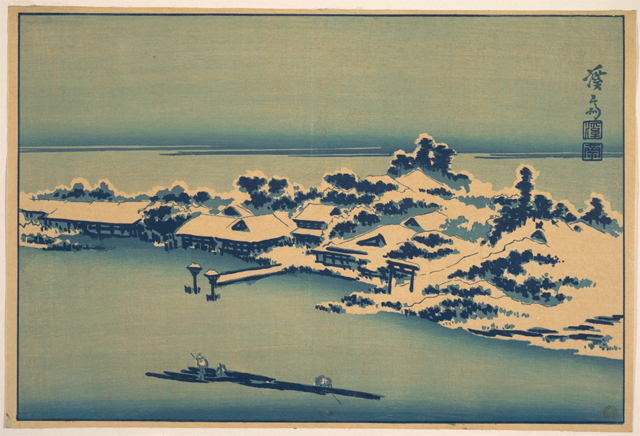
					<b>Nate: </b><em>?Here's something I didn't know: this lovely print belongs to a genre of artwork called <a href="http://en.wikipedia.org/wiki/Ukiyo-e">ukiyo-e</a>, whose name translates literally as "pictures of the floating world." They celebrated the the evanescent impermance of natural scenes and moments, but also of the heightened worlds of entertainment (kabuki, geisha). Because they could be mass-produced, they introduced ownable artwork to new classes of Japanese people.?</em><br />
		
		<a href="http://www.metmuseum.org/collections/search-the-collections/60001107"><img src="http://www.culture-making.com/media/edo-winter.jpg" alt="image" /></a><hr />
<div class="author" style="font-size: -1">"<a href="http://www.metmuseum.org/collections/search-the-collections/60001107">Winter Landscape</a>," polychrome woodblock print by Keisai Eisen (1790–1848), from the collections of <a href="http://www.metmuseum.org/collections/search-the-collections/60001107">The Metropolitan Museum of Art</a></div>		


      ]]></content>
    </entry>    <entry>
      <title>Merry Christmas Mr. Lawrence, by Ryuichi Sakamoto</title>
      <link rel="alternate" type="text/html" href="https://culture-making.com/post/merry_christmas_mr._lawrence_by_ryuichi_sakamoto" />
      <id>tag:culture-makers.com,2025:author/1.1764</id>
      <published>2025-01-02T22:53:00Z</published>
      <updated>2025-01-03T22:54:05Z</updated>
      <author>
            <name>Andy Crouch</name>
            <email>andy@culture-making.com</email>
            
      </author>

      <content type="html"><![CDATA[


			<p align="center"><object width="420" height="340"><param name="movie" value="http://www.youtube.com/v/YwkuS9FlB7M&amp;hl=en_US&amp;fs=1&amp;"></param><param name="allowFullScreen" value="true"></param><param name="allowscriptaccess" value="always"></param><embed src="http://www.youtube.com/v/YwkuS9FlB7M&amp;hl=en_US&amp;fs=1&amp;" type="application/x-shockwave-flash" allowscriptaccess="always" allowfullscreen="true" width="420" height="340"></embed></object></p><br />
<b>Christy: </b><em>?This is not at all your stereotypical Christmas song, but it expresses more accurately how I often feel this time of year. While I love Christmas, I find myself taking long walks, acutely aware of the bleakness all around me—skeletal remains of once-vibrant trees, bone-chilling coldness, and a general sense of longing for loved ones who have passed away and relationships that did not work out. I haven't seen the eponymous <a href="http://en.wikipedia.org/wiki/Merry_Christmas,_Mr._Lawrence">Japanese film</a> from which this song comes (about prisoners and guards in a WWII Japanese POW camp), but this gripping performance by Sakamoto is part of my Christmas soundtrack.?</em><br />
<hr /><span style="font-size: -1"></span>


      ]]></content>
    </entry>    <entry>
      <title>Straw sounds</title>
      <link rel="alternate" type="text/html" href="https://culture-making.com/post/straw_sounds" />
      <id>tag:culture-makers.com,2025:author/1.1657</id>
      <published>2025-01-02T22:53:00Z</published>
      <updated>2025-01-03T22:54:05Z</updated>
      <author>
            <name>Andy Crouch</name>
            <email>andy@culture-making.com</email>
            
      </author>

      <content type="html"><![CDATA[


			<p align="center"><img src="http://culture-making.com/media/no.7_4people_quebec.jpg" /><br/>
<embed type="application/x-shockwave-flash" src="http://www.google.com/reader/ui/3247397568-audio-player.swf?audioUrl=http://afewnotes.com/sound/etude_no7.mp3" width="420" height="27" allowscriptaccess="never" quality="best" bgcolor="#ffffff" wmode="window" flashvars="playerMode=embedded" /></p><br />
<b>Christy: </b><em>?Mamoru is a Japanese sound artist who creates sound installations using common objects, such as, in this case, drinking straws. He records and then mixes the sounds to create music from these unlikely sources of sound. I love the way he explores the horizons of what is possible in sound, stretching even the very definition of music.?</em><br /><hr />
<span style="font-size: -1">"<a href="http://afewnotes.com/etude_7_jp.html">etude no.7</a>" (English <a href="http://afewnotes.com/etude_7_2_e.html">here</a>) by <a href="http://www.afewnotes.com/bio_e.html">Mamoru</a>, 2009</span>


      ]]></content>
    </entry>    <entry>
      <title>????? (Hibi no neiro), video by SOUR and friends</title>
      <link rel="alternate" type="text/html" href="https://culture-making.com/post/hibi_no_neiro_video_by_sour_and_friends" />
      <id>tag:culture-makers.com,2025:author/1.1513</id>
      <published>2025-01-02T22:53:00Z</published>
      <updated>2025-01-03T22:54:05Z</updated>
      <author>
            <name>Andy Crouch</name>
            <email>andy@culture-making.com</email>
            
      </author>

      <content type="html"><![CDATA[


			<p align="center"><a href="http://www.youtube.com/watch?v=WfBlUQguvyw"><img src="http://culture-making.com/media/sour.jpg" alt="image"></a></p><br />
<b>Nate: </b><em>?Nothing says Friday like a bit of crowdsourced J-pop: "The cast were selected from the actual Sour fan base, from many countries around the world. Each person and scene was filmed purely via webcam."?</em><br />
<hr /><span style="font-size: -1"><a href="http://www.youtube.com/watch?v=WfBlUQguvyw">"????? (Hibi no neiro)"</a>," by <a href="http://sour-web.com/">SOUR</a>, 1 July 2009 :: thanks <a href="http://twitter.com/jonathanhliu">@jonathanhliu</a></span>


      ]]></content>
    </entry>    <entry>
      <title>Fujimori Festival</title>
      <link rel="alternate" type="text/html" href="https://culture-making.com/post/fujimori_festival" />
      <id>tag:culture-makers.com,2025:author/1.1349</id>
      <published>2025-01-02T22:53:00Z</published>
      <updated>2025-01-03T22:54:05Z</updated>
      <author>
            <name>Andy Crouch</name>
            <email>andy@culture-making.com</email>
            
      </author>

      <content type="html"><![CDATA[


					<b><p>Nate</p>: </b><em>?Calligraphy on horseback! Now that would take some serious skill and practice. There's a modern <a href="http://translate.google.com/translate?hl=en&sl=ja&u=http://www.fujinomorijinjya.or.jp/&ei=Ge6_Sa69CJqqtQPG9pmbBA&sa=X&oi=translate&resnum=2&ct=result&prev=/search%3Fq%3D%25E8%2597%25A4%25E6%25A3%25AE%25E7%25A5%25AD%26hl%3Den%26client%3Dfirefox-a%26rls%3Dorg.mozilla:en-US:official%26hs%3DpTe">Fujimori Festival</a> at the eponymous shrine, though I dare not lean too hard on auto-translation to proclaim a direct linkage. Still, "<a href="http://translate.google.com/translate?hl=en&sl=ja&u=http://www.fujinomorijinjya.or.jp/&ei=Ge6_Sa69CJqqtQPG9pmbBA&sa=X&oi=translate&resnum=2&ct=result&prev=/search%3Fq%3D%25E8%2597%25A4%25E6%25A3%25AE%25E7%25A5%25AD%26hl%3Den%26client%3Dfirefox-a%26rls%3Dorg.mozilla:en-US:official%26hs%3DpTe">Shrine of the horses and learning</a>" sounds about right.?</em><br />
		
		<a href="http://tois.nichibun.ac.jp/database/html2/gyouji/gyouji_59.html"><img src="http://culture-making.com/media/027_1.jpg" alt="image" /></a><hr />
<div class="author" style="font-size: -1">"<a href="http://tois.nichibun.ac.jp/database/html2/gyouji/gyouji_59.html">?????????????</a> (Fujimori Festival/Every 10 Years/8th Century" from the <a href="http://tois.nichibun.ac.jp/database/html2/gyouji/itiran.html"><i>Miyako Nenju Gyoji Gajo (Picture Album of the Annual Festivals in the Miyako)</i></a>, hand-painted on silk by Nakajima Soyo (1928) :: via <a href="http://bibliodyssey.blogspot.com/2009/02/miyako-festivals.html">Bibliodyssey</a></div>		


      ]]></content>
    </entry>    <entry>
      <title>Cirque du sushi</title>
      <link rel="alternate" type="text/html" href="https://culture-making.com/post/cirque_du_sushi" />
      <id>tag:culture-makers.com,2025:author/1.1317</id>
      <published>2025-01-02T22:53:00Z</published>
      <updated>2025-01-03T22:54:05Z</updated>
      <author>
            <name>Andy Crouch</name>
            <email>andy@culture-making.com</email>
            
      </author>

      <content type="html"><![CDATA[


			<p align="center"><object width="420" height="340"><param name="movie" value="http://www.youtube.com/v/491A3Xecwxs&amp;color1=0xb1b1b1&amp;color2=0xcfcfcf&amp;hl=en&amp;feature=player_embedded&amp;fs=1"></param><param name="allowFullScreen" value="true"></param><embed src="http://www.youtube.com/v/491A3Xecwxs&amp;color1=0xb1b1b1&amp;color2=0xcfcfcf&amp;hl=en&amp;feature=player_embedded&amp;fs=1" type="application/x-shockwave-flash" allowfullscreen="true" width="420" height="340"></embed></object></p><br />
<b><p>Nate</p>: </b><em>?Here's what happens when you set a video camera on a plate at a kaiten (conveyor belt) sushi restaurant in <a href="http://maps.google.com/maps?f=q&source=s_q&hl=en&geocode=&q=Tomakomai,+Hokkaido">Tomakomai, Hokkaido, Japan</a>. Really amazing and surprisingly plotty (worth the full 7:39): culture-keeping (and consuming) at its best. All it needs is the right retro-indie soundtrack and it would fit right into a Wes Anderson film.?</em><br />
<hr /><span style="font-size: -1">"<a href="http://www.youtube.com/watch?v=491A3Xecwxs&eurl=http://www.boingboing.net/2009/03/01/sending-your-video-c.html&feature=player_embedded">Kaiten (conveyor) sushi time in real Japan</a>" by pastora911 (Youtube) :: via <a href="http://www.boingboing.net/2009/03/01/sending-your-video-c.html">Boing Boing</a></span>


      ]]></content>
    </entry>    <entry>
      <title>Eating and absorbing a technological tradition</title>
      <link rel="alternate" type="text/html" href="https://culture-making.com/post/eating_and_absorbing_a_technological_tradition" />
      <id>tag:culture-makers.com,2025:author/1.1205</id>
      <published>2025-01-02T22:53:00Z</published>
      <updated>2025-01-03T22:54:05Z</updated>
      <author>
            <name>Andy Crouch</name>
            <email>andy@culture-making.com</email>
            
      </author>

      <content type="html"><![CDATA[


					<b><p>Nate</p>: </b><em>?Sometimes cultural objects—homespun cloth in Independence-era India, the predominance (in spite of pressure to import cheaper international varities) of locally-grown rice in postwar Japan—take their most profound meanings not so much from the object itself as from the technology (actual or implied) that is used to produce the object.?</em><br />
		
		<p>When a modern Japanese family sits round the supper table eathing their bowls of Japanese-grown rice, they are not simply indulging a gastronomic preference for short-grain and slightly sticky Japonica rice over long-grain Indica rice from Thailand. They are eating and absorbing a tradition—in the sense of an invented and reinvented past. While the television beside the dining table pours out a stream of images of the here-and-now, of an urbanized, capitalist, and thoroughly internationalized Japan, each mouthful of rice offers communion with eternal and untainted Japanese values, with a rural world of simplicity and purity, inhabited by peasants tending tiny green farms in harmony with nature and ruled over by the emperor, descendant of the Sun Goddess, who plants and harvests rice himself each year in a special sacred plot. Simple peasant rice farmers are as marginal in contemporary Japan as hand-spinners are in India, but the small rice farm, like the <i>swadeshi</i> [homespun-style cloth] industry, lives on as a powerful symbol.
</p><hr />
<div class="author" style="font-size: -1">from <i><a href="http://books.google.com/books?id=fhmN7zqh6A0C&printsec=frontcover&dq=technology+gender+fabrics+power&ei=0QtlSbfuMYrIlQTzzf3aCg#PPA23,M1">Technology and Gender: Fabrics of Power in Late Imperial China</a></i>, by Francesca Bray (University of California Press, 1997)</div>		


      ]]></content>
    </entry>    <entry>
      <title>What are the Japanese up to right now?</title>
      <link rel="alternate" type="text/html" href="https://culture-making.com/post/what_are_the_japanese_up_to_right_now" />
      <id>tag:culture-makers.com,2025:author/1.1057</id>
      <published>2025-01-02T22:53:00Z</published>
      <updated>2025-01-03T22:54:05Z</updated>
      <author>
            <name>Andy Crouch</name>
            <email>andy@culture-making.com</email>
            
      </author>

      <content type="html"><![CDATA[


<div class="author" style="font-size: -1">a <a href="http://www.kottke.org/08/10/what-are-the-japanese-up-to-right-now">kottke.org</a> post, 20 October 2008</div><hr />		
		<p>As part of the Japanese census, people were asked to keep a record of what they were doing in 15 minute intervals. The data was publicly released and Jonathan Soma took it and <a href="http://www.xoxosoma.com/tokyo-tuesday/">graphed the results so that you can see what many Japanese are up to during the course of a normal day</a>.</p><p>“Sports: Women like swimming, but men eschew the water for productive sports, which is the most important Japanese invention.</p><p>Early to bed and early to rise… and early to bed: People start waking up at 5 AM, but are taking naps by 7:30 AM.”</p><p>Fascinating.</p>


      ]]></content>
    </entry>    <entry>
      <title>Golden Gai, Tokyo</title>
      <link rel="alternate" type="text/html" href="https://culture-making.com/post/golden_gai_tokyo" />
      <id>tag:culture-makers.com,2025:author/1.1032</id>
      <published>2025-01-02T22:53:00Z</published>
      <updated>2025-01-03T22:54:05Z</updated>
      <author>
            <name>Andy Crouch</name>
            <email>andy@culture-making.com</email>
            
      </author>

      <content type="html"><![CDATA[


					<b><p>Nate</p>: </b><em>?I love the crazy interplay of the wires in this brush pen drawing. From the sketcher's note: "This is a place in Tokyo called Goruden Gai (Golden town) where you'll find lots of little bars etc that used to be run by yakuza after WWII."?</em><br />
		
		<a href="http://www.urbansketchers.com/2008/11/golden-gai-tokyo.html"><img src="http://culture-making.com/media/2998073089_ddcd51719b_o.jpg" alt="image" /></a><hr />
<div class="author" style="font-size: -1">"<a href="http://www.urbansketchers.com/2008/11/golden-gai-tokyo.html">Golden Gai, Tokyo</a>," by Lok, <a href="http://www.urbansketchers.com/2008/11/golden-gai-tokyo.html">Urban Sketchers</a>, 6 November 2008</div>		


      ]]></content>
    </entry>    <entry>
      <title>Tokyo vintage</title>
      <link rel="alternate" type="text/html" href="https://culture-making.com/post/tokyo_vintage" />
      <id>tag:culture-makers.com,2025:author/1.668</id>
      <published>2025-01-02T22:53:00Z</published>
      <updated>2025-01-03T22:54:05Z</updated>
      <author>
            <name>Andy Crouch</name>
            <email>andy@culture-making.com</email>
            
      </author>

      <content type="html"><![CDATA[


					<b><p>Nate</p>: </b><em>?I guess the transcontinental vintage clothing trade counts as a form of cultivating culture: pruning, honing, preserving (and, oh yeah, marking up the price). It's nice to know Westerners can go to Tokyo to experience a version of both our near-future (technology-wise) and the not-too-distant past.?</em><br />
		
		<p>The story about vintage clothes in Tokyo goes like this: A Hollywood actress, after a successful crash diet, sold her size 6 wardrobe to a thrift shop in Santa Monica. Three months later she came to Tokyo to promote her latest movie and one afternoon wandered into one of the city’s landmark vintage clothing shops, called Santa Monica. What should she find there but her own shorts and several party dresses, unobtrusively displayed under a sign that read: “Santa Monica Style.”</p> <p>The story is credible for the simple reason that Tokyo has now reached a point where it’s safe to call it Planet Vintage. Among the 400-plus shops scattered over the city, myths like this abound.</p><p>The good news is that it’s not all rumor and folklore - according to a fashion stylist, Keiko Okura, “the quality of Tokyo vintage products are unmatched.”</p><hr />
<div class="author" style="font-size: -1">from "<a href="http://www.iht.com/articles/2008/08/18/style/FVINTAGE.php">Toyko hones its vintage clothing market</a>," by Kaori Shoji, <a href="http://www.iht.com/articles/2008/08/18/style/FVINTAGE.php"><i>International Herald-Tribune</i></a>, 18 August 2008</div>		


      ]]></content>
    </entry>    <entry>
      <title>Make a fresh!</title>
      <link rel="alternate" type="text/html" href="https://culture-making.com/post/make_a_fresh" />
      <id>tag:culture-makers.com,2025:author/1.607</id>
      <published>2025-01-02T22:53:00Z</published>
      <updated>2025-01-03T22:54:05Z</updated>
      <author>
            <name>Andy Crouch</name>
            <email>andy@culture-making.com</email>
            
      </author>

      <content type="html"><![CDATA[


			<p><iframe width="420" height="240" frameborder="0" scrolling="no" marginheight="0" marginwidth="0" src="http://maps.google.com/maps/sv?cbp=1,218.146499020699,,0,-8.087983657787644&amp;cbll=35.669915,139.766493&amp;v=1&amp;panoid=8keLcbJu69lgykfzjOC9Qg&amp;gl=&amp;hl=en"></iframe><br /><br /><iframe width="420" height="240" frameborder="0" scrolling="no" marginheight="0" marginwidth="0" src="http://maps.google.com/maps/sv?cbp=1,230.15547658692324,,1,-6.684973889996683&amp;cbll=-16.922566,145.776188&amp;v=1&amp;panoid=QkjsYMv744M-2kUnzbFlOA&amp;gl=&amp;hl=en"></iframe>
</p><br />
<b><p>Nate</p>: </b><em>?Google Maps launched Street View coverage for Australia and Japan today. Let the cross-cultural-exploration begin! (I should note that it took a good 20min of clicking around Tokyo's streets before I found some funny English to link to. Nearly all the words I came upon were, contrary to stereotype, quite correct.)?</em><br /><hr />
<span style="font-size: -1"><a href="http://maps.google.com/?ie=UTF8&ll=-1.054628,153.105469&spn=99.892878,212.695313&z=3&layer=c">Google Street View</a>, Ginza, Tokyo and Cairns, Queensland</span>


      ]]></content>
    </entry>

</feed>