<?xml version="1.0" encoding="utf-8"?>
<feed xmlns="http://www.w3.org/2005/Atom" xml:lang="en">

    <title type="text">Culture Making Articles items tagged europe</title>
    <subtitle type="text">Culture Making Articles:Writing on Christianity and culture from Andy Crouch</subtitle>
    <link rel="alternate" type="text/html" href="http://culture-makers.com/" />
    <link rel="self" type="application/atom+xml" href="https://culture-making.com/tag/atom" />
    <updated>2025-01-03T22:54:05Z</updated>
    <rights>Copyright (c) 2025, Andy Crouch</rights>
    <generator uri="http://www.pmachine.com/" version="7.5.15">ExpressionEngine</generator>
    <id>tag:culture-makers.com,2025:01:02</id>

    <entry>
      <title>Mediev&#97;l job listings</title>
      <link rel="alternate" type="text/html" href="https://culture-making.com/post/medievl_job_listings" />
      <id>tag:culture-makers.com,2025:author/1.2034</id>
      <published>2025-01-02T22:53:00Z</published>
      <updated>2025-01-03T22:54:05Z</updated>
      <author>
            <name>Andy Crouch</name>
            <email>andy@culture-making.com</email>
            
      </author>

      <content type="html"><![CDATA[


					<b>Nate: </b><em>?Below's an unexpurgated excerpt from a list of Mediev&#97;l sales occupations. The section on artisans is also full of gems (and future last names). Among those delightful oddities for you to look up: alabaster, bilgier, bodger, bowyer, broom-dasher, compassmith, delver, knacker, linen-armorer, male maker, perkier, spooner, thonger, treen maker, upholder, vaginarius, wiredrawer.?</em><br />
		
		<p><em>booth man</em> - one who sells grains
<br/><em>chapman</em> - traveling merchant
<br/><em>collier</em> - one who makes or sells charcoal
<br/><em>colporteur</em> - seller of religious books
<br/><em>costermonger</em> - fruit seller
<br/><em>drover</em> - one who drives sheep or cattle to market
<br/><em>eggler</em> - an egg-merchant</p><hr />
<div class="author" style="font-size: -1">from "<a href="http://www.svincent.com/MagicJar/Economics/Mediev&#97;lOccupations.html">What did people do in a Mediev&#97;l City?</a>," by Shawn Vincent, 1999–2005 :: via <a href="http://kottke.org/12/02/a-list-of-medieval-occupations">kottke</a></div>		


      ]]></content>
    </entry>    <entry>
      <title>Der Bibelschreiber (The Bible writer)</title>
      <link rel="alternate" type="text/html" href="https://culture-making.com/post/der_bibelschreiber_the_bible_writer" />
      <id>tag:culture-makers.com,2025:author/1.2003</id>
      <published>2025-01-02T22:53:00Z</published>
      <updated>2025-01-03T22:54:05Z</updated>
      <author>
            <name>Andy Crouch</name>
            <email>andy@culture-making.com</email>
            
      </author>

      <content type="html"><![CDATA[


					<b>Nate: </b><em>?The work of German art-technology collective <a href="http://robotlab.de/bios/bible.htm">robotlab</a> (Matthias Gommel, Martina Haitz, Jan Zap) revolves around programming industrial robots to do rather human things, like <a href="http://robotlab.de/auto/portrait.htm">draw people's portraits</a>, play music with their servos, or pick up a calligrapher's pen and, over the course of seven months, write out all 66 books of the Bible. According to the artists' statement (as best I can figure out the German), Bios [bible] is concerned with questions of faith and technical progress, with particular attention to the role of writing in the development and transmission of both realms. Bios, of course, has allusions to scripture as the word of life, but also encompasses the more mundane computer-scientific acronym, basic input-output system—the code that underlies the liturgies of every robot monk.?</em><br />
		
		<a href="http://robotlab.de/bios/bible.htm"><img src="http://culture-making.com/media/bios00b.jpg" alt="photo" /></a><hr />
<div class="author" style="font-size: -1">"<a href="http://robotlab.de/bios/bible.htm">Der Bibelschreiber</a>," by robotlab, from the installation <a href="http://robotlab.de/bios/bible.htm">bios [bible]</a>, 2007 :: via <a href="http://pietmondriann.com">pietmondriann.com</a></div>		


      ]]></content>
    </entry>    <entry>
      <title>Are carrots protestant?</title>
      <link rel="alternate" type="text/html" href="https://culture-making.com/post/are_carrots_protestant" />
      <id>tag:culture-makers.com,2025:author/1.1772</id>
      <published>2025-01-02T22:53:00Z</published>
      <updated>2025-01-03T22:54:05Z</updated>
      <author>
            <name>Andy Crouch</name>
            <email>andy@culture-making.com</email>
            
      </author>

      <content type="html"><![CDATA[


					<b>Nate: </b><em>?It's fun to be reminded how many of our 'natural' foods are in fact the result of a long collaboration between cultivator and cultivated, guided by the possibilities and limits of agriculture and by the choices and preferances of particular people in particular settings. According to the <a href="http://www.carrotmuseum.co.uk/">World Carrot Museum</a>—let me say that again: the <a href="http://www.carrotmuseum.co.uk/">World Carrot Museum</a>—the long orange carrot of supermarket and snowman-nose and Bugs Bunney fame was popularized by Dutch breeders in the 17th century, perhaps as a tribute to <a href="http://en.wikipedia.org/wiki/William_the_Silent">William of Orange</a>, the the Dutch independance leader who became a Calvinist and helped get the 80 years war started. His grandson <a href="http://en.wikipedia.org/wiki/William_III_of_England">William III</a> ruled the Netherlands and, later on, the British Isles, where he was responsible for the introduction of orange as the favored color of Irish protestants.?</em><br />
		
		<a href="http://www.nextnature.net/?p=3829"><img src="http://culture-making.com/media/carrots_of_many_colors_530.jpg" alt="photo" /></a><hr />
<div class="author" style="font-size: -1">from "<a href="http://www.nextnature.net/?p=3829">Why are carrots orange? It is political</a>," by Koert van Mensvoort, <a href="http://www.nextnature.net/">Next Nature</a>, 16 August 2009 :: image via <a href="http://upload.wikimedia.org/wikipedia/commons/3/32/Carrots_of_many_colors.jpg">Wikipedia</a>, unattributed :: first posted here 4 January 2010</div>		


      ]]></content>
    </entry>    <entry>
      <title>Angel with a Mobile Phone, Sint&#45;Janskathederaal, by Ton Mooy</title>
      <link rel="alternate" type="text/html" href="https://culture-making.com/post/angel_with_a_mobile_phone_sint-janskathederaal_by_ton_mooy" />
      <id>tag:culture-makers.com,2025:author/1.1991</id>
      <published>2025-01-02T22:53:00Z</published>
      <updated>2025-01-03T22:54:05Z</updated>
      <author>
            <name>Andy Crouch</name>
            <email>andy@culture-making.com</email>
            
      </author>

      <content type="html"><![CDATA[


					<b>Nate: </b><em>?As part of a recent twelve-year restoration of the 16th century cathedral in 's-Hertogenbosch in the Netherlands, the Dutch sculptor Ton Mooy was commissioned to create 25 new statues of angels to be added to the outside, including one of a jeans-wearing angel utilizing a thoroughly modern bit of technology. "'The phone has just one button,' says the artist. 'It dials directly to God.'" Make of it what you will.?</em><br />
		
		<a href="http://www.nextnature.net/2011/04/angel-with-cellphone-adorns-cathedral/"><img src="http://www.culture-making.com/media/742px-Angel_with_Mobile_Phone.jpg" alt="photo" /></a><hr />
<div class="author" style="font-size: -1">photo from <a href="http://en.wikipedia.org/wiki/St._John's_Cathedral,_'s-Hertogenbosch">wikipedia</a> :: via <a href="http://www.nextnature.net/2011/04/angel-with-cellphone-adorns-cathedral/">Next Nature</a></div>		


      ]]></content>
    </entry>    <entry>
      <title>Re&#45;bonjour</title>
      <link rel="alternate" type="text/html" href="https://culture-making.com/post/re_bonjour" />
      <id>tag:culture-makers.com,2025:author/1.1366</id>
      <published>2025-01-02T22:53:00Z</published>
      <updated>2025-01-03T22:54:05Z</updated>
      <author>
            <name>Andy Crouch</name>
            <email>andy@culture-making.com</email>
            
      </author>

      <content type="html"><![CDATA[


					<b><p>Nate</p>: </b><em>?This article, in the long and generally grand literary tradition of "Letters from Paris"—see Adam Gopnik's collection <a href="http://www.amazon.com/Paris-Moon-Adam-Gopnik/dp/0375758232/cmcom-20">Paris to the Moon</a> for a fine recent example—veers towards the ooh-la-la picturesque; one gets the feeling that French people outside Paris, and not-fully-"French" people in it, lead lives less authentic and less interesting. Still, I'm a sucker for them details: I spent half of college writing my messy English notes in lovely multi-lined French journals.?</em><br />
		
		<div style="float:right; padding:15px 5px 5px 5px"><img src="http://culture-making.com/media/cfClothBoundGroup.jpg" alt="image"></div><p>Everyone thinks that people in Paris are impossibly rude. The longer I spend in the city, the more I realise that this is untrue. In fact, they are impossibly polite. Understanding this is the secret to an effortless life in the French capital. Mastering lift etiquette is a good case in point. I arrived in Paris a few years ago from London, where even colleagues would rather stare blankly at the closed doors than venture a greeting. In Paris, by contrast, there is a tightly observed ritual. When the lift doors part, you step in and say “Bonjour”. Everybody says “Bonjour” back. Whenever anyone steps out, you wish them a “Bonne journée”. They do the same. And that’s not all. If later in the day you bump into anyone again, you start all over again with (I’m not making this up) “Re-bonjour”....</p><p>The general French respect for formality and form is nowhere more finely observed than in Paris. ... When my son was learning to write, his school report gave him marks for whether his <i>boucles</i>, or loops, of his joined-up letters respected to the millimetre the inter-line boundaries printed on the page. At the same time, he would bring back English exercise books filled with a chaotic caterpillar of mismatched letters. Why didn’t he use his neat handwriting in those books too, I asked him? He looked perplexed: “But that’s not how you write in English!”</p><hr />
<div class="author" style="font-size: -1">from "<a href="http://www.moreintelligentlife.com/story/parisians-rude-pas-du-tout">Parisians, rude? Pas du tout!</a>," by Sophie Pedder, <a href="http://www.moreintelligentlife.com/story/parisians-rude-pas-du-tout">More Intelligent Life</a>, 18 March 2009 :: Clairfontaine French-ruled notebooks on sale <a href="http://www.thedailyplanner.com/clothbound-notebookfrench-ruled-p-5232.html">here</a> :: first posted here 26 March 2009</div>		


      ]]></content>
    </entry>    <entry>
      <title>Counsel woven into the fabric of real life</title>
      <link rel="alternate" type="text/html" href="https://culture-making.com/post/counsel_woven_into_the_fabric_of_real_life" />
      <id>tag:culture-makers.com,2025:author/1.1913</id>
      <published>2025-01-02T22:53:00Z</published>
      <updated>2025-01-03T22:54:05Z</updated>
      <author>
            <name>Andy Crouch</name>
            <email>andy@culture-making.com</email>
            
      </author>

      <content type="html"><![CDATA[


					<b>Nate: </b><em>?You can read most of Benjamin's essay at <a href="http://books.google.com/books?id=A4tRaJK85n8C&lpg=PA143&dq=walter%20benjamin%20%22the%20storyteller%22&pg=PA145#v=onepage&q=walter%20benjamin%20%22the%20storyteller%22&f=false">Google Books</a>. The first few pages are all quite good and require no knowledge whatsoever of that <a href="http://en.wikipedia.org/wiki/Nikolai_Leskov">Nikolai Leskov</a> fellow.?</em><br />
		
		<p>All this points to the nature of every real story. It contains, openly or covertly, something useful. The usefulness may, in one case, consist in a moral; in another, in some practical advice; in a third, in a proverb or maxim. In every case the storyteller is a man who has counsel for his readers. But if today “having counsel” is beginning to have an old-fashioned ring, this is because the communicability of experience is decreasing. In consequence we have no counsel either for ourselves or for others. After all, counsel is less an answer to a question than a proposal concerning the continuation of a story which is just unfolding. To seek this counsel one would first have to be able to tell the story. (Quite apart from the fact that a man is receptive to counsel only to the extent that he allows his situation to speak.) Counsel woven into the fabric of real life is wisdom.</p><hr />
<div class="author" style="font-size: -1">from "<a href="http://ayjay.tumblr.com/post/631313575/all-this-points-to-the-nature-of-every-real-story">The Storyteller: Observations on the Works of Nikolai Leskov</a>," by Walter Benjamin, 1936, in <a href="http://books.google.com/books?id=A4tRaJK85n8C&lpg=PA143&dq=walter%20benjamin%20%22the%20storyteller%22&pg=PA145#v=onepage&q=walter%20benjamin%20%22the%20storyteller%22&f=false">Selected Writings, Volume 3</a> :: via <a href="http://ayjay.tumblr.com/post/631313575/all-this-points-to-the-nature-of-every-real-story">more than 95 theses</a></div>		


      ]]></content>
    </entry>    <entry>
      <title>The polychromatic Middle Ages</title>
      <link rel="alternate" type="text/html" href="https://culture-making.com/post/the_polychromatic_middle_ages" />
      <id>tag:culture-makers.com,2025:author/1.1911</id>
      <published>2025-01-02T22:53:00Z</published>
      <updated>2025-01-03T22:54:05Z</updated>
      <author>
            <name>Andy Crouch</name>
            <email>andy@culture-making.com</email>
            
      </author>

      <content type="html"><![CDATA[


					<b>Nate: </b><em>?Visual motifs from the Middle Ages, seen through the late-19th century aesthetic lens (and impressive multicolor printing techniques) of the French painter, lithographer, and art historian Auguste Racinet. The <a href="http://digitalgallery.nypl.org/nypldigital/dgkeysearchresult.cfm?trg=1&parent_id=169639&word=&s=&notword=&d=&c=&f=&k=0&sScope=&sLevel=&sLabel=&lword=&lfield=&num=0&imgs=20&snum=&pNum=">sumptuous plates</a> of <i>L'Ornament Polychrome</i> run the gamut from ancient Asian and Egyptian art through to the European 18th century.?</em><br />
		
		<a href="http://bibliodyssey.blogspot.com/2010/05/racinet-polychromes.html"><img src="http://culture-making.com/media/4620732012_7d33d87ff0_b.jpg" alt="image" /></a><hr />
<div class="author" style="font-size: -1">from <i><a href="http://digitalgallery.nypl.org/nypldigital/dgkeysearchresult.cfm?trg=1&parent_id=169639&word=&s=&notword=&d=&c=&f=&k=0&sScope=&sLevel=&sLabel=&lword=&lfield=&num=0&imgs=20&snum=&pNum=">L'Ornament Polychrome: Motifs de tous les styles, art ancien et asiatique, Moyen Age, Renaissance, XVIIe et XVIIIe siècles</a></i>, by A. Racinet, 1869–73 :: via  <a href="http://bibliodyssey.blogspot.com/2010/05/racinet-polychromes.html">BibliOdyssey</a></div>		


      ]]></content>
    </entry>    <entry>
      <title>If you want a masterpiece, the artist has to screw up</title>
      <link rel="alternate" type="text/html" href="https://culture-making.com/post/if_you_want_a_masterpiece_the_artist_has_to_screw_up" />
      <id>tag:culture-makers.com,2025:author/1.1880</id>
      <published>2025-01-02T22:53:00Z</published>
      <updated>2025-01-03T22:54:05Z</updated>
      <author>
            <name>Andy Crouch</name>
            <email>andy@culture-making.com</email>
            
      </author>

      <content type="html"><![CDATA[


					<b>Nate: </b><em>?One of the defining moments in the last twenty-five years of world soccer is the infamous (or perhaps <a href="http://news.bbc.co.uk/sport2/hi/football/2396503.stm">glorious</a>) "<a href="http://en.wikipedia.org/wiki/Argentina_v_England_%281986_FIFA_World_Cup_quarter-final%29#.22Hand_of_God.22_goal">Hand of God</a>" goal, scored by Diego Maradona in the 1986 England–Argentina World Cup quarterfinal (video <a href="http://www.youtube.com/watch?v=TBXZx0Ky4gE&feature=player_embedded#!">here</a>). The referee didn't see that Maradona had knocked the ball in with his fist, and so the goal stood. But should it have? If you could go back in time and erase all the mistakes, would soccer be better for it??</em><br />
		
		<p>What that means is that, if we care about the sport as a story, we have to hope that the people in charge of running it do their jobs <i>just badly enough</i> to ensure that the Hand of God is possible. The wider the circle within which you’re willing to see the game as aesthetic, in other words, the more you wind up relying on chance and accident. If soccer is only a game—that is, aesthetic only in the most limited and technical sense—then it can achieve perfection as a deliberate design or as a successfully realized intention. If it’s a story—that is, aesthetic in a more primary sense—it can’t. If you want a masterpiece, the artist has to screw up. The lamest defense of bad refereeing in the world is “human error is part of the game.” It isn’t; but it is certainly, and problematically, part of the story.</p><hr />
<div class="author" style="font-size: -1">from "<a href="http://www.runofplay.com/2010/04/20/aesthetics-and-justice/?utm_source=feedburner&utm_medium=feed&utm_campaign=Feed:+runofplay+(The+Run+of+Play)&utm_content=Google+Reader">Aesthetics and Justice</a>," by Brian Phillips, <a href="http://www.runofplay.com/2010/04/20/aesthetics-and-justice/?utm_source=feedburner&utm_medium=feed&utm_campaign=Feed:+runofplay+(The+Run+of+Play)&utm_content=Google+Reader">The Run of Play</a>, 20 April 2010 :: video via <a href="http://www.youtube.com/watch?v=TBXZx0Ky4gE">YouTube</a></div>		


      ]]></content>
    </entry>    <entry>
      <title>Open Air Library, Magdeburg, Germany</title>
      <link rel="alternate" type="text/html" href="https://culture-making.com/post/open_air_library_magdeburg_germany" />
      <id>tag:culture-makers.com,2025:author/1.1860</id>
      <published>2025-01-02T22:53:00Z</published>
      <updated>2025-01-03T22:54:05Z</updated>
      <author>
            <name>Andy Crouch</name>
            <email>andy@culture-making.com</email>
            
      </author>

      <content type="html"><![CDATA[


					<b>Nate: </b><em>?This self-styled "architectural bookmark" is the latest winner of the biennial <a href="http://www.publicspace.org/en/prize/2010">European Prize for Urban Public Space</a>. The designers <a href="http://www.karo-architekten.de/">KARO</a> converted an unused industrial median into an open-access book repository and lending facility, at once compressing a typical library and turning it inside out to make a welcoming public space for reading, eating, school plays, and the like. I love how, in that orientation, the library—and the community space it creates—extends beyond the plaza and into the city itself. It reminds me of the <a href="http://www.terindell.com/asylum/docs/asylum.html">closing passage</a> of the Douglas Adams novel <a href="http://www.amazon.com/So-Long-Thanks-All-Fish/dp/0345391837/cmcom-20">So Long and Thanks for All the Fish</a>.?</em><br />
		
		<a href="http://arkinetblog.wordpress.com/2010/03/29/open-air-library-wins-european-prize-for-public-space/"><img src="http://culture-making.com/media/timthumb.jpg" alt="photo" /></a><hr />
<div class="author" style="font-size: -1">photo via "<a href="http://arkinetblog.wordpress.com/2010/03/29/open-air-library-wins-european-prize-for-public-space/">Open Air Library Wins European Prize for Public Space</a>," <a href="http://arkinetblog.wordpress.com/2010/03/29/open-air-library-wins-european-prize-for-public-space/">arkinet</a>, 29 March 2010</div>		


      ]]></content>
    </entry>    <entry>
      <title>Medieval helpdesk</title>
      <link rel="alternate" type="text/html" href="https://culture-making.com/post/medieval_helpdesk" />
      <id>tag:culture-makers.com,2025:author/1.1802</id>
      <published>2025-01-02T22:53:00Z</published>
      <updated>2025-01-03T22:54:05Z</updated>
      <author>
            <name>Andy Crouch</name>
            <email>andy@culture-making.com</email>
            
      </author>

      <content type="html"><![CDATA[


			<p align="center"><object width="420" height="340"><param name="movie" value="http://www.youtube.com/v/pQHX-SjgQvQ&amp;hl=en_US&amp;fs=1&amp;"></param><param name="allowFullScreen" value="true"></param><param name="allowscriptaccess" value="always"></param><embed src="http://www.youtube.com/v/pQHX-SjgQvQ&amp;hl=en_US&amp;fs=1&amp;" type="application/x-shockwave-flash" allowscriptaccess="always" allowfullscreen="true" width="420" height="340"></embed></object></p><br />
<b>Nate: </b><em>?You put your cultural product out there, but it's still up to individual people (and their oft long-suffering helpers) to let it succeed or fail. I love that this sketch is from a decade ago but feels perfect for the current tech-nerd-philosophical debates about <a href="http://daringfireball.net/">the</a> <a href="http://text-patterns.thenewatlantis.com/2010/01/definitive-ipad-thoughts.html">iPad</a>, the <a href="http://text-patterns.thenewatlantis.com/search/label/Kindle">Kindle</a>, and <a href="http://www.futureofthebook.org/blog/">the future of the book</a>.?</em><br />
<hr /><span style="font-size: -1">"<a href="http://www.youtube.com/watch?v=pQHX-SjgQvQ">Medieval helpdesk</a>," from the show <i>Øystein og jeg</i>, Norwegian Broadcasting (<a href="http://www.nrk.no/">NRK</a>), 2001 :: via <a href="http://www.languagehat.com/archives/003765.php">languagehat</a></span>


      ]]></content>
    </entry>    <entry>
      <title>An archipelago of churches, one pebble at a time</title>
      <link rel="alternate" type="text/html" href="https://culture-making.com/post/an_archipelago_of_churches_one_pebble_at_a_time" />
      <id>tag:culture-makers.com,2025:author/1.1801</id>
      <published>2025-01-02T22:53:00Z</published>
      <updated>2025-01-03T22:54:05Z</updated>
      <author>
            <name>Andy Crouch</name>
            <email>andy@culture-making.com</email>
            
      </author>

      <content type="html"><![CDATA[


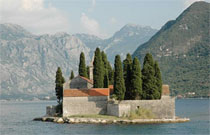
					<b>Nate: </b><em>?A great example of long-form culture making, from an island church in Montenegro's <a href="http://maps.google.com/maps?f=q&source=s_q&hl=en&geocode=&q=kotor&sll=42.367676,19.146423&sspn=0.691981,1.476288&ie=UTF8&hq=&hnear=Kotor,+Montenegro&ll=42.486213,18.690169&spn=0.002698,0.005767&t=h&z=18">Bay of Kotor</a>.?</em><br />
		
		<div style="float:right; padding:15px 5px 5px 5px"><img src="http://culture-making.com/media/kotor.jpg" alt="image"></div>
<p>&#8220;In 1452,&#8221; we read at <a href="http://www.montenegro.com/phototrips/coast/Perast,_a_walk_through_eternity.html" target="_blank">montenegro.com</a>, &#8220;two sailors from Perast happened by a small rock jutting out of the bay after a long day at sea and discovered a picture of the Virgin Mary perched upon the stone.&#8221; Thus began a process of dumping more stones into the bay in order to expand this lonely, seemingly blessed rock—as well as loading the hulls of old fishing boats with stones in order to sink them beneath the waves, adding to the island&#8217;s growing landmass. </p><p>Eventually, in 1630, a small chapel was constructed atop this strange half-geological, half-shipbuilt assemblage.</p><p>Throwing stones into the bay and, in the process, incrementally expanding the island&#8217;s surface area, has apparently become a local religious tradition: &#8220;The custom of throwing rocks into the sea is alive even nowadays. Every year on the sunset of July 22, an event called <a href="http://en.wikipedia.org/wiki/Our_Lady_of_the_Rocks" target="_blank"><i>fašinada</i></a>, when local residents take their boats and throw rocks into the sea, widening the surface of the island, takes place.&#8221;<br><br>The idea that devotional rock-throwing has become an art of creating new terrain, generation after generation, rock after rock, pebble after pebble, is stunning to me. Perhaps in a thousand years, a whole archipelago of churches will exist there, standing atop a waterlogged maze of old pleasure boats and fishing ships, the mainland hills and valleys nearby denuded of loose stones altogether. Inadvertently, then, this is as much a museum of local geology—a catalog of rocks—as it is a churchyard.</p><hr />
<div class="author" style="font-size: -1">from "<a href="http://bldgblog.blogspot.com/2010/01/our-lady-of-rocks.html">Our Lady of the Rocks</a>," by Geoff Manaugh, <a href="http://bldgblog.blogspot.com/2010/01/our-lady-of-rocks.html">BLDGBLOG</a>, 30 January 2010</div>		


      ]]></content>
    </entry>    <entry>
      <title>Early warning system</title>
      <link rel="alternate" type="text/html" href="https://culture-making.com/post/early_warning_system" />
      <id>tag:culture-makers.com,2025:author/1.1793</id>
      <published>2025-01-02T22:53:00Z</published>
      <updated>2025-01-03T22:54:05Z</updated>
      <author>
            <name>Andy Crouch</name>
            <email>andy@culture-making.com</email>
            
      </author>

      <content type="html"><![CDATA[


					<b>Nate: </b><em>?There's a lovely Dr. Seuss-ish quality to these physical amplifiers. Sometimes this is how I feel — one ear to the sky, one ear to the ground, listening for what's out there.?</em><br />
		
		<a href="http://butdoesitfloat.com/190819/For-the-world-to-be-interesting-you-have-to-be-manipulating-it-all"><img src="http://culture-making.com/media/goerz.jpg" alt="photo" /></a><hr />
<div class="author" style="font-size: -1">"<a href="http://butdoesitfloat.com/190819/For-the-world-to-be-interesting-you-have-to-be-manipulating-it-all">Acoustic listening devices developed for the Dutch army as part of air defense
systems research between World Wars 1 and 2</a>," <a href="http://butdoesitfloat.com/190819/For-the-world-to-be-interesting-you-have-to-be-manipulating-it-all">but does it float</a>, 16 December 2009 :: via <a href="http://feedproxy.google.com/~r/Swissmiss/~3/06eVXLxYipM/acoustic-listening-devices.html">swissmiss</a></div>		


      ]]></content>
    </entry>    <entry>
      <title>One thing that’s dangerous for an artist</title>
      <link rel="alternate" type="text/html" href="https://culture-making.com/post/one_thing_thats_dangerous_for_an_artist" />
      <id>tag:culture-makers.com,2025:author/1.1694</id>
      <published>2025-01-02T22:53:00Z</published>
      <updated>2025-01-03T22:54:05Z</updated>
      <author>
            <name>Andy Crouch</name>
            <email>andy@culture-making.com</email>
            
      </author>

      <content type="html"><![CDATA[


		<p>I don&#8217;t believe in total freedom for the artist. Left on his own, free to do anything he likes, the artist ends up doing nothing at all. If there&#8217;s one thing that&#8217;s dangerous for an artist, it&#8217;s precisely this question of total freedom, waiting for inspiration and the rest of it.</p><br />
		<p><small>	&mdash;Federico Fellini, <a href="http://www.amazon.com/Im-Born-Liar-Fellini-Lexicon/dp/0810946173/cmcom-20"><i>I'm a Born Liar</i></a></small></p>


      ]]></content>
    </entry>    <entry>
      <title>Not all thumbs</title>
      <link rel="alternate" type="text/html" href="https://culture-making.com/post/not_all_thumbs" />
      <id>tag:culture-makers.com,2025:author/1.1691</id>
      <published>2025-01-02T22:53:00Z</published>
      <updated>2025-01-03T22:54:05Z</updated>
      <author>
            <name>Andy Crouch</name>
            <email>andy@culture-making.com</email>
            
      </author>

      <content type="html"><![CDATA[


					<b>Nate: </b><em>?This is from a study published in the <a href="http://jcc.sagepub.com/current.dtl">Journal of Cross-Cultural Psychology</a>. How do I love a journal with a title like that? Let me count the ways ...?</em><br />
		
		<p>Nicoladis and colleagues studied one and two-hand counting gestures and cultural differences between Germans and French and English Canadians. While the majority of Germans use their thumb to begin to sequentially count, the majority of Canadians, both French and English, use their index finger as the numerical kick-off point when counting with their hands.</p>
<p>However, Nicoladis noted that some French Canadians also displayed anomalous differences from their Canadian or even their German counterparts.</p><p>&#8220;They show a lot more variation in what they are willing to use in terms of gestures, suggesting there might be some influence from the European French manner of gesturing (whose gestures are identical to the Germans&#8217;), or possibly other cultures too,&#8221; she said. &#8220;This association suggests that there are some cultural artifacts left over from these older French gestures and that they have been replaced because of the cultural contact with English Canadians.&#8221;</p><hr />
<div class="author" style="font-size: -1">from "<a href="http://www.sciencedaily.com/releases/2009/09/090929091935.htm">Ein, Zwei, Molson Dry? Researcher Says Hand Gesturing To Count In Foreign Countries Can Be Tricky</a>," <a href="http://www.sciencedaily.com/releases/2009/09/090929091935.htm">Science Daily</a>, 30 September 2009</div>		


      ]]></content>
    </entry>    <entry>
      <title>St. Bartholomew’s Church, redesigned by Maxim Velcovsky</title>
      <link rel="alternate" type="text/html" href="https://culture-making.com/post/st._bartholomews_church_redesigned_by_maxim_velcovsky" />
      <id>tag:culture-makers.com,2025:author/1.1683</id>
      <published>2025-01-02T22:53:00Z</published>
      <updated>2025-01-03T22:54:05Z</updated>
      <author>
            <name>Andy Crouch</name>
            <email>andy@culture-making.com</email>
            
      </author>

      <content type="html"><![CDATA[


					<b>Nate: </b><em>?Two Czech designers were given the opportunity to reinvent the interior of a (presumably Catholic) chuch in the East Bohemian village of Chodovice (<a href="http://maps.google.com/maps?source=s_q&hl=en&geocode=&q=Chodovice&sll=45.530145,-122.811566&sspn=0.009876,0.018346&ie=UTF8&radius=15000.000000&split=1&hq=Chodovice&hnear=&ll=50.375248,15.58784&spn=0.008991,0.018346&t=h&z=16">here</a>, I think). I haven't been able to tell if the redesign was permanent, or how it was received by the church's parishioners. The designers write: "The central nave has been stripped of dull repaints and left totally exposed so that visitors can watch the course of history on fragments and details on the wall. Illuminated by chandeliers adorned with pressed and roughly cut crystal, the bare space is dominated by an “army” of legendary chairs designed by Verner Panton with one crucial detail added – a Christian cross carved through the back of the chair." There's a lot going on here, much of which I find pleasing, some amusing. I love the idea of warmly revealing the church's fragmentary history—and its connection to the generations who have worshiped in the space. The plastic chairs offer a wonderful double-reading: for design initiates they are indeed iconic, probably the first (1960), and possibly still the best-looking of the global family of one-piece molded chairs. For most people, though, they would probably read not as <a href="http://www.dwr.com/product/outdoor/view-all/panton-chair.do">$260 design classics</a> but as their $3 cousins, which are no doubt in use in many low-budget churches around the world. But those four-legged kin lack the stunning priest-in-white-cassock-esque sweeping view from behind.?</em><br />
		
		<a href="http://www.dezeen.com/2007/04/09/st-bartholomew’s-church-by-maxim-velcovsky/"><img src="http://culture-making.com/media/2.jpg" alt="photo" /></a><hr />
<div class="author" style="font-size: -1">"<a href="http://www.dezeen.com/2007/04/09/st-bartholomew’s-church-by-maxim-velcovsky/">St. Bartholomew's Church, Chodovice (interior)</a>," redesigned by Maxim Velcovsky and Jakub Berdych (<a href="http://www.qubus.cz/">Qubus Studio</a>), photo from the studio's site :: via  <a href="http://www.dezeen.com/2007/04/09/st-bartholomew’s-church-by-maxim-velcovsky/">Dezeen</a>, 9 April 2007</div>		


      ]]></content>
    </entry>    <entry>
      <title>Two things you’ve never considered drinking before, but may want to now</title>
      <link rel="alternate" type="text/html" href="https://culture-making.com/post/two_things_youve_never_considered_drinking_before_but_may_want_to_now1" />
      <id>tag:culture-makers.com,2025:author/1.1629</id>
      <published>2025-01-02T22:53:00Z</published>
      <updated>2025-01-03T22:54:05Z</updated>
      <author>
            <name>Andy Crouch</name>
            <email>andy@culture-making.com</email>
            
      </author>

      <content type="html"><![CDATA[


					<b>Nate: </b><em>?Of course all these lists of "50 best things" are, even at their best, arbitrary and hyperbolic. But they're also fun—clearly scratching some itch in the collective mind of reader and writer. In the case of food/travel lists like this one, they really can be a treat.?</em><br />
		
		<p><b>20. Best place to buy: Olive oil<br/>Turkish embassy electrical supplies, London</b></p>
<p>The most unlikely olive oil vendor in the world? At his electrical supply shop in London&#8217;s Clerkenwell, Mehmet Murat sells wonderful, intensely fruity oil from his family&#8217;s olive groves in Cyprus and south-west Turkey. Now he imports more than a 1,000 litres per year. His lemon-flavoured oil is good enough to drink on its own.</p><p>76 Compton Street, London  EC1, 020 7251 4721,<a href="http://www.planet mem.com">www.planet mem.com</a></p>
<p><b>26. Best place to eat: Filipino cuisine<br/>Lighthouse Restaurant, Cebu, Philippines</b></p><p>&#8220;The Lighthouse in Cebu in the Philippines is my favourite restaurant. We always eat bulalo (beef stew), banana heart salad, adobo (marinaded meat), baked oysters, pancit noodles, lechon de leche (suckling pig) and, to drink, green mango juice – my daughter is addicted to it! The staff are so friendly and welcoming. The chef has been there for more than 20 years, so the food is very consistent.&#8221;</p><p>Gaisano Country Mall, Banilad, Cebu city, Philippines, 0063 32 231 2478</p><hr />
<div class="author" style="font-size: -1">from "<a href="http://www.guardian.co.uk/lifeandstyle/2009/sep/13/best-foods-in-the-world">The 50 best foods in the world and where to eat them</a>," by Killian Fox, <a href="http://www.guardian.co.uk/lifeandstyle/2009/sep/13/best-foods-in-the-world"><i>The Observer</i></a>, 13 September 2009 :: via <a href="http://kottke.org/09/09/wheres-the-worlds-best-food">kottke.org</a></div>		


      ]]></content>
    </entry>    <entry>
      <title>Storytelling in sand</title>
      <link rel="alternate" type="text/html" href="https://culture-making.com/post/storytelling_in_sand" />
      <id>tag:culture-makers.com,2025:author/1.1593</id>
      <published>2025-01-02T22:53:00Z</published>
      <updated>2025-01-03T22:54:05Z</updated>
      <author>
            <name>Andy Crouch</name>
            <email>andy@culture-making.com</email>
            
      </author>

      <content type="html"><![CDATA[


			<p align="center"><object width="420" height="340"><param name="movie" value="http://www.youtube.com/v/518XP8prwZo&amp;hl=en&amp;fs=1&amp;"></param><param name="allowFullScreen" value="true"></param><param name="allowscriptaccess" value="always"></param><embed src="http://www.youtube.com/v/518XP8prwZo&amp;hl=en&amp;fs=1&amp;" type="application/x-shockwave-flash" allowscriptaccess="always" allowfullscreen="true" width="420" height="340"></embed></object></p><br />
<b>Christy: </b><em>?This remarkable and touching Ukrainian history lesson depicted in sand is a wonderful example of how art can do what words cannot. Watching the reactions of the audience members speaks volumes about how that nation's citizens are still feeling the emotional impact of WWII and Victory Day. After you've watched the video, get more of the story <a href="http://en.wikipedia.org/wiki/History_of_Ukraine#Ukraine_in_World_War_II">here</a>.?</em><br />
<hr /><span style="font-size: -1">from "<a href="http://www.youtube.com/watch?v=518XP8prwZo">Ukraine's Got Talent</a>," by Kseniya Simonova, posted 7 June 2009</span>


      ]]></content>
    </entry>    <entry>
      <title>So many different kinds of lines</title>
      <link rel="alternate" type="text/html" href="https://culture-making.com/post/so_many_different_kinds_of_lines" />
      <id>tag:culture-makers.com,2025:author/1.1560</id>
      <published>2025-01-02T22:53:00Z</published>
      <updated>2025-01-03T22:54:05Z</updated>
      <author>
            <name>Andy Crouch</name>
            <email>andy@culture-making.com</email>
            
      </author>

      <content type="html"><![CDATA[


					<b>Nate: </b><em>?This sounds like a fantastic exhibition. I love the more casual draftsmanship of this detail from one of the drawings on display at the Met's <a href="http://blog.metmuseum.org/penandparchment/">Pen and Parchement blog</a>: the <a href="http://blog.metmuseum.org/penandparchment/wp-content/uploads/2009/05/90af17vr6_49d.jpg">Evangelist Mathew</a>, from the 11th-century Arenberg Gospels.?</em><br />
		
		<div style="float:right; padding:15px 5px 5px 5px"><img src="http://culture-making.com/media/penandparch.jpg" alt="image"></div>
<p>The exhibition is a knockout, at once sumptuous and restrained. The entire show fits into three galleries, but what galleries they are! Holcomb has gathered books and manuscripts from museums, libraries, and religious institutions in Europe and the United States. And it is in these bound volumes that the signal graphic achievements of the Middle Ages are to be found. Everybody, of course, knows the illuminated manuscripts of those centuries, with their dazzlingly colored pages, finished to a jewel-like shimmer. Holcomb&#8217;s great idea has been to set those works aside for the time being, and focus instead on what have traditionally perhaps been regarded as humbler fare. These are the pictures done with black or brown or sometimes colored ink, many of which have, at least at first glance, a more casual, more informal character. Such works, she argues, put us in touch with the medieval artist&#8217;s most immediate impressions and responses. I think she is absolutely right. There is an easygoing, wonderfully lowdown quality about a lot of the work in this show. We have gotten beyond the delicious formality of the illuminated manuscript. We are seeing artists in a variety of moods, sometimes ruminative or contemplative, at other times more intuitive, more playful. Even when the artists are doing something wonderfully elegant, it is an off-the-cuff elegance, an improvisational elegance. There are so many different kinds of lines to be seen in this show, from skeletal and attenuated to athletic and even frenetic. We see flashes of humor and wit, but also agitation, anxiety, and melancholy.</p><hr />
<div class="author" style="font-size: -1">from "<a href="http://www.tnr.com/booksarts/story.html?id=8c90f6c2-5e41-4757-bd3a-0d520950d207">Anonymous No More</a>," by Jed Perl, <a href="http://www.tnr.com/booksarts/story.html?id=8c90f6c2-5e41-4757-bd3a-0d520950d207">The New Republic</a>, 28 July 2009, reviewing "<a href="http://www.metmuseum.org/special/se_event.asp?OccurrenceId={C13BDA78-23E0-4F1D-A8AA-A045286AB888}">Pen and Parchment: Drawing in the Middle Ages</a>," at the Metropolitan Museum, New York City, through 23 August 2009 :: via <a href="http://www.3quarksdaily.com/3quarksdaily/2009/07/to-make-marks-is-to-be-human.html">3quarksdaily</a></div>		


      ]]></content>
    </entry>    <entry>
      <title>“Dispatchwork” in Berlin</title>
      <link rel="alternate" type="text/html" href="https://culture-making.com/post/dispatchwork_in_berlin" />
      <id>tag:culture-makers.com,2025:author/1.1530</id>
      <published>2025-01-02T22:53:00Z</published>
      <updated>2025-01-03T22:54:05Z</updated>
      <author>
            <name>Andy Crouch</name>
            <email>andy@culture-making.com</email>
            
      </author>

      <content type="html"><![CDATA[


					<b>Andy: </b><em>?The German artist Jan Vormann uses Lego bricks to fill in—but also, inevitably, to focus our attention on—holes in the façades of buildings, created in the case of this Berlin building by shells in World War II. It's an incongruous gesture, playful and plastic in the face of the mute testimony to suffering and time offered by Old Europe's architecture.?</em><br />
		
		<a href="http://www.janvormann.com/testbild/dispatchwork-berlin/"><img src="http://www.culture-making.com/media/dispatchwork.jpg" alt="image" /></a><hr />
<div class="author" style="font-size: -1">from "<a href="http://www.janvormann.com/testbild/dispatchwork-berlin/">Dispatchwork Berlin</a>," by Jan Vormann:: via <a href="http://laughingsquid.com/in-berlin-lego-bricks-fill-real-world-cracks/">Laughing Squid</a> (thanks Agnieszka)</div>		


      ]]></content>
    </entry>    <entry>
      <title>Man on Flying Machine, by Yinka Shonibare</title>
      <link rel="alternate" type="text/html" href="https://culture-making.com/post/man_on_flying_machine_by_yinka_shonibare" />
      <id>tag:culture-makers.com,2025:author/1.1509</id>
      <published>2025-01-02T22:53:00Z</published>
      <updated>2025-01-03T22:54:05Z</updated>
      <author>
            <name>Andy Crouch</name>
            <email>andy@culture-making.com</email>
            
      </author>

      <content type="html"><![CDATA[


					<b>Nate: </b><em>?The Nigerian-British artist Yinka Shonibare has made a whole fascinating series of race/class remix sculptures featuring mannequins of 18th-century European dandies dressed in period clothing cut from "African" Dutch-wax fabrics (made in Manchester and the Netherlands, purchased by the artist in Brixton Market, London). He's currently got a big exhibition up at the <a href="http://www.brooklynmuseum.org/exhibitions/yinka_shonibare_mbe/">Brooklyn Museum</a>.?</em><br />
		
		<a href="http://www.jamescohan.com/artists/yinka-shonibare-mbe/selected-works-all/"><img src="http://www.culture-making.com/media/e3154742.jpg" alt="image" /></a><hr />
<div class="author" style="font-size: -1">"<a href="http://www.jamescohan.com/artists/yinka-shonibare-mbe/selected-works-all/">Man on Flying Machine</a>" (2008), by Yinka Shonibare, <a href="http://www.jamescohan.com/artists/yinka-shonibare-mbe/selected-works-all/">James Cohan Gallery</a> :: via <a href="#">Daily Serving</a></div>		


      ]]></content>
    </entry>

</feed>