<?xml version="1.0" encoding="utf-8"?>
<feed xmlns="http://www.w3.org/2005/Atom" xml:lang="en">

    <title type="text">Culture Making Articles items tagged environmentalism</title>
    <subtitle type="text">Culture Making Articles:Writing on Christianity and culture from Andy Crouch</subtitle>
    <link rel="alternate" type="text/html" href="http://culture-makers.com/" />
    <link rel="self" type="application/atom+xml" href="https://culture-making.com/tag/atom" />
    <updated>2025-01-03T22:54:05Z</updated>
    <rights>Copyright (c) 2025, Andy Crouch</rights>
    <generator uri="http://www.pmachine.com/" version="7.5.15">ExpressionEngine</generator>
    <id>tag:culture-makers.com,2025:01:02</id>

    <entry>
      <title>The redemption of the urban</title>
      <link rel="alternate" type="text/html" href="https://culture-making.com/post/the_redemption_of_the_urban" />
      <id>tag:culture-makers.com,2025:author/1.1993</id>
      <published>2025-01-02T22:53:00Z</published>
      <updated>2025-01-03T22:54:05Z</updated>
      <author>
            <name>Andy Crouch</name>
            <email>andy@culture-making.com</email>
            
      </author>

      <content type="html"><![CDATA[


					<b>Andy: </b><em>?This spring I had the great pleasure of interviewing two of my heroes, pastor and author Eugene Peterson and British conservationist and Christian leader Peter Harris. The interview appears in the June issue of Christianity Today—I especially was struck by the way both Eugene and Peter differentiate a biblical environmentalism from other environmentalisms more rooted in the Romantic era.?</em><br />
		
		<p><strong>How do these themes connect with Americans, who mostly live in either suburban or urban environments? </strong></p>
<p><i>Harris:</i> That&#8217;s one distinction between a Christian take on creation and a secular romanticism about wilderness. Think about Psalm 104. In that psalm, which echoes Genesis, you don&#8217;t just have &#8220;the sea and everything in it&#8221;; you have ships on it, working. You don&#8217;t just have the land; you have people, working. There is a radical environmentalism that wishes people were not on the planet. That&#8217;s not the biblical view at all. A Rocha in the United Kingdom actually works in the most polluted, urban borough of the country, because creation isn&#8217;t absent just because people are there. The challenge is how to restore a right way of life, rather than escaping to some wilderness paradise. Fifty percent of the planet now lives in cities. That is where we live out our relationship with creation.</p>
<p><strong>As Christian conservationists, do you see urbanization as a good thing, a bad thing, or something neutral?</strong></p>
<p><i>Harris:</i> My biblical theology means I cannot see it as a bad thing. The ultimate biblical vision is the heavenly city. Our challenge is the redemption of the urban, not the consecration of wilderness.</p>
<p><i>Peterson:</i> I agree, and I don&#8217;t think we realize how much of our view of wilderness comes to us through the Romantic movement. Romantic literature was written at the height of the industrial city, with its exploitation, poverty, and child labor. In reaction to all that, they gave us the concept of nature as romantic. But it&#8217;s not romantic.</p>
<p><i>Harris:</i> It may not even be natural. Sir Ghillean Prance, who has studied the Amazon rainforest for decades, believes that the very diversity of the rainforest is a result of gardening. The human beings who lived there selectively used it and tended it, and that is the best way to account for its extraordinary botanical diversity.</p>
<p>Even biologically, the idea of a pristine, teeming world without human beings probably isn&#8217;t accurate. Britain is certainly a case in point. The original British form of vegetation was a pretty monocultural oak forest. It was only as farming came and we had a diversity of habitats that we had the biodiversity that we cherish on the British Isles today.</p>
<p>So we should understand the human presence on the planet in God&#8217;s purposes as a blessing.</p><hr />
<div class="author" style="font-size: -1">from "<a href="http://www.christianitytoday.com/ct/article_print.html?id=92510">The Joyful Environmentalists: Eugene Peterson and Peter Harris</a>," interview by Andy Crouch, <a href="http://www.christianitytoday.com/">Christianity Today</a>, June 2011</div>		


      ]]></content>
    </entry>    <entry>
      <title>A new greenhouse on campus</title>
      <link rel="alternate" type="text/html" href="https://culture-making.com/post/a_new_greenhouse_on_campus" />
      <id>tag:culture-makers.com,2025:author/1.1743</id>
      <published>2025-01-02T22:53:00Z</published>
      <updated>2025-01-03T22:54:05Z</updated>
      <author>
            <name>Andy Crouch</name>
            <email>andy@culture-making.com</email>
            
      </author>

      <content type="html"><![CDATA[


					<b>Christy: </b><em>?These undergrads at Columbia are surpassing every other effort I have seen at green living. Regardless of what is or is not happening with the climate, this short news article inspires me to think once again about what it means to be given the mandate of caring for that which God called "good." I'm embracing the the 5-minute shower and unplugging unused appliances, but I'm afraid I have to draw the line at worm bins in my bedroom.?</em><br />
		
		<p>Todd Nelson, a Columbia sophomore, plans a double major in environmental science and history with a focus on industrialization and the rise of consumerism. He sleeps next to a worm bin where he composts food scraps.</p><p>He’s one of 13 students in Columbia’s GreenBorough dorm, where an experiment in sustainable living launched this semester is a competitive sport.</p><p>Showers are limited to five minutes (Nelson’s personal record is 1:50). A chart on the wall keeps track of offenders who forget to turn off lights and unplug appliances.</p><p>“We’re semi-paranoid about leaving on lights,” Nelson said. “We try to implement social pressure.”</p><p>The house won’t buy anything wasteful — like plastic cups — so its “off-the-grid” party two weeks ago had acoustic-only bands, flashlights, and was BYOC — Bring Your Own Cup.</p><hr />
<div class="author" style="font-size: -1">from "<a href="http://metro.us/us/article/2009/12/03/08/2205-82/index.xml">Green rules in college, literally</a>," by Amy Zimmer, <a href="http://metro.us/us/article/2009/12/03/08/2205-82/index.xml">Metro</a>, 3 December 2009</div>		


      ]]></content>
    </entry>    <entry>
      <title>The problem is, where I should be horrified I think: hey, cool!</title>
      <link rel="alternate" type="text/html" href="https://culture-making.com/post/the_problem_is_where_i_should_be_horrified_i_think_hey_cool" />
      <id>tag:culture-makers.com,2025:author/1.1198</id>
      <published>2025-01-02T22:53:00Z</published>
      <updated>2025-01-03T22:54:05Z</updated>
      <author>
            <name>Andy Crouch</name>
            <email>andy@culture-making.com</email>
            
      </author>

      <content type="html"><![CDATA[


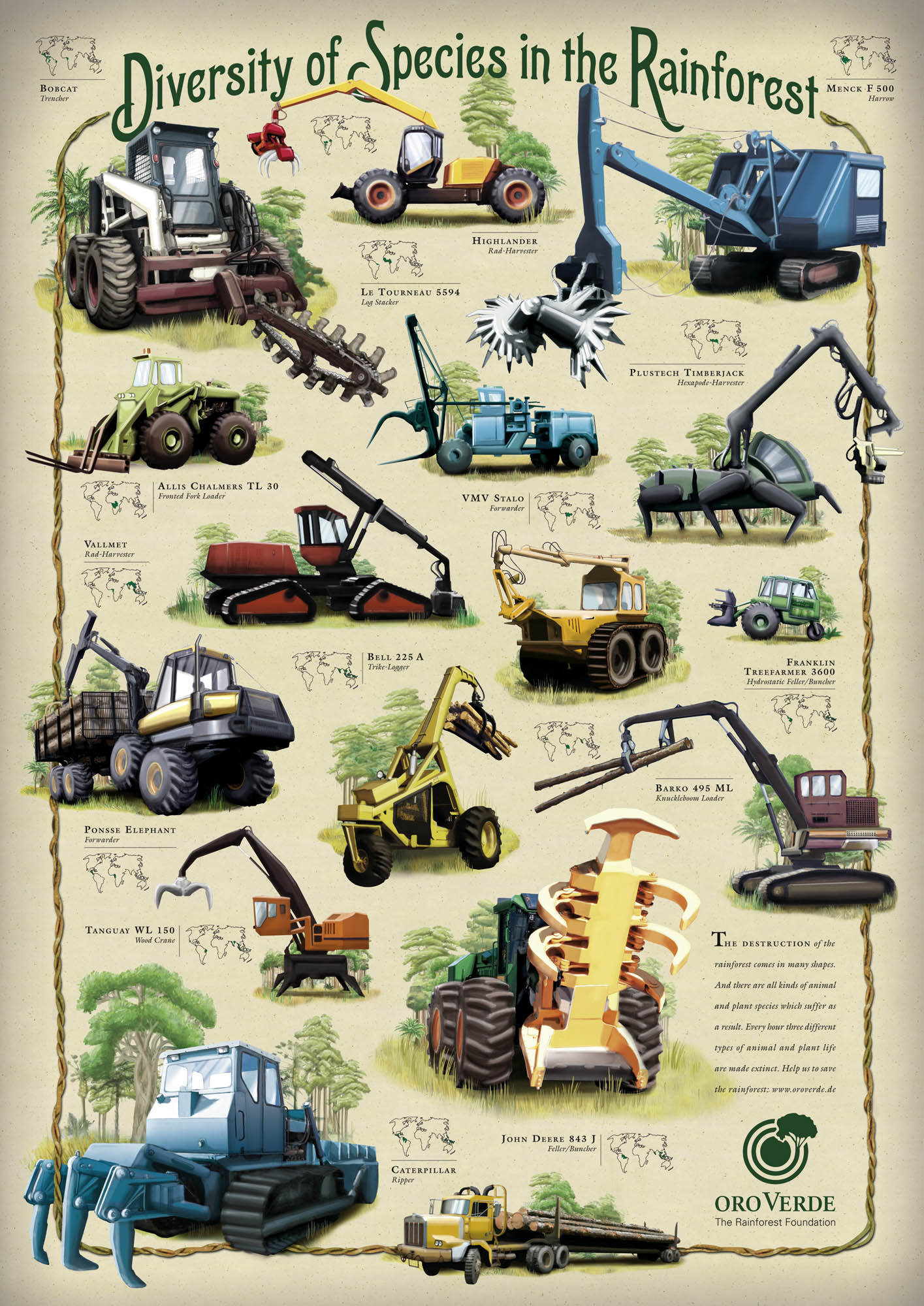
					<b><p>Nate</p>: </b><em>?Cool for sustainable timber harvest, one hopes. Do follow the link for a <a href="http://www.ibelieveinadv.com/commons/oroverde-rainforest-foundation.jpg">much larger version</a>—sadly, I have to conclude that the "range" maps for each type of machine are probably rather fabricated. The amazing six-legged Timberjack Harvester (<a href="http://www.youtube.com/watch?v=CD2V8GFqk_Y">awesome promo video</a>) is only a working prototype; John Deere bought the company that designed it, but doesn't seem to offer them yet.?</em><br />
		
		<a href="http://www.ibelieveinadv.com/commons/oroverde-rainforest-foundation.jpg"><img src="http://culture-making.com/media/oroverde-rainforest-foundation.jpg" alt="image" /></a><hr />
<div class="author" style="font-size: -1">"<a href="http://www.ibelieveinadv.com/commons/oroverde-rainforest-foundation.jpg">Diversity of Species in the Rainforest</a>," ad by <a href="http://www.oroverde.de/">Oro Verde: Die Tropenwaldstiftung (The Rainforest Foundation)</a> :: via <a href="http://ffffound.com/image/0740e157d12c1baa2dfca9e862d56ce12fa71771">FFFFOUND!</a></div>		


      ]]></content>
    </entry>    <entry>
      <title>Love throws a line</title>
      <link rel="alternate" type="text/html" href="https://culture-making.com/post/love_throws_a_line" />
      <id>tag:culture-makers.com,2025:author/1.995</id>
      <published>2025-01-02T22:53:00Z</published>
      <updated>2025-01-03T22:54:05Z</updated>
      <author>
            <name>Andy Crouch</name>
            <email>andy@culture-making.com</email>
            
      </author>

      <content type="html"><![CDATA[


					<b><p>Nate</p>: </b><em>?The electric dryer hasn't just changed the way most of us dry our laundry; it's also changed the broader cultural expectations of how laundry ought to work: that it should be something we can do without having to figure out what the weather's going to be like, and—here's what makes things difficult for the solution offered below—changed how we feel about seeing our own (and our neighbors') clothes strung out to dry in in semi-public.?</em><br />
		
		<p>Friedman is locked into reverence for technology, sometimes at the expense of common sense. He conjures up a house so &#8220;smart&#8221; that its room lights are triggered by motion sensors; a central monitoring device is in constant contact with the local public utility, automatically reducing consumption at peak times; the house generates its own energy from wind and the sun; and &#8220;when the sun is shining brightly and the wind is howling&#8221; the house&#8217;s energy-brain will turn on your dryer, finishing up your laundry.</p><p>McKibben asks: &#8220;Does it ever occur to him, in the grip of a fantasia like this, that if the sun is shining brightly, or the breeze is blowing steadily, you could dry your clothes on a $14 piece of rope strung off your back deck, or for that matter on a foldable rack in the apartment hallway?&#8221; Friedman&#8217;s smart house is more benign version of the much-hyped hydrogen car, in other words: They&#8217;re both sexy and a long way off, while there are other, simpler solutions already at hand.</p><hr />
<div class="author" style="font-size: -1">from "<a href="http://www.boston.com/bostonglobe/ideas/brainiac/2008/10/the_environment.html">Hot, flat, and blinded by science</a>," by Christopher Shea, <a href="http://www.boston.com/bostonglobe/ideas/brainiac/2008/10/the_environment.html">Boston Globe/Brainiac</a>, 30 October 2008</div>		


      ]]></content>
    </entry>    <entry>
      <title>The trayless cafeteria</title>
      <link rel="alternate" type="text/html" href="https://culture-making.com/post/the_trayless_cafeteria" />
      <id>tag:culture-makers.com,2025:author/1.761</id>
      <published>2025-01-02T22:53:00Z</published>
      <updated>2025-01-03T22:54:05Z</updated>
      <author>
            <name>Andy Crouch</name>
            <email>andy@culture-making.com</email>
            
      </author>

      <content type="html"><![CDATA[


					<b><p>Nate</p>: </b><em>?Evidently if you can take less food, you waste less food. But the wider ripples—from environmental impact to dishwashing methodology to socialization—emerge when the humble cafeteria tray gets taken away.?</em><br />
		
		<p>From the University of California at Santa Cruz to Virginia Tech, cafeteria trays are disappearing, enabling universities and food-service companies to reduce food waste, lower energy costs and make college campuses more environmentally sustainable. The reasoning goes like this: when students are allowed to use trays, they tend to roam around the cafeteria grabbing food with abandon until space on the tray runs out. If you remove their trays, you make it impossible for them to carry a surplus of dishes, and they will make their selections more carefully and be satisfied with less food overall. That saves on food. Further, getting rid of trays means dishwashers have less to wash. That saves on water and energy.</p><hr />
<div class="author" style="font-size: -1">from "<a href="http://www.time.com/time/nation/article/0,8599,1834403,00.html">The War on College Cafeteria Trays</a>," by Maya Curry, <a href="http://www.time.com/"><i>TIME</i></a>, 25 August 2008</div>		


      ]]></content>
    </entry>    <entry>
      <title>Garbage barges vs. vertical farms</title>
      <link rel="alternate" type="text/html" href="https://culture-making.com/post/garbage_barges_vs_vertical_farms" />
      <id>tag:culture-makers.com,2025:author/1.624</id>
      <published>2025-01-02T22:53:00Z</published>
      <updated>2025-01-03T22:54:05Z</updated>
      <author>
            <name>Andy Crouch</name>
            <email>andy@culture-making.com</email>
            
      </author>

      <content type="html"><![CDATA[


					<b><p>Nate</p>: </b><em>?Why cities might not be the best place for large-scale, hi-tech food production -- food-miles notwithstanding.?</em><br />
		
		<p>Cities offer a lot of environmental benefits, at least compared to the alternatives. There are many reasons this is so, but they all spring from a fairly basic fact: cities are built for people. Lots of people, densely packed, sharing resources. Innovations that encourage or take advantage of that density are likely to make cities more sustainable. And innovations that undermine density have a lot of work to do to overcome their inherent environmental disadvantages. </p><p>New York City, for example, recently released an ambitious plan to slash municipal carbon emissions by almost two million metric tons per year. Fully 16% of total life cycle reductions will come from a new rail and barge network built for the express purpose of hauling garbage. No one will appear on The Colbert Report to plug the new garbage barges, but the system will eliminate five million vehicle miles per year. Less congestion, less noise, less air pollution, and less greenhouse gas emissions. New York’s size and density make this project possible. </p><p>Urban vertical farms, on the other hand, fail miserably on this score. Land is one of the primary inputs for agriculture, which is why we don’t expect to see corn growing in lower Manhattan. Such spaces are better reserved for people, mass transit, mass entertainment, and businesses that depend primarily on human capital.  </p><p>Our collective confusion on this point seems to be most acute when the topic is food. We intuitively understand that it doesn’t really make sense to manufacture, say, iPods in small factories scattered across hundreds of urban centers, even though iPods are consumed in just about every city in the world. We readily grasp that the economics wouldn’t work out, and we probably even understand that such a scheme wouldn’t help the environment. Efficiency benefits more than just the bottom line. 
</p><hr />
<div class="author" style="font-size: -1">from "<a href="http://www.worldchanging.com/archives/008330.html">Cities are for People: The Limits of Localism</a>," by Adam Stein, <a href="http://www.worldchanging.com/">WorldChanging</a>, 8 August 2008</div>		


      ]]></content>
    </entry>

</feed>