<?xml version="1.0" encoding="utf-8"?>
<feed xmlns="http://www.w3.org/2005/Atom" xml:lang="en">

    <title type="text">Culture Making Articles items tagged entertainment</title>
    <subtitle type="text">Culture Making Articles:Writing on Christianity and culture from Andy Crouch</subtitle>
    <link rel="alternate" type="text/html" href="http://culture-makers.com/" />
    <link rel="self" type="application/atom+xml" href="https://culture-making.com/tag/atom" />
    <updated>2025-01-03T22:54:05Z</updated>
    <rights>Copyright (c) 2025, Andy Crouch</rights>
    <generator uri="http://www.pmachine.com/" version="7.5.15">ExpressionEngine</generator>
    <id>tag:culture-makers.com,2025:01:02</id>

    <entry>
      <title>The Jolly Flatboatmen (detail), by George Caleb Bingham</title>
      <link rel="alternate" type="text/html" href="https://culture-making.com/post/the_jolly_flatboatmen_detail_by_george_caleb_bingham" />
      <id>tag:culture-makers.com,2025:author/1.1853</id>
      <published>2025-01-02T22:53:00Z</published>
      <updated>2025-01-03T22:54:05Z</updated>
      <author>
            <name>Andy Crouch</name>
            <email>andy@culture-making.com</email>
            
      </author>

      <content type="html"><![CDATA[


					<b>Nate: </b><em>?This 19th century slice-of-riparian-life manages to combine joyous abandon with highly stylized composition. I love its mannered glimpse at labor, camaraderie, and do-it-yourself entertainment.?</em><br />
		
		<a href="http://www.metmuseum.org/special/americanstories/objectView.aspx?oid=9&sid=3"><img src="http://culture-making.com/media/flatboatmen2.jpg" alt="image" /></a><hr />
<div class="author" style="font-size: -1">"<a href="http://www.metmuseum.org/special/americanstories/objectView.aspx?oid=9&sid=3">The Jolly Flatboatmen</a>" (detail), oil on canvas, 1846, by George Caleb Bingham, from the exhibition <a href="http://www.metmuseum.org/special/americanstories/objectView.aspx?oid=9&sid=3">American Stories: Paintings of Everyday Life</a>, at the <a href="http://www.metmuseum.org/home.asp">Metropolitan Museum of Art</a>, 12 October 2009–24 January 2010 :: via <a href="http://coudal.com/archives/2010/02/american_storie.php?utm_source=feedburner&utm_medium=feed&utm_campaign=Feed%3A+CoudalFreshSignals+%28Coudal%3A+Fresh+Signals%29&utm_content=Google+Reader">Coudal Partners</a></div>		


      ]]></content>
    </entry>    <entry>
      <title>Don’t forget your happy slip!</title>
      <link rel="alternate" type="text/html" href="https://culture-making.com/post/dont_forget_your_happy_slip" />
      <id>tag:culture-makers.com,2025:author/1.1696</id>
      <published>2025-01-02T22:53:00Z</published>
      <updated>2025-01-03T22:54:05Z</updated>
      <author>
            <name>Andy Crouch</name>
            <email>andy@culture-making.com</email>
            
      </author>

      <content type="html"><![CDATA[


			<p align="center"><object width="420" height="340"><param name="movie" value="http://www.youtube.com/v/_3y_hX0noR0&amp;hl=en&amp;fs=1&amp;"></param><param name="allowFullScreen" value="true"></param><param name="allowscriptaccess" value="always"></param><embed src="http://www.youtube.com/v/_3y_hX0noR0&amp;hl=en&amp;fs=1&amp;" type="application/x-shockwave-flash" allowscriptaccess="always" allowfullscreen="true" width="420" height="340"></embed></object></p><br />
<b>Christy: </b><em>?Christine Gambito is an excessively talented and enterprising individual. Her HappySlip Productions, named for a mispronunciation of "half slip" she inherited from her Filipino mother, have made her an online celebrity, with 70 million YouTube views. She writes, acts out all the parts (based on her own family members), and produces her videos, which affectionately embody the Filipino-American experience. This is one of my favorites.?</em><br />
<hr /><span style="font-size: -1">from "<a href="http://www.youtube.com/watch?v=_3y_hX0noR0">Mixed Nuts</a>," by HappySlip Productions, 17 November 2006</span>


      ]]></content>
    </entry>    <entry>
      <title>Crazymouse, Minnesota State Fair, by David Bowman</title>
      <link rel="alternate" type="text/html" href="https://culture-making.com/post/crazymouse_minnesota_state_fair_by_david_bowman" />
      <id>tag:culture-makers.com,2025:author/1.1540</id>
      <published>2025-01-02T22:53:00Z</published>
      <updated>2025-01-03T22:54:05Z</updated>
      <author>
            <name>Andy Crouch</name>
            <email>andy@culture-making.com</email>
            
      </author>

      <content type="html"><![CDATA[


					<b>Nate: </b><em>?This glorious long-exposure photo is also the first reference to the Minnesota State Fair that I can recall that doesn't have to do with <a href="http://www.youtube.com/watch?v=l-5Lr2IhB_o">terrible-for-you food innovations</a>. Though come to think of it, that beautiful pink blur does look a lot like cotton candy. Or a mushroom cloud.?</em><br />
		
		<a href="http://flak-photo.my-expressions.com/archives/6333_1646490288/332747"><img src="http://www.culture-making.com/media/1247057267.jpg" alt="photo" /></a><hr />
<div class="author" style="font-size: -1">"<a href="http://flak-photo.my-expressions.com/archives/6333_1646490288/332747">Crazymouse</a>," Minnesota State Fair (2008), photo by <a href="http://www.bowmanstudio.com/">David Bowman</a> :: via <a href="http://flak-photo.my-expressions.com/archives/6333_1646490288/332747">Flak Photo</a></div>		


      ]]></content>
    </entry>    <entry>
      <title>Golden idol fails to deliver on promise, again</title>
      <link rel="alternate" type="text/html" href="https://culture-making.com/post/golden_idol_fails_to_deliver_on_promise_again" />
      <id>tag:culture-makers.com,2025:author/1.1141</id>
      <published>2025-01-02T22:53:00Z</published>
      <updated>2025-01-03T22:54:05Z</updated>
      <author>
            <name>Andy Crouch</name>
            <email>andy@culture-making.com</email>
            
      </author>

      <content type="html"><![CDATA[


					<b><p>Nate</p>: </b><em>?For some reason the <i>LA Times</i> has categorized this story under "Science &amp; Medicine." Curiouser and curiouser.?</em><br />
		
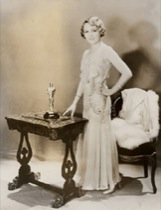
		<div style="float:right; padding:15px 5px 5px 5px"><img src="http://culture-making.com/media/marypickford_academyaward_oscarphoto_210.jpg" alt="image"></div><p>And the Oscar for best Hollywood courtroom drama goes to . . . the Academy of Motion Picture Arts and Sciences. The golden statuette was awarded Monday by a Los Angeles Superior Court jury, which ruled that if Mary Pickford&#8217;s heirs want to sell it, they have to offer it to academy officials for $10 instead of auctioning it off for as much as $800,000. Academy leaders took a Rancho Mirage woman, her daughter and a cousin to court after the women announced plans to sell the Oscar presented in 1930 to the silent-movie star known as &#8220;America&#8217;s sweetheart&#8221; and donate the proceeds to charity.</p><hr />
<div class="author" style="font-size: -1">from "<a href="http://www.latimes.com/news/science/la-me-pickford16-2008dec16,0,2092583.story?track=rss">Jury bars auction of Mary Pickford's Oscar</a>," by Bob Pool, <a href="http://www.latimes.com/news/science/la-me-pickford16-2008dec16,0,2092583.story?track=rss"><i>Los Angeles Times</i></a>, 16 December 2008</div>		


      ]]></content>
    </entry>    <entry>
      <title>Follies</title>
      <link rel="alternate" type="text/html" href="https://culture-making.com/post/follies" />
      <id>tag:culture-makers.com,2025:author/1.1092</id>
      <published>2025-01-02T22:53:00Z</published>
      <updated>2025-01-03T22:54:05Z</updated>
      <author>
            <name>Andy Crouch</name>
            <email>andy@culture-making.com</email>
            
      </author>

      <content type="html"><![CDATA[


					<b><p>Nate</p>: </b><em>?Having watched way more black and white movies than most people I know, I'm relatively familiar with rehashed versions of the Vaudeville—Broadway—Hollywood transition—last week I watched "Broadway Melody of 1929," which was featured the requisite Florenz Ziegfeld stand-in (Eddie Kane as "Francis Zanfield"). Still I have trouble wrapping my mind around the popularity and cultural ubiquity of Ziegfeld and the cultural artifacts—not least the Broadway musical—he helped create. The cinematic references just seem like an inside joke I'm just shy of getting.?</em><br />
		
		<div style="float:right; padding:15px 5px 5px 5px"><img src="http://culture-making.com/media/isherwood-2-500_210.jpg" alt="image"></div><p>A century is a mere blink in the history of mankind, but it’s a long time in the history of show business. Just about a hundred years ago, a Chicago-born talent manager started a franchise called the “Follies” that set New York on its ear. He apotheosized the showgirl and changed the entertainment rulebook by making the revue an ethnic stew. He later went on to produce “Show Boat,” the first great American musical. But who knows much about Florenz Ziegfeld Jr. today? To most New Yorkers he’s just a name on a dinosaurish single-screen movie house in Midtown. </p><p>Even the stars he showcased — <a href="http://movies.nytimes.com/person/8403/Fanny-Brice?inline=nyt-per" title="">Fanny Brice</a> and <a href="http://movies.nytimes.com/person/129720/Will-Rogers?inline=nyt-per" title="">Will Rogers</a>, <a href="http://movies.nytimes.com/person/10700/Eddie-Cantor?inline=nyt-per" title="">Eddie Cantor</a> and Marilyn Miller — are mostly just names in the pages of theater histories. Among Ziegfeld’s long A-list of “Follies” regulars, W. C. Fields alone forged a big-time career in the movies, ensuring the only kind of immortality that seems readily marketable today, the kind that can be uploaded onto YouTube in easily digestible nuggets.</p><hr />
<div class="author" style="font-size: -1">from "<a href="http://www.nytimes.com/2008/11/23/books/review/Isherwood-t.html?_r=2&ref=books">'Ziegfeld - The Man Who Invented Show Business,' by Ethan Mordden</a>," reviewed by Charles Isherwood, <a href="http://www.nytimes.com/2008/11/23/books/review/Isherwood-t.html?_r=2&ref=books&pagewanted=print"><i>The New York Times</i></a>, 23 November 2008 :: via <a href="http://www.3quarksdaily.com/3quarksdaily/2008/11/yowzah.html">3quarksdaily</a></div>		


      ]]></content>
    </entry>    <entry>
      <title>My pre&#45;teen made me buy it</title>
      <link rel="alternate" type="text/html" href="https://culture-making.com/post/my_pre_teen_made_me_buy_it" />
      <id>tag:culture-makers.com,2025:author/1.960</id>
      <published>2025-01-02T22:53:00Z</published>
      <updated>2025-01-03T22:54:05Z</updated>
      <author>
            <name>Andy Crouch</name>
            <email>andy@culture-making.com</email>
            
      </author>

      <content type="html"><![CDATA[


					<b><p>Andy</p>: </b><em>?Of all the statistics in this generally fascinating summary of recent research on religion and consumerism (in Adweek, of all places!), these are the ones that really make me say, Yikes.?</em><br />
		
		<p>In a pre-Christmas poll last year of religious Christians with kids age 2 to 18, 78 percent said they&#8217;d bought DVDs of movies or TV shows for their teenagers, and 87 percent said they&#8217;d bought these for kids 13 and under. &#8220;However, one-quarter of those adults (26 percent) did not feel comfortable with the DVD products they bought.&#8221; Likewise for music CDs: &#8220;About six of 10 parents bought these discs for their kids, yet one out of every three of those parents (33 percent) had concerns about the content.&#8221; As for video games, 39 percent of the parents of pre-teens were concerned about the content of games they&#8217;d bought, as were 46 percent of parents of teens.</p><hr />
<div class="author" style="font-size: -1">from "<a href="http://www.adweek.com/aw/content_display/special-reports/other-reports/e3i2db03fb29d573ec5fbf2200893197974?pn=2">Church and State</a>," by Mark Dolliver, <a href="http://www.adweek.com/">Adweek</a>, 6 October 2008 :: via Bob Carlton (Facebook friend extraordinaire!)</div>		


      ]]></content>
    </entry>    <entry>
      <title>Give me a telenovela and I’ll give you a nation</title>
      <link rel="alternate" type="text/html" href="https://culture-making.com/post/give_me_a_telenovela_and_ill_give_you_a_nation" />
      <id>tag:culture-makers.com,2025:author/1.968</id>
      <published>2025-01-02T22:53:00Z</published>
      <updated>2025-01-03T22:54:05Z</updated>
      <author>
            <name>Andy Crouch</name>
            <email>andy@culture-making.com</email>
            
      </author>

      <content type="html"><![CDATA[


					<b><p>Nate</p>: </b><em>?Thoughts on drama, production values, and collective therapy from the director of the transglobal, peripatetic Telenovela Institute, studying the effect of Latin American TV soaps in Eastern Europe and around the world.?</em><br />
		
		<p>Since the first days of the [Telenovela] institute’s research, I began to notice common patterns in the way each country related to telenovelas, and, at the same time, the way in which a country’s relationship to telenovelas revealed something unique about it. A Canadian researcher, Denise Bombardier, described it perfectly with her phrase “Give me a telenovela and I’ll give you a nation.” In general terms, however, telenovelas implement what the critic Tomás Lopez-Pumarejo (my principal theorist at the Institute) described as “the drama of the subconscious”: They are stories that revolve around ontological questions: “Where is my son?” or “Where is my love?”</p><p>There is a clear relationship in the way in which the telenovela soap operas explore the social tensions of a country and convert them into collective therapy. This process worked very well in countries that had recently emerged from communism, where people were casting about in a psychological search to deal with the class taboos that had dominated for so long. As a result, a drama centered on the impossibility of love because of social or economic obstacles was extremely powerful. Several studies of the time during which <i>Los Ricos También Lloran</i> was broadcast in Russia indicate that programs simultaneously broadcast from the US (such as<i> Dallas</i> and <i>Dynasty</i>) were popular but never generated the same level of interest, because Russians could not identify with the family problems of an oil millionaire in Texas. The higher production quality of those programs didn’t seem to matter either, and so companies like Televisa did not overly concern themselves with investments in production. It was the drama, the emotions worn on the sleeve, and in part the exotic settings that gave the telenovelas a special attraction.
</p><hr />
<div class="author" style="font-size: -1">from "<a href="http://www.viceland.com/int/v15n6/htdocs/global-pandemic-telenovelabz-152.php?country=us">The Global Pandemic of the Telenovela</a>," by Pablo Helguera, translated by Megan McDowell, <a href="http://www.viceland.com/">Vice Magazine</a>, Vol. 15 No. 8 (July 2008) :: via <a href="http://www.utne.com/2008-11-01/Media/As-the-World-Turns-On-Its-TV.aspx?page=3">Utne Reader</a></div>		


      ]]></content>
    </entry>    <entry>
      <title>The afterlife of Gordon Gekko</title>
      <link rel="alternate" type="text/html" href="https://culture-making.com/post/the_afterlife_of_gordon_gekko" />
      <id>tag:culture-makers.com,2025:author/1.966</id>
      <published>2025-01-02T22:53:00Z</published>
      <updated>2025-01-03T22:54:05Z</updated>
      <author>
            <name>Andy Crouch</name>
            <email>andy@culture-making.com</email>
            
      </author>

      <content type="html"><![CDATA[


					<b><p>Nate</p>: </b><em>?We can never really predict what the effects, and interpretations, of our cultural offerings will be in the long run, as the man who cowrote (with Oliver Stone) the iconic 1980s film <i>Wall Street</i> has had ample occasion to discover. Sometimes we're even remembered for the opposite of the point we were trying to convey. Every time I see the phrase "Orwellian" used, I feel a similar sort of empathetic pang for old anti-totalitarian George Orwell.?</em><br />
		
		<p>Gekko’s character was written to create an engaging, charming, but deceitful and brutal being. I have nevertheless run into quite a number of younger people, who upon discovering that I co-wrote the film, wax rhapsodic about it . . . but often for the wrong reasons.</p><p>A typical example would be a business executive or a younger studio development person spouting something that goes like this: “The movie changed my life. Once I saw it I knew that I wanted to get into such and such business. I wanted to be like Gordon Gekko.”</p><p>The flattery is disarming and ego-stoking, but then neurons fire and alarm bells go off. “You have succeeded with this movie, but you’ve also failed. You gave these people hope to become greater asses than they may already be.”</p><hr />
<div class="author" style="font-size: -1">from "<a href="http://www.latimes.com/entertainment/news/movies/la-ca-wallstreet5-2008oct05,0,478549.story">'Wall Street's' message was not 'Greed is Good'</a>," by Stanley Weiser, <a href="http://www.latimes.com/entertainment/news/movies/la-ca-wallstreet5-2008oct05,0,478549.story"><i>Los Angeles Times</i></a>, 5 October 2008 :: via <a href="http://ideas.blogs.nytimes.com/2008/10/19/the-moral-hazard-of-creating-gordon-gekko/">NYTimes Ideas blog</a></div>		


      ]]></content>
    </entry>

</feed>