<?xml version="1.0" encoding="utf-8"?>
<feed xmlns="http://www.w3.org/2005/Atom" xml:lang="en">

    <title type="text">Culture Making Articles items tagged cities</title>
    <subtitle type="text">Culture Making Articles:Writing on Christianity and culture from Andy Crouch</subtitle>
    <link rel="alternate" type="text/html" href="http://culture-makers.com/" />
    <link rel="self" type="application/atom+xml" href="https://culture-making.com/tag/atom" />
    <updated>2025-01-03T22:54:05Z</updated>
    <rights>Copyright (c) 2025, Andy Crouch</rights>
    <generator uri="http://www.pmachine.com/" version="7.5.15">ExpressionEngine</generator>
    <id>tag:culture-makers.com,2025:01:02</id>

    <entry>
      <title>City Silhouettes by Jasper James</title>
      <link rel="alternate" type="text/html" href="https://culture-making.com/post/city_silhouettes_by_jasper_james" />
      <id>tag:culture-makers.com,2025:author/1.2025</id>
      <published>2025-01-02T22:53:00Z</published>
      <updated>2025-01-03T22:54:05Z</updated>
      <author>
            <name>Andy Crouch</name>
            <email>andy@culture-making.com</email>
            
      </author>

      <content type="html"><![CDATA[


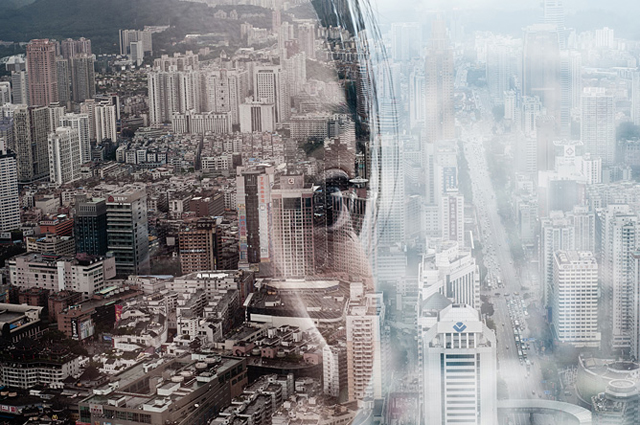
					<b>Nate: </b><em>?Beijing-based photographer <a href="http://www.jasperjames.co.uk/">Jasper James</a> has a wonderful series of portraits of people reflected against cityscapes. The images are all composed in camera—no compositing or Photoshopping beyond simple contrast adjustments. The result—giant humans superimposed on tiny buildings—inverts the usual urban experience, where the buildings dwarf each individual.?</em><br />
		
		<a href="http://www.jasperjames.co.uk/project/people-and-places-2/"><img src="http://www.culture-making.com/media/8_silhouettes004.jpg" alt="photo" /></a><hr />
<div class="author" style="font-size: -1">from "<a href="http://www.jasperjames.co.uk/project/people-and-places-2/">City Silhouettes</a>," by Jasper James, 2010 :: via <a href="http://www.featureshoot.com/2012/01/new-city-silhouette-portraits-by-jasper-james/">Feature Shoot</a> and <a href="http://www.petapixel.com/2012/01/17/city-silhouettes-skylines-seen-through-portraits-of-city-dwellers/?utm_source=feedburner&utm_medium=feed&utm_campaign=Feed%3A+PetaPixel+%28PetaPixel%29">Petapixel</a></div>		


      ]]></content>
    </entry>    <entry>
      <title>Solving the three ring binder problem</title>
      <link rel="alternate" type="text/html" href="https://culture-making.com/post/solving_the_three_ring_binder_problem" />
      <id>tag:culture-makers.com,2025:author/1.2009</id>
      <published>2025-01-02T22:53:00Z</published>
      <updated>2025-01-03T22:54:05Z</updated>
      <author>
            <name>Andy Crouch</name>
            <email>andy@culture-making.com</email>
            
      </author>

      <content type="html"><![CDATA[


					<b>Nate: </b><em>?<a href="http://homeless-scc.org/">Homeless: Santa Clara County</a> is a web-based app designed to connect people who are homeless in communities in and near Silicon Valley with relevant services.  It offers a step beyond the typical three ring binder full of referral info and notes that social workers and other advocates typically wind up relying on to keep track of where people can go for what kinds of help. The app, still in beta, was just awarded second <a href="http://appsforcommunities.challenge.gov/submissions/2732-homeless-scc-santa-clara-county">second prize</a> in Challenge.gov's "<a href="http://appsforcommunities.challenge.gov/">Apps for Communities</a>" contest. Congratulations to our friend Curtis Chang and his team at <a href="http://consultingwithinreach.com/">Consulting Within Reach</a> for their work developing this resource.?</em><br />
		
		<a href="http://appsforcommunities.challenge.gov/submissions/2732-homeless-scc-santa-clara-county"><img src="http://www.culture-making.com/media/homeless.jpg" alt="image" /></a><hr />
<div class="author" style="font-size: -1">map search from <a href="http://homeless-scc.org/">Homeless-SCC (beta)</a>,  15 December 2011</div>		


      ]]></content>
    </entry>    <entry>
      <title>Winnipeg Drummer Boy</title>
      <link rel="alternate" type="text/html" href="https://culture-making.com/post/winnipeg_drummer_boy" />
      <id>tag:culture-makers.com,2025:author/1.2001</id>
      <published>2025-01-02T22:53:00Z</published>
      <updated>2025-01-03T22:54:05Z</updated>
      <author>
            <name>Andy Crouch</name>
            <email>andy@culture-making.com</email>
            
      </author>

      <content type="html"><![CDATA[


			<p align="center"><object width="420" height="213"><param name="movie" value="http://www.youtube.com/v/IrNcD34KFhM?version=3&amp;hl=en_US"></param><param name="allowFullScreen" value="true"></param><param name="allowscriptaccess" value="always"></param><embed src="http://www.youtube.com/v/IrNcD34KFhM?version=3&amp;hl=en_US" type="application/x-shockwave-flash" width="420" height="213" allowscriptaccess="always" allowfullscreen="true"></embed></object></p><br />
<b>Andy: </b><em>?I have to admit, “Little Drummer Boy” is one of my absolute least favorite Christmas songs. You’d think a gleefully amateur music video of it would be low on my list. Instead this exuberant take on the song made my day with its celebration of Winnipeg, snow, drumming, friends, and Jesus. Enjoy, and celebrate.?</em><br />
<hr /><span style="font-size: -1"><a href="http://www.youtube.com/watch?v=IrNcD34KFhM">Sean Quigley - Little Drummer Boy</a>, 30 November 2011 :: thanks <a href="http://twitter.com/MichaelMeinema">@MichaelMeinema</a>!</span>


      ]]></content>
    </entry>    <entry>
      <title>The redemption of the urban</title>
      <link rel="alternate" type="text/html" href="https://culture-making.com/post/the_redemption_of_the_urban" />
      <id>tag:culture-makers.com,2025:author/1.1993</id>
      <published>2025-01-02T22:53:00Z</published>
      <updated>2025-01-03T22:54:05Z</updated>
      <author>
            <name>Andy Crouch</name>
            <email>andy@culture-making.com</email>
            
      </author>

      <content type="html"><![CDATA[


					<b>Andy: </b><em>?This spring I had the great pleasure of interviewing two of my heroes, pastor and author Eugene Peterson and British conservationist and Christian leader Peter Harris. The interview appears in the June issue of Christianity Today—I especially was struck by the way both Eugene and Peter differentiate a biblical environmentalism from other environmentalisms more rooted in the Romantic era.?</em><br />
		
		<p><strong>How do these themes connect with Americans, who mostly live in either suburban or urban environments? </strong></p>
<p><i>Harris:</i> That&#8217;s one distinction between a Christian take on creation and a secular romanticism about wilderness. Think about Psalm 104. In that psalm, which echoes Genesis, you don&#8217;t just have &#8220;the sea and everything in it&#8221;; you have ships on it, working. You don&#8217;t just have the land; you have people, working. There is a radical environmentalism that wishes people were not on the planet. That&#8217;s not the biblical view at all. A Rocha in the United Kingdom actually works in the most polluted, urban borough of the country, because creation isn&#8217;t absent just because people are there. The challenge is how to restore a right way of life, rather than escaping to some wilderness paradise. Fifty percent of the planet now lives in cities. That is where we live out our relationship with creation.</p>
<p><strong>As Christian conservationists, do you see urbanization as a good thing, a bad thing, or something neutral?</strong></p>
<p><i>Harris:</i> My biblical theology means I cannot see it as a bad thing. The ultimate biblical vision is the heavenly city. Our challenge is the redemption of the urban, not the consecration of wilderness.</p>
<p><i>Peterson:</i> I agree, and I don&#8217;t think we realize how much of our view of wilderness comes to us through the Romantic movement. Romantic literature was written at the height of the industrial city, with its exploitation, poverty, and child labor. In reaction to all that, they gave us the concept of nature as romantic. But it&#8217;s not romantic.</p>
<p><i>Harris:</i> It may not even be natural. Sir Ghillean Prance, who has studied the Amazon rainforest for decades, believes that the very diversity of the rainforest is a result of gardening. The human beings who lived there selectively used it and tended it, and that is the best way to account for its extraordinary botanical diversity.</p>
<p>Even biologically, the idea of a pristine, teeming world without human beings probably isn&#8217;t accurate. Britain is certainly a case in point. The original British form of vegetation was a pretty monocultural oak forest. It was only as farming came and we had a diversity of habitats that we had the biodiversity that we cherish on the British Isles today.</p>
<p>So we should understand the human presence on the planet in God&#8217;s purposes as a blessing.</p><hr />
<div class="author" style="font-size: -1">from "<a href="http://www.christianitytoday.com/ct/article_print.html?id=92510">The Joyful Environmentalists: Eugene Peterson and Peter Harris</a>," interview by Andy Crouch, <a href="http://www.christianitytoday.com/">Christianity Today</a>, June 2011</div>		


      ]]></content>
    </entry>    <entry>
      <title>The suburbs keep growing</title>
      <link rel="alternate" type="text/html" href="https://culture-making.com/post/the_suburbs_keep_growing" />
      <id>tag:culture-makers.com,2025:author/1.1989</id>
      <published>2025-01-02T22:53:00Z</published>
      <updated>2025-01-03T22:54:05Z</updated>
      <author>
            <name>Andy Crouch</name>
            <email>andy@culture-making.com</email>
            
      </author>

      <content type="html"><![CDATA[


					<b>Andy: </b><em>?You can rely on Joel Kotkin to challenge conventional wisdom about urban planning, and here he (with Wendell Cox) does it again. My own reading of this data is that cities are becoming more and more an elite phenomenon (in Mayor Bloomberg's words, "a luxury good"). Or, as Kotkin and Cox put it at the end of this article—well worth reading in its entirety—"Cities remain a successful niche product for a relatively small percentage of the population."?</em><br />
		
		<p>For years, academics, the media, and big-city developers have been suggesting that suburbs were dying and that people were flocking back to the cities that they had fled in the 1970s. The Obama administration has taken this as gospel. “We’ve reached the limits of suburban development,” Housing and Urban Development secretary Shaun Donovan opined in 2010. “People are beginning to vote with their feet and come back to the central cities.” Yet of the 51 metropolitan areas that have more than 1 million residents, only three—Boston, Providence, and Oklahoma City—saw their core cities grow faster than their suburbs. (And both Boston and Providence grew slowly; their suburbs just grew more slowly. Oklahoma City, meanwhile, built suburban residences on the plentiful undeveloped land within city limits.)</p><p>All this suburbanization means that the best unit for comparison may be, not the core city, but the metropolitan area; and the census shows clearly which metropolitan areas are growing and which are not. The top ten population gainers—growing by 20 percent, twice the national average or more—are the metropolitan areas surrounding Las Vegas, Raleigh, Austin, Charlotte, Riverside–San Bernardino, Orlando, Phoenix, Houston, San Antonio, and Atlanta. These areas are largely suburban. None developed the large, dense core cities that dominated America before the post–World War II suburban boom began. By contrast, many of the metropolitan areas that grew at rates half the national average or less—San Francisco, Los Angeles, Philadelphia, Boston, New York—have core areas that are the old, dense variety. Planners and pundits may like density, but people, for the most part, continue to prefer more space.</p><hr />
<div class="author" style="font-size: -1">from "<a href="http://www.city-journal.org/2011/eon0406jkwc.html">Cities and the Census</a>," by Joel Kotkin and Wendell Cox, <a href="http://www.city-journal.org/">City Journal</a>, 6 April 2011</div>		


      ]]></content>
    </entry>    <entry>
      <title>A really big deal</title>
      <link rel="alternate" type="text/html" href="https://culture-making.com/post/a_really_big_deal" />
      <id>tag:culture-makers.com,2025:author/1.1983</id>
      <published>2025-01-02T22:53:00Z</published>
      <updated>2025-01-03T22:54:05Z</updated>
      <author>
            <name>Andy Crouch</name>
            <email>andy@culture-making.com</email>
            
      </author>

      <content type="html"><![CDATA[


					<b>Nate: </b><em>?Rutgers professor <a href="http://www.rci.rutgers.edu/~nokwate/">Naa Oyo A. Kwate</a> researches the density of fast food restaurants and alcohol ads in New York. The results aren't encouraging, but do offer insights into the ways that culture shapes the city and vise versa.?</em><br />
		
		<p>Several other researchers have shown that there is a disproportionate amount of alcohol advertising in predominantly black neighbourhoods compared to predominantly white neighbourhoods. Kwate’s study not only revealed that an astonishing twenty-five percent of the outdoor advertising space in Central Harlem was dedicated to selling alcohol, but also that exposure to these ads increased black women’s chances of being a problem drinker—by up to thirteen percent. That, as she puts it, is “a really big deal.”</p><hr />
<div class="author" style="font-size: -1">from "<a href="http://www.ediblegeography.com/edible-geography/">Edible Geography</a>," by Nicola Twilley, <a href="http://www.ediblegeography.com/edible-geography/">Edible Geography</a>, 2 February 2011</div>		


      ]]></content>
    </entry>    <entry>
      <title>The demographic inversion</title>
      <link rel="alternate" type="text/html" href="https://culture-making.com/post/the_demographic_inversion" />
      <id>tag:culture-makers.com,2025:author/1.626</id>
      <published>2025-01-02T22:53:00Z</published>
      <updated>2025-01-03T22:54:05Z</updated>
      <author>
            <name>Andy Crouch</name>
            <email>andy@culture-making.com</email>
            
      </author>

      <content type="html"><![CDATA[


					<b><p>Andy</p>: </b><em>?This smart article from <i>The New Republic</i> about the return of affluent residents to downtowns makes some judicious points about the return of the (upper) middle classes to American cities. The bottom line remains that "the suburbs" are going to mean something quite different to our grandchildren than they meant to us: among other things, ethnic and economic diversity, lower incomes, and increased crime. And "the city" already means something completely different to a 22-year-old today than it meant to me when I was 22 years old (e.g., "Sex and . . .").?</em><br />
		
		<p>What makes [Vancouver] unusual&#8212;indeed, at this point unique in all of North America&#8212;is that roughly 20 percent of its residents live within a couple of square miles of each other in the city&#8217;s center. Downtown Vancouver is a forest of slender, green, condo skyscrapers, many of them with three-story townhouse units forming a kind of podium at the base. Each morning, there are nearly as many people commuting out of the center to jobs in the suburbs as there are commuting in. Two public elementary schools have opened in downtown Vancouver in the past few years. A large proportion of the city&#8217;s 600,000 residents, especially those with money, want to live downtown.</p><p>No American city looks like Vancouver at the moment. But quite a few are moving in this direction. Demographic inversions of one sort or another are occurring in urban pockets scattered all across America, many of them in seemingly unlikely places. Charlotte, North Carolina, is in the midst of a downtown building boom dominated by new mixed-use high-rise buildings, with office space on the bottom and condos or rental units above. Even at a moment of economic weakness, the condos are still selling briskly.</p><p>We are not witnessing the abandonment of the suburbs or a movement of millions of people back to the city all at once. But we are living at a moment in which the massive outward migration of the affluent that characterized the second half of the twentieth century is coming to an end. For several decades now, cities in the United States have wished for a &#8220;24/7&#8221; downtown, a place where people live as well as work, and keep the streets busy, interesting, and safe at all times of day. This is what urbanist Jane Jacobs preached in the 1960s, and it has long since become the accepted goal of urban planners. Only when significant numbers of people lived downtown, planners believed, could central cities regain their historic role as magnets for culture and as a source of identity and pride for the metropolitan areas they served. Now that&#8217;s starting to happen, fueled by the changing mores of the young and by gasoline prices fast approaching $5-per-gallon. In many of its urbanized regions, an America that seemed destined for everincreasing individualization and sprawl is experimenting with new versions of community and sociability.</p><hr />
<div class="author" style="font-size: -1">from <a href="http://tnr.com/story_print.html?id=264510ca-2170-49cd-bad5-a0be122ac1a9">Trading Places</a>, by Alan Erhenhalt, <a href="http://tnr.com/">The New Republic</a>, 13 August 2008 :: via <a href="http://www.bigcontrarian.com">Big Contrarian</a> :: first posted here 9 August 2008</div>		


      ]]></content>
    </entry>    <entry>
      <title>Cities, wandering, serendipity and (wait for it) zombies</title>
      <link rel="alternate" type="text/html" href="https://culture-making.com/post/cities_wandering_serendipity_and_wait_for_it_zombies" />
      <id>tag:culture-makers.com,2025:author/1.1952</id>
      <published>2025-01-02T22:53:00Z</published>
      <updated>2025-01-03T22:54:05Z</updated>
      <author>
            <name>Andy Crouch</name>
            <email>andy@culture-making.com</email>
            
      </author>

      <content type="html"><![CDATA[


					<b>Nate: </b><em>?Cell phones and GPS can easily take the thinking out of urban navigation, obscuring the reality of making our way on our own with the reality of screen and algorithm. Of course we can, in more playful mode, use augmented reality—as with the video game described below—to get ourselves out of our urban ruts. I wonder if a more philosophical GPS system would have, next to the button that says "Take me home", one that says "Get me lost."?</em><br />
		
		<p>I’m very weary of the hipster obsession with zombies by now. Cut it out, hipsters. So I felt shame the other night as my friend and I sprinted through the dark along treacherously uneven brick sidewalks, running from zombies and loving it.</p><p>Not real zombies, or even hipsters—we were responding to an awesome app for Android phones called Zombie, Run! It’s a location-based game of sorts that places a bunch of zombies between you and your destination on the map. When you’re near enough to a zombie, it begins to give chase. You must reach your destination without a zombie catching you and eating your brains. It’s lots of fun and can make mundane trips much more interesting, especially if you enjoy running around like a maniac in public.</p><p>But a game like this is also fascinating when you set down your can of High Life and put on your Geographer hat. It directs a kind of spatial behavior that technology more often stamps out in one way or another—wandering. While our gizmos usually tell us exactly where something is and how to get there, here is something that forces a person to stray from the direct path. Assuming the player keeps his eyes open and actually notices the world around him, the game provides an interesting way of experiencing and understanding urban spaces. By acting upon virtual landscape in the physical landscape, the player travels unpredicted paths and enters areas that might otherwise never have been seen.</p><hr />
<div class="author" style="font-size: -1">from "<a href="http://www.cartogrammar.com/blog/zombie-psychogeography/">Zombie psychogeography</a>" by Andy Woodruff, <a href="http://www.cartogrammar.com/blog/zombie-psychogeography/">Cartogrammar</a>, 23 August 2010</div>		


      ]]></content>
    </entry>    <entry>
      <title>The bottom of the urban planning bag</title>
      <link rel="alternate" type="text/html" href="https://culture-making.com/post/the_bottom_of_the_urban_planning_bag" />
      <id>tag:culture-makers.com,2025:author/1.1909</id>
      <published>2025-01-02T22:53:00Z</published>
      <updated>2025-01-03T22:54:05Z</updated>
      <author>
            <name>Andy Crouch</name>
            <email>andy@culture-making.com</email>
            
      </author>

      <content type="html"><![CDATA[


					<b>Nate: </b><em>?These maps compare the possible routes of a one-kilometer walk in two neighborhoods in the Seattle area: the heavily cul-de-sac'd <a href="http://maps.google.com/maps?f=q&source=s_q&hl=en&geocode=&q=woodinville+seattle&sll=45.530145,-122.811566&sspn=0.011935,0.018797&ie=UTF8&hq=&hnear=Woodinville,+King,+Washington&ll=47.775271,-122.178397&spn=0,0.053945&t=h&z=15&layer=c&cbll=47.759964,-122.167316&panoid=2aMkF9v9a9KJSYbAXr7WUw&cbp=12,267.46,,0,1.32">Woodinville</a> and the gridded <a href="http://maps.google.com/maps?f=q&source=s_q&hl=en&geocode=&q=ballard+seattle&sll=47.759964,-122.167316&sspn=0.023022,0.053945&ie=UTF8&hq=&hnear=Seattle&ll=47.684777,-122.392116&spn=0,0.053945&t=h&z=15&layer=c&cbll=47.675104,-122.37888&panoid=XUNO3CkYJ-NBoAkQcim2GQ&cbp=12,168.27,,0,12.71">Ballard</a> neighborhood. Cul-de-sacs (or, if we're sticklers for French grammar in our loan-words, <a href="http://en.wikipedia.org/wiki/Cul-de-sac">culs-de-sac</a>, or if we're actual French, <a href="http://fr.wikipedia.org/wiki/Impasse">les impasses</a>) are designed, in part, to free residential suburbs from the noises and hazards of automobiles, with the side effect of making it nearly impossible to go anywhere without a car. I suppose a secondary effect of the culs was to mask the depersonalizing qualities of vast suburbs of near-identical houses all built over the course of a few months—again, at the depersonalizing cost of making coming and going by foot, bicycle, or public transit much more difficult. In an added layer of irony, the map on the right looks far more organic, almost lung-like, but (our shifting urban values tell us) the mathematical abstraction on the right is the one more suited to healthy city life.?</em><br />
		
		<a href="http://hbr.org/2010/05/back-to-the-city/sb1"><img src="http://culture-making.com/media/F1005B_A_lg.jpg" alt="image" /></a><hr />
<div class="author" style="font-size: -1">from "<a href="http://hbr.org/2010/05/back-to-the-city/sb1">The Unintended Consequences of Cul-de-sacs</a>," by Ania Wieckowski, <a href="http://hbr.org/2010/05/back-to-the-city/sb1"><i>Harvard Business Review</i></a>, May 2010 :: via <a href="http://www.infrastructurist.com/2010/05/07/how-cul-de-sacs-are-killing-your-community/">The Infrasructuralist</a></div>		


      ]]></content>
    </entry>    <entry>
      <title>Street photography by Matt Stuart</title>
      <link rel="alternate" type="text/html" href="https://culture-making.com/post/street_photography_by_matt_stuart" />
      <id>tag:culture-makers.com,2025:author/1.1896</id>
      <published>2025-01-02T22:53:00Z</published>
      <updated>2025-01-03T22:54:05Z</updated>
      <author>
            <name>Andy Crouch</name>
            <email>andy@culture-making.com</email>
            
      </author>

      <content type="html"><![CDATA[


					<b>Nate: </b><em>?I love Matt Stewart's mannered, witty, sometimes downright cheeky street photos—the <a href="http://www.mattstuart.com/Photographs/Black-White">black & white</a> and <a href="http://www.mattstuart.com/Photographs/Colour">colour</a> sections of his site are worth full perusal. The photos are all about finding echoed gestures and surprising, double-take juxtapositions. Sometimes it can feel like a one-trick project, but the one trick always leaves me smiling.?</em><br />
		
		<a href="http://www.mattstuart.com/"><img src="http://culture-making.com/media/12.jpg" alt="photo" /></a><hr />
<div class="author" style="font-size: -1">"<a href="http://www.mattstuart.com/">Soho</a>," by <a href="http://www.mattstuart.com/">Matt Stuart</a>, 2010 :: via <a href="http://moreintelligentlife.com/blog/melissa-goldstein/qa-matt-stuart-street-photographer?utm_source=feedburner&utm_medium=feed&utm_campaign=Feed%3A+MoreintelligentlifeTotal+%28moreintelligentlife.com+-+total%29&utm_content=Google+Reader">More Intelligent Life</a></div>		


      ]]></content>
    </entry>    <entry>
      <title>Dancers Among Us, by Jordan Matter</title>
      <link rel="alternate" type="text/html" href="https://culture-making.com/post/dancers_among_us_by_jordan_matter" />
      <id>tag:culture-makers.com,2025:author/1.1895</id>
      <published>2025-01-02T22:53:00Z</published>
      <updated>2025-01-03T22:54:05Z</updated>
      <author>
            <name>Andy Crouch</name>
            <email>andy@culture-making.com</email>
            
      </author>

      <content type="html"><![CDATA[


					<b>Nate: </b><em>?Artist's description: "Dancers Among Us is a collection of NYC dance photographs featuring members of the Paul Taylor and Martha Graham Dance Companies. This is an ongoing project that began in the spring of 2009. There were no trampolines or other devices used for these images." The entire series is lots of fun, but I love the interplay of artistic exchange—gifts offered, gifts received—in this one.?</em><br />
		
		<a href="http://www.jordanmatter.com/photography/dance-photography/dancers-among-us.php#dance_couple_bw.jpg"><img src="http://culture-making.com/media/dance_couple_bw.jpg" alt="photo" /></a><hr />
<div class="author" style="font-size: -1">"<a href="http://www.jordanmatter.com/photography/dance-photography/dancers-among-us.php#dance_couple_bw.jpg">Jamie Rae Walker and Annmaria Mazzini</a>," photo by Jordan Matter, from the series <a href="http://www.jordanmatter.com/photography/dance-photography/dancers-among-us.php#dance_couple_bw.jpg">Dancers Among Us</a>, 2009–ongoing :: via <a href="http://kottke.org/10/04/dancers-among-us">kottke.org</a></div>		


      ]]></content>
    </entry>    <entry>
      <title>Sana’a sunset: a panoramic view of Yemen’s capital city</title>
      <link rel="alternate" type="text/html" href="https://culture-making.com/post/sanaa_sunset_a_panoramic_view_of_yemens_capital_city" />
      <id>tag:culture-makers.com,2025:author/1.1776</id>
      <published>2025-01-02T22:53:00Z</published>
      <updated>2025-01-03T22:54:05Z</updated>
      <author>
            <name>Andy Crouch</name>
            <email>andy@culture-making.com</email>
            
      </author>

      <content type="html"><![CDATA[


			<p align="center"><object classid="clsid:D27CDB6E-AE6D-11cf-96B8-444553540000" codebase="http://download.macromedia.com/pub/shockwave/cabs/flash/swflash.cab#version=9,0,28,0" id="_360_krpano_id_958200" name="_360_krpano_name_958200" width="425" height="315"><param name="movie" value="http://www.360cities.net/javascripts/krpano/krpano.swf"/><param name="quality" value="autohigh"/><param name="allowScriptAccess" value="always"/><param name="flashvars" value="pano=http://www.360cities.net/krpano/external_embed/sanaa-sunset.xml&amp;epd=http://www.360cities.net/data/embed/plugin_data/sanaa-sunset"/><param name="allowFullScreen" value="true"/><embed src="http://www.360cities.net/javascripts/krpano/krpano.swf" pluginspage="http://www.macromedia.com/go/getflashplayer" width="425" height="315" allowFullScreen="true" allowScriptAccess="always" quality="autohigh" flashvars="pano=http://www.360cities.net/krpano/external_embed/sanaa-sunset.xml&amp;epd=http://www.360cities.net/data/embed/plugin_data/sanaa-sunset"></embed></object></p><br />
<b>Nate: </b><em>?An amazing interactive view of Yemen's capital, a city that has been continuously inhabited for more tha 2500 years. I love the infinite variablity of the vernacular style, the contrast of all those arches and windows and carved gypsum fanlights on facade after facade. Though they look quite contemporary, many of the flat-roofed multistory buildings in the old city are hundreds of years old. For much much more, see this lovely free-to-download book, <a href="">The old walled city of San'a'</a>.?</em><br /><hr />
<span style="font-size: -1">"<a href="http://www.360cities.net/image/sanaa-sunset">Sana'a: View from a rooftop at sunset panorama in Yemen</a>," panoramic photo by Stefan Geens, <a href="http://www.360cities.net/image/sanaa-sunset">360 Cities</a>, 2 May 2009 :: via <a href="http://www.good.is/post/incredible-interactive-panorama-of-sana-a-rooftops-at-sunset">GOOD Blog</a></span>


      ]]></content>
    </entry>    <entry>
      <title>A tale of two cities</title>
      <link rel="alternate" type="text/html" href="https://culture-making.com/post/a_tale_of_two_cities" />
      <id>tag:culture-makers.com,2025:author/1.1756</id>
      <published>2025-01-02T22:53:00Z</published>
      <updated>2025-01-03T22:54:05Z</updated>
      <author>
            <name>Andy Crouch</name>
            <email>andy@culture-making.com</email>
            
      </author>

      <content type="html"><![CDATA[


			<p><object width="420" height="340"><param name="movie" value="http://www.youtube.com/v/ZrDxe9gK8Gk&amp;hl=en_US&amp;fs=1&amp;"></param><param name="allowFullScreen" value="true"></param><param name="allowscriptaccess" value="always"></param><embed src="http://www.youtube.com/v/ZrDxe9gK8Gk&amp;hl=en_US&amp;fs=1&amp;" type="application/x-shockwave-flash" allowscriptaccess="always" allowfullscreen="true" width="420" height="340"></embed></object></p><br />
<b>Andy: </b><em>?For some reason, this year I have been especially seeking out Advent moments—books, films, and music that capture longing, incompleteness, and hope. This short film, shot on a cell phone in New York and Sydney, fits beautifully.?</em><br />
<hr /><span style="font-size: -1">"<a href="http://www.youtube.com/watch?v=ZrDxe9gK8Gk">Mankind Is No Island"</a> by Jason van Genderen, 29 September 2008 :: via Richard Law, 7th grade English teacher at Strath Haven Middle School (not the last time my son will introduce me to significant cultural works!)</span>


      ]]></content>
    </entry>    <entry>
      <title>What is social justice?</title>
      <link rel="alternate" type="text/html" href="https://culture-making.com/post/what_is_social_justice" />
      <id>tag:culture-makers.com,2025:author/1.1735</id>
      <published>2025-01-02T22:53:00Z</published>
      <updated>2025-01-03T22:54:05Z</updated>
      <author>
            <name>Andy Crouch</name>
            <email>andy@culture-making.com</email>
            
      </author>

      <content type="html"><![CDATA[


					<b>Andy: </b><em>?This is an intriguing historical treatment of the phrase "social justice," which Michael Novak (here writing in deliberately non-partisan mode) traces to the shift from agrarian serfdom to urbanized democracy. We need more careful work on overused words like these (and in the coming days, you can read Novak's take on two others, "the common good" and "personal liberty").?</em><br />
		
		<p>The scholar Friedrich Hayek finds that the first writer to use the term [&#8220;social justice&#8221;] was an Italian priest, Taparelli D’Azeglio, in his book <i>Natural Rights from a Historical Standpoint</i> (1883). It is in this book that Leo XIII (1878–1903) first encountered the term. The context was one of the most enormous social transformations in human history: the end of the agrarian age that had begun before the time of Christ, and the fairly abrupt entry into an age of invention, investment, urban growth, manufacturing, and services. No longer did families have an inherited roof over their heads and daily food from their own land. Now they were uprooted and dwelling in cities, dependent for shelter and food on the availability of jobs and their own initiative. Traditional social networks were cut to shreds, and the associations of a lifetime were torn asunder. . . .</p><p>I know from the experience of my own family over four generations how stressful the great transformation of society has been. Most of the gospel texts are cast in agricultural metaphors—seeds, harvests, grains, sheep, land, fruit trees—and so resonate with the economic order of most of human history until the nineteenth or twentieth century. My family served as serfs on the large estate of the Hungarian Count Czaky, whose own ancestor was a hero in the turning back of the Turks near Budapest in 1456. My relatives were subjects of the Austro-Hungarian Empire and, as near as I can determine, were not able to own their own land until the 1920s. Men, women, and children on the estate were counted annually, along with cattle, sheep, goats, and other livestock, for purposes of taxation.</p><p>My ancestors were taught to accept their lot. Their moral duties were fairly simple: Pray, pay, and obey. What they did and gained was pretty much determined from above. Beginning in about 1880, however, because farms no longer could sustain the growth in population, almost two million people from eastern Slovakia—one by one, along chains of connection with families and fellow villagers—began to migrate to America and elsewhere. Usually the sons left first and sent back later for wives. This was one of the greatest—and most unusual—mass migrations in history, with people migrating, not as whole tribes, but as individuals.</p><p>In America my grandparents were no longer subjects, but citizens. If their social arrangements were not right, they now had a duty (and a human necessity) to organize to change them. They were free, but they also were saddled with personal responsibility for their own future. They needed to learn new virtues, to form new institutions, and to take their own responsibility for the institutions they inherited from America’s founding geniuses.</p><p>In this context the term <i>social justice</i> can be defined with rather considerable precision. Social justice names a new virtue in the panoply of historical virtues: a set of new habits and abilities that need to be learned, perfected, and passed on—new virtues with very powerful social consequences.</p><hr />
<div class="author" style="font-size: -1">from "<a href="http://www.firstthings.com/onthesquare/2009/12/three-precisions58-social-justice">Three Precisions: Social Justice</a>," by Michael Novak, <a href="http://www.firstthings.com/onthesquare/">First Things</a>, 1 December 2009</div>		


      ]]></content>
    </entry>    <entry>
      <title>The generative richness of ruins</title>
      <link rel="alternate" type="text/html" href="https://culture-making.com/post/the_generative_richness_of_ruins" />
      <id>tag:culture-makers.com,2025:author/1.1732</id>
      <published>2025-01-02T22:53:00Z</published>
      <updated>2025-01-03T22:54:05Z</updated>
      <author>
            <name>Andy Crouch</name>
            <email>andy@culture-making.com</email>
            
      </author>

      <content type="html"><![CDATA[


					<b>Nate: </b><em>?This comes from a quietly amazing book of photographs of San Francisco in the aftermath of the 1906 earthquake and fire placed next to images of the same areas today. The destruction enacted by the century-old calamities represents, of course, only a small fraction of the total destructions and creations documented in the photographs, and in Rebecca Solnit's accompanying essay.?</em><br />
		
		<p>In another sense, everything is the ruin of what came before. A table is the ruin of a tree, as is the paper you hold in your hands; a carved figure is the ruin of the block from which it emerged, a block whose removal scarred the mountainside from which it was hacked; and anything made of metal requires earth upheaval and ore extraction on a scale of extraordinary disproportion to the resultant product. To imagine the metamorphoses that are life on earth at is grandest scale is to imagine both creation and destruction, and to imagine them together is to see their kinship in the common ground of change, abrupt and gradual, beautiful and disastrous, to see the generative richness of ruins and the ruinous nature of all change. &#8220;The child is the father to the man,&#8221; declared Wordsworth, but the man is also the ruin of the child, as much as the butterfly is the ruin of the caterpillar. Corpses feed flowers; flowers eat corpses. San Francisco has been ruined again and again, only most spectacularly in 1906, and those ruins too have been erased and forgotten and repeated and erased again.</p><hr />
<div class="author" style="font-size: -1">from "<a href="http://www.amazon.com/After-Ruins-1906-2006-Rephotographing/dp/0520245563/cmcom-20">The Ruins of Memory</a>," by Rebecca Solnit, in <a href="http://www.amazon.com/After-Ruins-1906-2006-Rephotographing/dp/0520245563/cmcom-20"><i>After the Ruins, 1906 and 2006: Rephotographing the San Francisco Earthquake and Fire</i></a>, by Mark Klett with Michael Lundgren, 2006</div>		


      ]]></content>
    </entry>    <entry>
      <title>Type the Sky, by Lisa Rienermann</title>
      <link rel="alternate" type="text/html" href="https://culture-making.com/post/type_the_sky_by_lisa_rienermann" />
      <id>tag:culture-makers.com,2025:author/1.1724</id>
      <published>2025-01-02T22:53:00Z</published>
      <updated>2025-01-03T22:54:05Z</updated>
      <author>
            <name>Andy Crouch</name>
            <email>andy@culture-making.com</email>
            
      </author>

      <content type="html"><![CDATA[


					<b>Nate: </b><em>?This lovely photographic alphabet—which incidentally wonderfully captures the urban inner-space of building courtyards—won a deserved prize from the Type Designers Club of New York City.?</em><br />
		
		<a href="http://www.lisarienermann.com/index.php?/project/type-the-sky/"><img src="http://culture-making.com/media/3_alphabet.jpg" alt="photo" /></a><hr />
<div class="author" style="font-size: -1">from "<a href="http://www.lisarienermann.com/index.php?/project/type-the-sky/">type the sky</a>," photographs by Lisa Rienermann, 2007 :: via <a href="http://reubenmiller.typepad.com/my_weblog/2008/09/21-unexpected-a.html">ReubenMiller</a></div>		


      ]]></content>
    </entry>    <entry>
      <title>Tell it slant</title>
      <link rel="alternate" type="text/html" href="https://culture-making.com/post/tell_it_slant" />
      <id>tag:culture-makers.com,2025:author/1.1666</id>
      <published>2025-01-02T22:53:00Z</published>
      <updated>2025-01-03T22:54:05Z</updated>
      <author>
            <name>Andy Crouch</name>
            <email>andy@culture-making.com</email>
            
      </author>

      <content type="html"><![CDATA[


					<b>Andy: </b><em>?Beautiful Angle is a "guerilla arts" poster project in Tacoma, Washington. (So saith the project's <a href="http://en.wikipedia.org/wiki/Beautiful_Angle">Wikipedia entry</a>.) They create striking combinations of images and texts, usually with words that are surprisingly and disarmingly sincere. Many of their posters are intentionally local, playing off of Tacoma's somewhat mixed reputation and yet always coming down on the side of love for the place—posters that couldn't have been made anywhere else. Terrific stuff.?</em><br />
		
		<a href="http://beautifulangle.homestead.com/"><img src="http://www.culture-making.com/media/gospel_tacoma.jpg" alt="image" /></a><hr />
<div class="author" style="font-size: -1">from "<a href="http://beautifulangle.homestead.com/gospel.html">The Gospel According to Tacoma, June 2007</a>," <a href="http://beautifulangle.homestead.com/">Beautiful Angle</a></div>		


      ]]></content>
    </entry>    <entry>
      <title>South Bronx, 1979: An urban narrative of hope</title>
      <link rel="alternate" type="text/html" href="https://culture-making.com/post/south_bronx_1979_an_urban_narrative_of_hope" />
      <id>tag:culture-makers.com,2025:author/1.1591</id>
      <published>2025-01-02T22:53:00Z</published>
      <updated>2025-01-03T22:54:05Z</updated>
      <author>
            <name>Andy Crouch</name>
            <email>andy@culture-making.com</email>
            
      </author>

      <content type="html"><![CDATA[


					<b>Christy: </b><em>?Photographer David Gonzalez <a href="http://www.nytimes.com/2009/08/23/nyregion/23bronx.html?pagewanted=3&_r=1">writes</a>, "Thirty years ago this summer, I returned to the South Bronx, where I grew up, with a Yale diploma in one hand and a beat-up Pentax camera in the other. Raised to get a good education, become a doctor and escape, I had instead come right back to teach photography — on Charlotte Street, no less, the world’s most famous slum." His <i>New York Times</i> essay and multimedia slideshows revisit the images and memories from his work from 1979, and open a window into the legendary South Bronx, presenting what my friend (and IAM Board president) Mark Meehan calls "an urban narrative of hope."?</em><br />
		
		<a href="http:"><img src="http://culture-making.com/media/23rubble_600.jpg" alt="photo" /></a><hr />
<div class="author" style="font-size: -1">"<a href="http://www.nytimes.com/2009/08/23/nyregion/23bronx.html?pagewanted=1&_r=2">Boston Road near Charlotte Street</a>" (1979) from <a href="http://www.nytimes.com/2009/08/23/nyregion/23bronx.html?pagewanted=1&_r=2">Faces in the Rubble</a>" by David Gonzalez, <http://www.nytimes.com/2009/08/23/nyregion/23bronx.html?pagewanted=1&_r=2"><i>The New York Times</i></a>, 21 August 2009</div>		


      ]]></content>
    </entry>    <entry>
      <title>Parking is such sweet sorrow</title>
      <link rel="alternate" type="text/html" href="https://culture-making.com/post/parking_is_such_sweet_sorrow" />
      <id>tag:culture-makers.com,2025:author/1.1546</id>
      <published>2025-01-02T22:53:00Z</published>
      <updated>2025-01-03T22:54:05Z</updated>
      <author>
            <name>Andy Crouch</name>
            <email>andy@culture-making.com</email>
            
      </author>

      <content type="html"><![CDATA[


					<b>Nate: </b><em>?Fascinating example of infrastructure mandating (and at the same time limiting) the culture of a particular place, from the journal of the University of California's Transportation Center. Includes this quote from urban historian Lewis Mumford: "The right to access every building in the city by private motorcar, in an age where everyone owns such a vehicle, is actually the right to destroy the city."?</em><br />
		
		<p>Disney Hall’s six-level, 2,188-space underground garage cost $110 million to build (about $50,000 per space). Financially troubled Los Angeles County, which built the garage, went into debt to ?nance it, expecting that parking revenues would repay the borrowed money. But the garage was completed in 1996, and Disney Hall—which suffered from a budget less grand than its vision—became knotted in delays and didn’t  open until late 2003. During the seven years in between, parking revenue fell far short of debt payments (few people park in an underground structure if there is nothing above it) and the county, by that point nearly bankrupt, had to subsidize the garage even as it laid off employees.</p><p>The county owns the land beneath Disney Hall, and its lease for the site specifies that Disney Hall must schedule at least 128 concerts each winter season. Why 128? That’s the minimum number of concerts that will generate the parking revenue necessary to pay the debt service on the garage. And in its ?rst year, Disney Hall scheduled exactly 128 concerts. The parking garage, ostensibly designed to serve the Philharmonic, now has the Philharmonic serving it; the minimum parking requirements have led to a minimum concert requirement.</p><hr />
<div class="author" style="font-size: -1">from "<a href="http://www.uctc.net/access/25/Access 25 - 02 - People, Parking, and Cities.pdf">People, Parking, and Cities</a>," by Michael Manville and Donald Shoup, <a href="http://www.uctc.net/access/access25.shtml"><i>Access</i></a>, Fall 2004 :: via <a href="http://delicious.com/amaah">Koranteng's bookmarks</a></div>		


      ]]></content>
    </entry>    <entry>
      <title>Old cities, still kicking</title>
      <link rel="alternate" type="text/html" href="https://culture-making.com/post/old_cities_still_kicking" />
      <id>tag:culture-makers.com,2025:author/1.1542</id>
      <published>2025-01-02T22:53:00Z</published>
      <updated>2025-01-03T22:54:05Z</updated>
      <author>
            <name>Andy Crouch</name>
            <email>andy@culture-making.com</email>
            
      </author>

      <content type="html"><![CDATA[


			<b>Nate: </b><em>?The linked post's writeup is a bit too breezy to withstand a lot of scrutiny, alas. For instance, I'd guess that Varanasi can see a million tourists on a single festival weekend, not just annually. <a href="http://en.wikipedia.org/wiki/List_of_cities_by_time_of_continuous_habitation">This Wikipedia page</a> has a longer and more credible list.?</em><br />

<div class="author" style="font-size: -1">a <a href="http://www.kottke.org/09/07/old-cities-still-kicking">kottke.org</a> post, 22 July 2009</div><hr />		
		<p><a href="http://weburbanist.com/2009/07/09/senior-city-zens-the-10-oldest-still-inhabited-cities/">The 10 oldest cities which are still inhabited</a>. Includes a few you&#8217;ve probably heard of (Damascus, Jericho, Jerusalem) and a couple of surprises.</p>


      ]]></content>
    </entry>

</feed>