<?xml version="1.0" encoding="utf-8"?>
<feed xmlns="http://www.w3.org/2005/Atom" xml:lang="en">

    <title type="text">Culture Making Articles items tagged churches</title>
    <subtitle type="text">Culture Making Articles:Writing on Christianity and culture from Andy Crouch</subtitle>
    <link rel="alternate" type="text/html" href="http://culture-makers.com/" />
    <link rel="self" type="application/atom+xml" href="https://culture-making.com/tag/atom" />
    <updated>2025-01-03T22:54:05Z</updated>
    <rights>Copyright (c) 2025, Andy Crouch</rights>
    <generator uri="http://www.pmachine.com/" version="7.5.15">ExpressionEngine</generator>
    <id>tag:culture-makers.com,2025:01:02</id>

    <entry>
      <title>The gift of non&#45;order</title>
      <link rel="alternate" type="text/html" href="https://culture-making.com/post/the_gift_of_non-order" />
      <id>tag:culture-makers.com,2025:author/1.1891</id>
      <published>2025-01-02T22:53:00Z</published>
      <updated>2025-01-03T22:54:05Z</updated>
      <author>
            <name>Andy Crouch</name>
            <email>andy@culture-making.com</email>
            
      </author>

      <content type="html"><![CDATA[


					<b>Andy: </b><em>?In this final excerpt from David Taylor's <a href="http://www.amazon.com/gp/product/0801071917?ie=UTF8&tag=cmcom-20&linkCode=as2&camp=1789&creative=9325&creativeASIN=0801071917"><i>For the Beauty of the Church,</i></a> the musician and theologian Jeremy Begbie suggests that artists and pastors need one another to do justice to the new world that will come as a gift of the Spirit. A fitting conclusion (or beginning) to a wonderful book.?</em><br />
		
		<div class="bookcover"><img src="http://culture-making.com/media/forthebeauty.gif" /></div><p>Perhaps the most striking thing of all about the vision of the new heaven and earth at the end of Revelation is that it is indeed <i>new.</i> This is worth probing and pondering carefully. It is new in the sense we have already spoken about: the created world is not returned to its beginning but (like the risen body of Christ) elevated to a fresh level. But it is surely &#8220;new&#8221; in another sense also—it is <i>ever</i> new. In the world to come, nothing ever becomes old, and since it is hard to imagine this as a static state of perfection (if time and movement, as part of God&#8217;s creation, are taken up in the new heaven and earth), we must surely speak of endless and surprising novelty as belonging to the new creation. We dare to envisage the Holy Spirit weaving limitless, unpredictable improvisations out of the &#8220;givens&#8221; of creation, doubtless to the delight of us all.</p><p>What needs subverting here is the common assumption that there are only two possible basic shapes to our lives—order and disorder. Order is considered good and fruitful—disorder evil and damaging. If our house is immaculate, we are complimented; if it looks like bedlam, we apologize. But are order and disorder the only options? What about laughter? It is not order (predictably patterned) but nor is it disorder (destructive). It is an example of what Daniel Hardy and David Ford call &#8220;non-order,&#8221; or the &#8220;jazz-factor.&#8221;&nbsp;.&nbsp;.&nbsp;.</p><p>[One] of the reasons artists and pastors need each other is to learn and relearn together that the richest fruit comes from <i>the interplay between order and non-order,</i> between the given chords and the improvised riff, between the faithful bass of God&#8217;s grace and the novel whirls of the Spirit. The question for pastors, then, is: Are you prepared to allow artists room to provoke the church to venture into risky arenas of novelty—a fresh &#8220;take&#8221; on a parable, a hitherto unexplored zone of culture? The question for artists is: Are you prepared to get to know the &#8220;bass lines&#8221; of artistic tradition, and, more fundamentally, the bass lines that God uses to hold his church in the faith?</p><hr />
<div class="author" style="font-size: -1">Jeremy Begbie, "The Future," from W. David O. Taylor, ed., <a href="http://www.amazon.com/gp/product/0801071917?ie=UTF8&tag=cmcom-20&linkCode=as2&camp=1789&creative=9325&creativeASIN=0801071917">For the Beauty of the Church: Casting a Vision for the Arts</a> (Baker, 2010), pp. 182–183</div>		


      ]]></content>
    </entry>    <entry>
      <title>The farmer–pastor</title>
      <link rel="alternate" type="text/html" href="https://culture-making.com/post/the_farmer_pastor" />
      <id>tag:culture-makers.com,2025:author/1.1890</id>
      <published>2025-01-02T22:53:00Z</published>
      <updated>2025-01-03T22:54:05Z</updated>
      <author>
            <name>Andy Crouch</name>
            <email>andy@culture-making.com</email>
            
      </author>

      <content type="html"><![CDATA[


					<b>Andy: </b><em>?As good as every chapter is in <a href="http://www.amazon.com/gp/product/0801071917?ie=UTF8&tag=cmcom-20&linkCode=as2&camp=1789&creative=9325&creativeASIN=0801071917"><i>For the Beauty of the Church,</i></a> Joshua Banner's chapter just may be the very best. It's full of wise, practical advice for pastors who want to serve artists well—to nurture them and not just to exploit their talents for our churches' needs. Josh suggests that the most important things he learned about pastoring artists actually came from watching his grandfather farm—because pastoring artists is all about patient, long-term cultivation.?</em><br />
		
		<div class="bookcover"><img src="http://culture-making.com/media/forthebeauty.gif" /></div><p>[My relationships with artists] have been messy and, at times, unpleasant. I&#8217;ve struggled with patience, expected too much, pushed too far, and overstretched my own small spool of energies. But the use of a gentle, consistent hand is, despite my stumbling, effective. Why? Because the arts are made <i>by</i> people <i>for</i> people—each as intricate and organic as the corn my grandfather raised. In this very human endeavor, I have to continually remind myself that the arts are not buttons we push to enhance a sermon. They&#8217;re not levers we switch to intensify an evangelistic tactic. Art has to do with people we love, and this love bears witness to Christ. . . .</p><p>As farmer-pastors, we are lovers. We tenderly work the soil of our culture by identifying artistic gifts with discernment (pastoring). Then our joyful response to discovering the artists is to push their gifts outward in order to share their creativity with others (promoting). Finally, we prune the gifts and coach the artists to mature so that their fruit will be sustainable and long lasting (producing). . . .</p><p>How can the gospel find a vibrant witness through the arts to transform our neighborhoods and cities? We must begin with a renewal of our churches before we have anything to offer the culture outside the church. And we begin this renewal not by asking what the arts can do for the church, to vary on John F. Kennedy&#8217;s dictum, but how the church can serve the arts. As patient, careful stewards, we, as pastors and leaders, can nourish the soil of our culture by the way we love artists intentionally—loving not only their artwork, but who they are as persons in the process.</p><hr />
<div class="author" style="font-size: -1">Joshua Banner, "The Practitioner," from W. David O. Taylor, ed., <a href="http://www.amazon.com/gp/product/0801071917?ie=UTF8&tag=cmcom-20&linkCode=as2&camp=1789&creative=9325&creativeASIN=0801071917">For the Beauty of the Church: Casting a Vision for the Arts</a> (Baker, 2010), pp. 126, 142</div>		


      ]]></content>
    </entry>    <entry>
      <title>The coolest reindeer</title>
      <link rel="alternate" type="text/html" href="https://culture-making.com/post/the_coolest_reindeer" />
      <id>tag:culture-makers.com,2025:author/1.1886</id>
      <published>2025-01-02T22:53:00Z</published>
      <updated>2025-01-03T22:54:05Z</updated>
      <author>
            <name>Andy Crouch</name>
            <email>andy@culture-making.com</email>
            
      </author>

      <content type="html"><![CDATA[


					<b>Andy: </b><em>?Barbara Nicolosi (now Harrington) is funny, blunt, laser-sharp in her observations and opinions, and generally a treasure. She's also the founder of the screenwriting program Act One, and a contributor to <a href="http://www.amazon.com/gp/product/0801071917?ie=UTF8&tag=cmcom-20&linkCode=as2&camp=1789&creative=9325&creativeASIN=0801071917"><i>For the Beauty of the Church,</i></a> in a marvelous and wide-ranging chapter on how we can recognize and support true artists.?</em><br />
		
		<div class="bookcover"><img src="http://culture-making.com/media/forthebeauty.gif" /></div><p>In my experience, artistic talent shows up early. I&#8217;m very leery of forty-eight-year-olds who come to me and say, &#8220;I think I&#8217;m going to become a writer.&#8221; I always want to say to them, &#8220;And I think I&#8217;m going to have an IQ of 237.&#8221; It&#8217;s not about deciding what talent you have. You either have it, or you don&#8217;t.</p><p>I was in my seven-year-old nephew&#8217;s second-grade class around Christmastime. Looking up on the wall, it was <i>immediately</i> obvious to me which of the little blokes had talent because some of the things on the wall looked like blobs and some looked like reindeer. Not only that, but some kids had put the reindeer in a setting with foreground, while others had them frolicking in the snow. That is, some of the kids were already playing with composition.</p><p>I asked my little nephew and his two best friends, Matt and Allen, &#8220;Who is the best artist in your class?&#8221; And they replied with one refrain: &#8220;Joey. Joey can draw.&#8221;</p><p>Don&#8217;t you wish we could do that in the church? Simply accept the self-evident truth that this kid can draw, and that one can sing, and that one is good at dancing? There is something beautiful in the way kids accept the divine economy, which doles out graces and talent so arbitrarily. It&#8217;s dreadfully uncivil of God to make us grownups so uncomfortable by giving some kids artistic talents and others none at all.</p><p>So, if you want to be a patron of the arts, go into the second grade of your local grammar school, find out whoever produced the coolest reindeer, and then patronize that kid.</p><hr />
<div class="author" style="font-size: -1">Barbara Nicolosi, "The Artist," from W. David O. Taylor, ed., <a href="http://www.amazon.com/gp/product/0801071917?ie=UTF8&tag=cmcom-20&linkCode=as2&camp=1789&creative=9325&creativeASIN=0801071917">For the Beauty of the Church: Casting a Vision for the Arts</a> (Baker, 2010), pp. 114-115</div>		


      ]]></content>
    </entry>    <entry>
      <title>Beautify the commandments</title>
      <link rel="alternate" type="text/html" href="https://culture-making.com/post/beautify_the_commandments" />
      <id>tag:culture-makers.com,2025:author/1.1884</id>
      <published>2025-01-02T22:53:00Z</published>
      <updated>2025-01-03T22:54:05Z</updated>
      <author>
            <name>Andy Crouch</name>
            <email>andy@culture-making.com</email>
            
      </author>

      <content type="html"><![CDATA[


					<b>Andy: </b><em>?Lauren Winner's chapter in <a href="http://www.amazon.com/gp/product/0801071917?ie=UTF8&tag=cmcom-20&linkCode=as2&camp=1789&creative=9325&creativeASIN=0801071917"><i>For the Beauty of the Church</i></a> reflects on the crucial role of the patron of the arts. How do we justify purchasing fine art in the face of the needs of the world and our own need for simplicity? Lauren offers several responses, including this observation drawn from Jewish tradition.?</em><br />
		
		<div class="bookcover"><img src="http://culture-making.com/media/forthebeauty.gif" /></div><p>The Jewish communities of my childhood taught me, among other things, about art. Specifically, Judaism taught me the principle of <i>hiddur mitzvah.</i> This is the idea that one does not just <i>do</i> the commandments, one &#8220;beautifies&#8221; them. The roots of this commandment may be found in Exodus 15:2, which may be translated something like: &#8220;This is my God and I will beautify him with praises.&#8221; In a passage of the Talmud (<i>Masechet Shabbat</i> 133b), the rabbis muse over this verse: What exactly does it mean to &#8220;beautify&#8221; God? How does one &#8220;beautify God with praises&#8221;? The rabbis have an answer: &#8220;Adorn yourself before him by a truly elegant fulfillment of the religious duties, for example a beautiful tabernacle, a beautiful palm branch, a beautiful ram&#8217;s horn, beautiful show fringes, a beautiful scroll or the Torah, written in fine ink, with a fine reed, by a skilled penman, wrapped with beautiful silks.&#8221;</p><p>In other words, when you fulfill the commandment to blow a <i>shofar,</i> a ram&#8217;s horn, during the liturgies for Rosh Hashanah and Yom Kippur, don&#8217;t blow just any old ram&#8217;s horn—beautify the commandment by using a beautiful <i>shofar.</i> And when you build and take your meals in a <i>sukkah,</i> a hut, during the festival of Sukkot, do not just throw up a shack whose dimensions happen to meet your requirements, but build a beautiful tabernacle in which to take your holiday meals. . . . This is the theological sensibility that prompted those seventeenth- and eighteenth-century eastern European Jews to craft intricate marriage contracts, turning simple legal documents into objects of art. Those papercutters knew that a man pledging to treat his soon-to-be wife fairly and honorably was more than just the faithful discharging of a commandment. It was an opportunity to &#8220;adorn&#8221;—glorify—God.</p><hr />
<div class="author" style="font-size: -1">Lauren Winner, "The Art Patron," from W. David O. Taylor, ed., <a href="http://www.amazon.com/gp/product/0801071917?ie=UTF8&tag=cmcom-20&linkCode=as2&camp=1789&creative=9325&creativeASIN=0801071917">For the Beauty of the Church: Casting a Vision for the Arts</a> (Baker, 2010), pp. 74–75</div>		


      ]]></content>
    </entry>    <entry>
      <title>Even better than it appears</title>
      <link rel="alternate" type="text/html" href="https://culture-making.com/post/even_better_than_it_appears" />
      <id>tag:culture-makers.com,2025:author/1.1877</id>
      <published>2025-01-02T22:53:00Z</published>
      <updated>2025-01-03T22:54:05Z</updated>
      <author>
            <name>Andy Crouch</name>
            <email>andy@culture-making.com</email>
            
      </author>

      <content type="html"><![CDATA[


					<b>Andy: </b><em>?For the conference that eventually led to the book <a href="http://www.amazon.com/gp/product/0801071917?ie=UTF8&tag=cmcom-20&linkCode=as2&camp=1789&creative=9325&creativeASIN=0801071917"><i>For the Beauty of the Church,</i></a> David Taylor assigned me the intimidating topic: "The gospel: how is art a gift, a calling, and an obedience?" I chose to talk about the importance of "unuseful" things (which are, by the way, by no means unimportant let alone unnecessary), beginning in the primordial Garden.?</em><br />
		
		<div class="bookcover"><img src="http://culture-making.com/media/forthebeauty.gif" /></div><p>&#8220;Out of the ground the Lord God made to grow every tree that is pleasant to the sight and good for food&#8221; (Gen. 3:9). This garden, this original gift of culture, is not just a utilitarian source of nourishment. It is not just a vegetable garden, populated with a healthful array of plants that will provide the Creator&#8217;s RDA of nutrients to the dutiful fruit- and vegetable-eating human gardener. It is also a place of beauty. The trees of the garden are not just good <i>for</i> something. They are good simply in the beholding. They are beautiful.</p><p>But even more striking than the description of the vegetation is the least remarked-upon part of the whole story in Genesis 2. &#8220;The name of the first [river] is Pishon; it is the one that flows around the whole land of Havilah, where there is gold; and the gold of that land is good; bdellium and onyx stone are there&#8221; (v. 12).</p><p>Why does the author indulge in this metallurgical excursion—with its digression within an excursion, &#8220;And the gold of that land is good&#8221;? Is this a treasure map for future readers? What is the point of this list of precious natural resources? Note that these are not primarily <i>useful</i> minerals or substances. The text does not say that the land of Havilah has good iron, granite, and bauxite. These are substances whose only real value is in their beauty. God has located the garden in a place where the natural explorations of its human cultivators will bring them into contact with substances that will invite the creation of beauty.</p><p>I owe to Makoto Fujimura the further observation that these substances are hidden. They are not like the low-hanging fruit of the garden&#8217;s trees. They are latent—lying below the surface of the very good world. Only by exploration and excavation will they be discovered. Only by experimentation and craftsmanship will their possibilities be disclosed. God has placed primordial humanity in a world that will only reach its full potential for beauty when it is cultivated, explored—where more goodness waits to be unearthed. The world is even better than it appears. The gold of that land is good.</p><hr />
<div class="author" style="font-size: -1">Andy Crouch, "The Gospel," from W. David O. Taylor, ed., <a href="http://www.amazon.com/gp/product/0801071917?ie=UTF8&tag=cmcom-20&linkCode=as2&camp=1789&creative=9325&creativeASIN=0801071917">For the Beauty of the Church: Casting a Vision for the Arts</a> (Baker, 2010), p. 33</div>		


      ]]></content>
    </entry>    <entry>
      <title>A vision for the arts, in cathedrals or cafeterias</title>
      <link rel="alternate" type="text/html" href="https://culture-making.com/post/a_vision_for_the_arts_in_cathedrals_or_cafeterias" />
      <id>tag:culture-makers.com,2025:author/1.1876</id>
      <published>2025-01-02T22:53:00Z</published>
      <updated>2025-01-03T22:54:05Z</updated>
      <author>
            <name>Andy Crouch</name>
            <email>andy@culture-making.com</email>
            
      </author>

      <content type="html"><![CDATA[


					<b>Andy: </b><em>?Two years ago I had the great pleasure of joining a memorable conversation on the church and the arts in Austin, Texas, convened by the inimitable <a href="http://artspastor.blogspot.com/">W. David O. Taylor</a> and the <a href="http://hillcountryinstitute.org/">Hill Country Institute</a>. Now several talks from that event (including one of my own), along with some really stellar new material, have been collected in the new book <i><a href="http://www.amazon.com/gp/product/0801071917?ie=UTF8&tag=cmcom-20&linkCode=as2&camp=1789&creative=9325&creativeASIN=0801071917">For the Beauty of the Church: Casting a Vision for the Arts</a></i>. Over the next week I'll post some excerpts. If you care about Christianity and the arts, you won't want to miss this helpful, hopeful new book. Today: David's explanation of why, and for whom, the book was written.?</em><br />
		
		<div class="bookcover"><img src="http://culture-making.com/media/forthebeauty.gif" /></div><p>As a working pastor I found my tradition ambivalent, if not actively resistant, to the artistic life—to the imagination, the emotions, the senses, the material realm, and beauty. . . . If I were a gardener, I would say that my tradition offered me thin soil with little hope for a flourishing of the arts. At worst, it taught me to view the arts as ultimately expendable, a luxury far from the center of biblical Christianity. . . .</p><p>This book aims to redress this deficiency. It aims to inspire the church, in its life and mission, with an expansive vision for the arts. By &#8220;the arts&#8221; I mean at least music, dance, drama, poetry and other literary arts, visual arts, film, and architecture. This book seeks to show how the many parts of the landscape of church and art can hold together. . . .</p><p>For whom is this book written? It is written for pastors and artists along with lay leaders working in the context of the church. This book is for pastors who gather in cathedrals or in junior high cafeterias, for artists in the urban core or, as the case may be, out in the cornfields. It aims to inform our ecclesiology as Protestant Christians, regardless of our material or missional particulars.</p><p>My hope is that this book will also be of benefit to educators and seminary students, to critical observers of Christianity and the arts, and to all those who seek a common vocabulary to advance the discussion of the church&#8217;s mission of artmaking.</p><hr />
<div class="author" style="font-size: -1">from W. David O. Taylor, ed., <a href="http://www.amazon.com/gp/product/0801071917?ie=UTF8&tag=cmcom-20&linkCode=as2&camp=1789&creative=9325&creativeASIN=0801071917">For the Beauty of the Church: Casting a Vision for the Arts</a> (Baker, 2010), pp. 21–22</div>		


      ]]></content>
    </entry>    <entry>
      <title>How to move a church</title>
      <link rel="alternate" type="text/html" href="https://culture-making.com/post/how_to_move_a_church" />
      <id>tag:culture-makers.com,2025:author/1.1823</id>
      <published>2025-01-02T22:53:00Z</published>
      <updated>2025-01-03T22:54:05Z</updated>
      <author>
            <name>Andy Crouch</name>
            <email>andy@culture-making.com</email>
            
      </author>

      <content type="html"><![CDATA[


			<p align="center"><object width="420" height="340"><param name="movie" value="http://www.youtube.com/v/tfXm2eJxXII&amp;hl=en_US&amp;fs=1&amp;"></param><param name="allowFullScreen" value="true"></param><param name="allowscriptaccess" value="always"></param><embed src="http://www.youtube.com/v/tfXm2eJxXII&amp;hl=en_US&amp;fs=1&amp;" type="application/x-shockwave-flash" allowscriptaccess="always" allowfullscreen="true" width="420" height="340"></embed></object></p><br />
<b>Nate: </b><em>?This video is fun, surreal, inspiring, and honestly a little creepy.?</em><br />
<hr /><span style="font-size: -1">"<a href="http://www.youtube.com/watch?v=tfXm2eJxXII&">How to move a 100-year-old church</a>," promo for the series <a href="http://www.discoverychannel.ca/Showpage.aspx?sid=13301">Monster Moves</a>, 2007 :: via <a href="http://feedproxy.google.com/~r/CoudalFreshSignals/~3/2YX-T3EdplI/how_to_move_a_c.php">Coudal Partners</a></span>


      ]]></content>
    </entry>    <entry>
      <title>An archipelago of churches, one pebble at a time</title>
      <link rel="alternate" type="text/html" href="https://culture-making.com/post/an_archipelago_of_churches_one_pebble_at_a_time" />
      <id>tag:culture-makers.com,2025:author/1.1801</id>
      <published>2025-01-02T22:53:00Z</published>
      <updated>2025-01-03T22:54:05Z</updated>
      <author>
            <name>Andy Crouch</name>
            <email>andy@culture-making.com</email>
            
      </author>

      <content type="html"><![CDATA[


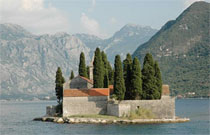
					<b>Nate: </b><em>?A great example of long-form culture making, from an island church in Montenegro's <a href="http://maps.google.com/maps?f=q&source=s_q&hl=en&geocode=&q=kotor&sll=42.367676,19.146423&sspn=0.691981,1.476288&ie=UTF8&hq=&hnear=Kotor,+Montenegro&ll=42.486213,18.690169&spn=0.002698,0.005767&t=h&z=18">Bay of Kotor</a>.?</em><br />
		
		<div style="float:right; padding:15px 5px 5px 5px"><img src="http://culture-making.com/media/kotor.jpg" alt="image"></div>
<p>&#8220;In 1452,&#8221; we read at <a href="http://www.montenegro.com/phototrips/coast/Perast,_a_walk_through_eternity.html" target="_blank">montenegro.com</a>, &#8220;two sailors from Perast happened by a small rock jutting out of the bay after a long day at sea and discovered a picture of the Virgin Mary perched upon the stone.&#8221; Thus began a process of dumping more stones into the bay in order to expand this lonely, seemingly blessed rock—as well as loading the hulls of old fishing boats with stones in order to sink them beneath the waves, adding to the island&#8217;s growing landmass. </p><p>Eventually, in 1630, a small chapel was constructed atop this strange half-geological, half-shipbuilt assemblage.</p><p>Throwing stones into the bay and, in the process, incrementally expanding the island&#8217;s surface area, has apparently become a local religious tradition: &#8220;The custom of throwing rocks into the sea is alive even nowadays. Every year on the sunset of July 22, an event called <a href="http://en.wikipedia.org/wiki/Our_Lady_of_the_Rocks" target="_blank"><i>fašinada</i></a>, when local residents take their boats and throw rocks into the sea, widening the surface of the island, takes place.&#8221;<br><br>The idea that devotional rock-throwing has become an art of creating new terrain, generation after generation, rock after rock, pebble after pebble, is stunning to me. Perhaps in a thousand years, a whole archipelago of churches will exist there, standing atop a waterlogged maze of old pleasure boats and fishing ships, the mainland hills and valleys nearby denuded of loose stones altogether. Inadvertently, then, this is as much a museum of local geology—a catalog of rocks—as it is a churchyard.</p><hr />
<div class="author" style="font-size: -1">from "<a href="http://bldgblog.blogspot.com/2010/01/our-lady-of-rocks.html">Our Lady of the Rocks</a>," by Geoff Manaugh, <a href="http://bldgblog.blogspot.com/2010/01/our-lady-of-rocks.html">BLDGBLOG</a>, 30 January 2010</div>		


      ]]></content>
    </entry>    <entry>
      <title>St. Bartholomew’s Church, redesigned by Maxim Velcovsky</title>
      <link rel="alternate" type="text/html" href="https://culture-making.com/post/st._bartholomews_church_redesigned_by_maxim_velcovsky" />
      <id>tag:culture-makers.com,2025:author/1.1683</id>
      <published>2025-01-02T22:53:00Z</published>
      <updated>2025-01-03T22:54:05Z</updated>
      <author>
            <name>Andy Crouch</name>
            <email>andy@culture-making.com</email>
            
      </author>

      <content type="html"><![CDATA[


					<b>Nate: </b><em>?Two Czech designers were given the opportunity to reinvent the interior of a (presumably Catholic) chuch in the East Bohemian village of Chodovice (<a href="http://maps.google.com/maps?source=s_q&hl=en&geocode=&q=Chodovice&sll=45.530145,-122.811566&sspn=0.009876,0.018346&ie=UTF8&radius=15000.000000&split=1&hq=Chodovice&hnear=&ll=50.375248,15.58784&spn=0.008991,0.018346&t=h&z=16">here</a>, I think). I haven't been able to tell if the redesign was permanent, or how it was received by the church's parishioners. The designers write: "The central nave has been stripped of dull repaints and left totally exposed so that visitors can watch the course of history on fragments and details on the wall. Illuminated by chandeliers adorned with pressed and roughly cut crystal, the bare space is dominated by an “army” of legendary chairs designed by Verner Panton with one crucial detail added – a Christian cross carved through the back of the chair." There's a lot going on here, much of which I find pleasing, some amusing. I love the idea of warmly revealing the church's fragmentary history—and its connection to the generations who have worshiped in the space. The plastic chairs offer a wonderful double-reading: for design initiates they are indeed iconic, probably the first (1960), and possibly still the best-looking of the global family of one-piece molded chairs. For most people, though, they would probably read not as <a href="http://www.dwr.com/product/outdoor/view-all/panton-chair.do">$260 design classics</a> but as their $3 cousins, which are no doubt in use in many low-budget churches around the world. But those four-legged kin lack the stunning priest-in-white-cassock-esque sweeping view from behind.?</em><br />
		
		<a href="http://www.dezeen.com/2007/04/09/st-bartholomew’s-church-by-maxim-velcovsky/"><img src="http://culture-making.com/media/2.jpg" alt="photo" /></a><hr />
<div class="author" style="font-size: -1">"<a href="http://www.dezeen.com/2007/04/09/st-bartholomew’s-church-by-maxim-velcovsky/">St. Bartholomew's Church, Chodovice (interior)</a>," redesigned by Maxim Velcovsky and Jakub Berdych (<a href="http://www.qubus.cz/">Qubus Studio</a>), photo from the studio's site :: via  <a href="http://www.dezeen.com/2007/04/09/st-bartholomew’s-church-by-maxim-velcovsky/">Dezeen</a>, 9 April 2007</div>		


      ]]></content>
    </entry>    <entry>
      <title>The Saddlebackplex</title>
      <link rel="alternate" type="text/html" href="https://culture-making.com/post/the_saddlebackplex" />
      <id>tag:culture-makers.com,2025:author/1.1503</id>
      <published>2025-01-02T22:53:00Z</published>
      <updated>2025-01-03T22:54:05Z</updated>
      <author>
            <name>Andy Crouch</name>
            <email>andy@culture-making.com</email>
            
      </author>

      <content type="html"><![CDATA[


					<b>Andy: </b><em>?Absolutely fantastic review of the parallel trends in corporate and megachurch architecture, from Spurgeon's Crystal (preaching) Palace to the present. I found the comparison between Saddleback Church's campus and Google's headquarters especially intriguing . . . a reminder that all churches are themselves cultural artifacts, created within the horizons of possibility that a culture creates. But is it just my imagination or does American church architecture almost exclusively adopt, rather than encourage, architectural innovation? <a href="http://www.visioneeringstudios.com/home.asp">Mel McGowan,</a> call your office!?</em><br />
		
		<p><img src="http://www.culture-making.com/media/saddlebackplex_420.jpg" /></p><p>The correspondences between the Googleplex and Saddleback are remarkable: Rigid building models were broken down into amorphous, disaggregated masses, screened from their parking lots by trees and artificial hills; both campuses include plush lounges, landscaped paths, beach-volleyball courts, and cafés (with “outdoor seating for sunshine daydreaming,” Google’s website boasts). The architecture is meant to persuade church members or secular employees—especially younger people—to spend their most productive time there. As Google CEO Eric Schmidt has said, “knowledge workers believe they are paid to be effective, not to work 9 to 5.” </p><p>It&#8217;s no coincidence that Saddleback mirrors the top office environments of its day. Warren was a good friend of [Peter] Drucker’s (the consultant died in 2005), and the books he has written for pastors quote Drucker liberally. Drucker, in turn, was so impressed with the business acumen of evangelical leaders that in 1998 he declared the megachurch “surely the most important social phenomenon in American society in the last 30 years.”</p><hr />
<div class="author" style="font-size: -1">from "<a href="http://www.canopycanopycanopy.com/6/infrastructure_for_souls">Infrastructure for Souls</a>," by Joseph Clarke, <a href="http://www.canopycanopycanopy.com/">Triple Canopy</a>, issue 6 :: thanks James!!</div>		


      ]]></content>
    </entry>    <entry>
      <title>Turnover</title>
      <link rel="alternate" type="text/html" href="https://culture-making.com/post/turnover" />
      <id>tag:culture-makers.com,2025:author/1.1329</id>
      <published>2025-01-02T22:53:00Z</published>
      <updated>2025-01-03T22:54:05Z</updated>
      <author>
            <name>Andy Crouch</name>
            <email>andy@culture-making.com</email>
            
      </author>

      <content type="html"><![CDATA[


					<b><p>Andy</p>: </b><em>?Insightful observation by Collin Hansen, at the end of an excellent commentary on Richard Florida's <a href="http://www.theatlantic.com/doc/200903/meltdown-geography"><i>Atlantic</i> piece on the geography of the economic slump.</a> (Emphasis added.)?</em><br />
		
		<p>Economic vitality may rely on a fast-paced lifestyle of risk and reward. But the creative class of one generation gives way to the next when they burn out and seek refuge in the suburbs. Just ask city pastors. This is the problem they struggle to solve. <b>Turnover gives urban churches wide national influence. Ironically, it also undermines local community.</b> So the very bonds of fellowship that attract young people to urban churches in the first place eventually dissolve when members lose their resolve to stay in the city.</p><hr />
<div class="author" style="font-size: -1">from "<a href="http://blog.christianitytoday.com/outofur/archives/2009/03/the_hansen_repo_2.html">The Hansen Report: Suburban Church Slump?</a>," by Collin Hansen, <a href="http://blog.christianitytoday.com/outofur/">Out of Ur | Conversations for Ministry Leaders</a>, 6 March 2009</div>		


      ]]></content>
    </entry>    <entry>
      <title>Cathedral, by David LaChapelle</title>
      <link rel="alternate" type="text/html" href="https://culture-making.com/post/cathedral_by_david_lachapelle" />
      <id>tag:culture-makers.com,2025:author/1.1288</id>
      <published>2025-01-02T22:53:00Z</published>
      <updated>2025-01-03T22:54:05Z</updated>
      <author>
            <name>Andy Crouch</name>
            <email>andy@culture-making.com</email>
            
      </author>

      <content type="html"><![CDATA[


					<b><p>Nate</p>: </b><em>?As with many of LaChapelle's lavish staged photographic tableaux, this invites multiple (and probably contradictory, not to mention uncomfortable) readings. But I do like this piece: I'm always attracted to the imagery of churches as ships—every catherdal, after all, has its nave.?</em><br />
		
		<a href="http://www.davidlachapelle.com/home.html"><img src="http://culture-making.com/media/MexicoExhibition_SaveTheDate.jpg" alt="photo" /></a><hr />
<div class="author" style="font-size: -1">"<a href="http://www.davidlachapelle.com/home.html">Cathedral</a>" (2007), by David LaChapelle, from the exhibition <i>Delirios de razón</i>, at the <a href="http://www.sanildefonso.org.mx/">Antiguo Colegio de San Ildefonso</a>, Mexico City, 3 February—17 May 2009 :: via <a href="http://www.lensculture.com/lachapelle.html?thisPic=11">lens culture</a></div>		


      ]]></content>
    </entry>    <entry>
      <title>Fighting for peace</title>
      <link rel="alternate" type="text/html" href="https://culture-making.com/post/fighting_for_peace" />
      <id>tag:culture-makers.com,2025:author/1.1257</id>
      <published>2025-01-02T22:53:00Z</published>
      <updated>2025-01-03T22:54:05Z</updated>
      <author>
            <name>Andy Crouch</name>
            <email>andy@culture-making.com</email>
            
      </author>

      <content type="html"><![CDATA[


					<b><p>Andy</p>: </b><em>?Canon Andrew White, who once led peacemaking and reconciliation efforts at the world-renowned Coventry Cathedral, has been serving in Baghdad for ten years. It is an extraordinary story of heroism and faith. Even if the cultural effects of his tireless efforts for reconciliation and bridge-building are yet to be fully seen, his ministry is a reminder of how fragile yet durable Christ's kingdom is in this fractured world.?</em><br />
		
		<p>He drives to church in an armourplated car, escorted by 25 members of the Iraqi Army. As he preaches, he and his congregation are protected by soldiers cradling machineguns. Each week, familiar faces disappear — kidnapped, abducted or blown up by a suicide bomber. And each week politicians, generals, Muslim clerics and desperate mothers stream in to St George’s Anglican church to beg the help of an English vicar in ending violence, promoting dialogue and negotiating the release of hostages. For Canon Andrew White, fighting for peace has an all too literal meaning. His parish is the most murderous in the world: Baghdad.</p><hr />
<div class="author" style="font-size: -1">from "<a href="http://www.timesonline.co.uk/tol/comment/faith/article5576046.ece">Wanted by God, but wanted by killers too</a>," by Michael Binyon, <a href="http://www.timesonline.co.uk/">Times Online</a>, 23 January 2009 :: via <a href="http://www.kendallharmon.net/t19/">TitusOneNine</a></div>		


      ]]></content>
    </entry>    <entry>
      <title>The church of core time</title>
      <link rel="alternate" type="text/html" href="https://culture-making.com/post/the_church_of_core_time" />
      <id>tag:culture-makers.com,2025:author/1.1120</id>
      <published>2025-01-02T22:53:00Z</published>
      <updated>2025-01-03T22:54:05Z</updated>
      <author>
            <name>Andy Crouch</name>
            <email>andy@culture-making.com</email>
            
      </author>

      <content type="html"><![CDATA[


					<b><p>Andy</p>: </b><em>?Skye Jethani argues that a church built only on "leisure time" is missing most of its members' lives—and may not be sustainable if leisure time is squeezed. But what if churches helped people see their "core time" as essential to their Christian life? Preach it, brother Skye.?</em><br />
		
		<p>A church with 100 adults would be considered truly remarkable if 40 members each give 5 hours per week of leisure time to the institution’s mission. That would be double what most churches experience, and many pastors would be thrilled to see similar stats in their congregation. But even this would represent less than 2 percent of the church members’ total available time. Is this being missional (however you define the word)? Is that loving God will all of our heart, mind, soul, and strength? . . .</p><p>Pastors should be asking what would happen if we built our mission on people’s core time rather than leisure time. What if we could tap into the 80+ hours people spend every week on the job, with their families, and engaging in life’s ordinary responsibilities? Of course, this would require a fundamental shift in the way we think about mission and institution. Here are a few implications:</p><p>1. It would mean helping people see the missional dignity of ordinary work; communicating that their jobs matter to Christ and his kingdom, not just what happens within the walls of the church.</p><p>2. It would mean elevating the role of family and household relationships as vehicles for spiritual growth and missional engagement. Yes, raising children and caring for aging parents honors God and advances his kingdom just as, if not more, than institutional church programs.</p><p>3. It would mean not extracting people from their lives and communities to engage in church programming or committees unless absolutely necessary, but equipping them to live in communion with Christ within the context he has placed them.</p><p>4. It would shift the focus of Sunday worship away from mission and outreach to a time of celebration and encouragement for Christians who are engaged in mission the other six days of the week.</p><p>5. It would mean deploying church leaders outside the institution to engage members in their native contexts; mentoring and coaching on their turf rather than ours.</p><p>6. It would mean a radical adjustment in what the church celebrates—not institutional expansion or programmatic growth, but stories of ordinary people incarnating Christ at home, at work, at school . . . everywhere life happens.
</p><hr />
<div class="author" style="font-size: -1">from "<a href="http://blog.christianitytoday.com/outofur/archives/2008/12/mission_and_rec.html">Mission and Recession</a>," by Skye Jethani, <a href="http://blog.christianitytoday.com/outofur/">Out of Ur</a>, 10 December 2008</div>		


      ]]></content>
    </entry>    <entry>
      <title>The formative power of large numbers</title>
      <link rel="alternate" type="text/html" href="https://culture-making.com/post/the_formative_power_of_large_numbers" />
      <id>tag:culture-makers.com,2025:author/1.1101</id>
      <published>2025-01-02T22:53:00Z</published>
      <updated>2025-01-03T22:54:05Z</updated>
      <author>
            <name>Andy Crouch</name>
            <email>andy@culture-making.com</email>
            
      </author>

      <content type="html"><![CDATA[


					<b><p>Andy</p>: </b><em>?I don't really have a dog in the missional vs. attractional fight in church circles, for several reasons. 1) I suspect that the dichotomy is a false one. 2) Very few megachurch pastors would endorse "attractional" as a sufficient description of their ministry, so the language stacks the deck unfairly. 3) Never take a position in a debate featuring two words that are barely words in the first place. Still, I do appreciate the way that self-consciously "missional" leaders have recognized the formative power of culture, including the culture of our churches, as in this thoughtful post by David Fitch.?</em><br />
		
		<p>The way we worship, the kinds of things we look at, the habits that are enforced, the way we sit, the structure of passivity, the anonymity, the filing in and out by the thousands at a specific time, the parking lot attendants rushing you out the maze: we see all of this as training the people into being in relation to God and each other in a certain way. Therefore, to attract large amounts of people into one room, and offer a directed performance of worship from the front, trains people to be passivized, observers and consumers of Christianity. And it counteracts everything of what it means to be the church for missional thinkers and practitioners.</p><p>Missional types see the very life lived between three or more people as that which reveals Christ’s forgiveness, reconciliation and the gospel looks like. It is the social-linguistic context that makes possible the communication of the gospel to post Christendom people who have no context to understand the gospel at all. Attractional mega churches attract, appeal to a need, provide an attractive package and by their sheer numbers work against this kind of community that makes possible this kind of encountering of the gospel. Sure it is still possible to split people into smaller groups, but the sheer formative power of the large attractional gathering trains the habits of every believer into self selecting a comfortable community for other purposes other than mission.</p><hr />
<div class="author" style="font-size: -1">from "<a href="http://www.reclaimingthemission.com/">Three questions for the attractional practitioners who question the fruit of missional</a>," by David Fitch, <a href="http://www.reclaimingthemission.com/">Reclaiming the Mission</a>, 4 December 2008</div>		


      ]]></content>
    </entry>    <entry>
      <title>Boxes of worship</title>
      <link rel="alternate" type="text/html" href="https://culture-making.com/post/boxes_of_worship" />
      <id>tag:culture-makers.com,2025:author/1.1059</id>
      <published>2025-01-02T22:53:00Z</published>
      <updated>2025-01-03T22:54:05Z</updated>
      <author>
            <name>Andy Crouch</name>
            <email>andy@culture-making.com</email>
            
      </author>

      <content type="html"><![CDATA[


					<b><p>Nate</p>: </b><em>?I'd say the idea of repurposing a defunct big-box store as a church is far more appealing to me than purpose-building churches that look like ... big box stores.?</em><br />
		
		<div style="float:right; padding:15px 5px 5px 5px"><img src="http://culture-making.com/media/4_2_210.jpg" alt="image"></div><p>The challenges of repurposing big-box stores are not limited to dealing with their unwieldy size. Often, the real estate can be tied up in complicated arrangements. The potential buyer of a big-box store might encounter any number of stipulations on what the building, parking lot, and land can be used for in the future. These stipulations can make it difficult for other businesses to move into an abandoned big-box—but they also open up such spaces for more creative use. The Calvary Chapel in Pinellas Park, Fla., purchased an abandoned Wal-Mart building across the street from its previous home. The deed specified that the structure could not be used by one of Wal-Mart&#8217;s various competitors for several decades. But for the moment, at least, churches aren&#8217;t on that list. Many former big-box stores have been reclaimed by civic institutions—a library, a courthouse—and by churches. Before moving into this old Wal-Mart, the Calvary Chapel had made its home in an abandoned Winn-Dixie grocery store across the highway.</p><hr />
<div class="author" style="font-size: -1">from "<a href="http://www.slate.com/id/2204599/slideshow/2204910/fs/0//entry/2204914/">For Sale: 200,000-Square-Foot Box</a>," photo and text by Julia Christensen, <a href="http://www.slate.com/id/2204599/slideshow/2204910/fs/0//entry/2204914/">Slate</a>, 19 November 2008 :: via <a href="http://www.good.is/?p=13499">GOOD/blog</a></div>		


      ]]></content>
    </entry>    <entry>
      <title>First Congregational Church, Weeping Water, Nebraska</title>
      <link rel="alternate" type="text/html" href="https://culture-making.com/post/first_congregational_church_weeping_water_nebraska" />
      <id>tag:culture-makers.com,2025:author/1.866</id>
      <published>2025-01-02T22:53:00Z</published>
      <updated>2025-01-03T22:54:05Z</updated>
      <author>
            <name>Andy Crouch</name>
            <email>andy@culture-making.com</email>
            
      </author>

      <content type="html"><![CDATA[


			<p align="center"><iframe width="420" height="240" frameborder="0" scrolling="no" marginheight="0" marginwidth="0" src="http://maps.google.com/maps/sv?cbp=1,315.84751176788484,,0,-16.872547977586407&amp;cbll=40.869931,-96.140779&amp;v=1&amp;panoid=QeMGc8N_LxueyYJrH9ylIA&amp;gl=&amp;hl="></iframe>
</p><br />
<b><p>Nate</p>: </b><em>?I was struck by the rust streaking on this church in the evocatively named Weeping Water, NE (pop. 1003). The church seemed to be weeping too! At first I thought it must be derelict, but I think the staining is a sort of natural patina that grows from flecks of iron in the limestone—the <a href="http://flickr.com/photos/librarycommission/397899856/sizes/o/">Weeping Water Public Library</a> has the same facade, also out of stone from the town quarry, which is listed as the largest limestone mine in the state.?</em><br /><hr />
<span style="font-size: -1">First Congregational Church, Weeping Water, Nebraska, <a href="http://maps.google.com/?ie=UTF8&ll=40.922333,-96.133461&spn=0.104544,0.244446&t=h&z=13&layer=c&cbll=40.869945,-96.141239&panoid=Tr2qXQ2RuiLEFH6DD4o3WA&cbp=2,47.748063205876235,,0,-5.470343480425235">Google Street View</a></span>


      ]]></content>
    </entry>    <entry>
      <title>unCultured</title>
      <link rel="alternate" type="text/html" href="https://culture-making.com/post/uncultured" />
      <id>tag:culture-makers.com,2025:author/1.667</id>
      <published>2025-01-02T22:53:00Z</published>
      <updated>2025-01-03T22:54:05Z</updated>
      <author>
            <name>Andy Crouch</name>
            <email>andy@culture-making.com</email>
            
      </author>

      <content type="html"><![CDATA[


<p>One of the interesting consequences of writing a Christian book is that you end up doing a lot of interviews with Christian media. I enjoy almost all of these conversations. For one thing, I love the voices of people who work in radio! And I consistently find that my interviewers are intrigued by the topic of my book and genuinely eager to talk about it.</p><p>Still, there is one pattern to my interviews with Christian media that perplexes me, and that is my hosts’ relentless sense of pessimism about “the culture.” One of my favorite Christian radio hosts, a super-bright guy with whom I’ve talked several times, said in our most recent interview, “When we were in high school [I think he’s maybe a few years older than me] it seemed like the culture was a mixed bag. But now doesn’t it seem like it’s just gotten worse and worse?”</p><p>I had to answer that honestly, that’s not how it seems to me. For example, when I was in high school I remember hearing about the horrifyingly high incidence of drunk driving. But a mother named Candy Lightner, whose daughter had been killed by a drunk driver, started Mothers Against Drunk Driving. (People my age will remember yellow ribbons tied to car antennas, inspired by MADD—come to think of it, people my age will remember car antennas.) Two decades later, the cultural horizons have shifted decisively on this issue. <a href="http://www.nationalreview.com/comment/comment-mathewes-green012203.asp">As Frederica Mathewes-Green has pointed out,</a> films from the “innocent” 1950s regularly portray drunkenness (and its corollary, violence against women) with a lightheartedness that we now find inconceivable. Overall, it seems to me that culture, like Wall Street, is a random walk—improving in some ways, declining in others. The Christian job is simply to assess our current moment and cultivate and create within it. But when I express this on the air, I’m almost always greeted with disbelief, even when my hosts find the idea appealing.</p><p>What accounts for this Christian-radio pessimism about “the culture”? It occurs to me it’s strikingly similar to something documented by Dave Kinnaman and Gabe Lyons: the culture’s pessimism about “the Christians.” In their book <a href="http://www.amazon.com/gp/product/0801013003?ie=UTF8&amp;tag=cmcom-20&amp;linkCode=as2&amp;camp=1789&amp;creative=9325&amp;creativeASIN=0801013003"><i>unChristian</i></a>, Gabe and Dave show just how negatively most secular Americans view Christians when they are asked to characterize them as a group—even though the same people will report that their personal encounters with Christians have been much more positive. While some of this pessimism can certainly be traced to the way we Christians are presented in mainstream media, some of it seems to come from that media filling a vacuum of experience. People just don’t have enough encounters with self-identified Christians who are not wildly judgmental, homophobic right-wingers to realize that their stereotypes are untrue. When they meet an actual Christian who doesn’t fit their expectations, they are more likely to dismiss him or her as an exception than to revise their rule of thumb.</p><p>And that, it seems to me, is exactly what Christians—especially those who by vocation spend a lot of time immersed in the Christian subculture—are doing with the culture itself. In the absence of sustained encounters with our neighbors who don’t share our faith, cocooning in our own media and social groups, we fall into pessimistic stereotypes about “the culture” out there. When we happen to actually get to know an unbelieving neighbor and find that they are not wildly permissive, atheistic left-wingers, we just file them in the “exception to the rule” category.</p><p>The most basic solution to the challenge posed by <i>unChristian</i>, it seems to me, is for a lot more of us to get involved, as Christians, in the structures and institutions where our neighbors spend their time. But perhaps that will change more than just our neighbors’ attitudes. We, too, may discover that “the culture” is full of grace and heartbreak and beauty and folly—not so different, after all, from the church herself.</p><br />


      ]]></content>
    </entry>

</feed>