<?xml version="1.0" encoding="utf-8"?>
<feed xmlns="http://www.w3.org/2005/Atom" xml:lang="en">

    <title type="text">Culture Making Articles items tagged china</title>
    <subtitle type="text">Culture Making Articles:Writing on Christianity and culture from Andy Crouch</subtitle>
    <link rel="alternate" type="text/html" href="http://culture-makers.com/" />
    <link rel="self" type="application/atom+xml" href="https://culture-making.com/tag/atom" />
    <updated>2025-01-03T22:54:05Z</updated>
    <rights>Copyright (c) 2025, Andy Crouch</rights>
    <generator uri="http://www.pmachine.com/" version="7.5.15">ExpressionEngine</generator>
    <id>tag:culture-makers.com,2025:01:02</id>

    <entry>
      <title>City Silhouettes by Jasper James</title>
      <link rel="alternate" type="text/html" href="https://culture-making.com/post/city_silhouettes_by_jasper_james" />
      <id>tag:culture-makers.com,2025:author/1.2025</id>
      <published>2025-01-02T22:53:00Z</published>
      <updated>2025-01-03T22:54:05Z</updated>
      <author>
            <name>Andy Crouch</name>
            <email>andy@culture-making.com</email>
            
      </author>

      <content type="html"><![CDATA[


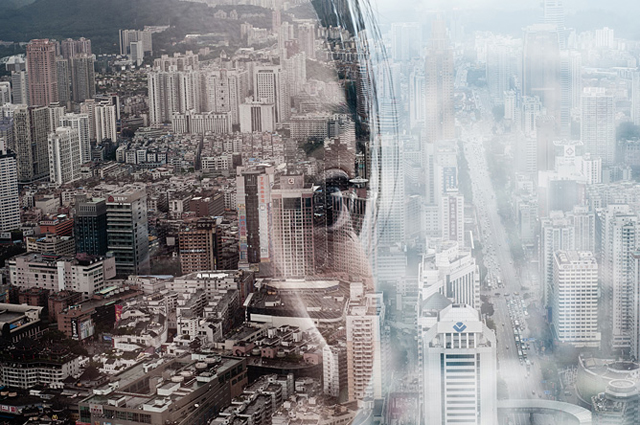
					<b>Nate: </b><em>?Beijing-based photographer <a href="http://www.jasperjames.co.uk/">Jasper James</a> has a wonderful series of portraits of people reflected against cityscapes. The images are all composed in camera—no compositing or Photoshopping beyond simple contrast adjustments. The result—giant humans superimposed on tiny buildings—inverts the usual urban experience, where the buildings dwarf each individual.?</em><br />
		
		<a href="http://www.jasperjames.co.uk/project/people-and-places-2/"><img src="http://www.culture-making.com/media/8_silhouettes004.jpg" alt="photo" /></a><hr />
<div class="author" style="font-size: -1">from "<a href="http://www.jasperjames.co.uk/project/people-and-places-2/">City Silhouettes</a>," by Jasper James, 2010 :: via <a href="http://www.featureshoot.com/2012/01/new-city-silhouette-portraits-by-jasper-james/">Feature Shoot</a> and <a href="http://www.petapixel.com/2012/01/17/city-silhouettes-skylines-seen-through-portraits-of-city-dwellers/?utm_source=feedburner&utm_medium=feed&utm_campaign=Feed%3A+PetaPixel+%28PetaPixel%29">Petapixel</a></div>		


      ]]></content>
    </entry>    <entry>
      <title>Forever Bicycles, by Ai Weiwei</title>
      <link rel="alternate" type="text/html" href="https://culture-making.com/post/forever_bicycles_by_ai_weiwei" />
      <id>tag:culture-makers.com,2025:author/1.2018</id>
      <published>2025-01-02T22:53:00Z</published>
      <updated>2025-01-03T22:54:05Z</updated>
      <author>
            <name>Andy Crouch</name>
            <email>andy@culture-making.com</email>
            
      </author>

      <content type="html"><![CDATA[


					<b>Nate: </b><em>?Chinese artist and activist <a href="http://en.wikipedia.org/wiki/Ai_Weiwei">Ai Weiwei</a> has an exhibition running through the end of this month at the Taipei Fine Art Museum—his first large-scale solo show, apparently, in the Chinese world. The show features a wide range of works in the border zone between sculpture and found object assembly. The knockout piece is undoubtedly this one, a layered vertical labyrinth of 1200 bicycles (sans seats and handlebars). The exhibition, incidentally, is titled <em>Absent</em> because Ai remains under a travel ban in China and won't be able to attend.?</em><br />
		
		<a href="http://www.fastcodesign.com/1665720/ai-weiwei-piles-1200-bikes-on-top-of-each-other-for-dazzling-effect"><img src="http://www.culture-making.com/media/foreverbicycles.jpg" alt="photo" /></a><hr />
<div class="author" style="font-size: -1">from "<a href="http://www.tfam.museum/TFAM_Exhibition/exhibitionDetail.aspx?PMN=1&ExhibitionId=417&PMId=417t">Forever Bicycles</a>," by Ai Weiwei, <a href="http://www.tfam.museum/TFAM_Exhibition/exhibitionDetail.aspx?PMN=1&ExhibitionId=417&PMId=417">Taipei Art Museum</a>, 2011 :: via <a href="http://www.fastcodesign.com/1665720/ai-weiwei-piles-1200-bikes-on-top-of-each-other-for-dazzling-effect">Co.Design</a></div>		


      ]]></content>
    </entry>    <entry>
      <title>If on a winter&#8217;s night a traveller</title>
      <link rel="alternate" type="text/html" href="https://culture-making.com/post/if_on_a_winters_night_a_traveller" />
      <id>tag:culture-makers.com,2025:author/1.1145</id>
      <published>2025-01-02T22:53:00Z</published>
      <updated>2025-01-03T22:54:05Z</updated>
      <author>
            <name>Andy Crouch</name>
            <email>andy@culture-making.com</email>
            
      </author>

      <content type="html"><![CDATA[


					<b><p>Andy</p>: </b><em>?James Fallows writes, "My reaction to this and innumerable similar signs in China has become sympathy rather than anything else (frustration, mirth, etc.)." But my reaction is a strange kind of delight in the indirect, vaguely poetic result of this mistranslation.?</em><br />
		
		<a href="http://jamesfallows.theatlantic.com/archives/2008/12/one_more_then_giving_this_topi.php"><img src="http://www.culture-making.com/media/halts_420.jpg" alt="photo" /></a><hr />
<div class="author" style="font-size: -1">from "<a href="http://jamesfallows.theatlantic.com/archives/2008/12/one_more_then_giving_this_topi.php">Once more, then giving this topic a rest</a>," by James Fallows, <a href="http://jamesfallows.theatlantic.com/">James Fallows</a>, 18 December 2008 :: via <a href="http://ayjay.tumblr.com/">Alan Jacobs</a> :: first posted here 19 December 2008</div>		


      ]]></content>
    </entry>    <entry>
      <title>Agate snuff bottle, China, 19th century</title>
      <link rel="alternate" type="text/html" href="https://culture-making.com/post/agate_snuff_bottle_china_19th_century" />
      <id>tag:culture-makers.com,2025:author/1.1790</id>
      <published>2025-01-02T22:53:00Z</published>
      <updated>2025-01-03T22:54:05Z</updated>
      <author>
            <name>Andy Crouch</name>
            <email>andy@culture-making.com</email>
            
      </author>

      <content type="html"><![CDATA[


					<b>Nate: </b><em>?Last night I attended a lecture on—why not?—antique Chinese snuff bottles. Snuff is, of course, made of spiced tobacco, a New World commodity, and made its way east to Europe and then on to China with the Portuguese and the Jesuits (whose gifts of snuff and snuff-boxes were among the few Western trinkets not disdained by the Emperor). I was surprised at how small the bottles were—barely the size of the smallest cell phone, with their stopper-openings about a quarter-inch in diameter.?</em><br />
		
		<a href="http://portlandartmuseum.org/collections/presentations/Private-Passions-Collecting-Miniature-Works-of-Asian-Art"><img src="http://culture-making.com/media/snuffbottle.jpg" alt="photo" /></a><hr />
<div class="author" style="font-size: -1">Carved agate jujube-form snuff bottle, China, 19th century, from the exhibition "<a href="http://portlandartmuseum.org/collections/presentations/Private-Passions-Collecting-Miniature-Works-of-Asian-Art">Private Passions: Collecting Miniature Works of Asian Art</a>," at the <a href="http://portlandartmuseum.org">Portland Art Museum</a>, 2010</div>		


      ]]></content>
    </entry>    <entry>
      <title>I couldn’t see the future with my bare eyes</title>
      <link rel="alternate" type="text/html" href="https://culture-making.com/post/i_couldnt_see_the_future_with_my_bare_eyes" />
      <id>tag:culture-makers.com,2025:author/1.1464</id>
      <published>2025-01-02T22:53:00Z</published>
      <updated>2025-01-03T22:54:05Z</updated>
      <author>
            <name>Andy Crouch</name>
            <email>andy@culture-making.com</email>
            
      </author>

      <content type="html"><![CDATA[


					<b>Andy: </b><em>?I urge readers of this Web site to spend a few moments today and tomorrow reflecting on one of the most audacious attempts at cultural change in recent history: the 1989 student protests in Tiananmen Square, brutally crushed by the Chinese government on 4 June and scarcely known or discussed in China today. One of the more penetrating critiques of my book has been that I don't devote enough space to environments of persistent oppression where people's culture-making agency is severely constrained. This excellent story by NPR's Louisa Lim provides some insights into how three leaders of the Tiananmen protests have responded to the movement's failure. The response of pastor Zhang Boli is especially worth pondering as Christian culture makers—perhaps both an encouraging and a cautionary tale.?</em><br />
		
		<p>Zhang, the former journalist who brought the students to the square, has taken a different path. Once, he preached for democracy; now he preaches for Jesus. Formerly No. 17 on Beijing&#8217;s most-wanted list, Zhang today is a pastor at a Chinese church in Fairfax, Va.</p><p>After the clampdown, Zhang spent two years in hiding, much of it in a remote mountain cabin near the frozen Russian border, where he lived off wildlife that he caught. He also spent a month in a Russian prison. It was at that time that he found God.</p><p>&#8220;I read the Bible and began to know God,&#8221; Zhang remembers. &#8220;I gained sustenance from it. People really needed God then. They needed a future. I couldn&#8217;t see the future with my bare eyes.&#8221;</p><p>Zhang finally escaped China through Hong Kong and sought asylum in the United States. These days, he throws himself into ministering his flock. He is planning to build a 16,000-square-foot church for his congregation, which currently numbers about 300.</p><hr />
<div class="author" style="font-size: -1">from "<a href="http://www.npr.org/templates/story/story.php?storyId=104821771">Student Leaders Reflect, 20 Years After Tiananmen</a>," by Louisa Lim, <a href="http://www.npr.org/">NPR</a>, 3 June 2009</div>		


      ]]></content>
    </entry>    <entry>
      <title>Shanzai!</title>
      <link rel="alternate" type="text/html" href="https://culture-making.com/post/shanzai" />
      <id>tag:culture-makers.com,2025:author/1.1250</id>
      <published>2025-01-02T22:53:00Z</published>
      <updated>2025-01-03T22:54:05Z</updated>
      <author>
            <name>Andy Crouch</name>
            <email>andy@culture-making.com</email>
            
      </author>

      <content type="html"><![CDATA[


					<b><p>Andy</p>: </b><em>?How could I not link to a full-length article about copying culture? (Apologies if it's  behind the WSJ's subscription wall for some.) In this case, the copying is becoming a culture of its own. And perhaps in a tightly controlled society like China, copying is in fact a form of cultivating and creating.?</em><br />
		
		<p>Shanzhai, which literally means &#8220;mountain fortress&#8221; and implies banditry and lack of state control, refers to China&#8217;s vast array of name-brand knockoffs. Shanzhai versions of Apple Inc.&#8216;s iPhone, for example, include the HiPhone, the SciPhone and the deliberately misspelled citrus-themed iOrgane.</p><p>Recently, the definition of shanzhai has expanded. On China&#8217;s Internet, blogs, bulletin boards and news sites carry photos of automobiles jerry-rigged to run on railroad tracks (&#8220;shanzhai trains&#8221;), fluffy dogs trimmed and dyed to look like the national mascot (&#8220;shanzhai pandas&#8221;) and models of the Beijing Olympic Games&#8217; National Stadium made out of sticks (&#8220;shanzhai Bird&#8217;s Nest&#8221;). . . .</p><p>Once a term used to suggest something cheap or inferior, shanzhai now suggests to many a certain Chinese cleverness and ingenuity. Shanzhai culture &#8220;is from the grass roots and for the grass roots,&#8221; says Han Haoyue, a media critic in Beijing, who sees it as a means of self-expression. &#8220;It gives people another choice and the possibility of resisting dominant cultural values.&#8221;</p><p>Chinese authorities appear to regard shanzhai warily, especially when it comes to intellectual property issues. &#8220;The shanzhai culture as a celebration of the DIY [do it yourself] spirit or as a parody to mainstream culture can add fun to our daily lives,&#8221; said one recent editorial in an official state newspaper. &#8220;However, we should remain vigilant against it as a justification for rip-off products.&#8221;</p><hr />
<div class="author" style="font-size: -1">from "<a href="http://online.wsj.com/article/SB123257138952903561.html">Imitation Is the Sincerest Form of Rebellion in China</a>," by Sky Canaves and Juliet Ye, <a href="http://online.wsj.com/">WSJ.com</a>, 22 January 2009</div>		


      ]]></content>
    </entry>    <entry>
      <title>Every man a king</title>
      <link rel="alternate" type="text/html" href="https://culture-making.com/post/every_man_a_king" />
      <id>tag:culture-makers.com,2025:author/1.1239</id>
      <published>2025-01-02T22:53:00Z</published>
      <updated>2025-01-03T22:54:05Z</updated>
      <author>
            <name>Andy Crouch</name>
            <email>andy@culture-making.com</email>
            
      </author>

      <content type="html"><![CDATA[


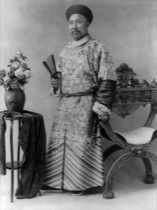
					<b><p>Nate</p>: </b><em>?After studying at an Anglican university in Hong Kong and then becoming the first East Asian to be admitted as a barrister in England, <a href="http://en.wikipedia.org/wiki/Wu_Tingfang">Wu Tingfang</a> served as the Qing Dynasty's minister to the United States, Spain, and Peru around the turn of the last century. His 1914 book comparing American and Chinese cultures is a fascinating, moving, and at times amusing read; it was written in part to counter the era's entrenched discrimination against Chinese immigrants. I particularly enjoyed his bafflement at the Americans' boast of calling their president, simply, "Mr."; he argues (in a playful but serious manner) for a more exalted title.?</em><br />
		
		<div style="float:right; padding:15px 5px 5px 5px"><img src="http://culture-making.com/media/450px-Wu_Tingfang1_210.jpg" alt="image"></div><p>[T]here are railroad kings, copper kings, tobacco kings, etc. It is, however, manifestly improper and incongruous that the people should possess a higher title than their President, who is the head of the nation. To make it even, I would suggest that the title “President” be changed to “Emperor,” for the following reasons: First, it would not only do away with the impropriety of the chief magistrate of the nation assuming a name below that of some of his people, but it would place him on a level with the highest ruler of any nation on the face of the earth. I have often heard the remark that the President of the United States is no more than a common citizen, elected for four years, and that on the expiration of his term he reverts to his former humble status of a private citizen; that he has nothing in common with the dignified majesty of an Emperor; but were the highest official of the United States to be in future officially known as Emperor, all these depreciatory remarks would fall to the ground. There is no reason whatever why he should not be so styled, as, by virtue of his high office, he possesses almost as much power as the most aristocratic ruler of any nation. Secondly, it would clearly demonstrate the sovereign power of the people; a people who could make and unmake an Emperor, would certainly be highly respected. Thirdly, the United States sends ambassadors to Germany, Austria, Russia, etc. According to international law, ambassadors have what is called the representative character, that is, they represent their sovereign by whom they are delegated, and are entitled to the same honors to which their constituent would be entitled were he personally present. In a Republic where the head of the State is only a citizen and the sovereign is the people, it is only by a stretch of imagination that its ambassador can be said to represent the person of his sovereign. Now it would be much more in consonance with the dignified character of an American ambassador to be the representative of an Emperor than of a simple President. The name of Emperor may be distasteful to some, but may not a new meaning be given to it?</p><hr />
<div class="author" style="font-size: -1">from <i><a href="http://books.google.com/books?id=VTcTAAAAYAAJ&printsec=frontcover&dq=america+through+the+spectacles&ei=U9N0SfLhHobWlQTa9ZG6Dg#">America, Through the Spectacles of an Oriental Diplomat</a></i>," by Wu Tingfang (1914)</div>		


      ]]></content>
    </entry>    <entry>
      <title>Viewing the City&#8217;s Places of Interest in Springtime, by Yao Lu</title>
      <link rel="alternate" type="text/html" href="https://culture-making.com/post/viewing_the_citys_places_of_interest_in_springtime_by_yao_lu" />
      <id>tag:culture-makers.com,2025:author/1.1047</id>
      <published>2025-01-02T22:53:00Z</published>
      <updated>2025-01-03T22:54:05Z</updated>
      <author>
            <name>Andy Crouch</name>
            <email>andy@culture-making.com</email>
            
      </author>

      <content type="html"><![CDATA[


					<b><p>Nate</p>: </b><em>?Another of Yao Lu's photos just won the BMW–Paris Photo prize, which is how I heard about him: "The artist photographs mounds of garbage covered in green protective nets which he assembles and reworks by computer to create bucolic images of mountain landscapes shrouded in the mist inspired by traditional Chinese paintings. Lying somewhere between painting and photography, between the past and the present, Yao Lu’s work speaks of the radical mutations affecting nature in China as is it subjected to rampant urbanization and the ecological threats that endanger the environment."?</em><br />
		
		<a href="http://www.798photogallery.cn/EN/photo/photo_1278.html"><img src="http://culture-making.com/media/x85q17B51214381426.jpg" alt="photo" /></a><hr />
<div class="author" style="font-size: -1"><i><a href="http://www.798photogallery.cn/EN/photo/photo_1278.html">Viewing the City's Places of Interest in Springtime</a></i>, digitally manipulated photograph, by Yao Lu, <a href="http://www.798photogallery.cn/EN/photo/photo_1278.html">798 Photo Galley</a>, Beijing :: via <a href="http://www.artdaily.org/index.asp?int_sec=2&int_new=27277">artdaily.org</a></div>		


      ]]></content>
    </entry>    <entry>
      <title>Fortune cookies come to China</title>
      <link rel="alternate" type="text/html" href="https://culture-making.com/post/fortune_cookies_come_to_china" />
      <id>tag:culture-makers.com,2025:author/1.859</id>
      <published>2025-01-02T22:53:00Z</published>
      <updated>2025-01-03T22:54:05Z</updated>
      <author>
            <name>Andy Crouch</name>
            <email>andy@culture-making.com</email>
            
      </author>

      <content type="html"><![CDATA[


			<p align="center"><object width="425" height="344"><param name="movie" value="http://www.youtube.com/v/Bp4IGgQoVQE&amp;hl=en&amp;fs=1"></param><param name="allowFullScreen" value="true"></param><embed src="http://www.youtube.com/v/Bp4IGgQoVQE&amp;hl=en&amp;fs=1" type="application/x-shockwave-flash" allowfullscreen="true" width="420" height="340"></embed></object></p><br />
<b><p>Nate</p>: </b><em>?Most people in China have never heard of a fortune cookie—which has its origins in a type of Japanese tea-cake but is, my friend Jenny writes in <a href="http://www.amazon.com/Fortune-Cookie-Chronicles-Adventures-Chinese/dp/0446580074">The Fortune Cookie Chronicles</a>, a very American phenomenon. So what do you get when you bring a bunch of American fortune cookies across the Pacific to their putative homeland? A charming string of cross-cultural surprises.?</em><br />
<hr /><span style="font-size: -1">"<a href="http://www.youtube.com/watch?v=Bp4IGgQoVQE">Fortune Cookies Not Found in China?</a>," by Jennifer 8. Lee, 11 August 2008 :: via <a href="http://www.fortunecookiechronicles.com/blog/">The Fortune Cookie Chronicles</a></span>


      ]]></content>
    </entry>    <entry>
      <title>Tibetans Play Pool</title>
      <link rel="alternate" type="text/html" href="https://culture-making.com/post/tibetans_play_pool" />
      <id>tag:culture-makers.com,2025:author/1.684</id>
      <published>2025-01-02T22:53:00Z</published>
      <updated>2025-01-03T22:54:05Z</updated>
      <author>
            <name>Andy Crouch</name>
            <email>andy@culture-making.com</email>
            
      </author>

      <content type="html"><![CDATA[


					<b><p>Nate</p>: </b><em>?More on the cultural importance of tables.?</em><br />
		
		<a href="http://www.flickr.com/photos/chinapix/93382660/"><img src="http://culture-making.com/media/93382660_04d160d5b3_o.jpg" alt="photo" /></a><hr />
<div class="author" style="font-size: -1">"<a href="http://www.flickr.com/photos/chinapix/93382660/sizes/o/">Tibetans Play Pool</a>," by <a href="http://nataliebehring.com/">Natalie Behring</a>, 2006 :: via <a href="http://ffffound.com/image/8a974e993fbcc62928b65bc3ea02cff82a3e0e98">ffffound</a>/<a href="http://www.flickr.com/photos/chinapix/93382660/sizes/o/">Flickr</a></div>		


      ]]></content>
    </entry>    <entry>
      <title>A long way from the rec room</title>
      <link rel="alternate" type="text/html" href="https://culture-making.com/post/a_long_way_from_the_rec_room" />
      <id>tag:culture-makers.com,2025:author/1.661</id>
      <published>2025-01-02T22:53:00Z</published>
      <updated>2025-01-03T22:54:05Z</updated>
      <author>
            <name>Andy Crouch</name>
            <email>andy@culture-making.com</email>
            
      </author>

      <content type="html"><![CDATA[


					<b><p>Nate</p>: </b><em>?I've been so mesmerized by the online coverage of archery and weightlifting (no joke!) that I've yet to delve much into the table tennis archive at <a href="http://www.nbcolympics.com/tabletennis/index.html">nbcolympics.com</a> Though the action's a bit too quick to show up well on my broadband, alas.?</em><br />
		
		<p>Doubles table tennis is so entertaining because it defies the laws of geometry. As anyone who’s played in a rec room fully understands, a Ping-Pong table simply isn’t big enough to accommodate four people. The key skill that every doubles team must master has nothing to do with shot-making or defense. Rather, it’s having the agility to get the hell out of the way of your partner.</p><p>In doubles table tennis, partners must alternate shots. That means the goal of any team is to sow confusion in the enemy—to make it so the player whose turn it is to hit has to get through his or her partner to do so. The highlight of a doubles match is when partners kick, trip, or smash into one another. I once saw a Malaysian duo knock heads so hard the match was delayed nearly half an hour. Also fun: when one player swings for the ball and hits his or her partner instead.</p><p>Sadly, at the Olympic level, the players are too accomplished for this to happen. Maybe it’s just as well, then, that doubles has been eliminated as an Olympic event.</p><hr />
<div class="author" style="font-size: -1">from "<a href="http://www.slate.com/id/2197722/?from=rss">In praise of doubles table tennis</a>," by Robert Weintraub, <a href="http://www.slate.com/id/2197722/?from=rss"><i>Slate</i></a>, 18 August 2008</div>		


      ]]></content>
    </entry>    <entry>
      <title>Children practicing gymnastics, by Qiu Yan</title>
      <link rel="alternate" type="text/html" href="https://culture-making.com/post/children_practicing_gymnastics_by_qiu_yan" />
      <id>tag:culture-makers.com,2025:author/1.630</id>
      <published>2025-01-02T22:53:00Z</published>
      <updated>2025-01-03T22:54:05Z</updated>
      <author>
            <name>Andy Crouch</name>
            <email>andy@culture-making.com</email>
            
      </author>

      <content type="html"><![CDATA[


					<b><p>Nate</p>: </b><em>?This image goes well with Mike Hickerson's answer to the question "What new culture is created in response to the Olympics?", over on our <a href="http://www.culture-making.com/five_questions/">five questions</a> page.?</em><br />
		
		<a href="http://freakonomics.blogs.nytimes.com/2008/08/11/todays-china-communist-millionaires-kissing-contests-and-oh-yes-the-olympics/"><img src="http://culture-making.com/media/ChinaGym.jpg" alt="photo" /></a><hr />
<div class="author" style="font-size: -1">"Children practicing gymnastics at a special school for athletes in Hubei province" (2004), by Qiu Yan, from <i><a href="http://www.amazon.com/China-Portrait-Country-James-Kynge/dp/383650569X/ref=pd_bbs_sr_1?ie=UTF8&s=books&qid=1218409044&sr=1-1">China: Portrait of a Country</a></i>, edited by Liu Heung Shing :: via <a href="http://freakonomics.blogs.nytimes.com/2008/08/11/todays-china-communist-millionaires-kissing-contests-and-oh-yes-the-olympics/">NYTimes.com Freakonomics blog</a></div>		


      ]]></content>
    </entry>    <entry>
      <title>Oops</title>
      <link rel="alternate" type="text/html" href="https://culture-making.com/post/oops" />
      <id>tag:culture-makers.com,2025:author/1.587</id>
      <published>2025-01-02T22:53:00Z</published>
      <updated>2025-01-03T22:54:05Z</updated>
      <author>
            <name>Andy Crouch</name>
            <email>andy@culture-making.com</email>
            
      </author>

      <content type="html"><![CDATA[


					<b><p>Andy</p>: </b><em>?There is a real danger that Christians' enthusiasm for God's work in human cultures will lead to simply baptizing whatever the culture is doing. Rarely has this been seen so clearly as in this communiqué from the Lutheran World Federation in 1975. As Sanneh describes it, "The communiqué insisted that the time had passed when Christianity could raise questions for China, pointing out that these questions were already settled for Chinese Christians who had long ago reached the conclusion that Christianity was, at best, irrelevant and, at worst, inimical to China's interests." Thirty years later, of course, we would never be so uncritical about culture. Of course not.?</em><br />
		
		<p>&#8220;Love your neighbour to the point of denying yourself&#8221; is the ethical core of the Gospel. &#8220;Fight selfishness; serve the people&#8221; is the ethical core of Mao Tse-Tung Thought. &#8220;By their fruits you shall know them&#8221; is the decisive criterion of the Gospel. Marxism has sworn by the same test of &#8220;fruits&#8221; or &#8220;practice,&#8221; and in the case of China at least has both preached and practiced &#8220;continuing revolution&#8221; in its name. . . .</p><p>The social and political transformations brought about in China through the application of the Thought of Mao Tse-Tung have unified and consolidated a quarter of the world population into a form of society and life-style at once pointing to some of the basic characteristics of the kingdom of God. . . .</p><p>Christians . . . have to free themselves from the parochial Western context in which many of their Churches have developed and realize that the Gospel might be more powerfully expressed and fulfilled in the new type of society which is promoted in China.</p><hr />
<div class="author" style="font-size: -1">from "The Louvain Consultation on China," <i>Pro Mundi Vita</i> 54 (1975) : : via Lamin Sanneh, <a href="http://www.amazon.com/gp/product/0195189612?ie=UTF8&amp;tag=cmcom-20&amp;linkCode=as2&amp;camp=1789&amp;creative=9325&amp;creativeASIN=0195189612"><i>Disciples of All Nations</i></a>, p. 253–254</div>		


      ]]></content>
    </entry>    <entry>
      <title>Yo&#45;Yo Ma and the Silk Road Ensemble</title>
      <link rel="alternate" type="text/html" href="https://culture-making.com/post/yo_yo_ma_and_the_silk_road_ensemble" />
      <id>tag:culture-makers.com,2025:author/1.614</id>
      <published>2025-01-02T22:53:00Z</published>
      <updated>2025-01-03T22:54:05Z</updated>
      <author>
            <name>Andy Crouch</name>
            <email>andy@culture-making.com</email>
            
      </author>

      <content type="html"><![CDATA[


			<p align="center"><object width="420" height="420"><param name="movie" value="http://www.kcrw.com/music/programs/mb/mb050803yo-yo_ma_and_the_sil/embed-video"></param><param name="wmode" value="transparent"></param><embed src="http://www.kcrw.com/music/programs/mb/mb050803yo-yo_ma_and_the_sil/embed-video" type="application/x-shockwave-flash" wmode="transparent" width="420" height="420"></embed></object>
</p><br />
<b><p>Nate</p>: </b><em>?As the world (or at least a good 4 billion of us) turn our thoughts towards Beijing this weekend, I recalled this wonderful in-studio performance from 2005, by a musical ensemble led (but by no means dominated -- he's merely a virtuoso among virtuosos) by cellist Yo-Yo Ma. They weave together many of the deep, rich musical cultures along the Silk Road, the ancient trade route linking Europe with the Far East: Persian, Roma, Mongolian, Chinese, etc. It's amazing watching this group of diverse musicians interact with, really listen and respond to, one another.?</em><br />
<hr /><span style="font-size: -1"><a href="http://www.kcrw.com/music/programs/mb/mb050803yo-yo_ma_and_the_sil">KRCW's Morning Becomes Eclectic</a></span>


      ]]></content>
    </entry>

</feed>