<?xml version="1.0" encoding="utf-8"?>
<feed xmlns="http://www.w3.org/2005/Atom" xml:lang="en">

    <title type="text">Culture Making Articles items tagged asia</title>
    <subtitle type="text">Culture Making Articles:Writing on Christianity and culture from Andy Crouch</subtitle>
    <link rel="alternate" type="text/html" href="http://culture-makers.com/" />
    <link rel="self" type="application/atom+xml" href="https://culture-making.com/tag/atom" />
    <updated>2025-01-03T22:54:05Z</updated>
    <rights>Copyright (c) 2025, Andy Crouch</rights>
    <generator uri="http://www.pmachine.com/" version="7.5.15">ExpressionEngine</generator>
    <id>tag:culture-makers.com,2025:01:02</id>

    <entry>
      <title>Winter Landscape, by Keisai Eisen</title>
      <link rel="alternate" type="text/html" href="https://culture-making.com/post/winter_landscape_by_keisai_eisen" />
      <id>tag:culture-makers.com,2025:author/1.2030</id>
      <published>2025-01-02T22:53:00Z</published>
      <updated>2025-01-03T22:54:05Z</updated>
      <author>
            <name>Andy Crouch</name>
            <email>andy@culture-making.com</email>
            
      </author>

      <content type="html"><![CDATA[


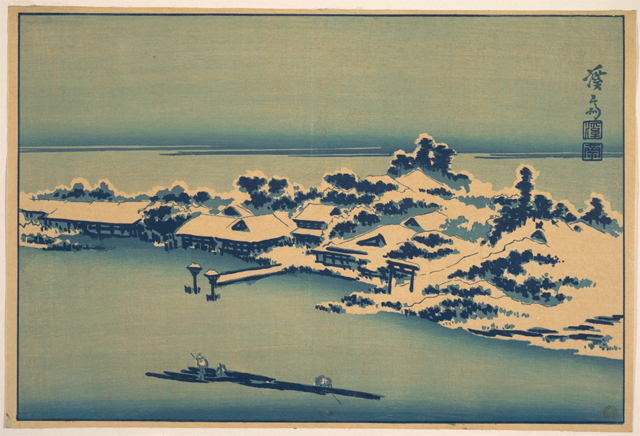
					<b>Nate: </b><em>?Here's something I didn't know: this lovely print belongs to a genre of artwork called <a href="http://en.wikipedia.org/wiki/Ukiyo-e">ukiyo-e</a>, whose name translates literally as "pictures of the floating world." They celebrated the the evanescent impermance of natural scenes and moments, but also of the heightened worlds of entertainment (kabuki, geisha). Because they could be mass-produced, they introduced ownable artwork to new classes of Japanese people.?</em><br />
		
		<a href="http://www.metmuseum.org/collections/search-the-collections/60001107"><img src="http://www.culture-making.com/media/edo-winter.jpg" alt="image" /></a><hr />
<div class="author" style="font-size: -1">"<a href="http://www.metmuseum.org/collections/search-the-collections/60001107">Winter Landscape</a>," polychrome woodblock print by Keisai Eisen (1790–1848), from the collections of <a href="http://www.metmuseum.org/collections/search-the-collections/60001107">The Metropolitan Museum of Art</a></div>		


      ]]></content>
    </entry>    <entry>
      <title>Calligraphy by Ahmed Shahnawaz Alam</title>
      <link rel="alternate" type="text/html" href="https://culture-making.com/post/calligraphy_by_ahmed_shahnawaz_alam" />
      <id>tag:culture-makers.com,2025:author/1.1881</id>
      <published>2025-01-02T22:53:00Z</published>
      <updated>2025-01-03T22:54:05Z</updated>
      <author>
            <name>Andy Crouch</name>
            <email>andy@culture-making.com</email>
            
      </author>

      <content type="html"><![CDATA[


					<b>Nate: </b><em>?This beautiful gazelle contains lines from the great eighteenth-century Urdu poet <a href="http://en.wikipedia.org/wiki/Mir_Taqi_Mir">Mir Taqi Mir</a>, one of the great masters of the <a href="http://en.wikipedia.org/wiki/Ghazal">ghazal</a> poetic form. (The gazelle-ghazal Arabic pun does not pass unnoticed. Wish I could figure out what the text itself is about—beyond the ghazal-standard "poetic expression of both the pain of loss or separation and the beauty of love in spite of that pain").?</em><br />
		
		<a href="http://www.calligraphy.mvk.ru/en/?idx=144&sw=p&fotka=1213"><img src="http://culture-making.com/media/1243863617.jpg" alt="image" /></a><hr />
<div class="author" style="font-size: -1">"<a href="http://www.calligraphy.mvk.ru/en/?idx=144&sw=p&fotka=1213">Poetry by Meer Taqi Meer, a renown poet of India</a>," paper, self-made ink and bamboo pen (2009), by Shanawaz Alam Ahmed, <a href="http://www.calligraphy.mvk.ru/en/?idx=144&sw=p&fotka=1213">International Exhibition of Calligraphy</a> :: via <a href="http://assemblyman-eph.blogspot.com/2010/04/selections-from-intl-exhibition-of.html">ephemera assemblyman</a></div>		


      ]]></content>
    </entry>    <entry>
      <title>Safety not fine? Install a shrine!</title>
      <link rel="alternate" type="text/html" href="https://culture-making.com/post/safety_not_fine_install_a_shrine" />
      <id>tag:culture-makers.com,2025:author/1.1865</id>
      <published>2025-01-02T22:53:00Z</published>
      <updated>2025-01-03T22:54:05Z</updated>
      <author>
            <name>Andy Crouch</name>
            <email>andy@culture-making.com</email>
            
      </author>

      <content type="html"><![CDATA[


			<b>Nate: </b><em>?Himalayan India has a rich tradition of humorous safety signs placed along precarious mountain roads (like <a href="http://www.richardsharp.co.uk/images/DSCF0015.JPG">AFTER WHISKY, DRIVING RISKY</a>, or <a href="http://www.howsmycycling.com/gallery/10%2013%2025%2006-12-03%20India%20road%20sign%20%27darling...%27.jpg">DARLING I WANT YOU, BUT NOT SO FAST</a>, or <a href="http://images.travelpod.com/users/anamcara/indianepal2005.1126323600.dsc01197.jpg">ROAD IS HILLY, DON'T DRIVE SILLY</a>), but apparently setting up traffic-slowing Hindu shrines at trouble-spots is far more effective. I wonder if Christian shrines at highway accident sites (designed to instill caution and remembrance, but not necessarily to get folks to stop) have anything like the same effect. I doubt it.?</em><br />

<div class="author" style="font-size: -1">a <a href="http://freakonomics.blogs.nytimes.com/2010/04/07/hindu-traffic-nudges/?utm_source=feedburner&utm_medium=feed&utm_campaign=Feed:+FreakonomicsBlog+(Freakonomics+Blog)&utm_content=Google+Reader">Freakonomics Blog</a> post, 7 April 2009</div><hr />		
		<p><b>Karan Talwar,</b> a blogger and Freakonomics reader, <a href="http://karantalwar.com/2010/04/07/shimla-accidents/">writes about an interesting traffic nudge near Shimla, India</a>.&nbsp; The roads into Shimla are notoriously dangerous, and traffic signs have done little to lessen the problem.&nbsp; So local authorities began constructing temple shrines at hot spots.&nbsp; The nudge worked like a charm: “Turns out even though the average Indian has no respect for traffic laws and signs, they will slow down before any place of worship and take a moment to ask for blessings!”</p>


      ]]></content>
    </entry>    <entry>
      <title>Worth nothing, but worth a lot</title>
      <link rel="alternate" type="text/html" href="https://culture-making.com/post/worth_nothing_but_worth_a_lot1" />
      <id>tag:culture-makers.com,2025:author/1.1806</id>
      <published>2025-01-02T22:53:00Z</published>
      <updated>2025-01-03T22:54:05Z</updated>
      <author>
            <name>Andy Crouch</name>
            <email>andy@culture-making.com</email>
            
      </author>

      <content type="html"><![CDATA[


					<b>Andy: </b><em>?This is a zero-rupee note. It's worth nothing—but one million of them have been printed and distributed for Indians to use when officials ask for petty bribes. <a href="http://www.economist.com/world/asia/displaystory.cfm?story_id=15393714">The Economist reports</a> that they have surprisingly effective: "corrupt officials so rarely encounter resistance that they get scared when they do." It's a brilliant example of culture making from the bottom up.?</em><br />
		
		<a href="http://old.5thpillar.org/images/rupees_front.jpg"><img src="http://www.culture-making.com/media/rupees_front.jpg" alt="image" /></a><hr />
<div class="author" style="font-size: -1">from "<a href="http://5thpillar.org/india/ZRN">Zero Rupee Notes</a>," by 5th Pillar :: via <a href="http://www.economist.com/world/asia/displaystory.cfm?story_id=15393714">The Economist</a></div>		


      ]]></content>
    </entry>    <entry>
      <title>Indian schoolroom posters</title>
      <link rel="alternate" type="text/html" href="https://culture-making.com/post/indian_schoolroom_posters" />
      <id>tag:culture-makers.com,2025:author/1.1786</id>
      <published>2025-01-02T22:53:00Z</published>
      <updated>2025-01-03T22:54:05Z</updated>
      <author>
            <name>Andy Crouch</name>
            <email>andy@culture-making.com</email>
            
      </author>

      <content type="html"><![CDATA[


					<b>Nate: </b><em>?Some of my favorite souvenirs from India are posters for schoolchildren of the sort sold in bookshops and street-side newsstands. They're always approachable and informative (you know, for kids!) and in me at least inspire lots of far-reaching thoughts about culture and categories. When you have an outsider's vantage, it's easier to notice the whims of taxonomy: why display this sort of thing, and not that one. The odd notes always seem most resonant and mysterious: is the strange language and selection a product of shoddy research (<a href="http://ibdmaphouse.com/PhotoZoom.aspx?PCode=89">Types of Rocks</a>: Volcanic, Metamorphic, Sedimentary, Igneous, Layerd, Sharp, Small, Big, Smooth), or a sign that the obvious groupings don't always hold up across cultures??</em><br />
		
		<a href="http://ibdmaphouse.com/Catalog_I.aspx?GPID=2&GrpName;=&SGPID=1&SubGrpName=10 X 14 INCH CHARTS"><img src="http://culture-making.com/media/maphouse.jpg" alt="image" /></a><hr />
<div class="author" style="font-size: -1">Newsprint and laminated schoolroom posters, 2–50 Rupees each, from the vast semi-online catalog of <a href="http://ibdmaphouse.com/Catalog_I.aspx?GPID=2&GrpName;=&SGPID=1&SubGrpName=10 X 14 INCH CHARTS">Indian Book Depot (Map House)</a>, New Delhi, India :: via <a href="http://www.thingsmagazine.net/">things magazine</a></div>		


      ]]></content>
    </entry>    <entry>
      <title>Dollar 009, by lolay</title>
      <link rel="alternate" type="text/html" href="https://culture-making.com/post/dollar_009_by_lolay" />
      <id>tag:culture-makers.com,2025:author/1.1778</id>
      <published>2025-01-02T22:53:00Z</published>
      <updated>2025-01-03T22:54:05Z</updated>
      <author>
            <name>Andy Crouch</name>
            <email>andy@culture-making.com</email>
            
      </author>

      <content type="html"><![CDATA[


					<b>Christy: </b><em>?This picture was taken by IAM's <a href="http://www.internationalartsmovement.org/bangkok">Bangkok</a> liaison during a recent gallery tour in Thailand, and I found it to be quite startling. At first glance, the sculpture by Thai artist Lolay of a futuristic female figure sitting on a bucket like a <a href="http://en.wikipedia.org/wiki/Busking">busker</a> was pretty interesting to me on its own. But then I noticed the little people walking around under her and realized the huge scale of this piece, which stands over twenty feet tall at the <a href="http://www.bacc.or.th/">Bangkok Arts and Culture Center</a>. According to the artist's statement, she represents human beings adapting to unpredictable changes in the economy, environment, politics, technology, etc., and the 'Dollar' name pertains to the United States and how it affects the rest of the world in so many aspects.?</em><br />
		
		<a href="http://lolaytoon.exteen.com/"><img src="http://culture-making.com/media/dollar009_lolay_photo_tim-mills.jpg" alt="photo" /></a><hr />
<div class="author" style="font-size: -1">"Dollar 009," fiberglass and coated enamel, 6.3 by 2.6 meters, by <a href="http://lolaytoon.exteen.com/">lolay</a>, photo by Tim Mills, IAM Bangkok</div>		


      ]]></content>
    </entry>    <entry>
      <title>Merry Christmas Mr. Lawrence, by Ryuichi Sakamoto</title>
      <link rel="alternate" type="text/html" href="https://culture-making.com/post/merry_christmas_mr._lawrence_by_ryuichi_sakamoto" />
      <id>tag:culture-makers.com,2025:author/1.1764</id>
      <published>2025-01-02T22:53:00Z</published>
      <updated>2025-01-03T22:54:05Z</updated>
      <author>
            <name>Andy Crouch</name>
            <email>andy@culture-making.com</email>
            
      </author>

      <content type="html"><![CDATA[


			<p align="center"><object width="420" height="340"><param name="movie" value="http://www.youtube.com/v/YwkuS9FlB7M&amp;hl=en_US&amp;fs=1&amp;"></param><param name="allowFullScreen" value="true"></param><param name="allowscriptaccess" value="always"></param><embed src="http://www.youtube.com/v/YwkuS9FlB7M&amp;hl=en_US&amp;fs=1&amp;" type="application/x-shockwave-flash" allowscriptaccess="always" allowfullscreen="true" width="420" height="340"></embed></object></p><br />
<b>Christy: </b><em>?This is not at all your stereotypical Christmas song, but it expresses more accurately how I often feel this time of year. While I love Christmas, I find myself taking long walks, acutely aware of the bleakness all around me—skeletal remains of once-vibrant trees, bone-chilling coldness, and a general sense of longing for loved ones who have passed away and relationships that did not work out. I haven't seen the eponymous <a href="http://en.wikipedia.org/wiki/Merry_Christmas,_Mr._Lawrence">Japanese film</a> from which this song comes (about prisoners and guards in a WWII Japanese POW camp), but this gripping performance by Sakamoto is part of my Christmas soundtrack.?</em><br />
<hr /><span style="font-size: -1"></span>


      ]]></content>
    </entry>    <entry>
      <title>The dude uniform</title>
      <link rel="alternate" type="text/html" href="https://culture-making.com/post/the_dude_uniform" />
      <id>tag:culture-makers.com,2025:author/1.1678</id>
      <published>2025-01-02T22:53:00Z</published>
      <updated>2025-01-03T22:54:05Z</updated>
      <author>
            <name>Andy Crouch</name>
            <email>andy@culture-making.com</email>
            
      </author>

      <content type="html"><![CDATA[


					<b>Nate: </b><em>?A funny letter from Mumbai about observing everyday Indian fashion. There's a nice bit about distinguishing saris, but aspects of the male wardrobe bear the brunt of the critique. I find myself concurring but wonder why it's so: perhaps because their outfits are more western-yet-not-quite-western? Or a cultural openness to the exotic feminine but not the exotic masculine? If I had to describe my combined impressions of Bollywood actresses in a word it would be "stunning"; for the actors, the word would probably be "goofy." Clearly there's a lot going on there in terms of my own sense of gender, culture, taste, and prejudice.?</em><br />
		
		<p>Most Indian men, at least those I see about town on the street, dress in what I call the “dude uniform”: a light-colored button-down long-sleeve shirt, slacks, and black sandals. As far as uniforms go, it’s pretty functional, working equally well for home and office, and requiring little in maintenance.</p><p>Younger guys, however, replace the sensible slacks with over-the-top denim: emulating their favorite Bollywood stars, they buy jeans that are dyed, streaked, distressed, and bedecked with clasps, latches, snaps, and pockets. Most of the time the pants are flared, giving them a bit of a disco feel.</p><p>On top, they wear a variety of shirts that make European clubwear appear dignified. Most are made of synthetic materials; gold lamé and neon orange are popular at the moment. Solid one-inch-wide black and orange vertical stripes were big in Fall 2008, but 2009 seems to favor a trompe l’oeil sweater-vest-over-T-shirt garment, usually in pastels. As far as I can tell, it’s the guys scraping by who wear the flashiest clothes. Too far down the socio-economic ladder and your duds turn to rags. Too far up and they become the dude uniform. Somewhere in between, though, is ‘70s gold.</p><hr />
<div class="author" style="font-size: -1">from "<a href="http://www.themorningnews.org/archives/letters_from_mumbai/the_expats_new_clothes.php">The Expat’s New Clothes</a>," by Jill Wheeler, <a href="http://www.themorningnews.org/archives/letters_from_mumbai/the_expats_new_clothes.php">The Morning News</a>, 6 October 2009</div>		


      ]]></content>
    </entry>    <entry>
      <title>Wedding Preparations, Davao City, Philippines, by Ryan Anson</title>
      <link rel="alternate" type="text/html" href="https://culture-making.com/post/wedding_preparations_davao_city_philippines_by_ryan_anson" />
      <id>tag:culture-makers.com,2025:author/1.1656</id>
      <published>2025-01-02T22:53:00Z</published>
      <updated>2025-01-03T22:54:05Z</updated>
      <author>
            <name>Andy Crouch</name>
            <email>andy@culture-making.com</email>
            
      </author>

      <content type="html"><![CDATA[


					<b>Nate: </b><em>?I love the warmth of this photo, and the way it somehow makes its considerable action (the figures almost read like multiple exposures of a single, very active woman) nonetheless conveys a strong sense of peace and stillness, the pause and deep breath one takes before stepping out into a momentous event. The photographer writes: "I shot this image in early 2004 during a wedding near <a href="http://maps.google.com/maps?f=q&source=s_q&hl=en&geocode=&q=davao+city&sll=45.530145,-122.811566&sspn=0.009485,0.016866&ie=UTF8&hq=&hnear=Davao+City,+Davao+del+Sur,+Philippines&ll=7.06069,125.530472&spn=1.719884,2.158813&t=h&z=9">Davao City</a> where a small Muslim minority group called the Kalagan people live amidst millions of Catholic residents. I was initially surprised that the bride let me in the changing room to spend time with she and her relatives as they applied the finishing touches to her dress and make-up. However, like many Filipinos in this region, Joanna and her family welcomed me as a guest and allowed me to photograph them in a very intimate environment."?</em><br />
		
		<a href="http://vervephoto.wordpress.com/2009/10/02/ryan-anson/"><img src="http://culture-making.com/media/anson_phillippines.jpg" alt="photo" /></a><hr />
<div class="author" style="font-size: -1">"<a href="http://vervephoto.wordpress.com/2009/10/02/ryan-anson/">Wedding Preparations, Davao City, Philippines</a>," photo by <a href="http://www.ryananson.net/">Ryan Anson</a>, <a href="http://vervephoto.wordpress.com/2009/10/02/ryan-anson/">The New Breed of Documentary Photographers</a>, 2 October 2009</div>		


      ]]></content>
    </entry>    <entry>
      <title>Two things you’ve never considered drinking before, but may want to now</title>
      <link rel="alternate" type="text/html" href="https://culture-making.com/post/two_things_youve_never_considered_drinking_before_but_may_want_to_now1" />
      <id>tag:culture-makers.com,2025:author/1.1629</id>
      <published>2025-01-02T22:53:00Z</published>
      <updated>2025-01-03T22:54:05Z</updated>
      <author>
            <name>Andy Crouch</name>
            <email>andy@culture-making.com</email>
            
      </author>

      <content type="html"><![CDATA[


					<b>Nate: </b><em>?Of course all these lists of "50 best things" are, even at their best, arbitrary and hyperbolic. But they're also fun—clearly scratching some itch in the collective mind of reader and writer. In the case of food/travel lists like this one, they really can be a treat.?</em><br />
		
		<p><b>20. Best place to buy: Olive oil<br/>Turkish embassy electrical supplies, London</b></p>
<p>The most unlikely olive oil vendor in the world? At his electrical supply shop in London&#8217;s Clerkenwell, Mehmet Murat sells wonderful, intensely fruity oil from his family&#8217;s olive groves in Cyprus and south-west Turkey. Now he imports more than a 1,000 litres per year. His lemon-flavoured oil is good enough to drink on its own.</p><p>76 Compton Street, London  EC1, 020 7251 4721,<a href="http://www.planet mem.com">www.planet mem.com</a></p>
<p><b>26. Best place to eat: Filipino cuisine<br/>Lighthouse Restaurant, Cebu, Philippines</b></p><p>&#8220;The Lighthouse in Cebu in the Philippines is my favourite restaurant. We always eat bulalo (beef stew), banana heart salad, adobo (marinaded meat), baked oysters, pancit noodles, lechon de leche (suckling pig) and, to drink, green mango juice – my daughter is addicted to it! The staff are so friendly and welcoming. The chef has been there for more than 20 years, so the food is very consistent.&#8221;</p><p>Gaisano Country Mall, Banilad, Cebu city, Philippines, 0063 32 231 2478</p><hr />
<div class="author" style="font-size: -1">from "<a href="http://www.guardian.co.uk/lifeandstyle/2009/sep/13/best-foods-in-the-world">The 50 best foods in the world and where to eat them</a>," by Killian Fox, <a href="http://www.guardian.co.uk/lifeandstyle/2009/sep/13/best-foods-in-the-world"><i>The Observer</i></a>, 13 September 2009 :: via <a href="http://kottke.org/09/09/wheres-the-worlds-best-food">kottke.org</a></div>		


      ]]></content>
    </entry>    <entry>
      <title>Heart of palm</title>
      <link rel="alternate" type="text/html" href="https://culture-making.com/post/heart_of_palm" />
      <id>tag:culture-makers.com,2025:author/1.1600</id>
      <published>2025-01-02T22:53:00Z</published>
      <updated>2025-01-03T22:54:05Z</updated>
      <author>
            <name>Andy Crouch</name>
            <email>andy@culture-making.com</email>
            
      </author>

      <content type="html"><![CDATA[


					<b>Nate: </b><em>?I love how this careful schematic cross-section of a palm stem calls to mind, of all things, <a href="http://images.google.com/images?hl=en&um=1&q=haida+art&ie=UTF-8&ei=6zWYSp-3GoHssQPi5PH_AQ&sa=X&oi=image_result_group&ct=title&resnum=1">Indian/First Nations art</a> from the Pacific Northwest—about as un-palmy a place as you can go to. <a href="http://www.rarepalmseeds.com/pix/EugTri.shtml">About the palm</a>: "Large, ascending leaves to about 6 m (20 ft.) tall, with glossy green leaflets, spiny leafstalks and a mostly underground, clustering trunk characterize this unusual palm from the Malay Peninsula. It is found in disturbed, open areas in rainforests between sea level and 800 m (2700 ft.). The large, scaly fruit are edible when unripe and the leaves make excellent thatch. <a href="http://sciweb.nybg.org/Science2/Onlinexhibits/exhbtcata.html">About the man</a>: "The author of over 150 botanical titles, including the great flora of Brazil, Karl Friedrich Philipp von Martius also wrote the still-definitive three-volume treatise on the palm family, one of the first plant monographs. He developed his life-long fascination with palms during an expedition through Brazil from 1817 to 1820, and he worked nearly 30 years to prepare this grand summation, including palms found only as fossils."?</em><br />
		
		<a href="http://bibliodyssey.blogspot.com/2009/07/historia-naturalis-palmarum.html"><img src="http://culture-making.com/media/3769362320_81302097c3_o.jpg" alt="image" /></a><hr />
<div class="author" style="font-size: -1">"<a href="http://www.flickr.com/photos/bibliodyssey/3769362320/sizes/o/">Eugeisona tristis (detail)</a>," from <a href="http://www.botanicus.org/bibliography/b12036171"><i>Historia Naturalis Palmarum (The Natural History of Palms</i></a> by Karl Friedrich Phillipp von Maritus, 1823–50 :: via <a href="http://bibliodyssey.blogspot.com/2009/07/historia-naturalis-palmarum.html">BibliOdyssey</a></div>		


      ]]></content>
    </entry>    <entry>
      <title>There are no televisions here</title>
      <link rel="alternate" type="text/html" href="https://culture-making.com/post/there_are_no_televisions_here" />
      <id>tag:culture-makers.com,2025:author/1.1597</id>
      <published>2025-01-02T22:53:00Z</published>
      <updated>2025-01-03T22:54:05Z</updated>
      <author>
            <name>Andy Crouch</name>
            <email>andy@culture-making.com</email>
            
      </author>

      <content type="html"><![CDATA[


					<b>Nate: </b><em>?Whether Paju Book City will live up to its motto at christening, "A City to Recover Lost Humanity," remains to be seen, but it's great to see so much thought and stunning architecture going into supporting and celebrating the life of books—of making them and of reading them.?</em><br />
		
		<p>The idea of a city of books evokes a fantastical vision: towers of tottering volumes, narrow alleys formed by canyons and stacks of dusty hardbacks, formal avenues between loaded shelves. Like something imagined by Calvino or Borges, it conjures up a city of wisdom and surprise, of endless narratives, meaning, knowledge and languages. What it does not evoke is an industrial estate bounded by a motorway and the heavily guarded edge of a demilitarised zone. Yet somehow, South Korea’s Paju Book City begins to reconcile these two extremes into one of the most unexpected and remarkable architectural endeavours.</p><p>Built on marshland, former flood plains and paddyfields 30km north-west of Seoul, Paju Book City is an attempt to create an ambitious new town based exclusively around publishing&#8230;.</p><p>At the centre of the city stands a huge cultural complex, designed by Kim Byung-yoon, a combination of hotel (in which, it was pointed out to me, there are no TVs), restaurants, auditoriums and, on the roof, an urbane, elevated realm of seating, shops, libraries and galleries overlooking the sparkling waters of the river and the Simhak Mountain.</p><hr />
<div class="author" style="font-size: -1">from "<a href="http://www.ft.com/cms/s/2/26852872-8de2-11de-93df-00144feabdc0.html">A city dedicated to books and print</a>," by Edwin Heathcole, <a href="http://www.ft.com/cms/s/2/26852872-8de2-11de-93df-00144feabdc0.html"><i>Financial Times</i></a>, 21 August 2009 :: thanks Adrianna!</div>		


      ]]></content>
    </entry>    <entry>
      <title>The audacity of Afghan women</title>
      <link rel="alternate" type="text/html" href="https://culture-making.com/post/the_audacity_of_afghan_women" />
      <id>tag:culture-makers.com,2025:author/1.1527</id>
      <published>2025-01-02T22:53:00Z</published>
      <updated>2025-01-03T22:54:05Z</updated>
      <author>
            <name>Andy Crouch</name>
            <email>andy@culture-making.com</email>
            
      </author>

      <content type="html"><![CDATA[


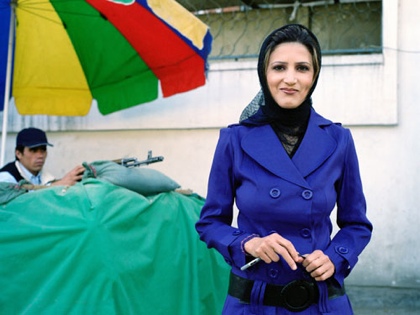
					<b>Christy: </b><em>?I don't read many fashion magazines, but when I began flipping through a copy of the latest Marie Claire someone had left on the Staten Island Ferry, I was delighted (and surprised) to discover this article featuring five Afghan women who are taking big risks to contribute to their deeply wounded culture.?</em><br />
		
		<a href="http://www.marieclaire.com/world-reports/news/international/afghanistan-womens-rights"><img src="http://www.culture-making.com/media/marieclareafghan_420.jpg" alt="photo" /></a><hr />
<div class="author" style="font-size: -1">From <a href="http://www.marieclaire.com/world-reports/news/international/afghanistan-womens-rights">Afghani Women Moving Forward</a>, by Louis Quail, <a href="http://www.marieclaire.com/">Marie Claire</a>, July 2009</div>		


      ]]></content>
    </entry>    <entry>
      <title>Uyghur culture: muqam and more</title>
      <link rel="alternate" type="text/html" href="https://culture-making.com/post/uyghur_culture_muqam_and_more" />
      <id>tag:culture-makers.com,2025:author/1.1516</id>
      <published>2025-01-02T22:53:00Z</published>
      <updated>2025-01-03T22:54:05Z</updated>
      <author>
            <name>Andy Crouch</name>
            <email>andy@culture-making.com</email>
            
      </author>

      <content type="html"><![CDATA[


					<b>Christy: </b><em>?In 2005, I traveled to Kashgar, China, to teach an American Culture course for students from Kashgar Teachers' College. Each morning, before class, the Uyghur students gave us hour-long Uyghur culture lessons. If I have learned anything about the Uyghurs, it is that they are very proud of their culture, especially their traditional music and dance. Even with the recent conflicts that have errupted there, bringing unprecedented global awareness of the Uyghurs, there is still not much to be found on the Web about their vibrant culture. However, I just discovered <a href="http://uyghurensemble.co.uk/en-html/home.html">this web site out of the U.K.</a> that is the most comprehensive site I can find on Uyghur music, including images of their traditional costumes and instruments, as well as a plethora of excellent recordings (including The Twelve Muqam, a piece of music that takes twenty-four hours to perform!). The thing my students asked of me before I came back to the States was that I tell America about Uyghur culture, so it is my pleasure to honor their request. Oh, and one more thing: the Uyghurs love America. They would want me to tell you that, too.?</em><br />
		
		<p>Uyghur music embraces several distinct regional styles, product of the geography and complex history of the region, whose oasis kingdoms, separated by mountains and deserts, have been subject through the course of history to rule by many different outside forces. The musical traditions of the southern oasis towns of Khotan and Kashgar are more closely allied to the classical Central Asian traditions of Bukhara and Samarkand, while the music of the easternmost oasis town of Qumul has closer links to the music of Northwest China. Each of the region’s oasis towns have to this day maintained their own distinctive sound and repertoire, but they are linked by a common language and overarching culture, maintained by constant communication through trade and movement of peoples. Musically there is much to link these local traditions, in terms of instruments, genres, styles and contexts. The most prestigious and well-known genre of Uyghur music are the large-scale suites of sung, instrumental and dance music known as <a href="http://uyghurensemble.co.uk/en-html/rh-canon-uy12muqam.html">muqam.</a> In addition to the muqam the Uyghurs maintain popular traditions of sung epic tales (dastan) and other forms of narrative song (qoshaq, leper, eytshish and maddhi name), suites of dance music (senem,) instrumental music, musical genres linked to the rituals of the Sufis, and a large repertoire of folk songs which commonly dwell on the suffering of life on earth and the torments of frustrated love. . . .</p><hr />
<div class="author" style="font-size: -1">from "<a href="http://uyghurensemble.co.uk/en-html/research-article1-1.html">Music of the Uyghurs</a>," by Rachel Harris and Yasin Muhpul, <a href="http://uyghurensemble.co.uk/en-html/home.html">London Uyghur Ensemble</a></div>		


      ]]></content>
    </entry>    <entry>
      <title>????? (Hibi no neiro), video by SOUR and friends</title>
      <link rel="alternate" type="text/html" href="https://culture-making.com/post/hibi_no_neiro_video_by_sour_and_friends" />
      <id>tag:culture-makers.com,2025:author/1.1513</id>
      <published>2025-01-02T22:53:00Z</published>
      <updated>2025-01-03T22:54:05Z</updated>
      <author>
            <name>Andy Crouch</name>
            <email>andy@culture-making.com</email>
            
      </author>

      <content type="html"><![CDATA[


			<p align="center"><a href="http://www.youtube.com/watch?v=WfBlUQguvyw"><img src="http://culture-making.com/media/sour.jpg" alt="image"></a></p><br />
<b>Nate: </b><em>?Nothing says Friday like a bit of crowdsourced J-pop: "The cast were selected from the actual Sour fan base, from many countries around the world. Each person and scene was filmed purely via webcam."?</em><br />
<hr /><span style="font-size: -1"><a href="http://www.youtube.com/watch?v=WfBlUQguvyw">"????? (Hibi no neiro)"</a>," by <a href="http://sour-web.com/">SOUR</a>, 1 July 2009 :: thanks <a href="http://twitter.com/jonathanhliu">@jonathanhliu</a></span>


      ]]></content>
    </entry>    <entry>
      <title>Shaolin monks rehearsing, photo by Wong Maye&#45;E</title>
      <link rel="alternate" type="text/html" href="https://culture-making.com/post/shaolin_monks_rehearsing_photo_by_wong_maye-e" />
      <id>tag:culture-makers.com,2025:author/1.1496</id>
      <published>2025-01-02T22:53:00Z</published>
      <updated>2025-01-03T22:54:05Z</updated>
      <author>
            <name>Andy Crouch</name>
            <email>andy@culture-making.com</email>
            
      </author>

      <content type="html"><![CDATA[


					<b>Nate: </b><em>?Dancing inside the box! From last week's lovely Big Picture series, "<a href="http://www.boston.com/bigpicture/2009/06/dance_around_the_world.html">Dance around the world</a>."?</em><br />
		
		<a href="http://www.boston.com/bigpicture/2009/06/dance_around_the_world.html#photo29"><img src="http://culture-making.com/media/d29_19074987.jpg" alt="photo" /></a><hr />
<div class="author" style="font-size: -1">"Monks from the Shaolin Temple in China rehearse inside wooden boxes as part of a dance entitled "Sutra" choreographed by Sidi Larbi Cherkaoui - part of the annual Singapore Arts Festival, Wednesday 20 May 2009" AP Photo/Wong Maye-E, <a href="http://www.boston.com/bigpicture/2009/06/dance_around_the_world.html#photo29">The Big Picture</a>, 19 June 2009</div>		


      ]]></content>
    </entry>    <entry>
      <title>I couldn’t see the future with my bare eyes</title>
      <link rel="alternate" type="text/html" href="https://culture-making.com/post/i_couldnt_see_the_future_with_my_bare_eyes" />
      <id>tag:culture-makers.com,2025:author/1.1464</id>
      <published>2025-01-02T22:53:00Z</published>
      <updated>2025-01-03T22:54:05Z</updated>
      <author>
            <name>Andy Crouch</name>
            <email>andy@culture-making.com</email>
            
      </author>

      <content type="html"><![CDATA[


					<b>Andy: </b><em>?I urge readers of this Web site to spend a few moments today and tomorrow reflecting on one of the most audacious attempts at cultural change in recent history: the 1989 student protests in Tiananmen Square, brutally crushed by the Chinese government on 4 June and scarcely known or discussed in China today. One of the more penetrating critiques of my book has been that I don't devote enough space to environments of persistent oppression where people's culture-making agency is severely constrained. This excellent story by NPR's Louisa Lim provides some insights into how three leaders of the Tiananmen protests have responded to the movement's failure. The response of pastor Zhang Boli is especially worth pondering as Christian culture makers—perhaps both an encouraging and a cautionary tale.?</em><br />
		
		<p>Zhang, the former journalist who brought the students to the square, has taken a different path. Once, he preached for democracy; now he preaches for Jesus. Formerly No. 17 on Beijing&#8217;s most-wanted list, Zhang today is a pastor at a Chinese church in Fairfax, Va.</p><p>After the clampdown, Zhang spent two years in hiding, much of it in a remote mountain cabin near the frozen Russian border, where he lived off wildlife that he caught. He also spent a month in a Russian prison. It was at that time that he found God.</p><p>&#8220;I read the Bible and began to know God,&#8221; Zhang remembers. &#8220;I gained sustenance from it. People really needed God then. They needed a future. I couldn&#8217;t see the future with my bare eyes.&#8221;</p><p>Zhang finally escaped China through Hong Kong and sought asylum in the United States. These days, he throws himself into ministering his flock. He is planning to build a 16,000-square-foot church for his congregation, which currently numbers about 300.</p><hr />
<div class="author" style="font-size: -1">from "<a href="http://www.npr.org/templates/story/story.php?storyId=104821771">Student Leaders Reflect, 20 Years After Tiananmen</a>," by Louisa Lim, <a href="http://www.npr.org/">NPR</a>, 3 June 2009</div>		


      ]]></content>
    </entry>    <entry>
      <title>Mongolian Bling</title>
      <link rel="alternate" type="text/html" href="https://culture-making.com/post/mongolian_bling" />
      <id>tag:culture-makers.com,2025:author/1.1427</id>
      <published>2025-01-02T22:53:00Z</published>
      <updated>2025-01-03T22:54:05Z</updated>
      <author>
            <name>Andy Crouch</name>
            <email>andy@culture-making.com</email>
            
      </author>

      <content type="html"><![CDATA[


			<p align="center"><object width="420" height="230"><param name="allowfullscreen" value="true" /><param name="allowscriptaccess" value="always" /><param name="movie" value="http://vimeo.com/moogaloop.swf?clip_id=4224552&amp;server=vimeo.com&amp;show_title=1&amp;show_byline=1&amp;show_portrait=0&amp;color=&amp;fullscreen=1" /><embed src="http://vimeo.com/moogaloop.swf?clip_id=4224552&amp;server=vimeo.com&amp;show_title=1&amp;show_byline=1&amp;show_portrait=0&amp;color=&amp;fullscreen=1" type="application/x-shockwave-flash" allowfullscreen="true" allowscriptaccess="always" width="420" height="230"></embed></object></p><br />
<b>Nate: </b><em>?I have mixed feelings about this teaser (designed to help get funding for the film, which hasn't been made yet) because, I guess, it falls back on certain cliches to further its stated aim of breaking stereotypes. Perhaps it's just a necessary hoop to jump through, and it sounds like a very cool and worthwhile project. Still, there's a delicious irony to it all: easterners adopting and adapting western poses, for the service of westerners wanting a bit of the eastern coolness to rub off (and angling to take said easterners on a mystical journey—"nomadic" being a downright talismanic term for a certain sort of electronica-meets-world-music afficionado—to explore their culture's musical roots).?</em><br />
<hr /><span style="font-size: -1"><a href="http://www.mongolianbling.com/">Mongolian Bling: Adventures in Nomadic Hip Hop</a> teaser :: via <a href="http://www.3quarksdaily.com/3quarksdaily/2009/05/trailer-for-mongolian-bling.html">3quarksdaily</a></span>


      ]]></content>
    </entry>    <entry>
      <title>What the poor see</title>
      <link rel="alternate" type="text/html" href="https://culture-making.com/post/what_the_poor_see" />
      <id>tag:culture-makers.com,2025:author/1.1425</id>
      <published>2025-01-02T22:53:00Z</published>
      <updated>2025-01-03T22:54:05Z</updated>
      <author>
            <name>Andy Crouch</name>
            <email>andy@culture-making.com</email>
            
      </author>

      <content type="html"><![CDATA[


					<b>Andy: </b><em>?Microfinance advocate Mark Russell has begun a blog called "The Entrepreneurial Life" at conversantlife.com. Here's a typically pointed and unsettling observation from his travels (which at last report had him in a jail on the Republic of Congo–DRC border . . . Mark lives an interesting life!).?</em><br />
		
		<p>There is no end to the desire for wealth. Recently, I asked an entrepreneur, whose net worth is in the nine figures, if he thought greed or pride was a greater problem. He said greed has no end and that he knows people who are unhappy with their private Gulfstream jet because they have friends whose jets are slightly better. . . .</p><p>I once visited a microfinance loan group in Manila. These people were poor. We were in a one-room house. It was raining and water was pouring down the wall and flowing across the floor. At the end of the meeting, they took up an offering for “the poor in their community.” The total was $2.80. They made a vat of porridge, took it to the center of the slum and within minutes children were emerging to eat. Several were obviously malnourished.</p><p>We are in a global economic crisis because of this: The rich see the very rich and want to live like them. The poor see the very poor and want to help them.</p><hr />
<div class="author" style="font-size: -1">from "<a href="http://www.conversantlife.com/global-concerns/the-economy-of-god">The Economy of God</a>," by Mark Russell, <a href="http://www.conversantlife.com/">conversantlife.com</a>, 27 April 2009</div>		


      ]]></content>
    </entry>    <entry>
      <title>Some sweet, sweet South Indian song</title>
      <link rel="alternate" type="text/html" href="https://culture-making.com/post/some_sweet_sweet_south_indian_song" />
      <id>tag:culture-makers.com,2025:author/1.1394</id>
      <published>2025-01-02T22:53:00Z</published>
      <updated>2025-01-03T22:54:05Z</updated>
      <author>
            <name>Andy Crouch</name>
            <email>andy@culture-making.com</email>
            
      </author>

      <content type="html"><![CDATA[


			<p align="center"><object width="420" height="340"><param name="movie" value="http://www.youtube.com/v/RB3fMNiWtRg&amp;hl=en&amp;fs=1"></param><param name="allowFullScreen" value="true"></param><param name="allowscriptaccess" value="always"></param><embed src="http://www.youtube.com/v/RB3fMNiWtRg&amp;hl=en&amp;fs=1" type="application/x-shockwave-flash" allowscriptaccess="always" allowfullscreen="true" width="420" height="340"></embed></object></p><br />
<b>Nate: </b><em>?This is one of my favorite Indian film songs, bar none, from the 1991 Malayalam film <a href="http://en.wikipedia.org/wiki/Bharatham">Bharatham</a>. The plot and the music delve richly into the <a href="http://en.wikipedia.org/wiki/Carnatic_music">carnatic music</a> heritage of South India, notable for its wide and precise vocal quavers and deep, soulful rhythmicality. Like most Indian film music, there are occasional moments of (to my ears) cheesiness, but these only make it all the more thrilling when the groove kicks in at 1:27.?</em><br />
<hr /><span style="font-size: -1">"<a href="http://www.musicindiaonline.com/lr/20/394/">Gopangane</a>," sung by KS Chithra and KJ Yesudas, music by Raveendran, from the film <a href="http://en.wikipedia.org/wiki/Bharatham"><i>Bharatham</i></a> (1991)</span>


      ]]></content>
    </entry>

</feed>