<?xml version="1.0" encoding="utf-8"?>
<feed xmlns="http://www.w3.org/2005/Atom" xml:lang="en">

    <title type="text">Culture Making: Recent posts by</title>
    <subtitle type="text">Culture Making</subtitle>
    <link rel="alternate" type="text/html" href="http://www.culture-making.com/author/" />
    <link rel="self" type="application/atom+xml" href="https://culture-making.com/author/atom/" />
    <updated>2012-05-23T19:35:16Z</updated>
    <rights>Copyright (c) 2012, Nate Barksdale</rights>
    <generator uri="http://www.pmachine.com/" version="7.5.15">ExpressionEngine</generator>
    <id>tag:culture-making.com,2012:02:16</id>

    <entry>
      <title>Helen Keller’s view from the Empire State Building</title>
      <link rel="alternate" type="text/html" href="https://culture-making.com/post/helen_kellers_view_from_the_empire_state_building" />
      <id>tag:culture-making.com,2012:author/9.2036</id>
      <published>2012-03-11T16:41:15Z</published>
      <updated>2012-03-11T16:50:16Z</updated>
      <author>
            <name>Nate Barksdale</name>
            <email>natebarksdale@gmail.com</email>
            
      </author>

      <content type="html"><![CDATA[


					<b>Nate: </b><em>?An admirer wrote Helen Keller to ask what she had "seen" while being photographed on the observation deck of the Empire State Building. The blind-deaf author responded beautifully and at length. It's an amazing letter, and stunning how her descriptions are so deeply, richly metaphorical—stunning, but not surprising. "Perhaps," she wrote, "I beheld a brighter prospect than my companions with two good eyes."?</em><br />
		
		<p>But what of the Empire Building? It was a thrilling experience to be whizzed in a &#8220;lift&#8221; a quarter of a mile heavenward, and to see New York spread out like a marvellous tapestry beneath us.</p>

<p>There was the Hudson – more like the flash of a sword-blade than a noble river. The little island of Manhattan, set like a jewel in its nest of rainbow waters, stared up into my face, and the solar system circled about my head! Why, I thought, the sun and the stars are suburbs of New York, and I never knew it! I had a sort of wild desire to invest in a bit of real estate on one of the planets. All sense of depression and hard times vanished, I felt like being frivolous with the stars.</p><hr />
<div class="author" style="font-size: -1">from "<a href="http://www.lettersofnote.com/2012/03/empire-state-building.html">The Empire State Building</a>," by Helen Keller, 13 January 1932 :: via <a href="http://www.lettersofnote.com/2012/03/empire-state-building.html">Letters of Note</a></div>		


      ]]></content>
    </entry>    <entry>
      <title>Instructed in the endless brilliance of creation</title>
      <link rel="alternate" type="text/html" href="https://culture-making.com/post/instructed_in_the_endless_brilliance_of_creation" />
      <id>tag:culture-making.com,2012:author/9.2035</id>
      <published>2012-02-21T13:00:46Z</published>
      <updated>2012-02-20T21:45:47Z</updated>
      <author>
            <name>Nate Barksdale</name>
            <email>natebarksdale@gmail.com</email>
            
      </author>

      <content type="html"><![CDATA[


					<b>Nate: </b><em>?An excerpt of an excerpt of the wonderful Marilynne Robinson's <a href="http://www.amazon.com/When-Child-Read-Books-ebook/dp/B0071VUVSC">When I Was a Child I Read Books</a>.?</em><br />
		
		<p>We live in a time when many religious people feel fiercely threatened by science. O ye of little faith. Let them subscribe to Scientific American for a year and then tell me if their sense of the grandeur of God is not greatly enlarged by what they have learned from it. Of course many of the articles reflect the assumption at the root of many problems, that an account, however tentative, of some structure of the cosmos or some transaction of the nervous system successfully claims that part of reality for secularism. Those who encourage a fear of science are actually saying the same thing. If the old, untenable dualism is put aside, we are instructed in the endless brilliance of creation. Surely to do this is a privilege of modern life for which we should all be grateful.</p><hr />
<div class="author" style="font-size: -1">from "<a href="http://chronicle.com/article/Reclaiming-a-Sense-of-the/130705/?sid=cr">Reclaiming a Sense of the Sacred</a>," by Marilynne Robinson, <a href="http://chronicle.com/article/Reclaiming-a-Sense-of-the/130705/?sid=cr">The Chronicle of Higher Education</a>, 12 February 2012 :: via <a href="http://ayjay.tumblr.com/post/17786898072/we-live-in-a-time-when-many-religious-people-feel">more than 95 theses</a></div>		


      ]]></content>
    </entry>    <entry>
      <title>Mediev&#97;l job listings</title>
      <link rel="alternate" type="text/html" href="https://culture-making.com/post/medievl_job_listings" />
      <id>tag:culture-making.com,2012:author/9.2034</id>
      <published>2012-02-18T13:00:23Z</published>
      <updated>2012-02-20T14:33:24Z</updated>
      <author>
            <name>Nate Barksdale</name>
            <email>natebarksdale@gmail.com</email>
            
      </author>

      <content type="html"><![CDATA[


					<b>Nate: </b><em>?Below's an unexpurgated excerpt from a list of Mediev&#97;l sales occupations. The section on artisans is also full of gems (and future last names). Among those delightful oddities for you to look up: alabaster, bilgier, bodger, bowyer, broom-dasher, compassmith, delver, knacker, linen-armorer, male maker, perkier, spooner, thonger, treen maker, upholder, vaginarius, wiredrawer.?</em><br />
		
		<p><em>booth man</em> - one who sells grains
<br/><em>chapman</em> - traveling merchant
<br/><em>collier</em> - one who makes or sells charcoal
<br/><em>colporteur</em> - seller of religious books
<br/><em>costermonger</em> - fruit seller
<br/><em>drover</em> - one who drives sheep or cattle to market
<br/><em>eggler</em> - an egg-merchant</p><hr />
<div class="author" style="font-size: -1">from "<a href="http://www.svincent.com/MagicJar/Economics/Mediev&#97;lOccupations.html">What did people do in a Mediev&#97;l City?</a>," by Shawn Vincent, 1999–2005 :: via <a href="http://kottke.org/12/02/a-list-of-medieval-occupations">kottke</a></div>		


      ]]></content>
    </entry>    <entry>
      <title>Love is a cough that cannot be hid</title>
      <link rel="alternate" type="text/html" href="https://culture-making.com/post/love_is_a_cough_that_cannot_be_hid" />
      <id>tag:culture-making.com,2012:author/9.2033</id>
      <published>2012-02-16T13:00:14Z</published>
      <updated>2012-05-23T19:35:16Z</updated>
      <author>
            <name>Nate Barksdale</name>
            <email>natebarksdale@gmail.com</email>
            
      </author>

      <content type="html"><![CDATA[


					<b>Nate: </b><em>?The <a href="http://en.wikipedia.org/wiki/Kanga_(African_garment)">kanga</a> is the East African version of the brightly colored bolts of cloth familiar throughout the continent (and beyond—the Indian sari and Asian sarong aren't too different). Wrapped around the waist or shoulders, tied as headscarves, repurposed as child carriers, sewn into blouses and men's shirts—there's not much the kanga can't do. Though much of the cloth you see in Africa has topical prints and slogans intermingling with the wild patterns, kangas tend to have a single slogan running along the bottom, generally a Swahili proverb or riddle. I have a kanga hanging in my office window that reads HAMADI KIBINDONI SILAHA MKONONI, which turns out to be an encouragement to frugality whose literal meaning is something like "money in your underwear, a weapon in your hand". The kanga pictured above unravels its mystery a little more easily into this post's title.?</em><br />
		
		<a href="http://allmyeyes.blogspot.com/2012/02/love-is-like-cough-and-other-swahili.html"><img src="http://www.culture-making.com/media/mapenzi.jpg" alt="photo" /></a><hr />
<div class="author" style="font-size: -1">from "<a href="http://allmyeyes.blogspot.com/2012/02/love-is-like-cough-and-other-swahili.html">2009 Khanga Designs with Methali</a>," found at <a href="http://zanzibarifestival.myevent.com/3/quiz.htm">Zanzibari Reunion</a> :: via <a href="http://allmyeyes.blogspot.com/2012/02/love-is-like-cough-and-other-swahili.html">ALL MY EYES</a></div>		


      ]]></content>
    </entry>    <entry>
      <title>Good art in dark times</title>
      <link rel="alternate" type="text/html" href="https://culture-making.com/post/good_art_in_dark_times" />
      <id>tag:culture-making.com,2012:author/9.2032</id>
      <published>2012-02-08T14:29:34Z</published>
      <updated>2012-02-08T14:38:35Z</updated>
      <author>
            <name>Nate Barksdale</name>
            <email>natebarksdale@gmail.com</email>
            
      </author>

      <content type="html"><![CDATA[


					<b>Nate: </b><em>?From a bracing, decade-old conversation between David Foster Wallace and Larry McCaffery an English professor at San Diego State "<a href="http://en.wikipedia.org/wiki/Larry_McCaffery">perhaps best known for his role in helping to establish science fiction as a major literary genre</a>."?</em><br />
		
		<p>If what’s always distinguished bad writing—flat characters, a narrative world that’s cliched and not recognizably human, etc.—is also a description of today’s world, then bad writing becomes an ingenious mimesis of a bad world. If readers simply believe the world is stupid and shallow and mean, then Ellis can write a mean shallow stupid novel that becomes a mordant deadpan commentary on the badness of everything. Look man, we’d probably most of us agree that these are dark times, and stupid ones, but do we need fiction that does nothing but dramatize how dark and stupid everything is? In dark times, the definition of good art would seem to be art that locates and applies CPR to those elements of what’s human and magical that still live and glow despite the times’ darkness. Really good fiction could have as dark a worldview as it wished, but it’d find a way both to depict this world and to illuminate the possibilities for being alive and human in it.</p><hr />
<div class="author" style="font-size: -1">from "<a href="http://www.dalkeyarchive.com/book/?fa=customcontent&GCOI=15647100621780&extrasfile=A09F8296-B0D0-B086-B6A350F4F59FD1F7.html">A Conversation with David Foster Wallace</a>," interview by Larry McCaffery, <a href="http://www.dalkeyarchive.com/book/?fa=customcontent&GCOI=15647100621780&extrasfile=A09F8296-B0D0-B086-B6A350F4F59FD1F7.html">Dalkey Archive Press</a>, 1991 :: via <a href="http://ayjay.tumblr.com/post/17207284764/if-whats-always-distinguished-bad-writing-flat">more than 95 theses</a></div>		


      ]]></content>
    </entry>    <entry>
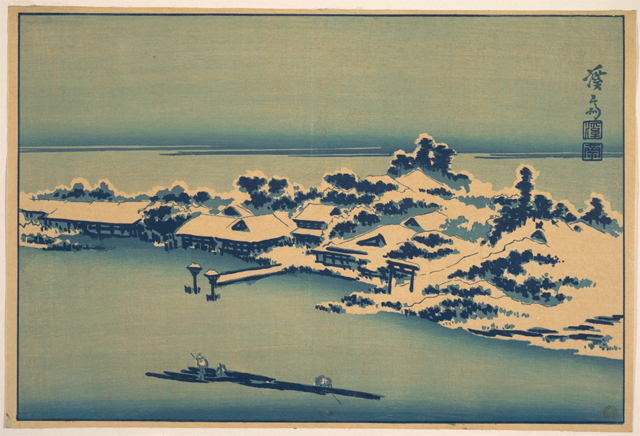
      <title>Winter Landscape, by Keisai Eisen</title>
      <link rel="alternate" type="text/html" href="https://culture-making.com/post/winter_landscape_by_keisai_eisen" />
      <id>tag:culture-making.com,2012:author/9.2030</id>
      <published>2012-02-02T13:00:14Z</published>
      <updated>2012-02-01T16:01:22Z</updated>
      <author>
            <name>Nate Barksdale</name>
            <email>natebarksdale@gmail.com</email>
            
      </author>

      <content type="html"><![CDATA[


					<b>Nate: </b><em>?Here's something I didn't know: this lovely print belongs to a genre of artwork called <a href="http://en.wikipedia.org/wiki/Ukiyo-e">ukiyo-e</a>, whose name translates literally as "pictures of the floating world." They celebrated the the evanescent impermance of natural scenes and moments, but also of the heightened worlds of entertainment (kabuki, geisha). Because they could be mass-produced, they introduced ownable artwork to new classes of Japanese people.?</em><br />
		
		<a href="http://www.metmuseum.org/collections/search-the-collections/60001107"><img src="http://www.culture-making.com/media/edo-winter.jpg" alt="image" /></a><hr />
<div class="author" style="font-size: -1">"<a href="http://www.metmuseum.org/collections/search-the-collections/60001107">Winter Landscape</a>," polychrome woodblock print by Keisai Eisen (1790–1848), from the collections of <a href="http://www.metmuseum.org/collections/search-the-collections/60001107">The Metropolitan Museum of Art</a></div>		


      ]]></content>
    </entry>    <entry>
      <title>We don&#8217;t believe because we don&#8217;t recall</title>
      <link rel="alternate" type="text/html" href="https://culture-making.com/post/we_dont_believe_because_we_dont_recall" />
      <id>tag:culture-making.com,2012:author/9.2029</id>
      <published>2012-02-01T13:00:16Z</published>
      <updated>2012-01-31T22:26:18Z</updated>
      <author>
            <name>Nate Barksdale</name>
            <email>natebarksdale@gmail.com</email>
            
      </author>

      <content type="html"><![CDATA[


					<b>Nate: </b><em>?This is why Andy's (and others') reminder that there's room and honor for the best of human cultural artifacts in the Christian conception of heaven gives me such comfort. One can wonder whether, as our significant human interactions are ever more mediated through data on devices, whether we'll experience fewer Proustian glove-moments in the future or whether (as I suspect) we'll simply be surprised at how a jpeg makes us weep.?</em><br />
		
		<p>Voluntary memory, the memory of the intellect and the eyes, [gives] us only imprecise facsimiles of the past which no more resemble it than pictures by bad painters resemble the spring…. So we don’t believe that life is beautiful because we don’t recall it, but if we get a whiff of a long-forgotten smell we are suddenly intoxicated, and similarly we think we no longer love the dead, because we don’t remember them, but if by chance we come across an old glove we burst into tears.</p><hr />
<div class="author" style="font-size: -1">from "<a href="http://books.google.com/books?id=YPiSF4qQUOYC&pg=PA123&dq=proust+%22vieux+gant%22&hl=en&sa=X&ei=qK0oT9umD6X9iQLA-NTeCg&ved=0CEkQ6AEwBA#v=onepage&q=proust%20%22vieux%20gant%22&f=false">Lettre à René Blum dans L. Pierre-Quint</a>," by Marcel Proust, 1913, <a href="http://books.google.com/books?ei=66woT9yNFYnmiALN2PGbCg&id=eO1cAAAAMAAJ&dq;="Voluntary+memory,+the+memory+of+the+intellect+and+the+eyes,"&q="burst+into+tears"#search_anchor"><em>Marcel Proust, Selected Letters: 1910-1917</em></a> :: via <a href="http://wubr2000.wordpress.com/2011/03/05/marcel’s-madeleine-excerpts-from-how-marcel-proust-can-change-your-life/"><em>How Proust Can Change Your Life</em></a>, <a href="http://twitter.com/_firescript">Teju Cole</a></div>		


      ]]></content>
    </entry>    <entry>
      <title>Metaphor as metastasis</title>
      <link rel="alternate" type="text/html" href="https://culture-making.com/post/metaphor_as_metastasis" />
      <id>tag:culture-making.com,2012:author/9.2028</id>
      <published>2012-01-30T13:00:32Z</published>
      <updated>2012-01-28T20:51:34Z</updated>
      <author>
            <name>Nate Barksdale</name>
            <email>natebarksdale@gmail.com</email>
            
      </author>

      <content type="html"><![CDATA[


					<b>Nate: </b><em>?An op-ed worth reading, if only for the opening epigraph (and, come to think of it, the essential closing verb in the quotation below).?</em><br />
		
		<p>What if, instead of that playful word bubble, we tried something a bit more accurately descriptive when growth at any cost became the goal. Say, &#8220;tumor&#8221;: &#8220;the dot-com tumor,&#8221; &#8220;the subprime tumor,&#8221; &#8220;the derivatives tumor.&#8221;</p>
<p>Would anyone seriously gainsay the highest possible vigilance over the proper functioning of their own body or doubt the need for strong regulation? Who, facing the prospect of a tumorous outbreak or living with a body demonstrably prone to such outbreaks, would entrust that body to a band of physicians blithely committed to laissez faire regarding these fatal bubbles of flesh?</p><p>Words matter. Metaphors frame thought. Pay them heed and tend them well.</p><hr />
<div class="author" style="font-size: -1">from "<a href="http://articles.latimes.com/2010/may/23/opinion/la-oe-weschler-bubble-20100523">The trouble with bubbles</a>," by Walter Murch and Lawrence Weschler, <a href="http://articles.latimes.com/2010/may/23/opinion/la-oe-weschler-bubble-20100523"><i>Los Angeles Times</i></a>, 23 May 2010</div>		


      ]]></content>
    </entry>    <entry>
      <title>Patent US690236</title>
      <link rel="alternate" type="text/html" href="https://culture-making.com/post/patent_us690236" />
      <id>tag:culture-making.com,2012:author/9.2027</id>
      <published>2012-01-29T13:00:47Z</published>
      <updated>2012-01-28T20:42:48Z</updated>
      <author>
            <name>Nate Barksdale</name>
            <email>natebarksdale@gmail.com</email>
            
      </author>

      <content type="html"><![CDATA[


					<b>Nate: </b><em>?An old forgotten bit of culture-making, which may seem hilariously small now, but on the scale of an early twentieth century milking shed, not insignificant. "The object of my invention is the production of a cow-tail holder which is very simple in construction and operation and cheap in its production and which will not annoy the cow or interfere with the milking operation and which can be readily attached and detached."?</em><br />
		
		<a href="http://www.google.com/patents?id=-Fo_AAAAEBAJ&zoom=4&dq=C. W. Colwel 1901&pg=PA1#v=onepage&q&f;=false"><img src="http://www.culture-making.com/media/cowtail.jpg" alt="image" /></a><hr />
<div class="author" style="font-size: -1">from "<a href="http://www.google.com/patents?id=-Fo_AAAAEBAJ&zoom=4&dq=C. W. Colwel 1901&pg=PA1#v=onepage&q&f;=false">Patent US690236 - COW-TAIL HOLDER</a>," awarded to C. W. Colwell of Delhi, New York, <a href="http://www.google.com/patents?id=-Fo_AAAAEBAJ&zoom=4&dq=C. W. Colwel 1901&pg=PA1#v=onepage&q&f;=false">United States Patent Office</a>, 31 December 1901 :: via <a href="http://twitter.com/TweetsofOld">Tweets of Old</a></div>		


      ]]></content>
    </entry>    <entry>
      <title>The quietest place in the lower forty&#45;eight</title>
      <link rel="alternate" type="text/html" href="https://culture-making.com/post/the_quietest_place_in_the_lower_forty-eight" />
      <id>tag:culture-making.com,2012:author/9.2026</id>
      <published>2012-01-26T20:56:41Z</published>
      <updated>2012-01-26T21:04:43Z</updated>
      <author>
            <name>Nate Barksdale</name>
            <email>natebarksdale@gmail.com</email>
            
      </author>

      <content type="html"><![CDATA[


					<b>Nate: </b><em>?Quiet, at least, when it comes to manmade noise. I like the quote from a neuroscientist earlier in the article: "Hearing is designed to get information from much farther away than your eyes can reach ... Hearing is not something that evolved so you can talk to me. It evolved so you can learn about your world." It tends to be best done, then, at a distance.?</em><br />
		
		<p>“Olympic National Park is the listener’s Yosemite,” Hempton said of his decision to locate his One Square Inch within the park’s forested realm. “In a single day, you can listen to an alpine environment, a wilderness beach, and a temperate rain forest. And it has the longest noise-free interval of any national park I’ve been to, and I’ve been to them all.”</p> <p>Part of Olympic’s quiet stems from its location: It sits on a peninsula in a secluded corner of the country. The park is not crossed by highways, navigable rivers, or utility rights of way; and it lies west of the major cross-country plane routes. Only three commercial-airline paths encroach upon its borders. Alaska Airlines is the most active, flying overhead 37 times each day in summer, but it tries to avoid the park during routine maintenance and training flights—a concession the carrier made to Hempton after he wrote asking it to change its flight patterns.</p><hr />
<div class="author" style="font-size: -1">from "<a href="http://www.cntraveler.com/features/2012/01/The-Sound-of-Silence">The Sound of Silence</a>," by Virginia Morell, <a href="http://www.cntraveler.com/features/2012/01/The-Sound-of-Silence">Conde Nast Traveler</a>, January 2012 :: via <a href="http://thebrowser.com/articles/sound-silence">The Browser</a></div>		


      ]]></content>
    </entry>    <entry>
      <title>City Silhouettes by Jasper James</title>
      <link rel="alternate" type="text/html" href="https://culture-making.com/post/city_silhouettes_by_jasper_james" />
      <id>tag:culture-making.com,2012:author/9.2025</id>
      <published>2012-01-25T15:16:55Z</published>
      <updated>2012-01-25T15:25:57Z</updated>
      <author>
            <name>Nate Barksdale</name>
            <email>natebarksdale@gmail.com</email>
            
      </author>

      <content type="html"><![CDATA[


					<b>Nate: </b><em>?Beijing-based photographer <a href="http://www.jasperjames.co.uk/">Jasper James</a> has a wonderful series of portraits of people reflected against cityscapes. The images are all composed in camera—no compositing or Photoshopping beyond simple contrast adjustments. The result—giant humans superimposed on tiny buildings—inverts the usual urban experience, where the buildings dwarf each individual.?</em><br />
		
		<a href="http://www.jasperjames.co.uk/project/people-and-places-2/"><img src="http://www.culture-making.com/media/8_silhouettes004.jpg" alt="photo" /></a><hr />
<div class="author" style="font-size: -1">from "<a href="http://www.jasperjames.co.uk/project/people-and-places-2/">City Silhouettes</a>," by Jasper James, 2010 :: via <a href="http://www.featureshoot.com/2012/01/new-city-silhouette-portraits-by-jasper-james/">Feature Shoot</a> and <a href="http://www.petapixel.com/2012/01/17/city-silhouettes-skylines-seen-through-portraits-of-city-dwellers/?utm_source=feedburner&utm_medium=feed&utm_campaign=Feed%3A+PetaPixel+%28PetaPixel%29">Petapixel</a></div>		


      ]]></content>
    </entry>    <entry>
      <title>Dinner with strangers</title>
      <link rel="alternate" type="text/html" href="https://culture-making.com/post/dinner_with_strangers" />
      <id>tag:culture-making.com,2012:author/9.2024</id>
      <published>2012-01-21T12:00:02Z</published>
      <updated>2012-01-21T12:10:04Z</updated>
      <author>
            <name>Nate Barksdale</name>
            <email>natebarksdale@gmail.com</email>
            
      </author>

      <content type="html"><![CDATA[


					<b>Nate: </b><em>?The author of <em>How Proust Can Change Your Life</em> discovers that religion can too.?</em><br />
		
		<p>Religions, he thinks, have the buttons and know how to use them. His book considers the Catholic mass, early Christianitiy&#8217;s ritual of agape or love feasts, and Jewish Passover rituals to explore how religions encouraged us to overcome fear of strangers and create communities. He then tentatively imagines a so-called &#8220;agape restaurant&#8221; where, instead of dining with like-minded friends, you would be invited to eat with strangers. It would be the antithesis of Facebook.</p><hr />
<div class="author" style="font-size: -1">from "<a href="http://www.guardian.co.uk/culture/2012/jan/20/alain-de-botton-life-in-writing">Alain de Botton: a life in writing</a>," by Stuart Jeffries, <a href="http://www.guardian.co.uk/culture/2012/jan/20/alain-de-botton-life-in-writing"><i>The Guardian</i></a>, 20 January 2012 :: via <a href="http://ayjay.tumblr.com/">More than 95 Theses</a></div>		


      ]]></content>
    </entry>    <entry>
      <title>Paving the home</title>
      <link rel="alternate" type="text/html" href="https://culture-making.com/post/paving_the_home" />
      <id>tag:culture-making.com,2012:author/9.2021</id>
      <published>2012-01-15T14:22:19Z</published>
      <updated>2012-01-15T10:07:20Z</updated>
      <author>
            <name>Nate Barksdale</name>
            <email>natebarksdale@gmail.com</email>
            
      </author>

      <content type="html"><![CDATA[


					<b>Nate: </b><em>?Cement floors and the horizons of the possible.?</em><br />
		
				<p>
			Starting in 2000, a program in Mexico&#8217;s Coahuila state called &#8220;<a href="http://desarrollosocial.guanajuato.gob.mx/piso-firme.php" target="_blank">Piso Firme</a>&#8221; (Firm Floor) offered up to $150 per home in mixed concrete, delivered directly to families who used it to cover their dirt floors. Scholar Paul Gertler <a href="http://insciences.org/article.php?article_id=3181" target=“_blank”>e&#118;aluated</a> the impact: Kids in houses that moved from all-dirt to all-concrete floors saw parasitic infestation rates drop 78 percent; the number of children who had diarrhea in any given month dropped by half; anemia fell more than four-fifths; and scores on cognitive tests went up by more than a third. (Perhaps unsurprisingly, mothers in newly cemented houses reported less depression and greater life satisfaction.) By 2005, Piso Firme had spread to other states, and 300,000 households&#8212;about 10 percent of dirt-floor houses in Mexico&#8212;had taken part in the program.
		</p>
<p>			It helps if the street outside the house gets paved, too&#8212;not so much for health reasons as for economic ones. Economists Marco Gonzalez-Navarro and Climent Quintana-Domeque <a href="http://www.fedea.es/pub/seminarios/24-05-2011ClimentQuintana.pdf" target="_blank">found</a> in a 2010 study that paving the street in the town of Acayucan, Mexico, added more than 50 percent to land values and caused a 31 percent rise in rental values. It also considerably increased households&#8217; access to credit. As a result, households on paved streets were 40 percent more likely to have cars.
		</p>

<p>&nbsp;</p><hr />
<div class="author" style="font-size: -1">From <a href="http://www.foreignpolicy.com/articles/2012/01/03/paving_paradise?page=full">"Paving Paradise"</a>, by Charles Kenny, <em><a href="http://www.foreignpolicy.com/articles/2012/01/03/paving_paradise?page=full">Foreign Policy</a></em>, Jan/Feb 2012 :: via Koranteng</div>		


      ]]></content>
    </entry>    <entry>
      <title>Forever Bicycles, by Ai Weiwei</title>
      <link rel="alternate" type="text/html" href="https://culture-making.com/post/forever_bicycles_by_ai_weiwei" />
      <id>tag:culture-making.com,2012:author/9.2018</id>
      <published>2012-01-15T02:40:14Z</published>
      <updated>2012-01-14T21:40:15Z</updated>
      <author>
            <name>Nate Barksdale</name>
            <email>natebarksdale@gmail.com</email>
            
      </author>

      <content type="html"><![CDATA[


					<b>Nate: </b><em>?Chinese artist and activist <a href="http://en.wikipedia.org/wiki/Ai_Weiwei">Ai Weiwei</a> has an exhibition running through the end of this month at the Taipei Fine Art Museum—his first large-scale solo show, apparently, in the Chinese world. The show features a wide range of works in the border zone between sculpture and found object assembly. The knockout piece is undoubtedly this one, a layered vertical labyrinth of 1200 bicycles (sans seats and handlebars). The exhibition, incidentally, is titled <em>Absent</em> because Ai remains under a travel ban in China and won't be able to attend.?</em><br />
		
		<a href="http://www.fastcodesign.com/1665720/ai-weiwei-piles-1200-bikes-on-top-of-each-other-for-dazzling-effect"><img src="http://www.culture-making.com/media/foreverbicycles.jpg" alt="photo" /></a><hr />
<div class="author" style="font-size: -1">from "<a href="http://www.tfam.museum/TFAM_Exhibition/exhibitionDetail.aspx?PMN=1&ExhibitionId=417&PMId=417t">Forever Bicycles</a>," by Ai Weiwei, <a href="http://www.tfam.museum/TFAM_Exhibition/exhibitionDetail.aspx?PMN=1&ExhibitionId=417&PMId=417">Taipei Art Museum</a>, 2011 :: via <a href="http://www.fastcodesign.com/1665720/ai-weiwei-piles-1200-bikes-on-top-of-each-other-for-dazzling-effect">Co.Design</a></div>		


      ]]></content>
    </entry>    <entry>
      <title>fictional landscape, by Kyle Kirkpatrick</title>
      <link rel="alternate" type="text/html" href="https://culture-making.com/post/fictional_landscape_by_kyle_kirkpatrick" />
      <id>tag:culture-making.com,2012:author/9.2016</id>
      <published>2012-01-14T13:00:24Z</published>
      <updated>2012-01-14T21:56:25Z</updated>
      <author>
            <name>Nate Barksdale</name>
            <email>natebarksdale@gmail.com</email>
            
      </author>

      <content type="html"><![CDATA[


					<b>Nate: </b><em>?I'm pondering why this example of book-carving seems more attractive than the standard version. I think it's because the books wind up resembling not just a landscape, but also an architect's model of a landscape, with its stairstep topographical-map layers.?</em><br />
		
		<a href="http://www.thisiscolossal.com/2012/01/fictional-landscapes/?utm_source=feedburner&utm_medium=feed&utm_campaign=Feed:+colossal+(Colossal)"><img src="http://www.culture-making.com/media/fictional-1-600x899.jpg" alt="photo" /></a><hr />
<div class="author" style="font-size: -1">from "<a href="http://www.saatchionline.com/art/Sculpture-Paper-Mache-Reading-Landscapes/152131/93701/view">fictional landscape with the small and minute</a>," by <a href="http://www.kylekirkpatrick.co.uk/">Kyle Kirkpatrick</a>, photo by <a href="http://www.flickr.com/search/?ss=2&w=49968232%40N00&q=kyle&m=text">Leo Reynolds</a>, 2009 :: via <a href="http://www.thisiscolossal.com/2012/01/fictional-landscapes/?utm_source=feedburner&utm_medium=feed&utm_campaign=Feed:+colossal+(Colossal)">Colossal</a></div>		


      ]]></content>
    </entry>    <entry>
      <title>The right to a horse</title>
      <link rel="alternate" type="text/html" href="https://culture-making.com/post/the_right_to_a_horse" />
      <id>tag:culture-making.com,2012:author/9.2015</id>
      <published>2012-01-06T13:00:28Z</published>
      <updated>2012-01-05T21:22:30Z</updated>
      <author>
            <name>Nate Barksdale</name>
            <email>natebarksdale@gmail.com</email>
            
      </author>

      <content type="html"><![CDATA[


					<b>Nate: </b><em>?One of the key figures in the creation of the Internet suggests we should be careful about enshrining any technology as a human right. That it is tempting to do so says a lot about many technologies' ability to enable incredible (and deeply humanizing) things, but also about their tendency to seem more irresistible and permanent than they really are.?</em><br />
		
		<p>[T]echnology is an enabler of rights, not a right itself. There is a high bar for something to be considered a human right. Loosely put, it must be among the things we as humans need in order to lead healthy, meaningful lives, like freedom from torture or freedom of conscience. It is a mistake to place any particular technology in this exalted category, since over time we will end up valuing the wrong things. For example, at one time if you didn’t have a horse it was hard to make a living. But the important right in that case was the right to make a living, not the right to a horse. Today, if I were granted a right to have a horse, I’m not sure where I would put it.</p><hr />
<div class="author" style="font-size: -1">from "<a href="http://www.nytimes.com/2012/01/05/opinion/internet-access-is-not-a-human-right.html">Internet Access Is Not a Human Right</a>," by Vint Cerf, <a href="http://www.nytimes.com/2012/01/05/opinion/internet-access-is-not-a-human-right.html"><em>The New York Times</em></a>, 4 January 2012 :: via <a href="http://www.wired.com/epicenter/2012/01/net-not-a-human-right/#">Wired.com</a></div>		


      ]]></content>
    </entry>    <entry>
      <title>New Years Rulin’s</title>
      <link rel="alternate" type="text/html" href="https://culture-making.com/post/new_years_rulins" />
      <id>tag:culture-making.com,2012:author/9.2014</id>
      <published>2012-01-01T15:30:33Z</published>
      <updated>2012-01-01T15:47:34Z</updated>
      <author>
            <name>Nate Barksdale</name>
            <email>natebarksdale@gmail.com</email>
            
      </author>

      <content type="html"><![CDATA[


					<b>Nate: </b><em>?From a list of folk singer Woody Guthrie's 1942 New Year's resolutions: a collection of low and high goals. The <a href="http://www.woodyguthrie.org/newyearsrulins.htm">second page</a> gets more metaphorical and far-seeing ("19. KEEP HOPING MACHINE RUNNING"; "31. LOVE EVERYBODY"). The item before "PLAY AND SING GOOD" strikes a pang: "SEND MARY AND KIDS MONEY", a reminder of the family he'd left behind for the rambling' lifestyle. Culture-making, however great, always comes at a cost. This July will mark the 100th anniversary of Woody's birth.?</em><br />
		
		<a href="http://www.woodyguthrie.org/newyearsrulins.htm"><img src="http://www.culture-making.com/media/guthrie.jpg" alt="image" /></a><hr />
<div class="author" style="font-size: -1">from "<a href="http://www.woodyguthrie.org/newyearsrulins.htm">New Year's Rulin's</a>," by Woody Guthrie, 31 January1942, from the archives of the <a href="http://www.woodyguthrie.org/newyearsrulins.htm">Woody Guthrie Foundation</a> :: via <a href="http://www.listsofnote.com/2011/12/new-years-rulins.html">Lists of Note</a></div>		


      ]]></content>
    </entry>    <entry>
      <title>Lives of consequence</title>
      <link rel="alternate" type="text/html" href="https://culture-making.com/post/lives_of_consequence" />
      <id>tag:culture-making.com,2011:author/9.2013</id>
      <published>2011-12-24T14:59:44Z</published>
      <updated>2011-12-24T15:22:45Z</updated>
      <author>
            <name>Nate Barksdale</name>
            <email>natebarksdale@gmail.com</email>
            
      </author>

      <content type="html"><![CDATA[


					<b>Nate: </b><em>?The Bible as a model for literary realism: both insist on taking time for the lives and stories of those at the margins. Like, for instance, certain shepherds long ago.?</em><br />
		
		<p>Old Jonathan Edwards wrote, “It has all along been God’s manner to open new scenes, and to bring forth to view things new and wonderful.” These scenes are the narrative method of the Bible, which assumes a steady march of history, the continuous unfolding of significant event, from the primordial quarrel of two brothers in a field to supper with a stranger at Emmaus. There is a cosmic irony in the veil of insignificance that obscures the new and wonderful. Moments of the highest import pass among people who are so marginal that conventional history would not have noticed them: aliens, the enslaved, people themselves utterly unaware that their lives would have consequence. The great assumption of literary realism is that ordinary lives are invested with a kind of significance that justifies, or requires, its endless iterations of the commonplace, including, of course, crimes and passions and defeats, however minor these might seem in the world’s eyes. This assumption is by no means inevitable. Most cultures have written about demigods and kings and heroes. Whatever the deeper reasons for the realist fascination with the ordinary, it is generous even when it is cruel, simply in the fact of looking as directly as it can at people as they are and insisting that insensitivity or banality matters. The Old Testament prophets did this, too.</p><hr />
<div class="author" style="font-size: -1">from "<a href="http://www.nytimes.com/2011/12/25/books/review/the-book-of-books-what-literature-owes-the-bible.html?_r=2&ref=review">The Book of Books - What Literature Owes the Bible</a>," by Marilynne Robinson, <a href="http://www.nytimes.com/2011/12/25/books/review/the-book-of-books-what-literature-owes-the-bible.html?_r=2&ref=review"><i>The New York Times</i></a>, 22 December 2011 :: via <a href="http://www.3quarksdaily.com/3quarksdaily/2011/12/the-book.html">3quarksdaily</a></div>		


      ]]></content>
    </entry>    <entry>
      <title>The next IJM</title>
      <link rel="alternate" type="text/html" href="https://culture-making.com/post/the_next_ijm" />
      <id>tag:culture-making.com,2011:author/9.2012</id>
      <published>2011-12-22T18:03:02Z</published>
      <updated>2011-12-22T18:19:03Z</updated>
      <author>
            <name>Andy Crouch</name>
            <email>andy@culture-making.com</email>
            
      </author>

      <content type="html"><![CDATA[


<p>Over the last 15 years International Justice Mission has mobilized Christians to address the profound need for structural transformation in public justice systems around the world that, due to a combination of corruption (i.e., human sin turned systemic) and lack of resources, do not serve the poor. Generally the rich can find a way to get these systems (or parallel replacements for them) to work adequately on their behalf. The poor cannot.</p><p>IJM has brought professional expertise (investigative, legal, social work, diplomatic, etc.) to bear on these systems, founded its work on a casework model that helps actual clients who have suffered from injustice in a dramatic way, married that casework to a structural transformation vision that realizes that the problem is bigger than individual cases, and been motivated and sustained by profound faith in a realm where even people of good will are often paralyzed by fear and despair. Due to this unique combination of assets targeted at an area of particular need, IJM has had an extraordinary impact, most recently recognized by Google, which is devoting its 2011 corporate philanthropy to an anti-trafficking coalition led by IJM. There is nothing I&#8217;m more thrilled by in my lifetime than the growth in breadth, depth, and influence of IJM (with whom I&#8217;ve had the privilege to work and volunteer in various ways for many years).</p><p>Thanks to generations of hard work and ongoing vigilance, our public justice system in the USA is not systemically broken to the same extent as it is in the countries where IJM works. But today it occurred to me that there is another system in our country that in some ways is as broken as, if not more broken than, its equivalents in the rest of the world. This system does not serve the poor. Generally the rich can find a way to get this system (or a parallel replacement for it) to work adequately on their behalf. The poor cannot—even though they overwhelmingly want to.</p><p>What we need in this system is a movement that brings professional expertise in numerous areas, a casework model that actually meets the needs of specific individuals and families in a dramatic way, married to a structural transformation model, motivated and sustained by profound faith in a realm where all too many people have effectively given up.</p><p>This system is our educational system.</p><p>Who will lead the IJM of courageous, faithful, professional, Christian efforts toward the structural transformation of American education so that it works just as well for the poor as it does for the rich? Could it be that 15 years from now we could have seen as much transformation in the way American Christians see their responsibility for education as we have seen in the last 15 years in the way they see their responsibility for public justice?</p><p>That&#8217;s what I&#8217;d like for Christmas.</p><br />


      ]]></content>
    </entry>    <entry>
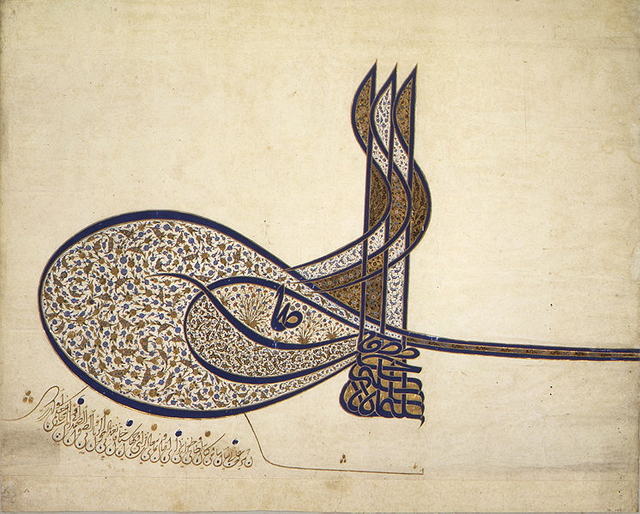
      <title>Süleyman the Magnificent’s magnificent signature</title>
      <link rel="alternate" type="text/html" href="https://culture-making.com/post/sueleyman_the_magnificents_magnificent_signature" />
      <id>tag:culture-making.com,2011:author/9.2011</id>
      <published>2011-12-21T20:43:26Z</published>
      <updated>2011-12-21T20:55:28Z</updated>
      <author>
            <name>Nate Barksdale</name>
            <email>natebarksdale@gmail.com</email>
            
      </author>

      <content type="html"><![CDATA[


					<b>Nate: </b><em>?When a new Ottoman emperor ascended to the throne, his court calligrapher would create an elaborate signature (called a tughra) for him, to be affixed henceforth to royal documents, coins, etc. Once or twice I've come across <a href="http://en.wikipedia.org/wiki/Süleyman_the_Magnificent">Süleyman the Magnificent</a>'s tughra and was always stopped short: what a fitting, dashing, swaggering mark for the man who rebuilt the walls of Jerusalem, and marched his armies all the way to the gates of Vienna. What I didn't realize is how stylized and similar all the Ottoman emperors' tughras are—unless you're skilled at parsing Arabic calligraphy, they <a href="http://en.wikipedia.org/wiki/File:Tughra_of_Selim_III.JPG">mostly</a> <a href="http://upload.wikimedia.org/wikipedia/commons/4/4d/Tugra_Mahmuds_II.png">look</a> the <a href="http://upload.wikimedia.org/wikipedia/commons/d/d3/Abdul_Hameed_II_Sign.svg">same</a>. What I'd assumed were the most distinct elements of Süleyman's mark—those three bold upstrokes with pennants flying—are common to all.?</em><br />
		
		<a href="http://en.wikipedia.org/wiki/Tughra"><img src="http://www.culture-making.com/media/tughra.jpg" alt="image" /></a><hr />
<div class="author" style="font-size: -1">image from <a href="http://en.wikipedia.org/wiki/Tughra">Tughra</a>, Wikipedia.</div>		


      ]]></content>
    </entry>

</feed>